
Blueberry Lemon Infused Water
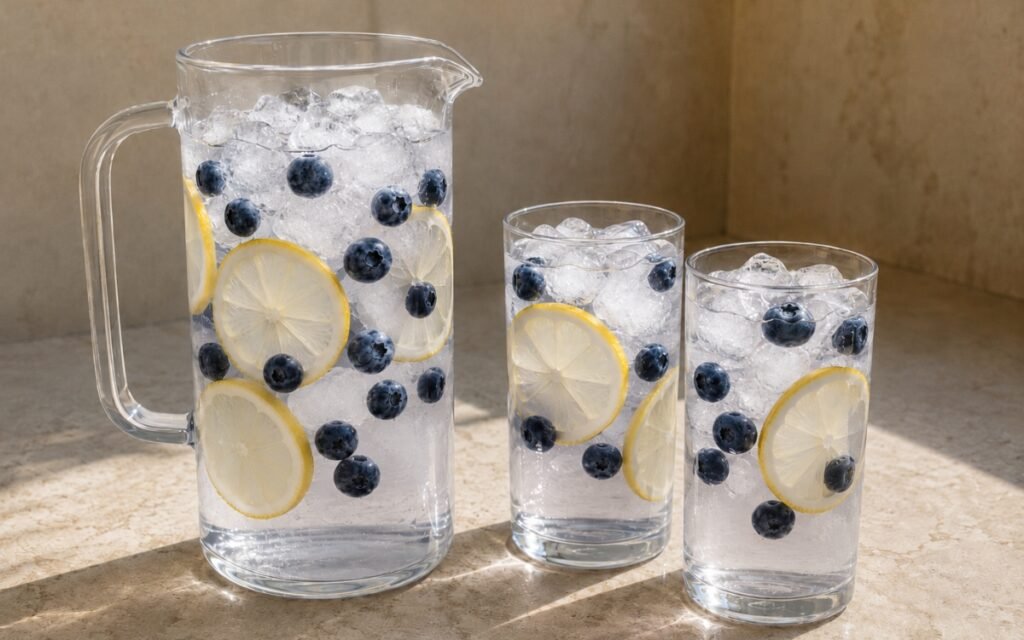
Blueberry lemon infused water is the most visually striking of the infused water preparations — blueberry’s intensely concentrated anthocyanin pigments infuse into cold water almost immediately upon mashing, producing a progressively deepening blue-purple to lavender-pink colour over the 1–4 hour window that no other infused water preparation matches for visual drama. The colour behaviour in this preparation is specifically different from the same anthocyanins in acidic mediums: in neutral cold water (rather than lemon juice’s low pH), blueberry’s anthocyanins remain in the blue-purple register rather than the red-pink they shift toward in acidic conditions. If the optional lemon juice is added, the colour will shift gradually from specifically purple-blue toward lavender-pink as the pH lowers — both colours are beautiful and natural, and the final colour is the visual indicator of the preparation’s acidity level. The preparation is the simplest of the infused water collection: mash one cup for aromatic and colour release, add a second cup whole for visual presence and progressive aromatic contribution. The mashing technique is lighter than the strawberry preparation — blueberry’s small size, tight skin, and specific internal structure means a light press with the back of a spoon produces sufficient cell-wall disruption for infusion without the purée risk of more vigorous mashing.
Prep Time : 10 min
Infusion Time: 1–4 hr
Servings : 16
10 min
1–4 hr
16
Ingredients
For the Infusion Base
• 1 cup fresh blueberries — approximately 150g; lightly mashed
• 30–45ml fresh lemon juice — optional
• 15–30g honey — optional; must be pre-dissolved — this one on Amazon
• 1–2 small pinches fine sea salt
For the Final Build
• 3 litres ice-cold water
• 1 cup fresh blueberries — approximately 150g; left whole
• 2 lemons — thinly sliced
This post may contain affiliate links. As an Amazon Associate I earn from qualifying purchases, at no additional cost to you.
Directions
- Lightly Mash the Base Blueberries
Add the first cup of blueberries to the large pitcher. Using the back of a spoon, press down on each berry individually — a firm, deliberate press rather than a sweeping mash — until each berry cracks and releases its vivid, deeply purple juice. The visual indicator of correct mashing: skins split open, vivid juice released, berry bodies intact in their cracked state rather than reduced to a uniform mush. Approximately 30–40 seconds of methodical pressing produces the correct result. Blueberry’s cell structure is specifically dense — the berries’ tight, thick skin and small size require more deliberate pressing than strawberry’s softer flesh. The goal is to disrupt sufficient cells for colour and aromatic release without reducing the berries to a fine paste that would make straining necessary for a clean-looking water. The cracked but intact berry pieces continue releasing their anthocyanin pigments and aromatic compounds throughout the infusion period as the cold water permeates the disrupted cells. - Optional Honey and Lemon Juice
Pre-dissolve any honey in warm water. Add to the pitcher with optional lemon juice (30–45ml in 3 litres — a barely perceptible brightness rather than any lemon flavour; if the finished water is specifically lemony, more water should be added rather than less lemon) and the 1–2 small pinches of fine sea salt. - Note on Colour and pH
The colour of the finished water is the preparation’s most visually engaging quality and provides a natural indicator of the preparation’s pH. In neutral cold water without lemon juice, blueberry’s anthocyanins produce a specifically blue-purple to lavender water that deepens over the infusion period. With lemon juice added, the pH shifts lower and the anthocyanins shift toward pink-lavender. Both versions are visually beautiful; the difference is natural and is a direct indicator of acidity — the blue-purple version is closer to neutral, the pink-lavender version has more citric acidity. Neither colour indicates spoilage or any quality issue. - Build and Infuse
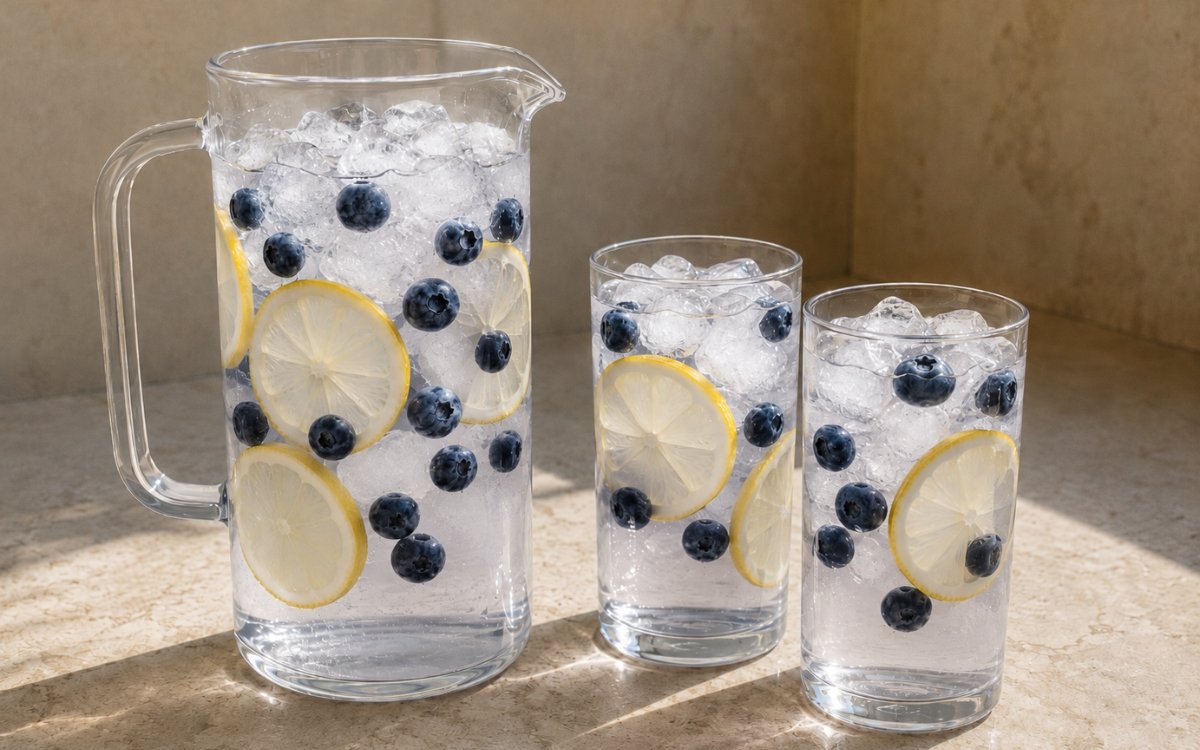
Pour the 3 litres of ice-cold water into the pitcher. Add the whole blueberries — their intact skins will release colour and aromatic compounds progressively and more slowly than the mashed base berries, providing both visual presence as vivid spheres throughout the water and a secondary, slower infusion contribution. Add the thinly sliced lemons. Stir gently once or twice. Cover and refrigerate for 1–4 hours. At 1 hour the colour is pale lavender and the blueberry presence is subtle. At 2 hours the colour is more developed and the blueberry’s mild, sweet, fruity character is more present. At 4 hours the water is at its most vivid — the deepest colour and the most specifically present blueberry and lemon character within the pleasantly infused range. After 4 hours, remove the lemon slices and all blueberries. The lemon peel’s limonoid compounds extract progressively into cold water beyond the 4-hour point; the blueberries, like the strawberries in the previous preparation, become waterlogged and faded, releasing a more muted, less specifically fresh aromatic character. Serve immediately, or refrigerate the strained water for up to 24 hours.
*Notes :
- Blueberry’s anthocyanin concentration is among the highest of any fruit used in this collection — delphinidin-3-glucoside, cyanidin-3-glucoside, and various other anthocyanin forms produce the specifically vivid, densely pigmented result of blueberry infusion in cold water. The colour development over 1–4 hours is the most dramatically visible of any infused water preparation, making this specifically appealing for visual presentation at tables and events.
- Frozen blueberries are an excellent substitute in this preparation — the freezing process pre-ruptures the cell walls, meaning frozen-thawed blueberries begin releasing their colour and aromatic compounds immediately without requiring mashing. Add frozen blueberries directly to the pitcher and reduce the mashing step entirely; the naturally thawing berries in the cold water provide the same progressive colour and aromatic release as mashed fresh ones.
Why This Recipe Works
This recipe works because the two-stage blueberry approach — mashed base for immediate vivid colour and aromatic release, whole berries for progressive visual and aromatic contribution — maximises both the visual impact and the aromatic depth within the clean infused-water format.
The pH sensitivity of the anthocyanins provides a natural, beautiful colour variation based on the lemon juice quantity. And the removal at 4 hours preserves the colour’s vivid quality before the waterlogged fade.
Ingredient Breakdown
Two-Stage Blueberry (Mashed Base + Whole Visual)
The colour and aromatic optimisation — mashed berries for immediate cell-disruption release; whole berries for progressive surface contribution and visual spheres throughout the water.
Anthocyanin Colour Sensitivity
The natural pH indicator — blue-purple without lemon juice (neutral); lavender-pink with lemon juice (slightly acidic); both visually beautiful and both natural.
Lemon Slices and Optional Juice
The citrus brightness dimension — lemon rounds for surface peel aromatic contribution and visual presence; optional juice for barely perceptible acidity.
4-Hour Maximum With Lemon Priority Removal
The quality preservation limit — lemon peel’s limonoid bitterness and blueberry waterlogging both develop progressively beyond 4 hours.
Flavor Structure Explained
This Blueberry lemon infused water follows a minimalist balance model:
- Gentle berry core (blueberry)
- Subtle citrus brightness (lemon)
- Clean aromatic freshness (light infusion)
- Hydration-focused structure (cold water)
- Visual appeal through natural color extraction (blueberry pigments)
Blueberry defines the foundation with soft fruit aromatics and mild sweetness that remain delicate and understated. Rather than delivering a strong berry flavor, it gives the water a subtle fruit character that makes each sip more interesting while preserving the drink’s refreshing simplicity. Lemon contributes a faint citrus brightness that sharpens the blueberry’s gentle profile and adds clarity to the overall flavor. The primary experience remains the clean refreshment of cold water, with both ingredients functioning as enhancements rather than dominant flavors. A distinctive feature of this infusion is its gradual blue-purple to lavender coloration, which provides a striking visual element while reflecting the blueberry’s presence in the water.
Common Mistakes to Avoid
- Puréeing Rather Than Lightly Mashing – Full blueberry purée produces a murky, pulpy result rather than a clear, vivid-coloured water. Always light individual berry pressing.
- Leaving Ingredients Beyond 4 Hours – Waterlogged faded blueberries and lemon peel bitterness both develop. Always remove at the 4-hour maximum.
- Adding Honey Directly to Cold Water – Always pre-dissolve. Honey settles as undissolved deposits in cold water.
- Being Surprised by Colour Variation – Blue-purple in neutral water, lavender-pink with lemon juice — both are natural and correct.
Variations
With Lavender
Add 1 tsp of food-grade dried culinary lavender to the pitcher alongside the blueberries — the lavender’s floral aromatic character alongside blueberry’s colour and gentle fruitiness produces the most specifically beautiful and most specifically aromatic version.
With Mint
Add 12 lightly clapped fresh mint leaves — mint’s cool freshness alongside blueberry’s gentle character produces a specifically more invigorating result.
With Lime
Replace lemon with lime — lime’s sharper, more tropical character produces a slightly more assertive citrus dimension with the added benefit of shifting the anthocyanin colour toward a more vivid pink.
With Frozen Blueberries
Replace the entire preparation with frozen blueberries thawed directly in the cold water — no mashing required; the pre-ruptured cells release colour and aromatics immediately.
Storage & Make-Ahead
Once the ingredients have been removed, the infused water can be refrigerated in a sealed pitcher for up to 24 hours. Its color remains vibrant throughout the storage period.
Infused water should not be stored with the ingredients still present for longer than 4 hours, as continued infusion can negatively affect the flavor and overall balance.
Frequently Asked Questions
Why does the colour change depending on whether lemon juice is added?
Blueberry’s anthocyanin pigments are pH-sensitive — their molecular structure produces different visible light absorption at different pH levels. At neutral pH (plain water) they absorb in the range that produces blue-purple visible colour. At lower pH (with lemon juice’s citric acid) they shift toward the range that produces pink-red visible colour. Both are completely natural; the colour difference is a direct indicator of the preparation’s acidity level.
Why two cups of blueberries in two different preparations?
The mashed cup provides immediate, complete cell-disruption release of the vivid anthocyanin pigments and the aromatic compounds — producing the dramatic colour from the first minutes of infusion. The whole cup provides both the visual presence of intact vivid blue spheres throughout the water and a secondary, slower aromatic contribution from surface diffusion. The two together produce both maximum visual impact and a more progressively developed aromatic depth.
Why remove the ingredients after 4 hours?
Lemon peel’s bitter limonoid compounds extract progressively into cold water beyond the 4-hour point. Blueberries become waterlogged and faded, releasing a less specifically fresh aromatic character as their surface cells become fully permeable. Always remove at the 4-hour maximum for the cleanest, most vivid result.
What other infused water preparations share this direction?
The Blackberry Lime Infused Water shares the dark berry anthocyanin colour and the berry-and-citrus infusion approach — blackberry’s more assertive, more wine-adjacent character producing a different depth than blueberry’s gentler fruitiness. The Strawberry Lime Infused Water shares the lightly mashed berry base and the same two-stage fruit approach in a different berry direction. The Cucumber Lemon Infused Water shares the lemon as citrus component with cucumber’s completely different, specifically green, cool character.
Nutrition Facts
( per serving )
Calories
~8 kcal
Protein
0 g
Fat
0 g
Carbs
2 g
Calories
~8 kcal
Protein
0 g
Fat
0 g
Carbs
2 g
Related Recipes
Related Recipes

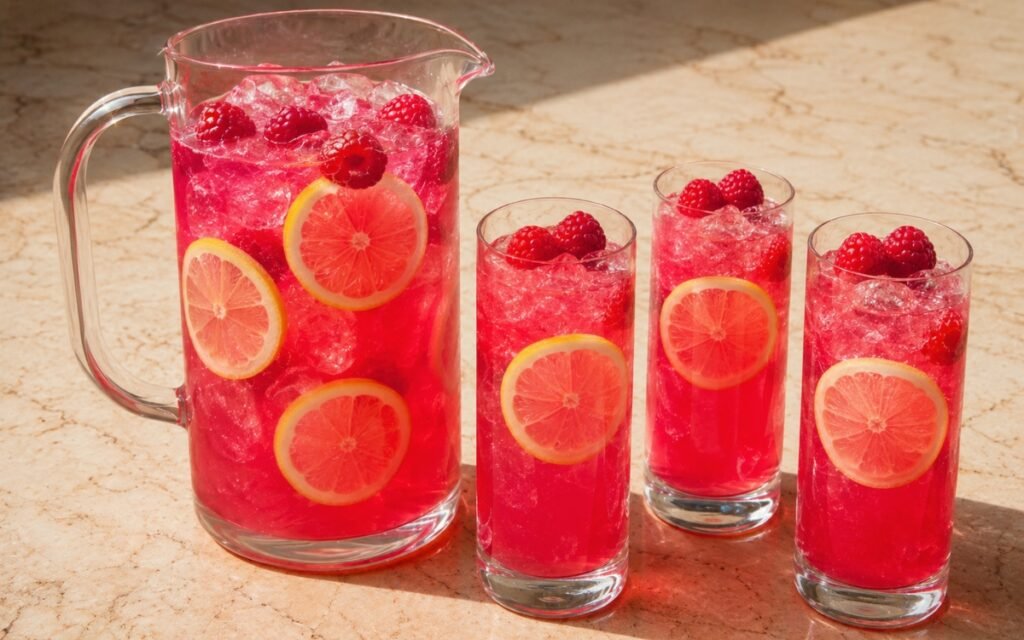
Raspberry Lemonade Pitcher Drink
Honey-raspberry syrup with lemon zest plus fresh raspberries cold-strained — combined with 300ml lemon juice for structural acid, salt, cold water. Vivid and crowd-ready.
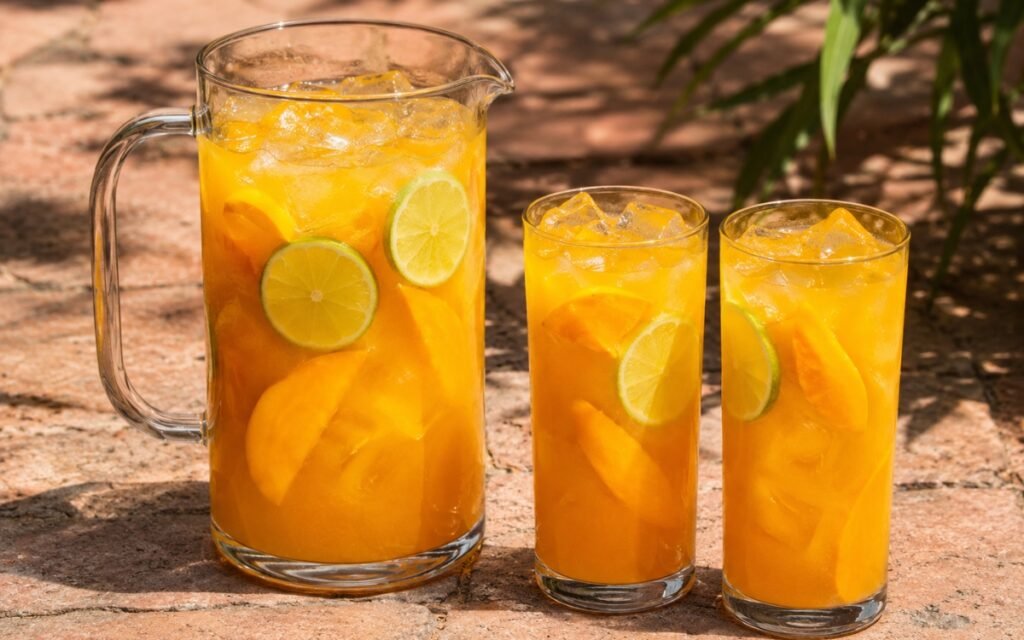
Mango Lime Pitcher Drink
Ripe mango in light brown sugar syrup with lime zest and chili off heat — pressed firmly, combined with fresh lime juice, salt, cold water, chilled. Tropical and lightly warm.
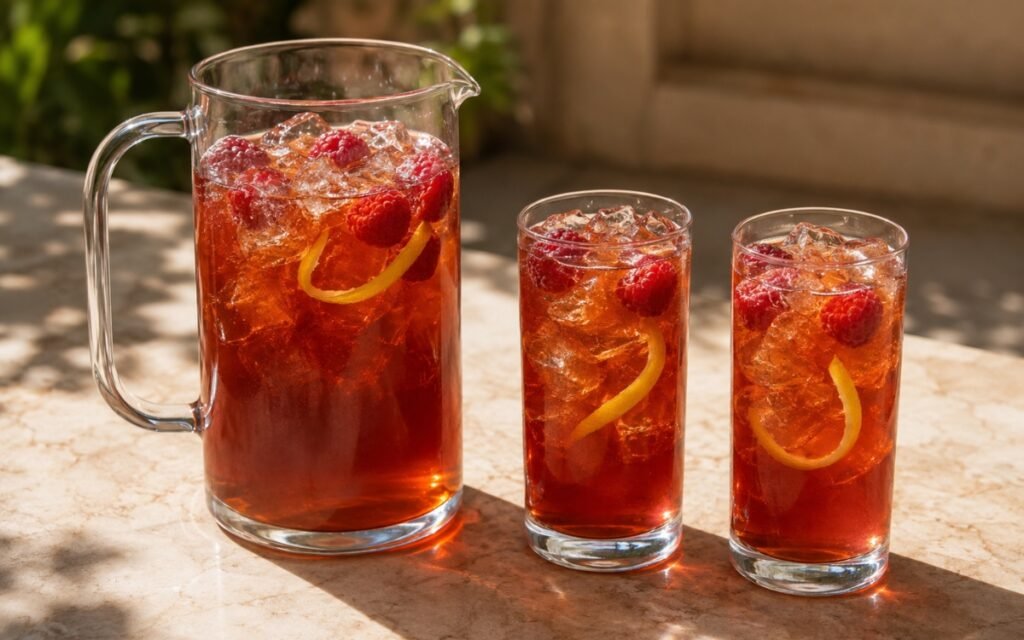
Raspberry Iced Tea Pitcher
Ruby-red raspberry iced tea made with Ceylon black tea, fresh raspberries, and lemon peel, served chilled over ice.
You might also like
You might also like
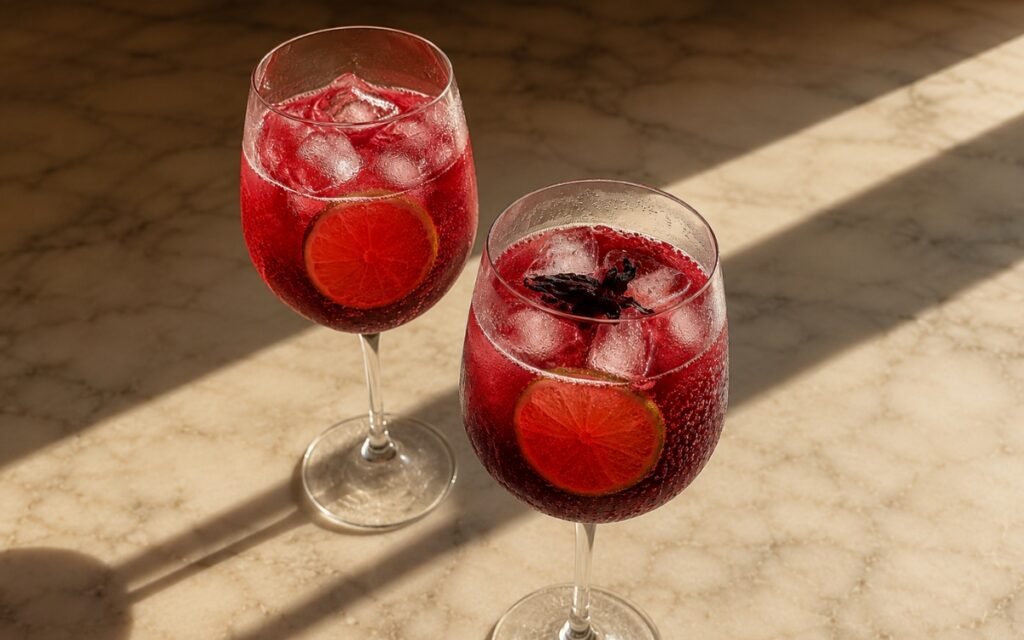
Hibiscus Lime Fizz Mocktail
A ruby-magenta sparkling hibiscus mocktail with honey and fresh lime, chilled and topped with club soda in wine glasses.
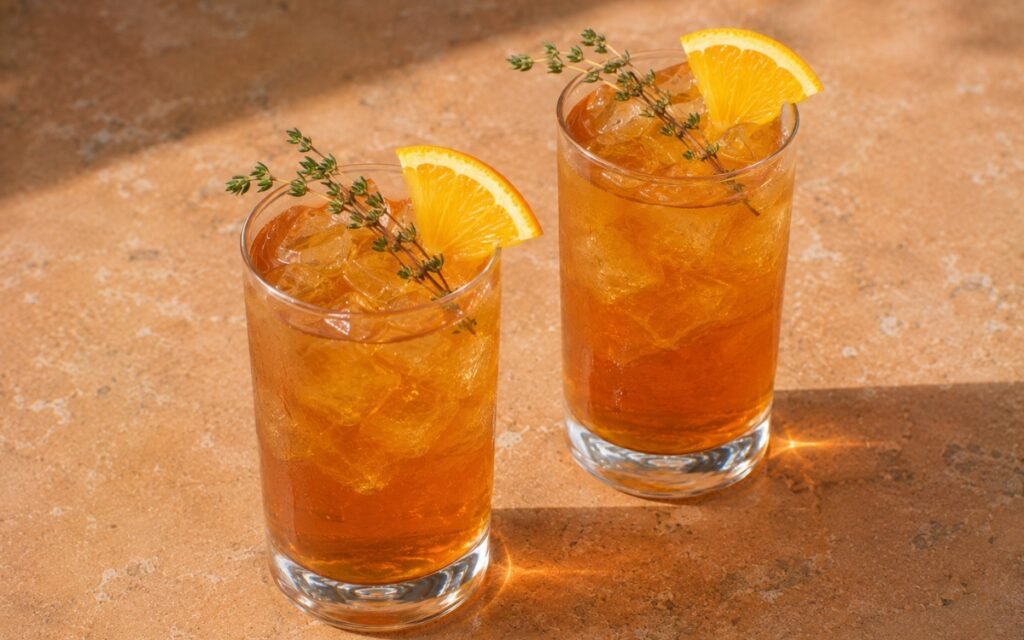
Thyme Orange Iced Tea
Black tea at 90–95°C for 2½–3 minutes, thyme clapped and infused cold, orange peel and fresh orange juice — chilled. Dry-leaning, aromatic, lightly sweet.
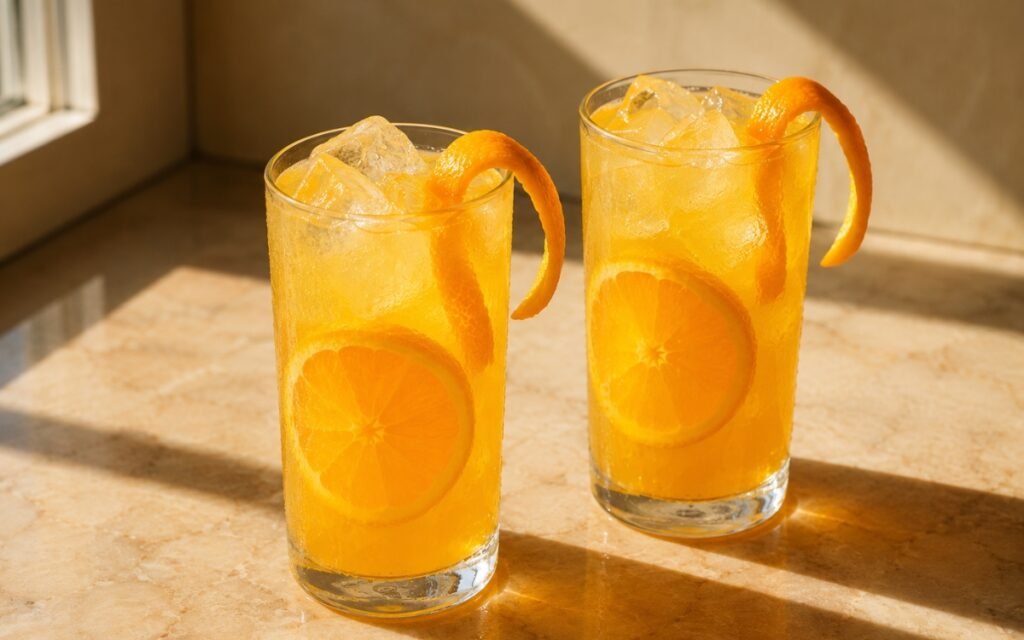
Orange Lemonade
Orange and lemon zest steeped off heat 8–10 minutes, pulp mashed — fresh orange juice with 120ml lemon for structural acid, salt, cold water. Juicy and structured.
Blueberry Lemon Infused Water
Ingredients
Method
- Add the first cup of blueberries to the large pitcher. Using the back of a spoon, press down on each berry individually — a firm, deliberate press rather than a sweeping mash — until each berry cracks and releases its vivid, deeply purple juice. The visual indicator of correct mashing: skins split open, vivid juice released, berry bodies intact in their cracked state rather than reduced to a uniform mush. Approximately 30–40 seconds of methodical pressing produces the correct result. Blueberry’s cell structure is specifically dense — the berries’ tight, thick skin and small size require more deliberate pressing than strawberry’s softer flesh. The goal is to disrupt sufficient cells for colour and aromatic release without reducing the berries to a fine paste that would make straining necessary for a clean-looking water. The cracked but intact berry pieces continue releasing their anthocyanin pigments and aromatic compounds throughout the infusion period as the cold water permeates the disrupted cells.
- Pre-dissolve any honey in warm water. Add to the pitcher with optional lemon juice (30–45ml in 3 litres — a barely perceptible brightness rather than any lemon flavour; if the finished water is specifically lemony, more water should be added rather than less lemon) and the 1–2 small pinches of fine sea salt.
- The colour of the finished water is the preparation’s most visually engaging quality and provides a natural indicator of the preparation’s pH. In neutral cold water without lemon juice, blueberry’s anthocyanins produce a specifically blue-purple to lavender water that deepens over the infusion period. With lemon juice added, the pH shifts lower and the anthocyanins shift toward pink-lavender. Both versions are visually beautiful; the difference is natural and is a direct indicator of acidity — the blue-purple version is closer to neutral, the pink-lavender version has more citric acidity. Neither colour indicates spoilage or any quality issue.
- Pour the 3 litres of ice-cold water into the pitcher. Add the whole blueberries — their intact skins will release colour and aromatic compounds progressively and more slowly than the mashed base berries, providing both visual presence as vivid spheres throughout the water and a secondary, slower infusion contribution. Add the thinly sliced lemons. Stir gently once or twice. Cover and refrigerate for 1–4 hours. At 1 hour the colour is pale lavender and the blueberry presence is subtle. At 2 hours the colour is more developed and the blueberry’s mild, sweet, fruity character is more present. At 4 hours the water is at its most vivid — the deepest colour and the most specifically present blueberry and lemon character within the pleasantly infused range. After 4 hours, remove the lemon slices and all blueberries. The lemon peel’s limonoid compounds extract progressively into cold water beyond the 4-hour point; the blueberries, like the strawberries in the previous preparation, become waterlogged and faded, releasing a more muted, less specifically fresh aromatic character. Serve immediately, or refrigerate the strained water for up to 24 hours.