Ingredients
Method
Lightly Mash the Base Blueberries
- Add the first cup of blueberries to the large pitcher. Using the back of a spoon, press down on each berry individually — a firm, deliberate press rather than a sweeping mash — until each berry cracks and releases its vivid, deeply purple juice. The visual indicator of correct mashing: skins split open, vivid juice released, berry bodies intact in their cracked state rather than reduced to a uniform mush. Approximately 30–40 seconds of methodical pressing produces the correct result. Blueberry's cell structure is specifically dense — the berries' tight, thick skin and small size require more deliberate pressing than strawberry's softer flesh. The goal is to disrupt sufficient cells for colour and aromatic release without reducing the berries to a fine paste that would make straining necessary for a clean-looking water. The cracked but intact berry pieces continue releasing their anthocyanin pigments and aromatic compounds throughout the infusion period as the cold water permeates the disrupted cells.
Optional Honey and Lemon Juice
- Pre-dissolve any honey in warm water. Add to the pitcher with optional lemon juice (30–45ml in 3 litres — a barely perceptible brightness rather than any lemon flavour; if the finished water is specifically lemony, more water should be added rather than less lemon) and the 1–2 small pinches of fine sea salt.
Note on Colour and pH
- The colour of the finished water is the preparation's most visually engaging quality and provides a natural indicator of the preparation's pH. In neutral cold water without lemon juice, blueberry's anthocyanins produce a specifically blue-purple to lavender water that deepens over the infusion period. With lemon juice added, the pH shifts lower and the anthocyanins shift toward pink-lavender. Both versions are visually beautiful; the difference is natural and is a direct indicator of acidity — the blue-purple version is closer to neutral, the pink-lavender version has more citric acidity. Neither colour indicates spoilage or any quality issue.
Build and Infuse
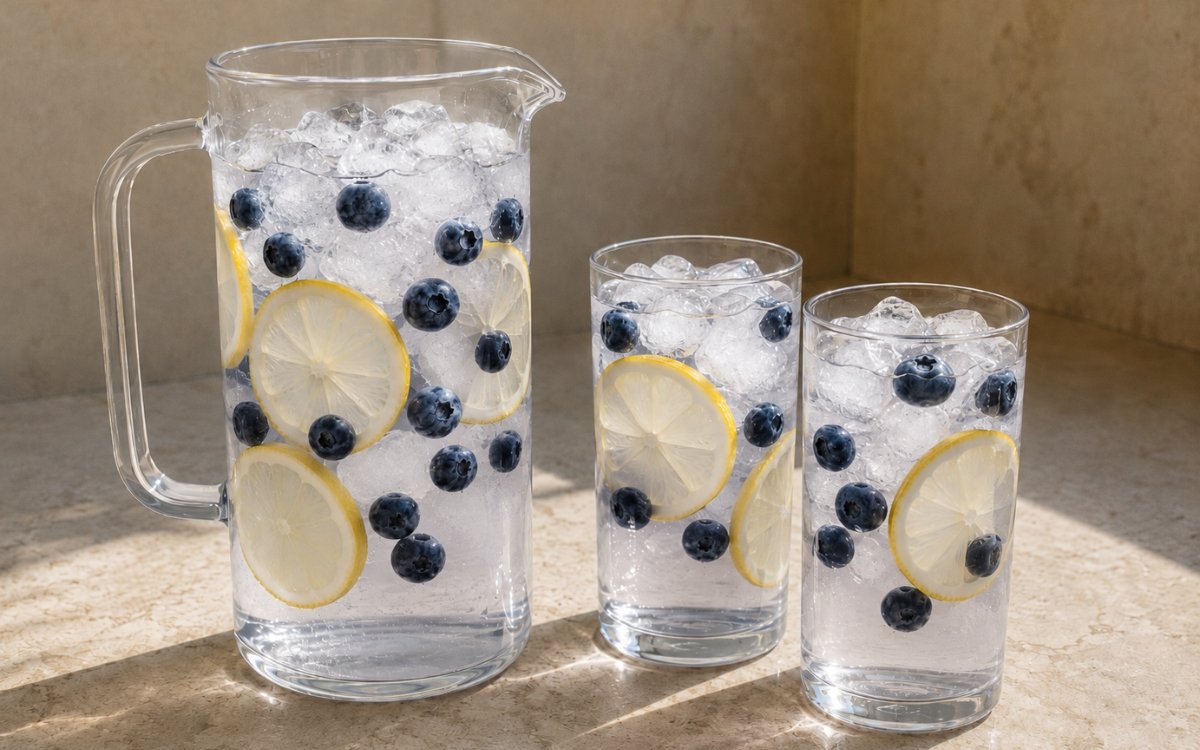
- Pour the 3 litres of ice-cold water into the pitcher. Add the whole blueberries — their intact skins will release colour and aromatic compounds progressively and more slowly than the mashed base berries, providing both visual presence as vivid spheres throughout the water and a secondary, slower infusion contribution. Add the thinly sliced lemons. Stir gently once or twice. Cover and refrigerate for 1–4 hours. At 1 hour the colour is pale lavender and the blueberry presence is subtle. At 2 hours the colour is more developed and the blueberry's mild, sweet, fruity character is more present. At 4 hours the water is at its most vivid — the deepest colour and the most specifically present blueberry and lemon character within the pleasantly infused range. After 4 hours, remove the lemon slices and all blueberries. The lemon peel's limonoid compounds extract progressively into cold water beyond the 4-hour point; the blueberries, like the strawberries in the previous preparation, become waterlogged and faded, releasing a more muted, less specifically fresh aromatic character. Serve immediately, or refrigerate the strained water for up to 24 hours.
Notes
Blueberry's anthocyanin concentration is among the highest of any fruit used in this collection — delphinidin-3-glucoside, cyanidin-3-glucoside, and various other anthocyanin forms produce the specifically vivid, densely pigmented result of blueberry infusion in cold water. The colour development over 1–4 hours is the most dramatically visible of any infused water preparation, making this specifically appealing for visual presentation at tables and events.
Frozen blueberries are an excellent substitute in this preparation — the freezing process pre-ruptures the cell walls, meaning frozen-thawed blueberries begin releasing their colour and aromatic compounds immediately without requiring mashing. Add frozen blueberries directly to the pitcher and reduce the mashing step entirely; the naturally thawing berries in the cold water provide the same progressive colour and aromatic release as mashed fresh ones.