Ingredients
Method
Make the Brown Sugar Citrus Syrup
- Combine the 120g of light brown sugar and 240ml of water in a small saucepan over low heat. Stir until completely dissolved. Remove from the heat immediately. Add the orange and grapefruit zest simultaneously. Cover and steep for 5–6 minutes. Taste the syrup at 5 minutes — if the grapefruit's aromatic character is well present and the syrup smells specifically of fresh grapefruit and orange peel, strain immediately. If the character is still muted, extend to the 8-minute maximum. Do not extend beyond 8 minutes regardless of aromatic development. The grapefruit zest's strict timing is the most specifically important technique point in this preparation. Grapefruit peel contains naringin and various limonoid compounds at higher concentration and in a more extractable form than any other citrus zest used across this collection. In concentrated warm simple syrup — higher dissolved solids, elevated temperature — these bitter compounds extract specifically faster than in plain warm water. The pleasant aromatic volatile oils responsible for grapefruit's characteristically fresh, vivid, slightly floral citrus character extract within the first 5–6 minutes; the bitter fraction extracts progressively from that point forward. A syrup steeped for 10+ minutes in this medium will be specifically harsh and dominated by bitter compounds that no dilution can remove from the finished pitcher. Strain through a fine-mesh sieve. Allow to cool completely.
Build the Pitcher
- Pour the cooled brown sugar citrus syrup into the large pitcher. Add the 500ml of fresh orange juice, 500ml of fresh grapefruit juice, and 2 pinches of fine sea salt. Stir until evenly combined. Add 1.6 litres of ice-cold water and stir gently. The total combined liquid at the starting quantities is approximately 2.84 litres — approximately 178ml per serving before ice dilution brings it to the 200ml target. Grapefruit variety affects the finished pitcher significantly at 500ml volume. Pink grapefruit — the most common commercial variety — has a specifically more approachable, less intensely bitter, slightly more aromatic character than white grapefruit and produces a more balanced result at the 1:1 ratio with orange. White grapefruit — less sweet, more aggressively bitter — produces a more adult, drier result; if using white grapefruit, the adjustment note in the brief applies: increase orange juice by approximately 100ml and reduce grapefruit by the same quantity. Ruby Red grapefruit — the sweetest, least bitter variety — produces the most accessible, most approachable result and may benefit from a reduction in orange juice to let the grapefruit character remain present. Taste with the grapefruit-orange crowd assessment: grapefruit's characteristic dry, clean, lightly bitter citrus character as the unmistakable primary impression; orange's round, sweet warmth present as the element that makes the bitterness refreshing rather than challenging. The salt's contribution is specifically perceptible here — with salt, the grapefruit's vivid citrus character is sharper and more precisely of itself; without salt, the diluted grapefruit bitterness reads as specifically flat and less refreshing. The two pinches in 2.84 litres are at the upper end of sub-threshold concentration in this context, given grapefruit's bitterness requires more salt amplification than sweeter preparations. Add more water only after tasting — the 1.6L starting point is specifically lower than some other crowd preparations, reflecting the already-high total juice volume (1 litre of combined citrus). Starting at 1.6L preserves the vivid citrus character; 2L produces a lighter, more water-forward result.
Chill, Stir, and Serve
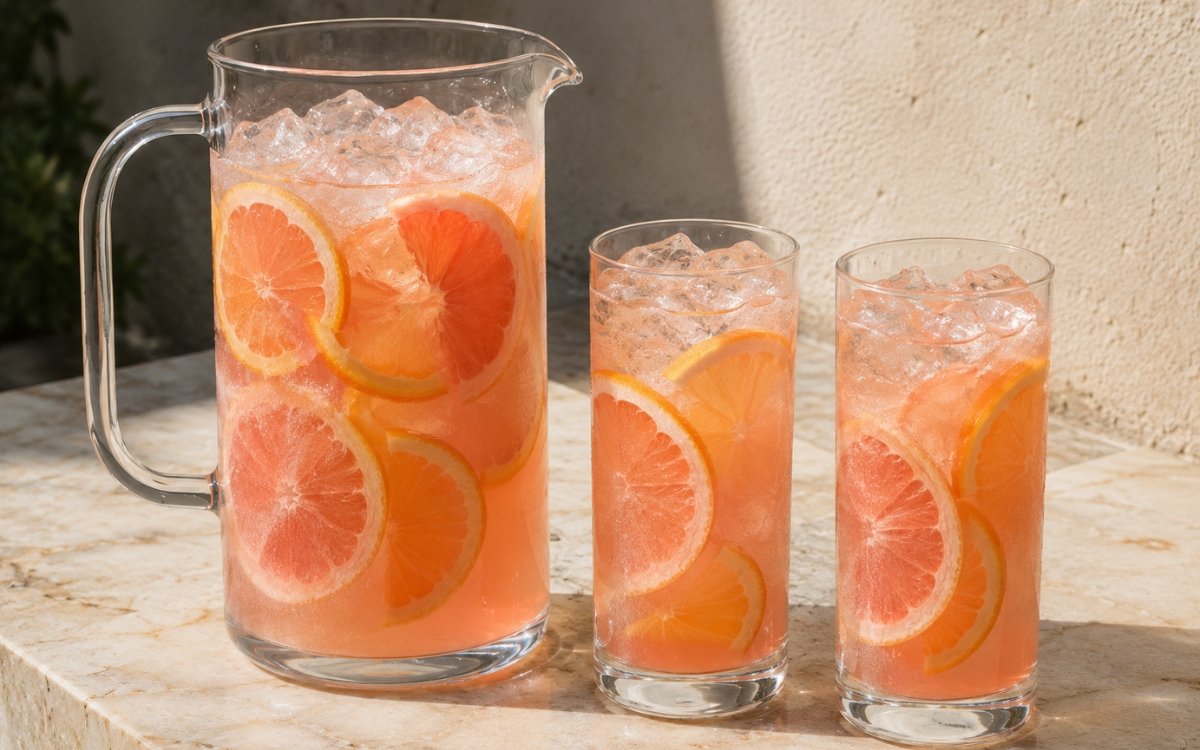
- Cover and refrigerate for 1–2 hours. Stir once before the first pour. Add grapefruit and orange rounds to the pitcher or individual glasses at service. Serve cold over ice.
Notes
The preparation specifically excludes lemon juice — different from the blood orange pitcher (which included 240ml of lemon for structural acid) and the pineapple-orange pitcher (which included optional lemon for brightness). The exclusion is deliberate: grapefruit's naringenin and citric acid naturally provide the preparation's structural acid character. Additional lemon in a grapefruit-orange pitcher would shift the primary acid dimension away from grapefruit's characteristic flavour toward a more generic citrus-sour register that would compete with rather than amplify the grapefruit.
The orange juice variety specifically matters at 500ml: Navel oranges (standard, sweet, widely available) produce the most reliably consistent result. Valencia oranges (more acidic, more complex) produce a slightly more interesting but slightly more variable result. Blood oranges at this quantity would shift the colour and flavour profile dramatically — that is specifically the Blood Orange Citrus Pitcher preparation.