
Fresh Mango Lemonade
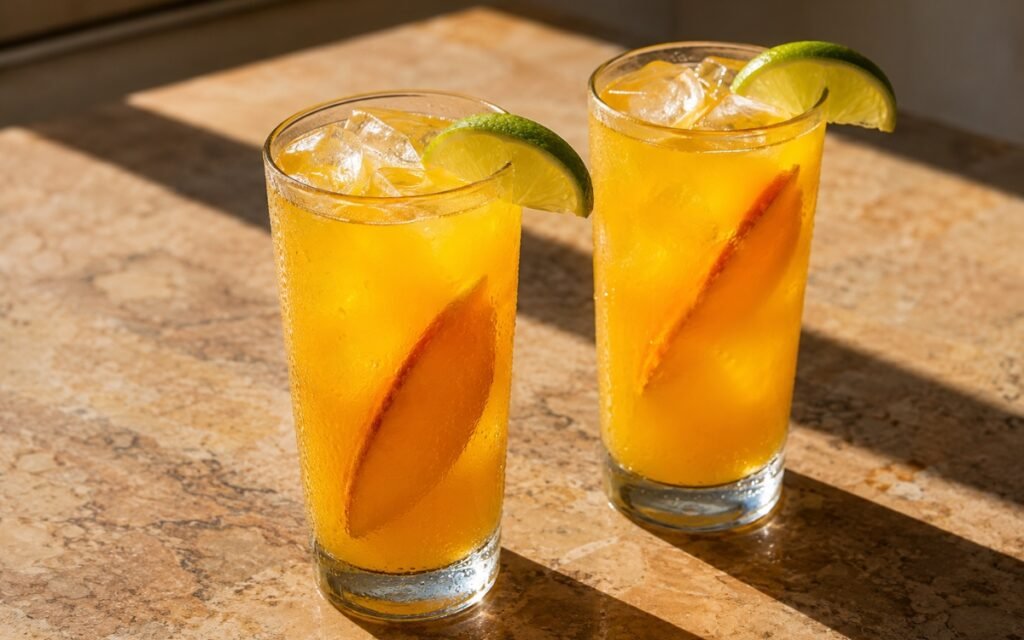
Mango lemonade built with the same extraction precision applied to the blueberry and cranberry preparations — a gentle, medium-low heat simmer for 6–8 minutes that releases the mango’s juice and concentrates its flavour without the longer cooking that produces the flat, cooked-fruit character of over-processed mango. Lime zest rather than lemon zest in the saucepan specifically because lime’s more specifically tropical, slightly sharper aromatic character resonates more precisely with mango’s own tropical flavour register — the two sharing the same aromatic direction rather than lime’s brightness working against the mango’s warmth as lemon zest might. The ginger added off heat for exactly 2 minutes before blending — the briefest botanical infusion in this entire collection. Two minutes in the warm post-simmer liquid extracts specifically the most volatile, most aromatic fraction of fresh ginger’s character, providing a barely perceptible warming background that amplifies the tropical aromatics without adding any detectable ginger note. The dual acid base — both lemon juice and a small quantity of lime juice — producing a more complex citrus brightness than lemon alone, with lime’s sharper, more specifically tropical acidity providing the secondary register that specifically suits mango’s character. Tropical, structured, and deeply refreshing.
Prep Time : 20 min
Cook Time : 6–8 min
Servings : 8
20 min
6–8 min
8
Ingredients
For the Mango Syrup
• 400–450g ripe mango flesh — roughly chopped; approximately 1 large or 2 medium mangoes
• 65–70g white granulated sugar — this one on Amazon
• 240ml water
• ⅛ tsp fine sea salt
• 1 strip lime zest — green part only, no white pith
• ¼ tsp fresh ginger, finely grated — added off heat only
For the Mango Lemonade
• 180–240ml mango syrup — from above; start with 180ml, adjust after tasting
• 240–300ml fresh lemon juice — approximately 5–7 lemons; start with 240ml
• 1–2 tbsp fresh lime juice — approximately ½ lime
• 750ml–1 litre ice-cold water — start with 750ml, adjust after tasting
• 1–2 tbsp plain simple syrup — optional; only if needed
For Serving
• Ice cubes
For the Garnish
• Lemon slices
• Fresh mango slices
This post may contain affiliate links. As an Amazon Associate I earn from qualifying purchases, at no additional cost to you.
Directions
- Build the Mango Syrup at the Lowest Effective Simmer
Combine the 400–450g of roughly chopped mango flesh, 65g of white sugar, 240ml of water, ⅛ tsp of fine sea salt, and the strip of lime zest in a medium saucepan. Place over medium-low heat rather than the medium heat of the cranberry and blueberry preparations — mango’s volatile aromatic character, while more heat-tolerant than pineapple’s, is specifically more delicate than cranberry’s and benefits from the slightly lower extraction temperature that medium-low provides. Bring to a very gentle simmer and cook for 6–8 minutes, stirring occasionally and lightly mashing the mango pieces as they soften — pressing against the pan’s surface to release their juice and begin breaking down the flesh. The mango should be noticeably soft and partially broken down by the 6-minute mark; by 8 minutes it should be fully collapsed with the surrounding liquid vivid, golden, and intensely fragrant. The same extraction principle applies: the volume should remain approximately the same as added, the syrup should be fluid rather than thick, and the aroma should be specifically of fresh mango — warm, tropical, and vivid — rather than caramelised or flat. Remove the lime zest strip and discard it at the end of the cooking period. - Add Ginger Off Heat (Exactly 2 Minutes)
Remove the saucepan from the heat. Immediately stir in the ¼ tsp of finely grated fresh ginger. Allow to steep for exactly 2 minutes. This is the briefest botanical infusion in this entire collection, and the 2-minute limit is the most specifically critical timing in this preparation. Fresh ginger at room temperature has a sharp, raw, aromatic character from its volatile gingerols and zingiberene. In warm post-simmer liquid at approximately 80–90°C, these volatile compounds transfer within minutes — 2 minutes extracts the most volatile, most specifically aromatic fraction into the surrounding warm mango syrup at a concentration where it is below detection as a separate ginger character but provides a barely-perceptible warming dimension that makes the tropical mango flavour taste more vivid and more three-dimensional. At 5 minutes in the same warm liquid the ginger character begins to become detectable; at 10 minutes it is clearly present as ginger rather than as background warmth. The ¼ tsp quantity combined with the 2-minute steep is the specifically calibrated approach for ginger as aromatic amplifier rather than flavour contributor. After 2 minutes, proceed immediately to blending — the continuing temperature of the warm syrup will continue the ginger extraction if left standing, so the brief blend-and-strain step that follows naturally ends the infusion period. - Blend and Strain
Transfer the warm mango mixture to a blender. Blend briefly at medium speed — 20–30 seconds — until mostly smooth. The mango’s soft flesh after 6–8 minutes of gentle simmering blends almost immediately into a vivid, golden purée. Strain through a fine-mesh sieve into a clean bowl or measuring jug, pressing firmly on the blended mango solids. Mango’s fibrous matrix holds a meaningful proportion of its juice — firm pressing is required for the maximum syrup yield. Press until the fibrous solids feel dry. Discard the solids. Allow to cool completely. - Build the Lemonade with Dual Citrus
In a large pitcher, combine 180ml of the cooled mango syrup, 240ml of fresh lemon juice, 1 tbsp of fresh lime juice, and 750ml of ice-cold water. Stir thoroughly. The dual citrus addition — predominantly lemon for the primary bright acid and a small amount of lime for the secondary tropical-citrus character — produces a specifically more interesting acid profile than lemon alone. Lime’s sharper, slightly more tropical citric-malic acid combination specifically complements mango’s own tropical character, contributing a secondary acid register that is tonally consistent with the mango’s direction. Taste and assess carefully. The mango should be the clearly dominant flavour; the citrus brightness from both lemon and lime sharpening it into something specifically refreshing rather than sweet. Adjust: more mango syrup for stronger fruit character; more lemon up to 300ml for brightness; more lime juice up to 2 tbsp for additional tropical sharpness; more cold water up to 1 litre for lighter concentration; optional simple syrup only if the combined acidity is more aggressive than pleasant. - Chill and Serve
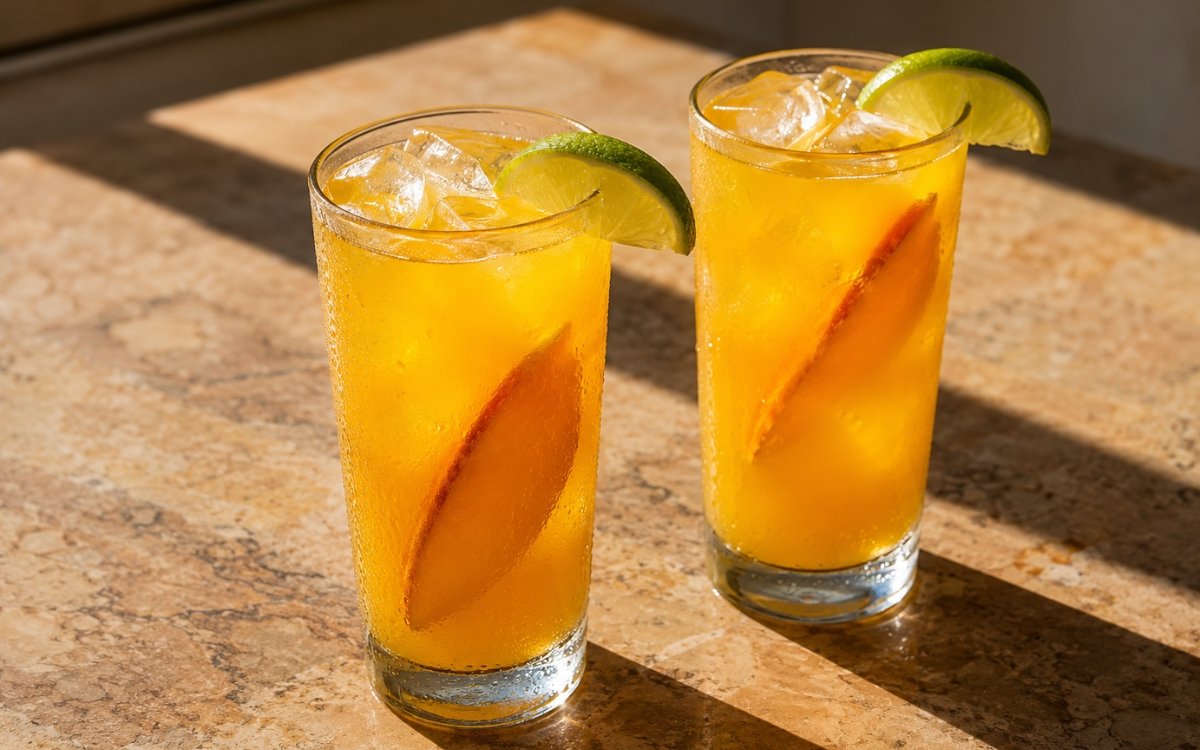
Refrigerate for 1–2 hours until completely cold and integrated. Stir before serving — mango juice contains natural large-molecule compounds that settle progressively, similar to the settling in the watermelon and pineapple lemonades. Fill glasses with ice. Pour the chilled mango lemonade over the ice. Garnish with a lemon slice and slices of fresh mango. Serve immediately.
*Notes :
- Mango variety affects the finished lemonade significantly in the same way it affects every mango preparation in this collection. Alphonso — small, intensely aromatic, deeply golden — produces the most vivid, most specifically tropical result. Ataulfo (honey mango) produces a comparably excellent result with slightly more acidity. Tommy Atkins — the large, commercially dominant variety with milder flavour — requires the full 450g quantity and produces a good but less intensely flavoured result. The sugar quantity should be adjusted downward by 10g for Alphonso or Ataulfo and maintained at 70g for Tommy Atkins.
- The lime zest in the saucepan rather than lemon zest is a tonally specific decision. Lemon zest’s primary aromatic compounds are more assertively citrusy in a bright, clean direction; lime zest’s primary compounds include a higher proportion of the specifically tropical, slightly floral notes that are tonally aligned with mango’s own aromatic direction. The integration of lime zest into the warm mango syrup produces a specifically more unified tropical-citrus base than lemon zest would.
Why This Recipe Works
This recipe works because the mango is extracted at medium-low heat for the specific 6–8 minutes that concentrates flavour without developing flat, cooked-fruit character. The lime zest is integrated during cooking for tonally aligned aromatic depth.
The ginger is infused for exactly 2 minutes off heat for the most volatile aromatic fraction as a background amplifier. And the dual lemon-and-lime acid base produces a more specifically tropical citrus brightness than lemon alone.
Ingredient Breakdown
Mango at Medium-Low Heat (6–8 Minutes, Extraction Not Reduction)
The precise extraction — slightly lower heat than other fruit syrups for mango’s aromatic sensitivity; full flavour development without flat cooked character.
Lime Zest Cooked In (Tonally Aligned With Mango’s Tropical Register)
The integrated citrus depth — lime’s specifically tropical aromatic compounds resonating with mango’s direction rather than competing.
Ginger Off Heat for Exactly 2 Minutes
The most precisely timed infusion in this collection — the briefest possible extraction for below-detection aromatic amplification of the tropical character.
Dual Acid Base (Lemon + Lime)
The layered citrus brightness — lemon’s primary clean acidity and lime’s secondary tropical-citrus character specifically complementary to mango.
Flavor Structure Explained
This Fresh mango lemonade follows a layered balance model:
- Dense tropical fruit core (mango)
- Bright citrus contrast (lemon juice)
- Tropical acid lift (lime juice)
- Aromatic warming depth (lime zest and ginger)
- Clean refreshing finish (balanced sweet-acid structure)
Mango defines the foundation with rich tropical sweetness, soft floral warmth, and concentrated fruit depth extracted fully from the flesh and fiber. Lemon juice provides the main acidic counterpoint, cutting through the sweetness and keeping the drink refreshing. Lime adds a second citrus layer with sharper, more tropical acidity that naturally reinforces the mango’s own flavor identity. Lime zest contributes aromatic citrus oils, while ginger adds subtle warmth beneath the surface, creating complexity without becoming overtly spicy. Together these elements create a lemonade that feels vivid, layered, and distinctly tropical rather than simply sweet fruit mixed with citrus.
Common Mistakes to Avoid
- Cooking at Medium Rather Than Medium-Low Heat – Mango at medium heat for 6–8 minutes develops slightly more cooked-fruit character than medium-low. Always the lowest effective heat.
- Leaving Ginger Beyond 2 Minutes – The aromatic amplification shifts toward detectable ginger character rapidly in the warm post-simmer liquid. Always blend immediately after exactly 2 minutes.
- Using Only Lemon Without Lime – The dual citrus base’s tropical-citrus secondary register is the preparation’s specific enhancement over a plain mango-lemon combination. Always include the lime juice.
- Not Pressing the Blended Solids Firmly – Mango’s fibrous matrix retains meaningful syrup. Always press firmly until solids are dry.
- Not Stirring Before Serving – Mango juice settles like watermelon and pineapple. Always stir before every pour.
Variations
With Chili
Add a pinch of cayenne pepper or a thin slice of fresh chili to the saucepan in the last 2 minutes of cooking — removed during straining. The chili’s warming heat alongside mango’s tropical sweetness is in the same direction as the Mango Chili Lime Spritzer Mocktail.
With Turmeric
Add ¼ tsp of ground turmeric to the saucepan alongside the other ingredients — the turmeric’s earthy warmth alongside mango produces the Mango Turmeric direction.
Sparkling Version
Replace the ice-cold still water with chilled sparkling water — add right before serving. The carbonation amplifies the tropical aromatic compounds.
With Coconut Water
Replace 300ml of the ice-cold still water with coconut water — the coconut’s mild tropical sweetness alongside mango produces a specifically richer, more specifically tropical result.
Storage & Make-Ahead
Mango syrup can be refrigerated in a sealed jar for up to 4 days. Its flavor is at its brightest and most vibrant within the first 48 hours.
Once assembled, the mango lemonade can be refrigerated for up to 2 days. Stir it before each serving, as separation may occur during storage. For the freshest tropical aroma and flavor, it is best enjoyed within 24 hours.
Assembled glasses are not suitable for storage and should be served immediately.
Frequently Asked Questions
Why medium-low heat rather than medium?
Mango’s primary aromatic character — built on volatile esters including various fruity and tropical compounds — is more heat-sensitive than cranberry or blueberry. Medium-low heat for 6–8 minutes achieves full juice extraction and flavour concentration while preserving more of the fresh, specifically tropical aromatic character than medium heat.
Why is the ginger steep only 2 minutes?
At 2 minutes in the post-simmer liquid at approximately 80–90°C, the most volatile, most aromatic fraction of ginger’s compounds transfers at a concentration below detection as ginger while providing a barely perceptible warmth that amplifies the tropical character. The function is amplification rather than flavour contribution — 2 minutes achieves this specifically without moving toward detectable ginger.
Why lime zest rather than lemon zest in the saucepan?
Lime zest’s primary aromatic compounds include a higher proportion of specifically tropical, slightly floral notes — including terpineol and various lime-specific terpenes — that are tonally aligned with mango’s own tropical aromatic direction. Lemon zest’s more assertively clean, bright citrus character is tonally slightly less specifically complementary to mango’s warmth.
Why both lemon and lime juice in the base?
Lemon juice provides the primary clean, bright, high-citric acid acidity that makes the mango taste refreshing. Lime juice at 1–2 tablespoons provides a secondary tropical-citrus character — sharper and more specifically tropical-tasting than lemon — that specifically resonates with and amplifies the mango’s own tropical direction.
What other mango-forward preparations share this direction?
The Mango Green Tea Lemonade shares the mango-and-lemon combination with green tea’s structural depth and the gradient layering format — a more complex, more visually dramatic presentation of the same primary flavour. The Mango Chili Lime Spritzer Mocktail shares the mango-and-lime direction in a sparkling format with chili’s heat — a more assertively spiced, more specifically Mexican-influenced preparation. The Mango Turmeric Tonic Mocktail shares the mango’s tropical warmth with turmeric’s earthy depth and tonic water’s bitterness — the most specifically complex and adult-tasting direction for mango in this collection.
Nutrition Facts
( per serving )
Calories
~80 kcal
Protein
0 g
Fat
0 g
Carbs
21 g
Calories
~80 kcal
Protein
0 g
Fat
0 g
Carbs
21 g
Related Recipes
Related Recipes

Cranberry Lemonade
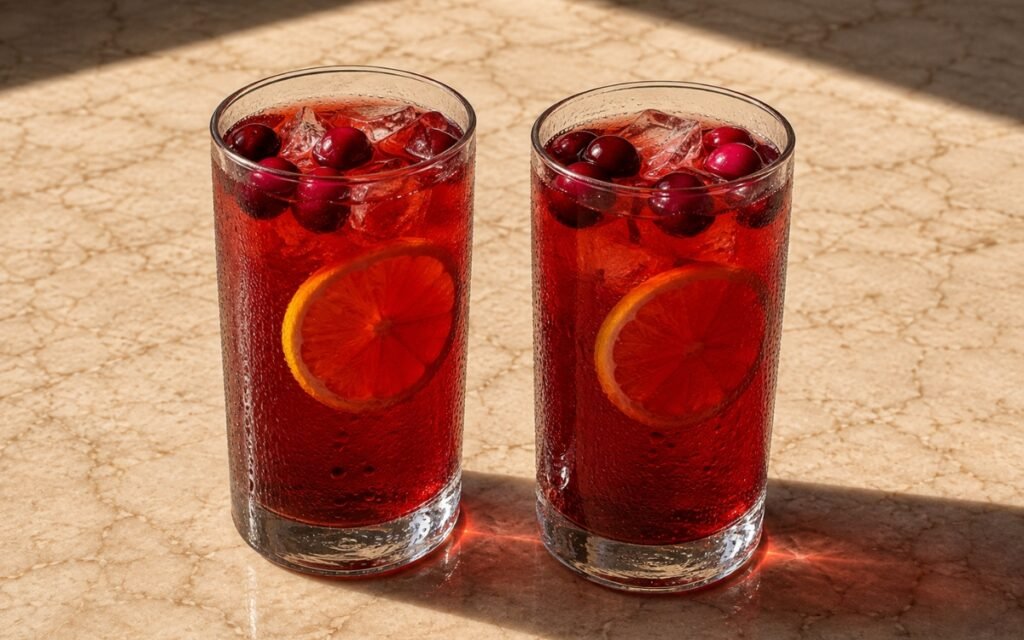
Cold-extracted lemon zest and juice combined with a raw, twice-strained cranberry base for a deep vivid red, tart lemonade.
Elderflower Lemonade
Elderflower steeped in warm syrup exactly 6–8 minutes, lightly strained — fresh lemon juice, salt, cold water, chilled 1–2 hours. Honeyed-floral and elegantly clean.
Green Tea Lemonade
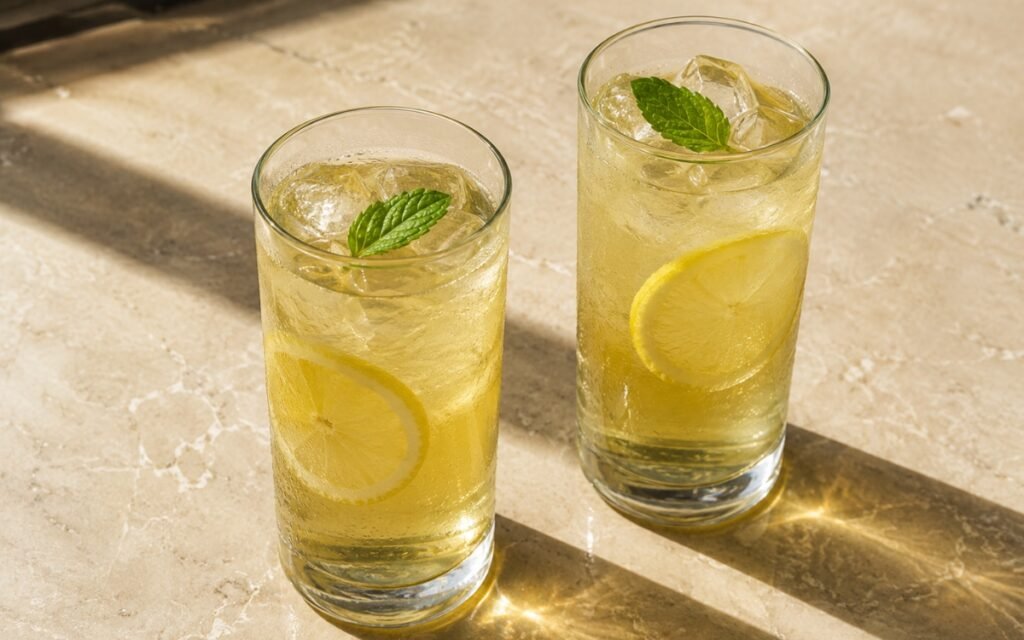
Sencha at 75–80°C for exactly 2–2½ minutes, bags not squeezed — honey-lemon syrup, fresh lemon, cold water, salt, chilled. Crisp, cool, and herbal-fresh.

You might also like
You might also like
Chamomile Honey White Iced Tea
White tea at 75–80°C for 3–4 minutes, chamomile infused 5–7 minutes and tasted early — lemon peel, mild honey, chilled. Soft, floral, soothing.
Thyme Grapefruit Sparkling Cooler
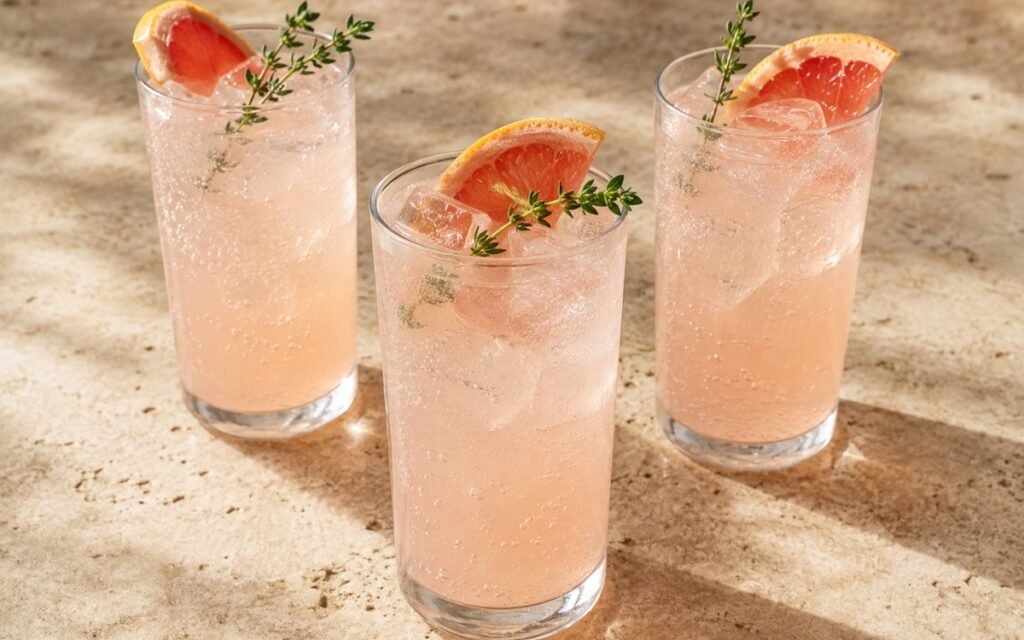
Thyme and grapefruit peel infused 8–10 minutes in boiled water — grapefruit juice once cooled, honey, club soda added last. Dry, botanical, crisp.
Fresh Peach Green Iced Tea
Green tea at 75–80°C for 2–3 minutes, raw peach slices cold-infused 30–45 minutes — strained promptly, honey, chilled. Light, clean, delicately fruity.


Fresh Mango Lemonade
Ingredients
Method
- Combine the 400–450g of roughly chopped mango flesh, 65g of white sugar, 240ml of water, ⅛ tsp of fine sea salt, and the strip of lime zest in a medium saucepan. Place over medium-low heat rather than the medium heat of the cranberry and blueberry preparations — mango’s volatile aromatic character, while more heat-tolerant than pineapple’s, is specifically more delicate than cranberry’s and benefits from the slightly lower extraction temperature that medium-low provides. Bring to a very gentle simmer and cook for 6–8 minutes, stirring occasionally and lightly mashing the mango pieces as they soften — pressing against the pan’s surface to release their juice and begin breaking down the flesh. The mango should be noticeably soft and partially broken down by the 6-minute mark; by 8 minutes it should be fully collapsed with the surrounding liquid vivid, golden, and intensely fragrant. The same extraction principle applies: the volume should remain approximately the same as added, the syrup should be fluid rather than thick, and the aroma should be specifically of fresh mango — warm, tropical, and vivid — rather than caramelised or flat. Remove the lime zest strip and discard it at the end of the cooking period.
- Remove the saucepan from the heat. Immediately stir in the ¼ tsp of finely grated fresh ginger. Allow to steep for exactly 2 minutes. This is the briefest botanical infusion in this entire collection, and the 2-minute limit is the most specifically critical timing in this preparation. Fresh ginger at room temperature has a sharp, raw, aromatic character from its volatile gingerols and zingiberene. In warm post-simmer liquid at approximately 80–90°C, these volatile compounds transfer within minutes — 2 minutes extracts the most volatile, most specifically aromatic fraction into the surrounding warm mango syrup at a concentration where it is below detection as a separate ginger character but provides a barely-perceptible warming dimension that makes the tropical mango flavour taste more vivid and more three-dimensional. At 5 minutes in the same warm liquid the ginger character begins to become detectable; at 10 minutes it is clearly present as ginger rather than as background warmth. The ¼ tsp quantity combined with the 2-minute steep is the specifically calibrated approach for ginger as aromatic amplifier rather than flavour contributor. After 2 minutes, proceed immediately to blending — the continuing temperature of the warm syrup will continue the ginger extraction if left standing, so the brief blend-and-strain step that follows naturally ends the infusion period.
- Transfer the warm mango mixture to a blender. Blend briefly at medium speed — 20–30 seconds — until mostly smooth. The mango’s soft flesh after 6–8 minutes of gentle simmering blends almost immediately into a vivid, golden purée. Strain through a fine-mesh sieve into a clean bowl or measuring jug, pressing firmly on the blended mango solids. Mango’s fibrous matrix holds a meaningful proportion of its juice — firm pressing is required for the maximum syrup yield. Press until the fibrous solids feel dry. Discard the solids. Allow to cool completely.
- In a large pitcher, combine 180ml of the cooled mango syrup, 240ml of fresh lemon juice, 1 tbsp of fresh lime juice, and 750ml of ice-cold water. Stir thoroughly. The dual citrus addition — predominantly lemon for the primary bright acid and a small amount of lime for the secondary tropical-citrus character — produces a specifically more interesting acid profile than lemon alone. Lime’s sharper, slightly more tropical citric-malic acid combination specifically complements mango’s own tropical character, contributing a secondary acid register that is tonally consistent with the mango’s direction. Taste and assess carefully. The mango should be the clearly dominant flavour; the citrus brightness from both lemon and lime sharpening it into something specifically refreshing rather than sweet. Adjust: more mango syrup for stronger fruit character; more lemon up to 300ml for brightness; more lime juice up to 2 tbsp for additional tropical sharpness; more cold water up to 1 litre for lighter concentration; optional simple syrup only if the combined acidity is more aggressive than pleasant.
- Refrigerate for 1–2 hours until completely cold and integrated. Stir before serving — mango juice contains natural large-molecule compounds that settle progressively, similar to the settling in the watermelon and pineapple lemonades. Fill glasses with ice. Pour the chilled mango lemonade over the ice. Garnish with a lemon slice and slices of fresh mango. Serve immediately.