
Cherry Lime Rickey Mocktail
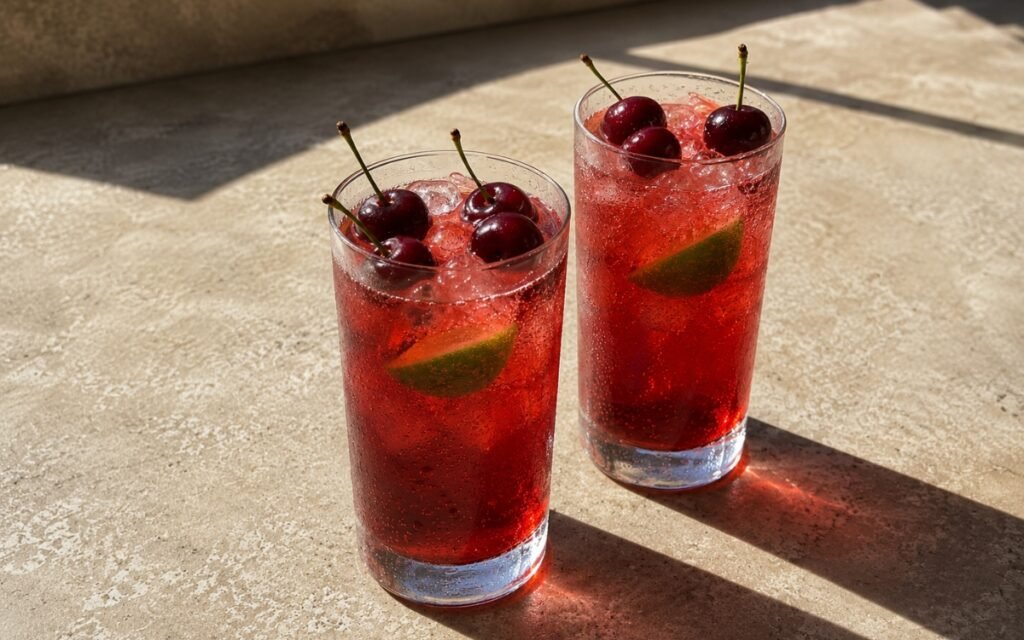
The lime rickey is one of American soda fountain culture’s most enduring preparations — carbonated water, lime juice, and sugar over ice, typically with gin in the alcoholic version. The cherry lime rickey is the classic American diner extension — deep red cherry added to the lime’s sharpness, producing the specific tart-sweet combination that has made this one of the most recognisable sparkling drinks in the American canon. White verjus — the pressed juice of unripe grapes, fermented to an acidic, slightly fruity condition — is added alongside the lime juice after cooling rather than cooked into the syrup. Its contribution is a specific layered acidity: slightly wine-adjacent, slightly more complex than pure lime juice, and specifically softer at the finish. The combination of lime juice’s sharp immediacy and verjus’s rounder, more complex acidity produces the drink’s characteristic multi-register tartness that a lime-only base cannot replicate. Deep red cherry syrup, both limes clear in the flavour, soda over ice with whole cherries and a lime wedge dropped into the glass — the classic rickey made without the alcohol and better for it.
Prep Time : 10 min
Cook Time : 10 min
Servings : 4
10 min
10 min
4
Ingredients
For the Cherry-Lime Base
• 250g fresh cherries, halved and pitted
• 120ml water
• 60g granulated sugar
• Zest of 1 lime
• 60ml fresh lime juice — added after cooling
• 60ml white verjus — added after cooling — this one on Amazon
For the Garnish
• 1 lime, cut into 4 wedges
• 12 fresh cherries
This post may contain affiliate links. As an Amazon Associate I earn from qualifying purchases, at no additional cost to you.
Directions
- Build the Cherry Syrup
Combine the 120ml of water and 60g of granulated sugar in a small saucepan. Granulated white sugar is the specifically correct sweetener for this preparation — its clean, neutral sweetness allows the cherry’s specific deep, fruity character and the lime’s sharpness to express without the additional aromatic complexity that honey or brown sugar would introduce. The lime rickey’s character depends on the clean clarity of its components: cherry, lime, and soda without competing background notes. Place over medium heat and bring to a gentle simmer, stirring until the sugar has fully dissolved. Add the 250g of halved and pitted cherries. Cook over medium-low heat for 5 minutes, stirring occasionally. After the first 2 minutes the cherries will have begun releasing their juice, deepening the syrup from clear to a vivid ruby-red. Using a spoon or potato masher, begin crushing the cherries directly in the saucepan — pressing firmly enough to break each half down and release its remaining juice without requiring complete pulverisation. The first mashing at the 5-minute mark is the primary extraction — the majority of the cherry’s colour and flavour releasing with this initial crushing. Add the lime zest and continue cooking over low heat for another 5 minutes, stirring occasionally. A second mashing during this second cooking period extracts any remaining juice from the partially cooked cherry pieces. The lime zest is added at this cooking stage rather than off heat because this is the larger, more robust zest quantity — 1 full lime’s zest — and the brief additional cooking integrates its citrus oils into the surrounding cherry syrup differently from off-heat steeping: at low cooking temperature over 5 minutes, the zest’s oils partially cook into the cherry syrup, contributing a specifically integrated citrus character that is different from the more vivid, more immediately aromatic quality of off-heat zest infusion. The result is a cherry-lime syrup where the citrus is present throughout the flavour rather than as a separate top note. Remove from the heat and allow to steep covered for 10 minutes — the cherry pieces and lime zest continuing to release their character at declining temperature. - Strain and Add Acids After Cooling
Strain the mixture through a fine-mesh sieve over a clean jug, pressing firmly on the mashed cherry and lime zest solids. Cherries are high in pectin and the solids will feel thick and resistant during pressing — press persistently until the residue in the sieve is relatively dry. Discard the solids. The finished strained syrup should be a deep, vivid, clear ruby-red — specifically the deep cherry-red that the mashed extraction produces rather than the paler, more translucent result of cherries simply simmered without crushing. Allow the strained syrup to cool completely to room temperature — approximately 20 minutes at room temperature, or 10 minutes with the jug set in a bowl of ice. Once completely cool, stir in the 60ml of fresh lime juice and the 60ml of white verjus. Both are added after complete cooling for the same reason across this collection — their volatile aromatic and acidic character is preserved at room temperature and diminished at elevated temperatures. White verjus is the pressed juice of unripe white grapes — typically Chardonnay or other white varieties — that has been allowed to acidify to a stable, tart, specifically fruity condition. Its acidity (primarily tartaric acid, the same acid as in wine) is softer and more complex in character than citric acid — less immediately sharp, more lingering, with a slightly wine-adjacent depth that specifically complements the cherry’s own wine-adjacent richness. In this recipe it is paired with lime juice rather than replacing it — the lime’s immediate sharp citrus brightness and the verjus’s rounder, more complex tartness together producing the specific layered acidity that the cherry lime rickey’s flavour requires. Available at specialty food shops, wine merchants, and online. Transfer to the refrigerator and chill completely. - Assemble and Serve
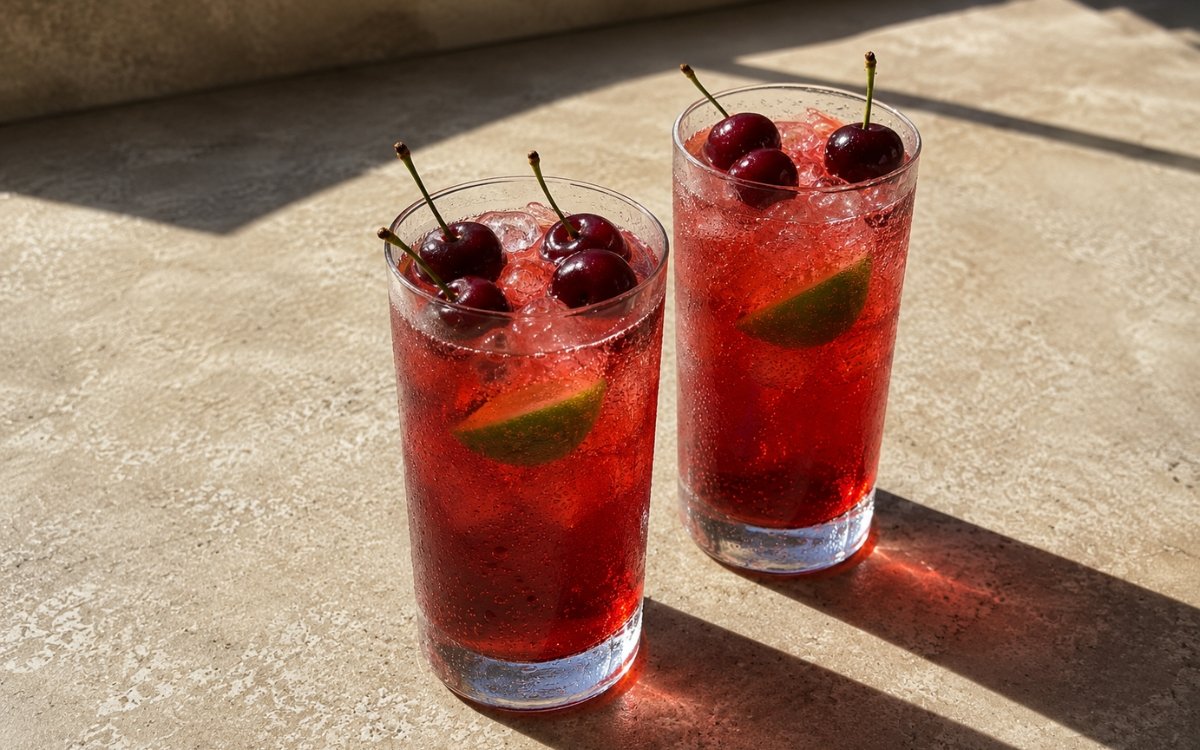
Fill four tall glasses generously with ice cubes. Divide the chilled cherry-lime base evenly among the glasses — approximately 75–80ml per glass. Stir briefly against the ice to chill the base further. Top each glass with approximately 125ml of chilled club soda, poured gently down the inner side of the glass. Stir gently once or twice. Drop a lime wedge directly into each glass — not placed on the rim, but dropped in among the ice — the classic rickey presentation where the lime is part of the drink’s assembly rather than purely decorative. Scatter 3 fresh cherries on top of the ice in each glass. Serve immediately, with the expectation that the lime wedge will be squeezed into the drink at the table for the additional fresh lime burst at the moment of drinking.
*Notes :
- The cherry variety affects the finished syrup significantly. Morello cherries — sour cherries, deeply red, specifically tart — produce the most vibrant colour and the most specifically sharp, intensely cherry-flavoured syrup. Bing or other sweet black cherries produce a sweeter, slightly less tart, more deeply flavoured result. Both are correct; Morello cherries produce the more specifically rickey-appropriate tartness while sweet cherries produce a more rounded, slightly more accessible result. If fresh cherries are unavailable, frozen cherries are an excellent substitute and often produce even more vivid colour as the freezing has pre-broken the cell walls.
- The lime rickey was specifically created in the 1880s at Shoomaker’s Restaurant in Washington D.C. by George Rickey, a Democratic lobbyist, who specified that gin, lime juice, and soda water should be served together. The non-alcoholic cherry lime rickey emerged from American soda fountain culture in the early-to-mid 20th century, becoming a standard preparation at diner soda fountains that remains in the American drink repertoire over a century later.
Why This Mocktail Works
This recipe works because the cherry is crushed twice during the cooking — the first mashing releasing the primary juice and the second extracting the remaining colour and flavour from the partially cooked pieces — and the lime zest is integrated into the cooking rather than steeped off heat, producing a specifically integrated citrus character throughout the syrup.
The dual-acid addition of lime juice and verjus after cooling produces the layered tartness that makes the rickey format specifically more interesting than a simple cherry-and-lime syrup.
Ingredient Breakdown
Fresh Cherries (Crushed Twice — At 5 Minutes and During Second Cook)
The maximum colour and flavour extraction technique — two crushing stages ensuring complete juice release from the high-pectin fruit.
Granulated White Sugar (Clean Neutral Sweetness)
The flavour-transparent sweetener — specifically correct for the rickey’s clean component clarity; no competing aromatic character.
Lime Zest (Cooked In With Cherries)
The integrated citrus depth — cooked into the cherry syrup over 5 minutes for a specifically integrated citrus-cherry character rather than a surface aromatic note.
Lime Juice (Added Cold)
The immediate sharp acid — clean citrus brightness added after cooling to preserve its fresh character.
White Verjus (Added Cold)
The complex secondary acid — tartaric acid’s rounded, wine-adjacent tartness providing a softer, more lingering acidity that complements lime’s sharp immediacy.
Lime Wedge Dropped Into the Glass
The classic rickey presentation — the lime as an active component dropped into the ice, squeezeable at the table.
Flavor Structure Explained
This Cherry lime rickey mocktail follows a layered balance model:
- Deep fruit core (cherry)
- Dual-acid brightness (lime juice, verjus)
- Clean sweet balance (white sugar)
- Crisp sparkling structure (club soda)
- Classic soda-fountain refreshment (fruit-acid-carbonation balance)
Cherry defines the foundation with rich berry-like fruitiness, subtle wine-like depth, and concentrated sweetness that give the drink its distinctive identity. The acidity is layered rather than singular: lime provides immediate citrus sharpness, while verjus contributes softer, lingering tartness that adds complexity and length. White sugar balances both acids without introducing additional flavors, allowing the fruit and citrus to remain the focus. Club soda finishes the structure with lively carbonation that lifts the fruit notes and keeps the drink crisp and refreshing. The result is a bright, fruit-forward profile where sweetness, tartness, and effervescence remain in constant balance.
Common Mistakes to Avoid
- Not Crushing the Cherries Sufficiently – Uncrushed cherries simmered whole produce a pale, mild syrup. Always crush thoroughly at least twice during the cooking process.
- Adding Lime Juice While the Syrup Is Warm – Warm lime juice loses its aromatic freshness. Always add after complete cooling.
- Placing the Lime Wedge on the Rim Rather Than Dropping It In – The dropped lime wedge is the specific rickey presentation — it visually signals that the lime is squeezeable and part of the drink’s assembly. Always drop into the ice.
- Not Pressing the Cherry Solids Firmly During Straining – Cherries’ high pectin content means the solids retain a significant proportion of the flavour. Always press firmly and persistently.
- Using Lemon Juice Instead of Lime – The lime rickey is specifically a lime preparation — lemon juice produces a different, flatter-tasting base without the lime’s specific character that defines the rickey format.
Variations
With Sour Cherries (Morello)
Replace sweet cherries with Morello or other sour cherry varieties — the syrup will be more specifically tart, more intensely coloured, and more specifically adult in character. Reduce or omit the verjus as Morello cherries provide sufficient complexity and tartness.
With Black Cherry and Vanilla
Add ¼ tsp of pure vanilla extract to the finished strained syrup before chilling — the vanilla’s aromatic sweetness alongside black cherry produces the specifically American diner black cherry character.
Spiced Version
Add 1 small cinnamon stick to the saucepan during the cooking — the cinnamon’s warm spiced depth produces an autumn-appropriate version.
With Maple Syrup
Replace the granulated sugar with 60g of maple syrup — the maple’s caramel-adjacent, slightly earthy depth provides a more complex sweetness that is specifically complementary to cherry’s wine-adjacent character.
Storage & Make-Ahead
Cherry-lime base can be refrigerated in a sealed jar for up to 5 days. Its vibrant color remains stable thanks to the high concentration of anthocyanins in the cherries. The flavor also deepens slightly during the first 24 hours as the cherry and lime flavors meld together, making it an excellent preparation to make one day in advance.
Once assembled, the drinks are not suitable for storage and should be served immediately.
Frequently Asked Questions
What is white verjus?
White verjus is the pressed juice of unripe white grapes (typically wine grape varieties like Chardonnay) that has been allowed to develop its natural tartaric acid concentration into a stable, specifically tart, slightly wine-adjacent condiment. It is used as a cooking acid, a salad dressing base, and in drink-making for its specifically softer, more complex tartness compared to citrus juice. Available at specialty food shops, wine merchants, and online. If unavailable, an additional 30ml of fresh lime juice plus 30ml of unsweetened white grape juice is the closest accessible substitute.
Why add lime juice and verjus after cooling rather than cooking them in?
Both lime juice’s volatile aromatic character and verjus’s more delicate fruit-adjacent acidity are diminished by heat. Added to the cooled syrup they retain their specific character — lime’s sharp, immediate freshness and verjus’s rounder complexity — providing the layered tartness that is the finished drink’s most interesting quality.
Why crush the cherries twice during cooking?
The first crushing at the 5-minute mark releases the primary juice and begins the colour extraction. The second crushing during the second cooking period extracts the remaining juice and colour from the partially cooked, further-softened pieces. Two crushings produce a significantly more vivid and more flavourful syrup than a single crushing at the end of cooking.
What is the lime rickey?
The lime rickey originated in the 1880s in Washington D.C. — a preparation of gin, fresh lime juice, and carbonated water. The non-alcoholic cherry lime rickey became a soda fountain standard in the early-to-mid 20th century, serving as one of the most enduring American diner drink preparations. The format — fruit syrup, lime, soda over ice — is the classic American fountain drink structure.
What other mocktails share this colour, tartness, and flavour direction?
The Shirley Temple Tonic shares the same vivid red colour and sweet-tart character — the original non-alcoholic grenadine-and-soda preparation that occupies the same American diner tradition as the cherry lime rickey. The Blackberry Mojito Mocktail shares the deep berry colour and the citrus-tartness axis — built on blackberry with lime and white verjus rather than cherry, producing a similarly vibrant, fruit-forward tart result with a mint herbal dimension.
Nutrition Facts
( per serving )
Calories
~100 kcal
Protein
0 g
Fat
0 g
Carbs
26 g
Calories
~100 kcal
Protein
0 g
Fat
0 g
Carbs
26 g
Related Recipes
Related Recipes

Shirley Temple Tonic
Pomegranate grenadine with ginger ale and citrus zest delivers a bright, tart, grown-up take on a nostalgic classic.
Grapefruit Tonic Mocktail
Bitter-leaning grapefruit tonic with peel syrup and pulp texture, dry, structured, and refreshingly grown-up.
Coconut Lime Sparkling Mocktail
Honey dissolved in fresh lime juice, lime zest and mint cold-infused — coconut water added, topped with club soda. Light, tropical, and refreshing.
You might also like
You might also like
Raspberry Lemonade Pitcher Drink
Honey-raspberry syrup with lemon zest plus fresh raspberries cold-strained — combined with 300ml lemon juice for structural acid, salt, cold water. Vivid and crowd-ready.
Peach Jasmine Iced Tea
Jasmine tea at 75–80°C for 2–3 minutes, peaches blended and strained — honey kept light, peach purée added with restraint, chilled. Floral and softly peachy.
Fresh Citrus Green Iced Tea
Green tea at 75–80°C for 2–3 minutes, thin peel-on citrus slices cold-infused 15–20 minutes — strained promptly, honey, chilled. Light, bright, and clean.
Cherry Lime Rickey Mocktail
Ingredients
Method
- Combine the 120ml of water and 60g of granulated sugar in a small saucepan. Granulated white sugar is the specifically correct sweetener for this preparation — its clean, neutral sweetness allows the cherry’s specific deep, fruity character and the lime’s sharpness to express without the additional aromatic complexity that honey or brown sugar would introduce. The lime rickey’s character depends on the clean clarity of its components: cherry, lime, and soda without competing background notes. Place over medium heat and bring to a gentle simmer, stirring until the sugar has fully dissolved. Add the 250g of halved and pitted cherries. Cook over medium-low heat for 5 minutes, stirring occasionally. After the first 2 minutes the cherries will have begun releasing their juice, deepening the syrup from clear to a vivid ruby-red. Using a spoon or potato masher, begin crushing the cherries directly in the saucepan — pressing firmly enough to break each half down and release its remaining juice without requiring complete pulverisation. The first mashing at the 5-minute mark is the primary extraction — the majority of the cherry’s colour and flavour releasing with this initial crushing. Add the lime zest and continue cooking over low heat for another 5 minutes, stirring occasionally. A second mashing during this second cooking period extracts any remaining juice from the partially cooked cherry pieces. The lime zest is added at this cooking stage rather than off heat because this is the larger, more robust zest quantity — 1 full lime’s zest — and the brief additional cooking integrates its citrus oils into the surrounding cherry syrup differently from off-heat steeping: at low cooking temperature over 5 minutes, the zest’s oils partially cook into the cherry syrup, contributing a specifically integrated citrus character that is different from the more vivid, more immediately aromatic quality of off-heat zest infusion. The result is a cherry-lime syrup where the citrus is present throughout the flavour rather than as a separate top note. Remove from the heat and allow to steep covered for 10 minutes — the cherry pieces and lime zest continuing to release their character at declining temperature.
- Strain the mixture through a fine-mesh sieve over a clean jug, pressing firmly on the mashed cherry and lime zest solids. Cherries are high in pectin and the solids will feel thick and resistant during pressing — press persistently until the residue in the sieve is relatively dry. Discard the solids. The finished strained syrup should be a deep, vivid, clear ruby-red — specifically the deep cherry-red that the mashed extraction produces rather than the paler, more translucent result of cherries simply simmered without crushing. Allow the strained syrup to cool completely to room temperature — approximately 20 minutes at room temperature, or 10 minutes with the jug set in a bowl of ice. Once completely cool, stir in the 60ml of fresh lime juice and the 60ml of white verjus. Both are added after complete cooling for the same reason across this collection — their volatile aromatic and acidic character is preserved at room temperature and diminished at elevated temperatures. White verjus is the pressed juice of unripe white grapes — typically Chardonnay or other white varieties — that has been allowed to acidify to a stable, tart, specifically fruity condition. Its acidity (primarily tartaric acid, the same acid as in wine) is softer and more complex in character than citric acid — less immediately sharp, more lingering, with a slightly wine-adjacent depth that specifically complements the cherry’s own wine-adjacent richness. In this recipe it is paired with lime juice rather than replacing it — the lime’s immediate sharp citrus brightness and the verjus’s rounder, more complex tartness together producing the specific layered acidity that the cherry lime rickey’s flavour requires. Available at specialty food shops, wine merchants, and online. Transfer to the refrigerator and chill completely.
- Fill four tall glasses generously with ice cubes. Divide the chilled cherry-lime base evenly among the glasses — approximately 75–80ml per glass. Stir briefly against the ice to chill the base further. Top each glass with approximately 125ml of chilled club soda, poured gently down the inner side of the glass. Stir gently once or twice. Drop a lime wedge directly into each glass — not placed on the rim, but dropped in among the ice — the classic rickey presentation where the lime is part of the drink’s assembly rather than purely decorative. Scatter 3 fresh cherries on top of the ice in each glass. Serve immediately, with the expectation that the lime wedge will be squeezed into the drink at the table for the additional fresh lime burst at the moment of drinking.