
Fresh Strawberry Lemonade
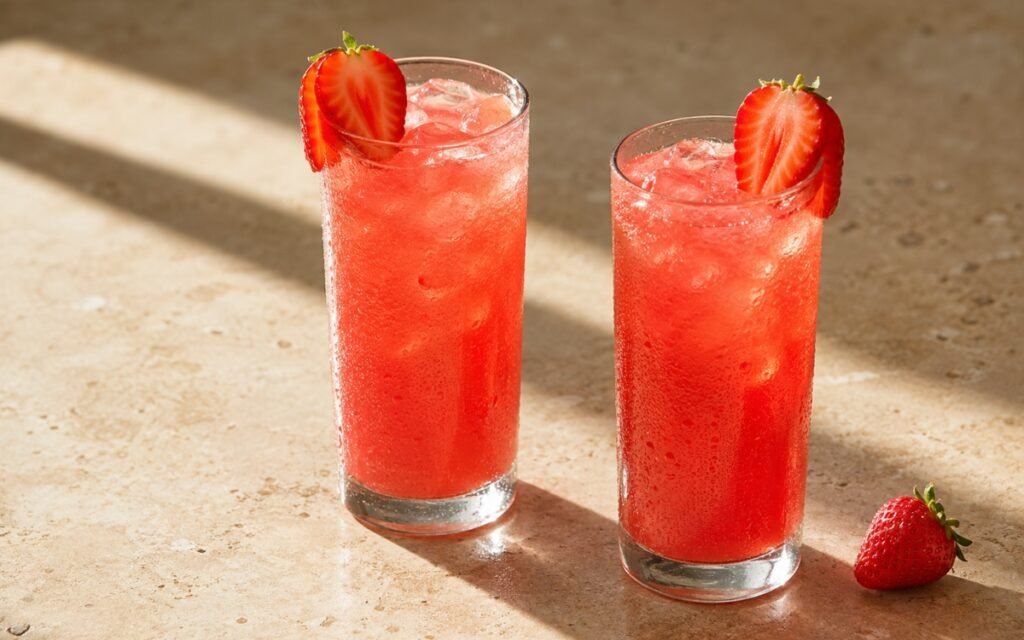
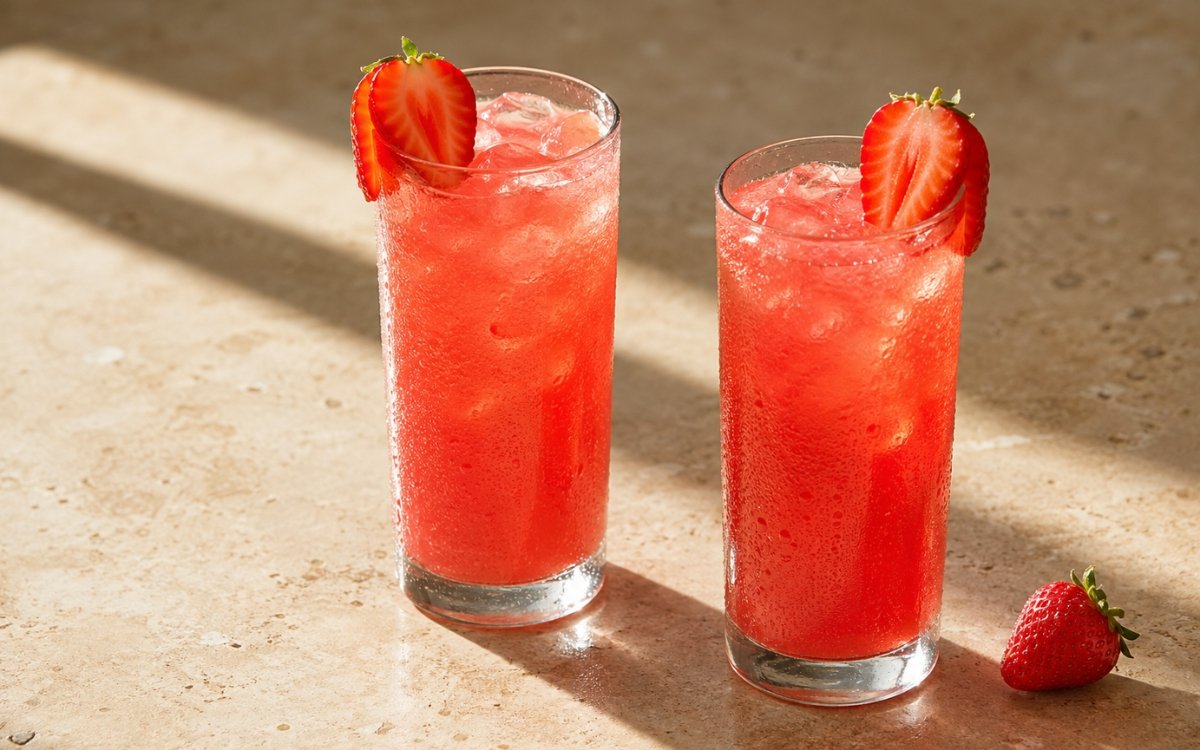
Classic strawberry lemonade made with the technique that produces the best result — strawberries cooked briefly and specifically, not aggressively, for 5–8 minutes rather than the 10–12 minutes applied to peach. Strawberry’s aromatic compounds are more heat-sensitive than peach’s: at 5–8 minutes at a gentle simmer the strawberries have softened completely, released their vivid ruby juice, and concentrated their flavour while retaining the specifically fresh, bright, summer-fruit character that distinguishes properly made strawberry lemonade from a drink that tastes of cooked strawberry jam. The lemon zest added off heat and infused for 5–10 minutes — releasing its fat-soluble aromatic oils into the warm strawberry syrup before the blend and strain, producing a specifically more integrated citrus aromatic depth in the syrup itself rather than only in the added lemon juice. The pinch of salt is sub-threshold — present as the flavour amplifier used throughout this collection, specifically sharpening the strawberry’s sweetness and the lemon’s brightness without any detectable salty character. Eight servings of vivid, ruby-red lemonade that tastes purely and intensely of fresh summer strawberry.
Prep Time : 15 min
Cook Time : 5–8 min
Servings : 8
15 min
5–8 min
8
Ingredients
For the Strawberry Lemonade
• 550–600g fresh strawberries — hulled and roughly chopped
• 130g white granulated sugar — this one on Amazon
• 240ml water — for the strawberry syrup
• 1 tsp fresh lemon zest — yellow part only, no white pith
• Pinch of fine sea salt — approximately ⅛ tsp
• 240–300ml fresh lemon juice — approximately 5–7 lemons; start with 240ml
• 900 – 1200 ml ice-cold water — for dilution; start with 900ml, adjust after tasting
For Serving
• Ice cubes
For the Garnish
• Lemon slices
• Fresh strawberry slices
This post may contain affiliate links. As an Amazon Associate I earn from qualifying purchases, at no additional cost to you.
Directions
- Select and Prepare the Strawberries
The strawberry quality determines the lemonade’s quality more directly than any other decision in this preparation. Ripe, fragrant, deeply red strawberries — where the flesh is red throughout rather than white at the centre — produce a vivid, intensely flavoured syrup. Under-ripe, white-centred, or flavourless commercial strawberries produce a pale, mildly flavoured syrup regardless of technique. The most vivid, most fragrant, smallest strawberries are generally the most intensely flavoured; large, water-heavy strawberries bred for visual appearance often have significantly less flavour per gram. Hull and roughly chop — the pieces can be large as the cooking and blending will break them down completely. - Cook the Strawberries Gently for 5–8 Minutes
Combine the 130g of white sugar, 240ml of water, and all the chopped strawberries in a medium saucepan. Place over medium heat and bring to a gentle simmer, stirring to begin dissolving the sugar. Cook for 5–8 minutes — shorter than the 10–12 minutes applied to peach — stirring occasionally and pressing the softening strawberries lightly against the pan’s surface to encourage juice release. The strawberries should be completely soft and their juice fully released into the surrounding sugar-water medium by the end of the cooking period; the liquid should be a vivid, deeply ruby red. The 5–8 minute window is specifically calibrated for strawberry. Strawberry’s volatile aromatic compounds — particularly the various furanones and esters responsible for fresh strawberry’s characteristic sweet, fruity character — evaporate at a meaningful rate above 70°C during sustained cooking. At 5–8 minutes of gentle simmering, the strawberries release their juice completely and concentrate their flavour meaningfully without shifting significantly into the cooked, jam-like register that extended cooking produces. The visual indicator of the correct end point: the liquid should be vivid ruby-red and the strawberries should have fully collapsed without the surrounding liquid having reduced to a thick, syrupy consistency. If the liquid is reducing noticeably, reduce the heat and add a small splash of water. - Off-Heat Lemon Zest Infusion
Remove the saucepan from the heat immediately at the 5–8 minute mark. Stir in the 1 tsp of fresh lemon zest — the yellow part only, with no white pith. The lemon zest is added specifically off heat and infused in the warm strawberry syrup rather than during the cooking period or in the cold combined base. This timing allows the zest’s fat-soluble limonene and terpene aromatic compounds to release into the warm syrup — integrating with the strawberry’s own aromatic character during the infusion — while avoiding the bitterness that cooking the zest at sustained simmering temperature can develop from the pith’s compounds. Allow the mixture to infuse covered for 5–10 minutes with the zest in the warm syrup. - Blend and Strain
After the 5–10 minute zest infusion, transfer the cooled mixture to a blender. Blend briefly at medium speed — 20–30 seconds — until mostly smooth. Strain through a fine-mesh sieve into a clean pitcher, pressing firmly on the blended solids to extract the maximum vivid ruby syrup. Press firmly — the cooked strawberry and blended mixture yields its juice efficiently under pressing; dry solids after pressing indicate maximum extraction. Discard the strained solids. Allow the syrup to cool completely. - Build the Lemonade and Adjust
In a large pitcher, combine the cooled strawberry syrup, 240ml of fresh lemon juice, 900ml of ice-cold water, and the pinch of fine sea salt. The salt is present at approximately ⅛ tsp in the full volume — sub-threshold for saltiness but specifically effective at brightening the strawberry’s sweetness and sharpening the lemon’s acidity into something more vivid. Stir thoroughly and taste. Adjust as needed: more lemon juice up to 300ml total for additional brightness; more cold water up to 1.2 litres for a lighter drink; additional sweetness via simple syrup if the strawberries were under-ripe. - Chill and Serve
Refrigerate for 1–2 hours until completely cold. Fill glasses with ice. Pour the chilled strawberry lemonade over the ice. Garnish with a lemon slice and sliced fresh strawberries. Serve immediately.
*Notes :
- White sugar is the specifically correct sweetener for classic strawberry lemonade — the same reasoning applied to the fresh peach lemonade: neutral sweetness allows the strawberry’s own flavour to be the sole character without competing aromatic notes. The note about avoiding plain sugar in cold lemonade for sweetness adjustments applies here as it did in the peach preparation: granulated sugar in cold liquid dissolves too slowly and incompletely, settling as crystals at the bottom. Any post-chilling sweetness correction must be made as simple syrup.
- The lemon zest infusion in this recipe is the specific technique detail that distinguishes it from simply using lemon juice alone. The zest’s aromatic oils infused into the warm strawberry syrup produce an integrated citrus depth in the syrup itself — present throughout every sip from the base — rather than the more acute, surface-level brightness of the cold-added lemon juice alone. Both are present: the integrated depth from the zest infusion and the immediate brightness from the cold-added juice.
Why This Recipe Works
This recipe works because the 5–8 minute cook is specifically calibrated for strawberry’s heat sensitivity — long enough for complete juice release and flavour concentration without the jam-register shift.
The lemon zest is infused off heat in the warm syrup for integrated aromatic depth. The pinch of salt amplifies the fruit’s sweetness and the lemon’s brightness at sub-threshold concentration. And the lemon juice is added cold for its preserved fresh aromatic character.
Ingredient Breakdown
Strawberries Cooked 5–8 Minutes (Shorter Than Peach)
The calibrated cook for strawberry’s specific heat sensitivity — complete juice release and flavour concentration without the jam character of longer cooking.
Lemon Zest Infused Off Heat in Warm Syrup
The integrated citrus depth — fat-soluble aromatic oils infusing into the syrup rather than only into the cold added lemon juice.
White Granulated Sugar
The neutral, clean sweetener — allowing strawberry’s own flavour character to be the sole register.
Pinch of Salt (Sub-Threshold)
The flavour amplifier — sharpening strawberry’s sweetness and lemon’s acidity at below-detection concentration.
Lemon Juice Added Cold to Combined Base
The preserved brightness — fresh aromatic character protected by cold addition.
Flavor Structure Explained
This Fresh strawberry lemonade follows a layered balance model:
- Sweet summer-fruit core (strawberry)
- Bright tart citrus contrast (lemon juice and zest)
- Flavor-enhancing salinity (pinch of salt)
- Concentrated fruit depth (cooked strawberry syrup)
- Clean refreshing finish (classic lemonade balance)
Strawberry defines the foundation with vivid sweetness, warm berry character, and concentrated summer-fruit flavor developed through gentle cooking. Lemon juice provides sharp acidity that cuts through the sweetness, while lemon zest adds aromatic citrus depth that makes the lemonade feel fuller and brighter. A small amount of salt subtly intensifies both the strawberry and lemon, making the fruit taste more expressive without becoming noticeable itself. The overall structure succeeds because sweetness and tartness remain tightly balanced, creating a drink that feels refreshing, familiar, and immediately approachable.
Common Mistakes to Avoid
- Cooking Strawberries Beyond 8 Minutes – The jam-like, flat-cooked flavour develops above this point. Always 5–8 minutes at a gentle simmer.
- Skipping the Lemon Zest Off-Heat Infusion – The integrated citrus depth from the zest in the warm syrup is a meaningfully different aromatic contribution than the cold-added lemon juice alone. Always include.
- Adding Plain Sugar to Cold Lemonade – It will not dissolve. Always use simple syrup for any post-chilling sweetness adjustment.
- Not Pressing the Blended Solids Firmly – The vivid ruby syrup is concentrated in the solids after blending. Always press firmly.
- Using Under-Ripe, Watery, or Flavourless Strawberries – No technique compensates for insufficient fruit flavour. Always the ripest, most fragrant, most deeply red strawberries available.
Variations
With Basil
Add 10g of lightly clapped fresh basil leaves to the combined lemonade before chilling — steep cold for 15 minutes then strain. The basil’s sweet anise-adjacent character is specifically complementary to strawberry.
With Vanilla
Add ¼ tsp of pure vanilla extract to the finished strawberry syrup before combining with lemon and water — the vanilla’s aromatic warmth amplifies the strawberry’s own sweetness.
Sparkling Version
Replace the ice-cold still water with chilled sparkling water — add right before serving to preserve carbonation.
With Mint
Add 12 lightly clapped fresh mint leaves to the combined lemonade before chilling — steep cold for 10–15 minutes then strain. The mint’s cool freshness alongside the strawberry provides a specifically refreshing herbal dimension.
Storage & Make-Ahead
Strawberry syrup, before it is combined with lemon juice and water, can be refrigerated in a sealed jar for up to 4 days. For the freshest flavor, combine it with the lemon juice and water on the day of serving.
Once assembled, the strawberry lemonade can be refrigerated for up to 3 days. Its vivid color remains bright throughout storage, although the fresh aromatic character of the lemon gradually becomes slightly less pronounced over time. For the best flavor and freshness, it is best enjoyed within 48 hours.
Assembled glasses are not suitable for storage and should be served immediately.
Frequently Asked Questions
Why 5–8 minutes rather than longer?
Strawberry’s volatile aromatic compounds — the furanones and esters responsible for its characteristic fresh, sweet, summer-fruit character — evaporate at a meaningful rate during sustained cooking above 70°C. The 5–8 minute gentle simmer allows complete juice release and meaningful flavour concentration while preserving enough of the fresh aromatic character that distinguishes properly made strawberry lemonade from a preparation that tastes of cooked jam.
Why add lemon zest to the warm syrup off heat rather than using only lemon juice?
The lemon zest contains fat-soluble aromatic compounds that release into the warm syrup and integrate with the strawberry’s own aromatic character during the infusion. This produces a specifically more complex, more integrated citrus depth in the base that is present throughout every sip — different from the more acute, surface-level brightness of the cold-added lemon juice alone.
Why white sugar rather than honey?
White sugar’s neutral sweetness allows the strawberry’s own flavour to be the sole character without any competing aromatic notes. This is the classic strawberry lemonade format where the strawberry’s vivid, clean fruitiness should be unmistakable and unmodified.
What other strawberry preparations share this direction?
The Hibiscus Strawberry Lemonade adds hibiscus’s vivid tartness and floral depth to a strawberry lemonade base — more complex and more specifically botanical than this preparation’s clean, classic approach. The Strawberry Basil Smash Mocktail is a no-cook, fresh-mash, herb-forward preparation — the same primary fruit in a completely different structural approach. The Strawberry Lemonade Pitcher Drink shares this preparation in a larger-yield format specifically for parties and group settings.
Nutrition Facts
( per serving )
Calories
~80 kcal
Protein
0 g
Fat
0 g
Carbs
21 g
Calories
~80 kcal
Protein
0 g
Fat
0 g
Carbs
21 g
Related Recipes
Related Recipes

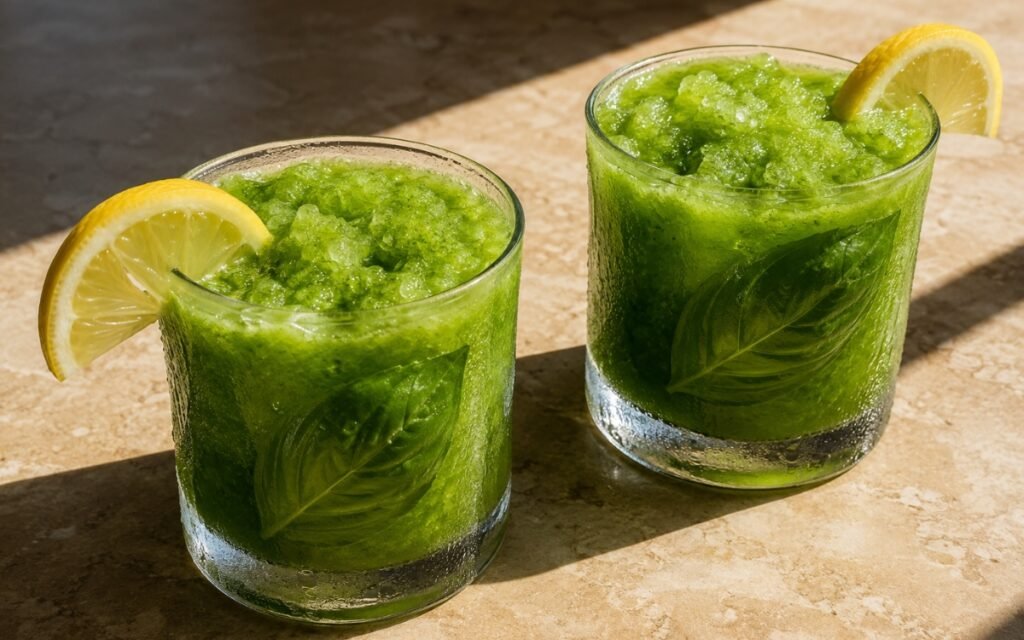
Basil Lemonade — Blended
Lemon zest syrup off heat, basil added last starting at ⅓ cup — blended 15–25 seconds, served immediately for slushy texture. Warm-herbal and unexpectedly elegant.
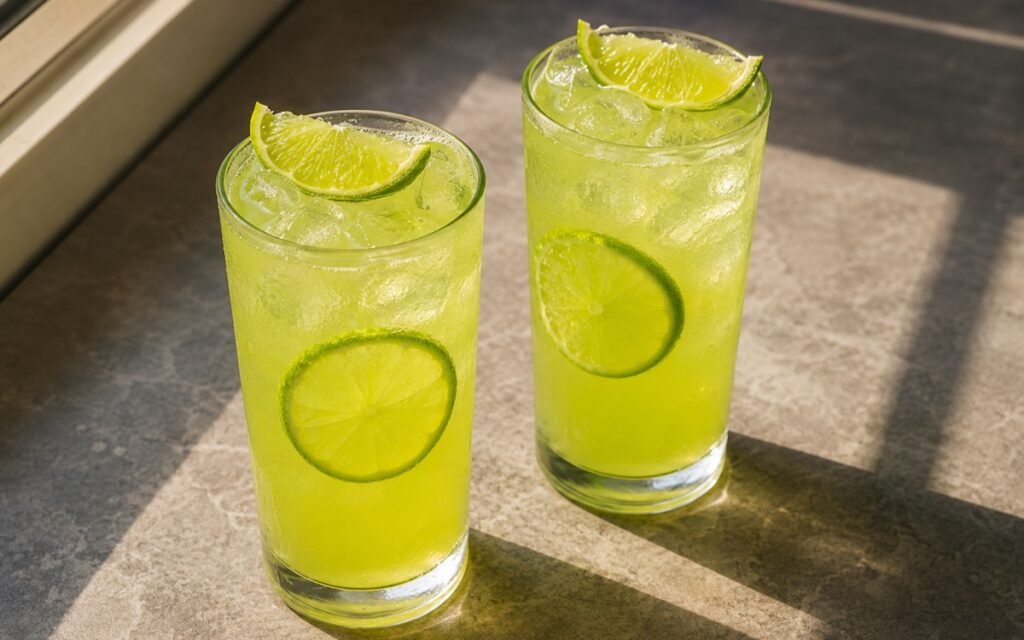
Lime Lemonade — Limenade
Lime zest steeped off heat exactly 8–10 minutes, clean pulp mashed with all pith removed — fresh lime juice, sugar calibrated for lime’s acid, salt. Sharp and bold.
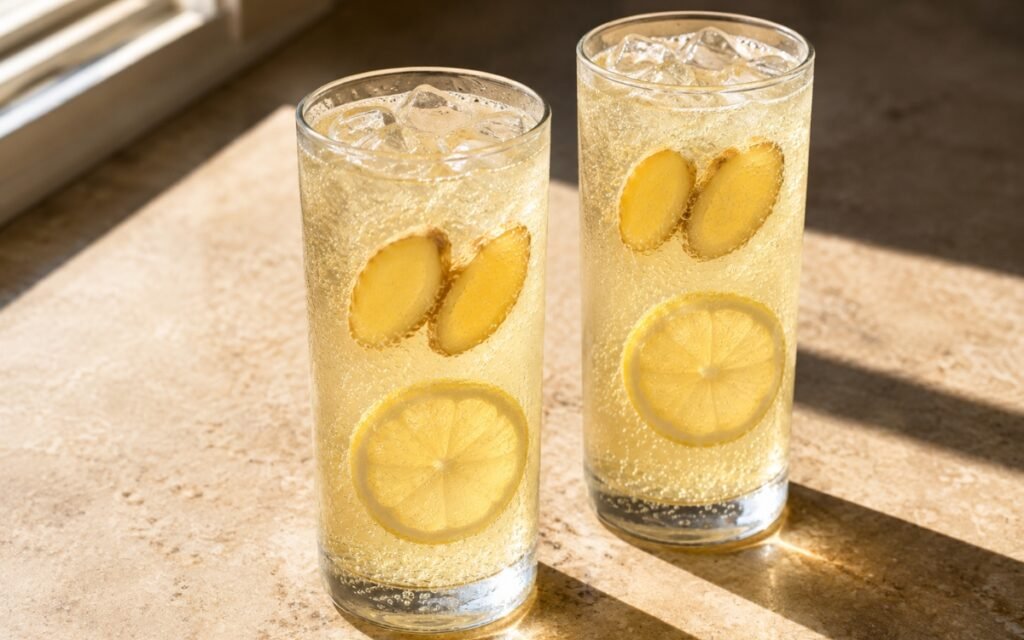
Sparkling Ginger Lemonade
Ginger simmered with honey 8–10 minutes, lemon zest off heat — concentrated base chilled, club soda side-poured right before serving. Sharp, hot, and fizzy.
You might also like
You might also like
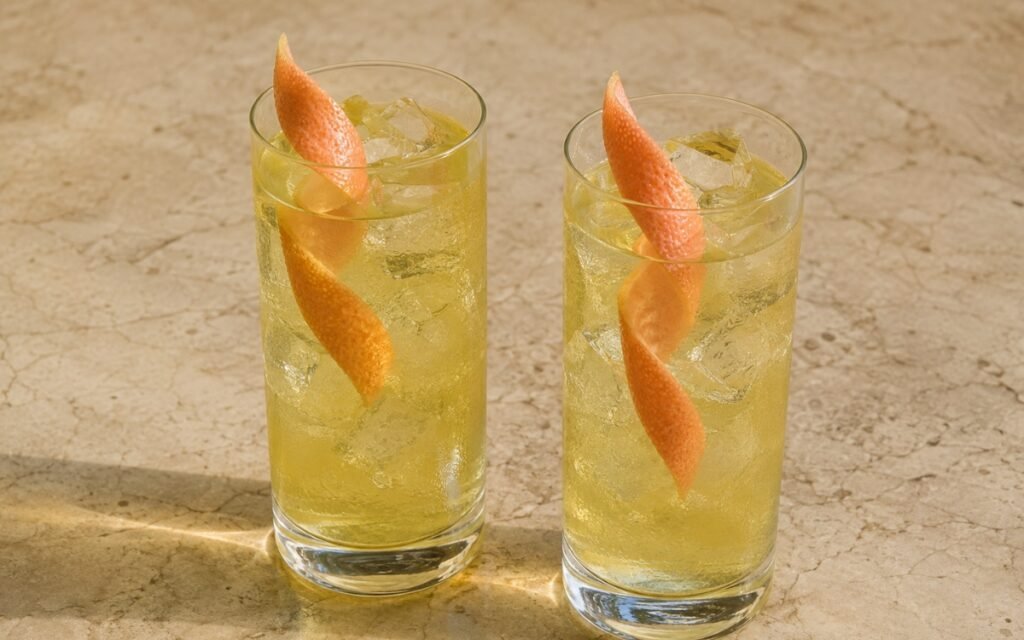
Grapefruit Green Iced Tea (Peel-Infused)
Green tea at 75–80°C for 2–3 minutes, grapefruit peel infused cold 3–5 minutes — honey and a pinch of salt, no juice, chilled. Bold, aromatic, acid-free.
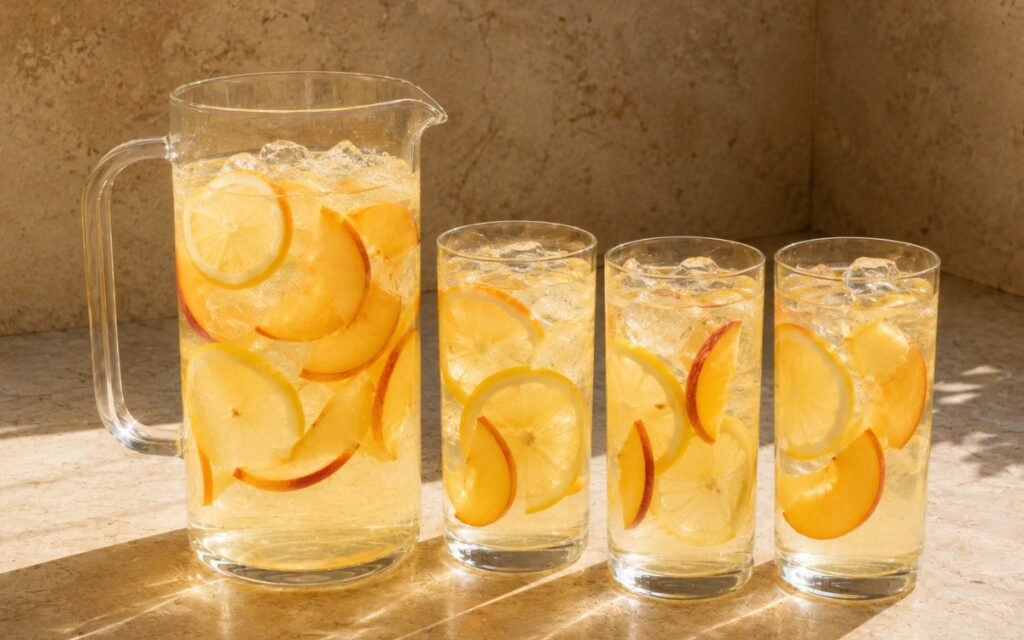
Peach Lemon Infused Water
Ripe peaches skin-on and lightly muddled, sliced peaches and lemon rounds cold-infused in 3L water — removed after 4 hours. Warm, fragrant, and peachy.
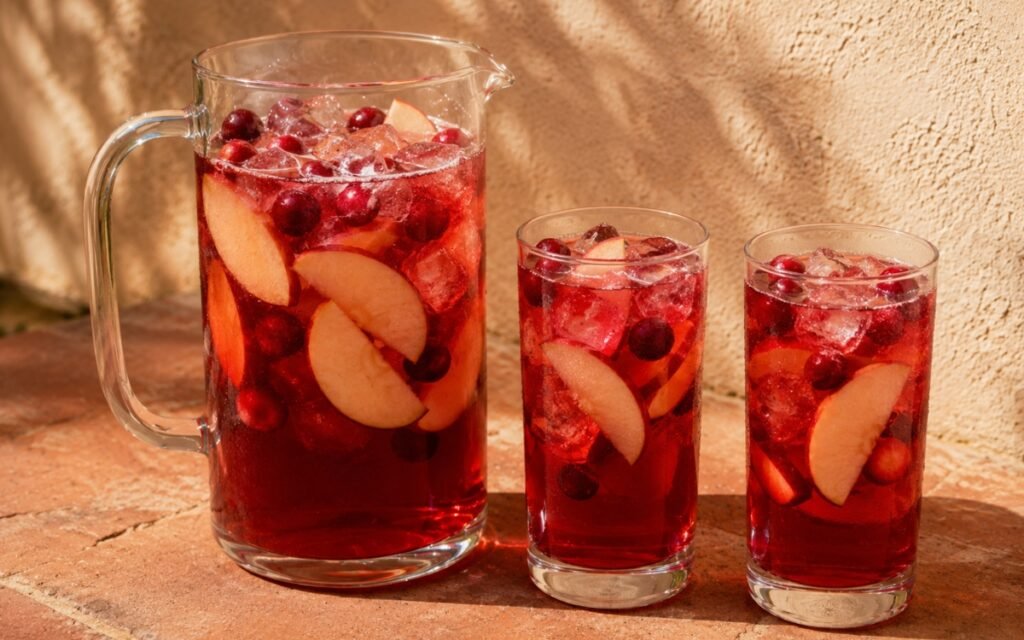
Apple Cranberry Pitcher Drink
Skin-on apples and cranberries with one cinnamon stick simmered 8–10 minutes in light brown sugar syrup — strained, combined with apple juice, cold water, chilled. Crisp and tart.
Fresh Strawberry Lemonade
Ingredients
Method
- The strawberry quality determines the lemonade’s quality more directly than any other decision in this preparation. Ripe, fragrant, deeply red strawberries — where the flesh is red throughout rather than white at the centre — produce a vivid, intensely flavoured syrup. Under-ripe, white-centred, or flavourless commercial strawberries produce a pale, mildly flavoured syrup regardless of technique. The most vivid, most fragrant, smallest strawberries are generally the most intensely flavoured; large, water-heavy strawberries bred for visual appearance often have significantly less flavour per gram. Hull and roughly chop — the pieces can be large as the cooking and blending will break them down completely.
- Combine the 130g of white sugar, 240ml of water, and all the chopped strawberries in a medium saucepan. Place over medium heat and bring to a gentle simmer, stirring to begin dissolving the sugar. Cook for 5–8 minutes — shorter than the 10–12 minutes applied to peach — stirring occasionally and pressing the softening strawberries lightly against the pan’s surface to encourage juice release. The strawberries should be completely soft and their juice fully released into the surrounding sugar-water medium by the end of the cooking period; the liquid should be a vivid, deeply ruby red. The 5–8 minute window is specifically calibrated for strawberry. Strawberry’s volatile aromatic compounds — particularly the various furanones and esters responsible for fresh strawberry’s characteristic sweet, fruity character — evaporate at a meaningful rate above 70°C during sustained cooking. At 5–8 minutes of gentle simmering, the strawberries release their juice completely and concentrate their flavour meaningfully without shifting significantly into the cooked, jam-like register that extended cooking produces. The visual indicator of the correct end point: the liquid should be vivid ruby-red and the strawberries should have fully collapsed without the surrounding liquid having reduced to a thick, syrupy consistency. If the liquid is reducing noticeably, reduce the heat and add a small splash of water.
- Remove the saucepan from the heat immediately at the 5–8 minute mark. Stir in the 1 tsp of fresh lemon zest — the yellow part only, with no white pith. The lemon zest is added specifically off heat and infused in the warm strawberry syrup rather than during the cooking period or in the cold combined base. This timing allows the zest’s fat-soluble limonene and terpene aromatic compounds to release into the warm syrup — integrating with the strawberry’s own aromatic character during the infusion — while avoiding the bitterness that cooking the zest at sustained simmering temperature can develop from the pith’s compounds. Allow the mixture to infuse covered for 5–10 minutes with the zest in the warm syrup.
- After the 5–10 minute zest infusion, transfer the cooled mixture to a blender. Blend briefly at medium speed — 20–30 seconds — until mostly smooth. Strain through a fine-mesh sieve into a clean pitcher, pressing firmly on the blended solids to extract the maximum vivid ruby syrup. Press firmly — the cooked strawberry and blended mixture yields its juice efficiently under pressing; dry solids after pressing indicate maximum extraction. Discard the strained solids. Allow the syrup to cool completely.
- In a large pitcher, combine the cooled strawberry syrup, 240ml of fresh lemon juice, 900ml of ice-cold water, and the pinch of fine sea salt. The salt is present at approximately ⅛ tsp in the full volume — sub-threshold for saltiness but specifically effective at brightening the strawberry’s sweetness and sharpening the lemon’s acidity into something more vivid. Stir thoroughly and taste. Adjust as needed: more lemon juice up to 300ml total for additional brightness; more cold water up to 1.2 litres for a lighter drink; additional sweetness via simple syrup if the strawberries were under-ripe.
- Refrigerate for 1–2 hours until completely cold. Fill glasses with ice. Pour the chilled strawberry lemonade over the ice. Garnish with a lemon slice and sliced fresh strawberries. Serve immediately.