
Cucumber Elderflower Tonic Mocktail
Barely-there colour in the glass — almost clear with the faintest pale green suggestion from the cucumber — and maximum aromatics from the elderflower’s specifically floral, honey-adjacent, slightly musky fragrance that is one of the most recognisable and most elegant drink flavours in the European botanical tradition. The elderflower steeped first in just-simmered water off heat for 10–15 minutes, its delicate volatile aromatic compounds extracted at the controlled temperature that preserves the floral character rather than cooking it to flatness. The honey and cucumber added to the warm elderflower infusion at the lowest possible heat — the cucumber’s cool, vegetal freshness infusing into the already-floral base over 8–10 minutes of the gentlest possible warmth. Tonic water rather than club soda for the same reason it is the correct choice in the Mango Turmeric Tonic — the quinine’s dry, bittersweet counterpoint to the elderflower’s sweetness producing the specifically grown-up character that makes this drink feel like a proper drink. The mocktail for occasions when something that looks and tastes specifically elegant is the requirement.
Prep Time : 10 min
Steep Time: 20–25 min
Servings : 4
10 min
20–25 min
4
Ingredients
For the Elderflower-Cucumber Syrup
• 500ml water
• 12g dried elderflowers — this one on Amazon
• 80g honey — this one on Amazon
• 150g cucumber, roughly chopped — skin on
For the Garnish
• 12 thin cucumber slices with skin on — 3 per glass
• Fresh elderflower sprigs — optional
This post may contain affiliate links. As an Amazon Associate I earn from qualifying purchases, at no additional cost to you.
Directions
- Brew the Elderflower Infusion
Pour the 500ml of water into a medium saucepan and bring just to a gentle simmer over medium heat. Remove from the heat the moment simmering begins. Add the 12g of dried elderflowers immediately and cover the saucepan — the cover traps the volatile aromatic compounds that would otherwise escape as steam during the steeping period. Allow to steep covered for 10–15 minutes. Elderflower’s aromatic character comes primarily from a collection of volatile organic compounds — primarily linalool, hotrienol, and various terpene esters — that are responsible for the flower’s specifically delicate, slightly honey-adjacent, slightly musky floral fragrance. These compounds are among the most heat-sensitive aromatics in botanical drink-making: brought to a full boil they evaporate almost completely within 1–2 minutes; steeped in just-simmered, covered water at the correct declining temperature, they release into the surrounding liquid and remain largely intact through the steeping period. The cover is specifically important — without it, the aromatic steam escapes freely and the infusion loses a measurable portion of its fragrance. After 10–15 minutes, strain the infusion through a fine-mesh sieve into a clean saucepan and discard the elderflowers. At 10 minutes the infusion is delicate and floral with a light honey character; at 15 minutes it is more assertively floral and slightly more complex. Both are correct — choose based on how prominently floral the intended result should be. - Infuse the Cucumber at Minimal Heat
Return the strained elderflower infusion to the saucepan over the absolute lowest available heat. Add the 80g of honey and stir until it dissolves completely into the warm infusion — the residual warmth from the elderflower steeping is sufficient to dissolve the honey smoothly. Add the 150g of roughly chopped cucumber — skin on, cut into 2–3cm pieces. The skin is specifically included because cucumber skin contains a higher concentration of the cucumber’s characteristic cool, green aromatic compounds (primarily (E,Z)-2,6-nonadienal and similar short-chain aldehydes) than the flesh — leaving the skin on during infusion produces a more distinctly cucumber-forward character than peeled cucumber at the same weight. Maintain over the lowest possible heat for 8–10 minutes, stirring occasionally and keeping the temperature below simmering at all times. The goal is the gentlest possible warmth — sufficient to draw the cucumber’s aromatic compounds into the surrounding elderflower-honey liquid without cooking them, which would destroy the cool, fresh, specifically vegetal character and replace it with a cooked-cucumber note. No visible steam should rise from the surface; the liquid should feel warm but not hot when a clean finger is dipped briefly. At this temperature the cucumber’s aromatic oils and volatile compounds transfer progressively into the floral-sweet infusion over the 8–10 minute window, producing the specifically cool-and-floral combination that is the syrup’s character. - Rest, Strain, and Chill
Remove from the heat and allow the mixture to stand for an additional 10 minutes — the further off-heat rest allowing any remaining aromatic compounds to transfer from the warm cucumber pieces into the surrounding liquid without any risk of over-cooking. Strain through a fine-mesh sieve over a clean jug, pressing lightly on the cucumber pieces to extract their juice — lightly rather than forcefully, as aggressive pressing at this stage can produce a slightly bitter, over-extracted cucumber flavour from the skin and seeds. Discard the solids. The finished syrup should be nearly clear to very pale green with an aromatic character that is simultaneously floral from the elderflower, cool and fresh from the cucumber, and gently sweet from the honey — three distinct but specifically harmonious notes present simultaneously. Transfer to the refrigerator and chill completely before assembly — a minimum of 30 minutes. - Assemble and Serve
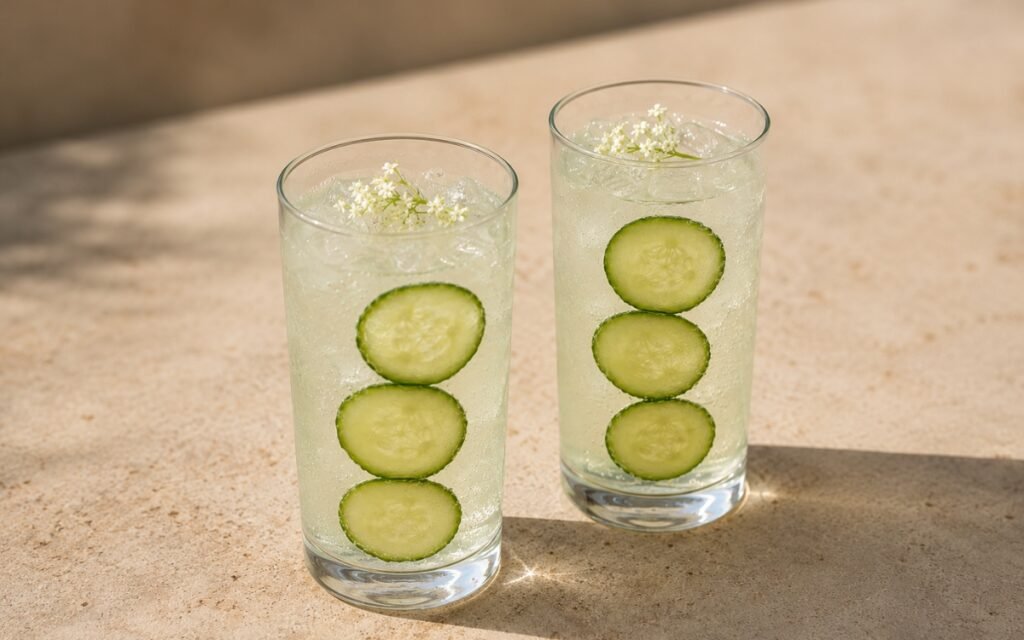
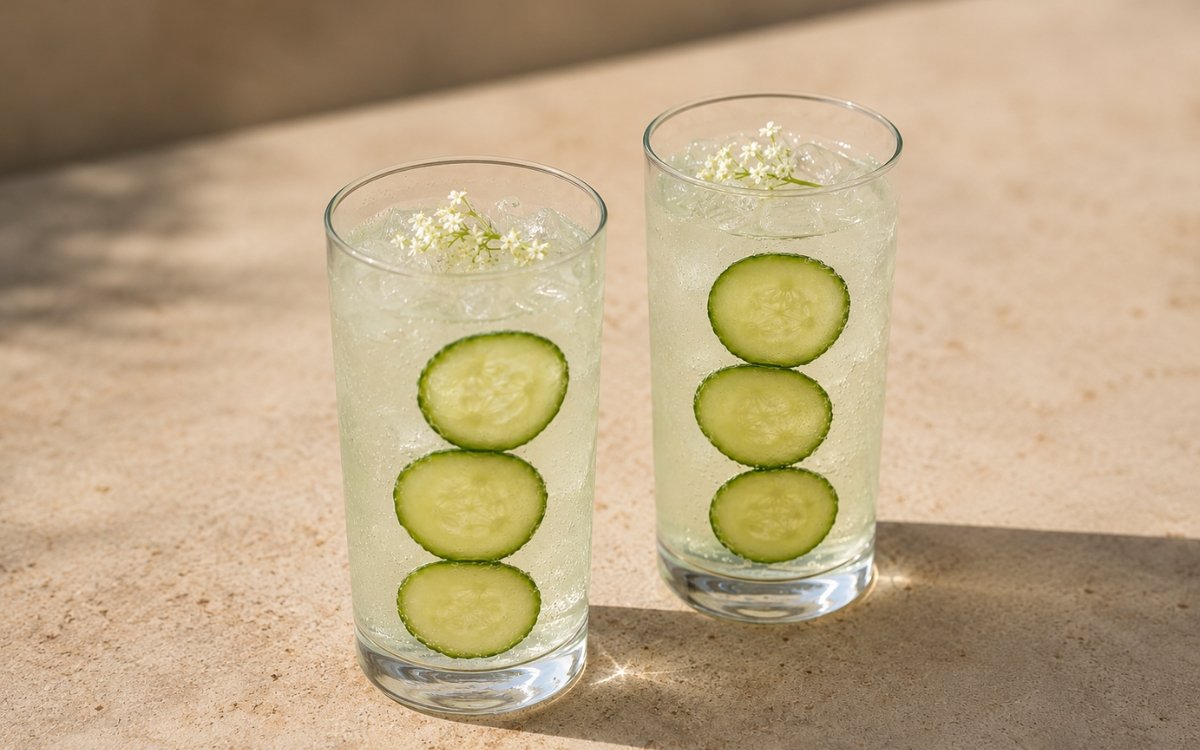
Fill four tall glasses generously with ice cubes. Divide the chilled elderflower-cucumber syrup evenly — approximately 60–65ml per glass. Stir briefly against the ice to further chill the syrup. Top each glass with approximately 150ml of chilled tonic water, pouring gently down the inner side of the glass to preserve the carbonation. Stir once or twice gently. Prepare the cucumber garnish: slice the cucumber into thin, even rounds — approximately 3mm thick — keeping the skin on so the green edge of each slice is visible against the glass. Press three slices vertically against the inside of each glass, distributed evenly around the circumference — the green-edged rounds visible through the nearly clear drink providing the visual identity of the drink without adding colour to the liquid itself. If fresh elderflower sprigs are available, rest one lightly across the rim or on the surface of the ice. Serve immediately.
*Notes :
- Dried elderflowers are available at specialty tea shops, health food stores, and online. Fresh elderflowers — when in season, typically late spring to early summer — can be substituted at approximately double the quantity (25g fresh for 12g dried), steeped for the same 10–15 minutes off just-simmered water. Fresh elderflowers produce a specifically more vivid, more intensely fragrant infusion than dried ones — if available during their brief season they are the superior choice for this recipe.
- The nearly colourless appearance of this mocktail is one of its specifically appealing qualities in a presentation context — a tall glass filled with clear to barely-green sparkling liquid, three cucumber rounds visible against the glass, a hint of elderflower sprig on the ice. The visual restraint communicates a different kind of elegance than the vivid ruby of the hibiscus fizz or the golden-orange of the mango tonic — the colour of water with the aroma and flavour of something specifically more composed.
Why This Recipe Works
This recipe works because the elderflower is steeped covered and off heat to preserve its most volatile aromatic compounds; the cucumber infuses at the absolute lowest possible temperature — below simmering throughout — preserving its cool, fresh, vegetal character rather than cooking it into something warm and flat; and tonic water provides the bittersweet finish that makes the drink feel specifically adult and complete rather than simply sweetened sparkling water.
Ingredient Breakdown
Dried Elderflowers (Covered, Off-Heat Steep)
The primary floral aromatic — volatile linalool and terpene esters preserved by covered off-heat steeping; the defining character of the drink.
Cucumber Skin On (Lowest Possible Heat, 8–10 Minutes)
The cool, vegetal freshness — skin-on for maximum cool green aromatic compounds; minimal heat for preservation rather than cooking.
Honey (Dissolved in Warm Infusion)
The specific sweetener — floral, warm, specifically complementary to elderflower’s own floral character.
Tonic Water (Rather Than Club Soda)
The adult bittersweet finish — quinine’s dry counterpoint making the delicate elderflower and cucumber taste specifically more elegant and more grown-up.
Light Press During Straining
The extraction control — gentle rather than forceful pressing avoiding bitter over-extraction from cucumber skin and seeds.
Flavor Structure Explained
This Cucumber elderflower tonic follows a layered balance model:
- Floral aromatic core (elderflower)
- Cool refreshing depth (cucumber)
- Gentle sweet foundation (honey)
- Dry bittersweet balance (tonic water)
- Crisp sparkling lift (carbonation)
Elderflower defines the foundation with delicate floral fragrance and subtle honey-like aromatics that give the drink its refined character. Cucumber adds cool vegetal freshness that enhances the floral notes and creates a distinctly refreshing profile. Honey provides soft sweetness that supports the botanicals without overwhelming them. Tonic water contributes quinine bitterness that balances the sweetness and prevents the drink from becoming overly perfumed or cloying. Carbonation completes the structure by carrying the floral and herbal aromas upward with every sip, making the drink feel light, elegant, and exceptionally refreshing.
Common Mistakes to Avoid
- Not Covering During the Elderflower Steep – Uncovered, the volatile aromatic compounds escape as steam. Always cover the saucepan during steeping.
- Bringing the Cucumber Infusion to a Simmer – Any simmering destroys the cucumber’s fresh, cool aromatic character and produces a cooked note. Always the absolute lowest heat throughout.
- Pressing the Cucumber Too Forcefully During Straining – Aggressive pressing extracts bitter compounds from the skin and seeds. Always press lightly.
- Not Chilling the Syrup Completely – Warm syrup flattens the tonic’s carbonation on contact. Always chill thoroughly before assembly.
- Using Club Soda Instead of Tonic Water – The substitution produces a lighter, more neutral drink without the bittersweet finish that makes this mocktail specifically elegant. The quinine is the drink’s adult character.
Variations
With Fresh Mint
Add 8 fresh mint leaves to the cucumber during the low-heat infusion step — the mint’s cool, herbal freshness alongside the cucumber and elderflower produces a specifically more assertive version. Remove with the cucumber during straining.
With Lime
Add a strip of lime zest to the cucumber during the low-heat infusion for a delicate citrus brightness — the lime’s aromatic oils infusing at the same gentle temperature as the cucumber’s compounds.
Still Version
Replace the tonic water with chilled still mineral water for a non-sparkling version — softer, more approachable, and specifically good as a longer-drink accompaniment to a meal.
With Vodka or Gin (Cocktail Version)
Add 30ml of a good floral gin — specifically one with botanical notes complementary to elderflower — to each glass before the tonic for a cocktail version where the gin’s botanicals amplify the elderflower character rather than competing with it.
Storage & Make-Ahead
Elderflower-cucumber syrup can be refrigerated for up to 4 days. However, the delicate floral compounds of the elderflower gradually diminish during storage, so the syrup is best used within the first 2 days for the most vibrant flavor and aroma.
Once assembled, the drinks are not suitable for storage and should be served immediately.
Frequently Asked Questions
What are dried elderflowers?
Dried elderflower is the dried blossom of the elder tree — Sambucus nigra — used widely in European botanical drink-making for its specifically delicate, honey-adjacent, slightly musky floral fragrance. The same flowers are used fresh for elderflower cordial and elderflower champagne throughout the UK and northern Europe. Dried elderflowers are available at specialty tea shops, health food stores, and online.
Why cover the saucepan during elderflower steeping?
Elderflower’s aromatic compounds — primarily linalool and various terpene esters — are highly volatile and escape rapidly as steam from an uncovered vessel. The cover traps these compounds in the headspace above the liquid where they condense back into the infusion as the temperature declines, preserving a significantly greater concentration of the floral character.
Why is the cucumber infused at the lowest possible heat rather than simmered?
The compounds responsible for cucumber’s specifically cool, fresh, green character — primarily (E,Z)-2,6-nonadienal and related short-chain aldehydes — are volatile and sensitive to heat. At gentle warmth below simmering they transfer gradually from the cucumber into the surrounding liquid. At simmering temperature they evaporate almost immediately, leaving only a milder, slightly cooked vegetable note rather than the fresh, specifically cool character that makes cucumber the right pairing for elderflower.
Why tonic water rather than club soda?
Tonic water contains quinine — a natural bitter compound extracted from cinchona bark — that provides a dry, bittersweet finish to drinks. Against elderflower’s delicate sweetness and cucumber’s cool freshness, the quinine’s dryness provides the specifically adult counterpoint that makes the drink feel like a proper drink rather than sweetened sparkling water.
Is there a more assertive version of this combination?
Yes — the Elderflower Cucumber Spritz Mocktail uses the same core elderflower and cucumber flavour base but adds ginger and lime juice alongside club soda — the ginger’s sharp warmth and the lime’s acidity producing a more aggressive, more assertive drink where the same floral-cool combination is surrounded by more vivid citrus and spice notes. This tonic version is specifically more restrained and more elegant; the spritz version is more energetic and more immediately bold.
Nutrition Facts
( per serving )
Calories
~70 kcal
Protein
0 g
Fat
0 g
Carbs
13 g
Calories
~70 kcal
Protein
0 g
Fat
0 g
Carbs
13 g
Related Recipes
Related Recipes

Shirley Temple Tonic
Pomegranate grenadine with ginger ale and citrus zest delivers a bright, tart, grown-up take on a nostalgic classic.
Lychee Rose Spritzer Mocktail
Rose-infused lychee base with honey over club soda — pale pink, floral, and intensely elegant.
Rose Hibiscus Mocktail
Refined floral fizz with subtle orange peel, light tartness, crisp bubbles, elegant structure without sugary weight.
You might also like
You might also like
Light Raspberry Mint Iced Tea
White tea at 75–80°C, raspberries blended with lemon and water — honey while warm, mint cold-infused 10–15 minutes, chilled. Pale blush-pink and clean.
Hibiscus White Iced Tea
White tea at 75–80°C for 3–4 minutes, hibiscus infused 4–6 minutes for vivid ruby color — strained promptly, honey, chilled. Bright, tart, floral.
Sage Citrus Iced Black Tea
Black tea at 90–95°C for 2½–3 minutes, sage clapped and infused cold, tasted periodically — lemon peel and juice, honey, chilled. Structured and herbal.
Cucumber Elderflower Tonic Mocktail
Ingredients
Method
- Pour the 500ml of water into a medium saucepan and bring just to a gentle simmer over medium heat. Remove from the heat the moment simmering begins. Add the 12g of dried elderflowers immediately and cover the saucepan — the cover traps the volatile aromatic compounds that would otherwise escape as steam during the steeping period. Allow to steep covered for 10–15 minutes. Elderflower’s aromatic character comes primarily from a collection of volatile organic compounds — primarily linalool, hotrienol, and various terpene esters — that are responsible for the flower’s specifically delicate, slightly honey-adjacent, slightly musky floral fragrance. These compounds are among the most heat-sensitive aromatics in botanical drink-making: brought to a full boil they evaporate almost completely within 1–2 minutes; steeped in just-simmered, covered water at the correct declining temperature, they release into the surrounding liquid and remain largely intact through the steeping period. The cover is specifically important — without it, the aromatic steam escapes freely and the infusion loses a measurable portion of its fragrance. After 10–15 minutes, strain the infusion through a fine-mesh sieve into a clean saucepan and discard the elderflowers. At 10 minutes the infusion is delicate and floral with a light honey character; at 15 minutes it is more assertively floral and slightly more complex. Both are correct — choose based on how prominently floral the intended result should be.
- Return the strained elderflower infusion to the saucepan over the absolute lowest available heat. Add the 80g of honey and stir until it dissolves completely into the warm infusion — the residual warmth from the elderflower steeping is sufficient to dissolve the honey smoothly. Add the 150g of roughly chopped cucumber — skin on, cut into 2–3cm pieces. The skin is specifically included because cucumber skin contains a higher concentration of the cucumber’s characteristic cool, green aromatic compounds (primarily (E,Z)-2,6-nonadienal and similar short-chain aldehydes) than the flesh — leaving the skin on during infusion produces a more distinctly cucumber-forward character than peeled cucumber at the same weight. Maintain over the lowest possible heat for 8–10 minutes, stirring occasionally and keeping the temperature below simmering at all times. The goal is the gentlest possible warmth — sufficient to draw the cucumber’s aromatic compounds into the surrounding elderflower-honey liquid without cooking them, which would destroy the cool, fresh, specifically vegetal character and replace it with a cooked-cucumber note. No visible steam should rise from the surface; the liquid should feel warm but not hot when a clean finger is dipped briefly. At this temperature the cucumber’s aromatic oils and volatile compounds transfer progressively into the floral-sweet infusion over the 8–10 minute window, producing the specifically cool-and-floral combination that is the syrup’s character.
- Remove from the heat and allow the mixture to stand for an additional 10 minutes — the further off-heat rest allowing any remaining aromatic compounds to transfer from the warm cucumber pieces into the surrounding liquid without any risk of over-cooking. Strain through a fine-mesh sieve over a clean jug, pressing lightly on the cucumber pieces to extract their juice — lightly rather than forcefully, as aggressive pressing at this stage can produce a slightly bitter, over-extracted cucumber flavour from the skin and seeds. Discard the solids. The finished syrup should be nearly clear to very pale green with an aromatic character that is simultaneously floral from the elderflower, cool and fresh from the cucumber, and gently sweet from the honey — three distinct but specifically harmonious notes present simultaneously. Transfer to the refrigerator and chill completely before assembly — a minimum of 30 minutes.
- Fill four tall glasses generously with ice cubes. Divide the chilled elderflower-cucumber syrup evenly — approximately 60–65ml per glass. Stir briefly against the ice to further chill the syrup. Top each glass with approximately 150ml of chilled tonic water, pouring gently down the inner side of the glass to preserve the carbonation. Stir once or twice gently. Prepare the cucumber garnish: slice the cucumber into thin, even rounds — approximately 3mm thick — keeping the skin on so the green edge of each slice is visible against the glass. Press three slices vertically against the inside of each glass, distributed evenly around the circumference — the green-edged rounds visible through the nearly clear drink providing the visual identity of the drink without adding colour to the liquid itself. If fresh elderflower sprigs are available, rest one lightly across the rim or on the surface of the ice. Serve immediately.