Ingredients
Method
Brew the Elderflower Infusion
- Pour the 500ml of water into a medium saucepan and bring just to a gentle simmer over medium heat. Remove from the heat the moment simmering begins. Add the 12g of dried elderflowers immediately and cover the saucepan — the cover traps the volatile aromatic compounds that would otherwise escape as steam during the steeping period. Allow to steep covered for 10–15 minutes. Elderflower's aromatic character comes primarily from a collection of volatile organic compounds — primarily linalool, hotrienol, and various terpene esters — that are responsible for the flower's specifically delicate, slightly honey-adjacent, slightly musky floral fragrance. These compounds are among the most heat-sensitive aromatics in botanical drink-making: brought to a full boil they evaporate almost completely within 1–2 minutes; steeped in just-simmered, covered water at the correct declining temperature, they release into the surrounding liquid and remain largely intact through the steeping period. The cover is specifically important — without it, the aromatic steam escapes freely and the infusion loses a measurable portion of its fragrance. After 10–15 minutes, strain the infusion through a fine-mesh sieve into a clean saucepan and discard the elderflowers. At 10 minutes the infusion is delicate and floral with a light honey character; at 15 minutes it is more assertively floral and slightly more complex. Both are correct — choose based on how prominently floral the intended result should be.
Infuse the Cucumber at Minimal Heat
- Return the strained elderflower infusion to the saucepan over the absolute lowest available heat. Add the 80g of honey and stir until it dissolves completely into the warm infusion — the residual warmth from the elderflower steeping is sufficient to dissolve the honey smoothly. Add the 150g of roughly chopped cucumber — skin on, cut into 2–3cm pieces. The skin is specifically included because cucumber skin contains a higher concentration of the cucumber's characteristic cool, green aromatic compounds (primarily (E,Z)-2,6-nonadienal and similar short-chain aldehydes) than the flesh — leaving the skin on during infusion produces a more distinctly cucumber-forward character than peeled cucumber at the same weight. Maintain over the lowest possible heat for 8–10 minutes, stirring occasionally and keeping the temperature below simmering at all times. The goal is the gentlest possible warmth — sufficient to draw the cucumber's aromatic compounds into the surrounding elderflower-honey liquid without cooking them, which would destroy the cool, fresh, specifically vegetal character and replace it with a cooked-cucumber note. No visible steam should rise from the surface; the liquid should feel warm but not hot when a clean finger is dipped briefly. At this temperature the cucumber's aromatic oils and volatile compounds transfer progressively into the floral-sweet infusion over the 8–10 minute window, producing the specifically cool-and-floral combination that is the syrup's character.
Rest, Strain, and Chill
- Remove from the heat and allow the mixture to stand for an additional 10 minutes — the further off-heat rest allowing any remaining aromatic compounds to transfer from the warm cucumber pieces into the surrounding liquid without any risk of over-cooking. Strain through a fine-mesh sieve over a clean jug, pressing lightly on the cucumber pieces to extract their juice — lightly rather than forcefully, as aggressive pressing at this stage can produce a slightly bitter, over-extracted cucumber flavour from the skin and seeds. Discard the solids. The finished syrup should be nearly clear to very pale green with an aromatic character that is simultaneously floral from the elderflower, cool and fresh from the cucumber, and gently sweet from the honey — three distinct but specifically harmonious notes present simultaneously. Transfer to the refrigerator and chill completely before assembly — a minimum of 30 minutes.
Assemble and Serve
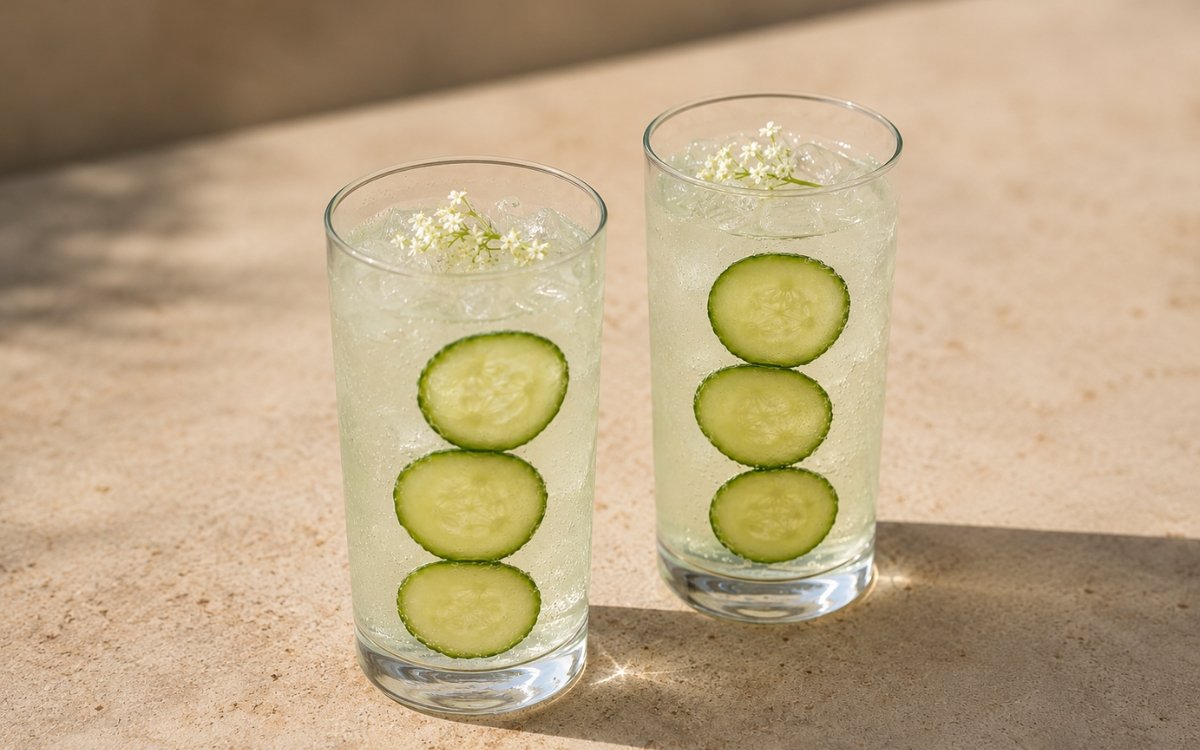
- Fill four tall glasses generously with ice cubes. Divide the chilled elderflower-cucumber syrup evenly — approximately 60–65ml per glass. Stir briefly against the ice to further chill the syrup. Top each glass with approximately 150ml of chilled tonic water, pouring gently down the inner side of the glass to preserve the carbonation. Stir once or twice gently. Prepare the cucumber garnish: slice the cucumber into thin, even rounds — approximately 3mm thick — keeping the skin on so the green edge of each slice is visible against the glass. Press three slices vertically against the inside of each glass, distributed evenly around the circumference — the green-edged rounds visible through the nearly clear drink providing the visual identity of the drink without adding colour to the liquid itself. If fresh elderflower sprigs are available, rest one lightly across the rim or on the surface of the ice. Serve immediately.
Notes
Dried elderflowers are available at specialty tea shops, health food stores, and online. Fresh elderflowers — when in season, typically late spring to early summer — can be substituted at approximately double the quantity (25g fresh for 12g dried), steeped for the same 10–15 minutes off just-simmered water. Fresh elderflowers produce a specifically more vivid, more intensely fragrant infusion than dried ones — if available during their brief season they are the superior choice for this recipe.
The nearly colourless appearance of this mocktail is one of its specifically appealing qualities in a presentation context — a tall glass filled with clear to barely-green sparkling liquid, three cucumber rounds visible against the glass, a hint of elderflower sprig on the ice. The visual restraint communicates a different kind of elegance than the vivid ruby of the hibiscus fizz or the golden-orange of the mango tonic — the colour of water with the aroma and flavour of something specifically more composed.