
Strawberry Basil Smash Mocktail
No syrup, no cooking, no steeping time — the smash format is the simplest possible structure for a mocktail and the one that most directly expresses the quality of its raw ingredients. Fresh strawberries mashed with honey and lemon zest until broken down and juicy, then basil folded gently through at the end rather than mashed aggressively into the fruit. The folding distinction is the technique decision that makes the basil’s contribution specifically sweet and herbal rather than grassy and slightly bitter — mashed basil’s cell walls rupture and release chlorophyll and the more aggressive volatile compounds alongside the pleasant aromatic ones; folded basil’s cell walls remain largely intact and release only the surface aromatics through gentle contact with the sweet, acidic strawberry. Club soda poured over the mash and stirred once or twice — not blended, not thoroughly mixed — leaving visible strawberry pieces and whole basil leaves throughout the glass. The drink that is ready in 10 minutes and looks as if it took considerably longer.
Prep Time : 10 min
Cook Time : 0 min
Servings : 4
10 min
0 min
4
Ingredients
For the Strawberry Basil Mash
• 350g fresh strawberries, hulled — this one on Amazon
• 45g honey
• Zest of ¼ lemon
• 12 fresh basil leaves, roughly chopped — torn rather than finely cut
For Serving
• 600ml chilled club soda — this one on Amazon
• Ice cubes — large cubes preferred
• 4 whole strawberries, for garnish
• 4 fresh basil leaves, for garnish
This post may contain affiliate links. As an Amazon Associate I earn from qualifying purchases, at no additional cost to you.
Directions
- Mash the Strawberries with Honey and Lemon Zest
Add the 350g of hulled strawberries to a large bowl. Using a fork or potato masher, mash thoroughly until the strawberries are mostly broken down — a juicy, slightly chunky mixture with some visible pieces remaining rather than a completely smooth purée. The remaining texture is intentional: this is a smash rather than a smoothie, and the visible strawberry pieces distributed through the finished drink are part of both the visual appeal and the eating experience. Mash to the point where the majority of the fruit has released its juice but small pieces remain intact. Add the 45g of honey and the zest of ¼ lemon directly to the mashed strawberries. Stir well until the honey is fully incorporated and the lemon zest is evenly distributed. Honey’s specific floral sweetness is particularly well-suited to this preparation rather than granulated sugar — it dissolves immediately into the wet strawberry mixture without any heating required, and its aromatic compounds specifically complement the strawberry’s own floral, fruity sweetness in a way that plain sugar’s neutral sweetness does not. The lemon zest contributes a fragrant, aromatic citrus thread — a small quantity at ¼ lemon’s worth, present as background brightness rather than citrus flavour in the foreground. - Fold the Basil
Add the 12 roughly torn or chopped basil leaves to the strawberry mixture. Fold them through gently using a large spoon — 3–4 slow, deliberate folding motions that distribute the basil through the mash without crushing the leaves aggressively. This technique distinction — folding rather than mashing — is what makes the basil’s contribution aromatic and pleasantly herbal rather than grassy and slightly bitter. When basil leaves are mashed or muddled aggressively, the cell walls rupture completely, releasing chlorophyll alongside the pleasant volatile aromatic compounds — the chlorophyll contributing a specifically grassy, slightly vegetal note that competes with the strawberry’s sweetness. When folded, the leaves release their surface aromatics through gentle contact with the acidic, sweet strawberry mixture while the cell walls remain largely intact, producing a specifically cleaner, sweeter, more floral basil character. Because this drink relies entirely on fresh fruit and fresh basil rather than a cooked-and-strained syrup, it is at its absolute best when prepared immediately before serving — the strawberries and basil at their most vivid and fragrant in the first 5 minutes after mashing. Prepared mash that waits begins to macerate: the strawberries release more liquid, the basil starts to darken, and both the visual appeal and the freshness of flavour diminish progressively. - Assemble and Serve Immediately
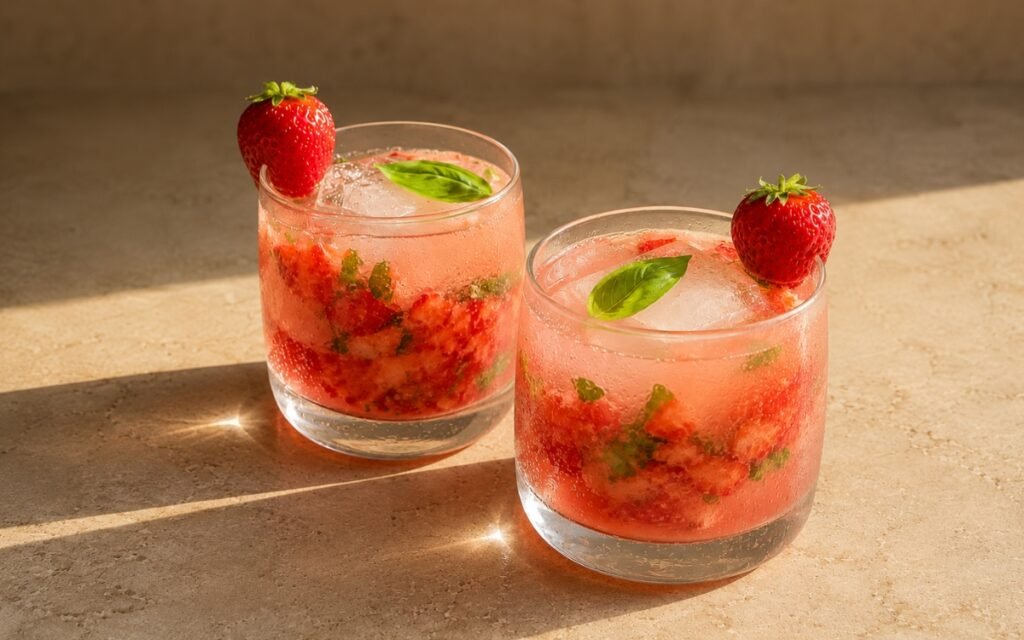
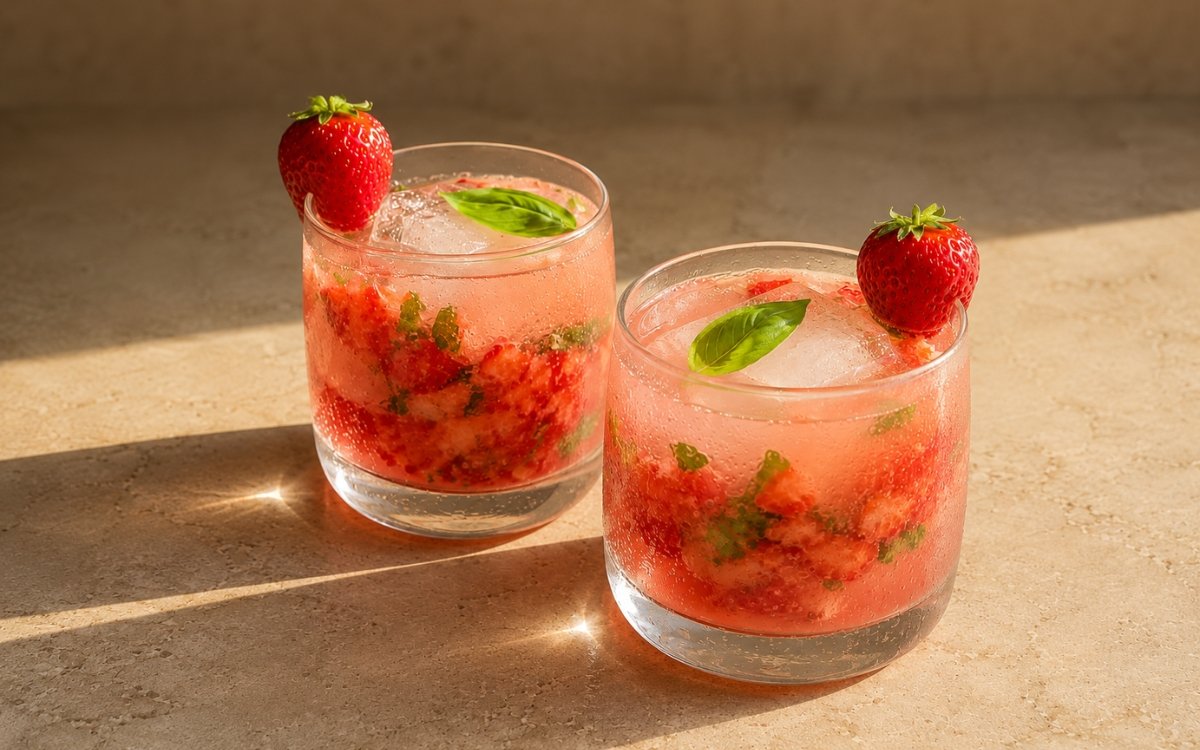
Divide the strawberry basil mash evenly among four short, wide glasses — tumblers or rocks glasses with a wide base and mouth show the visible fruit pieces most attractively. Add a large ice cube or several smaller cubes to each glass. The large cube preference is specifically for this format: large cubes melt slower than small cubes, keeping the drink cold for longer without progressive dilution that washes out the fresh strawberry flavour before the glass is finished. Pour approximately 150ml of chilled club soda over each glass — pouring gently down the inner side to preserve the carbonation. Stir once or twice with a bar spoon or long stirrer — not to fully blend the mash into the club soda but to distribute the fruit pieces and basil loosely through the glass so every sip encounters some mash alongside the sparkling water. The correct finished appearance is a lightly mixed, slightly cloudy pink drink with visible strawberry pieces and basil leaves throughout — not a uniform, fully mixed red liquid. Slice each of the 4 garnish strawberries from the tip toward the hull, stopping before cutting through completely, and perch on the rim of each glass. Place one fresh basil leaf on top of the ice. Serve immediately — this drink exists only in the window when the strawberries are vibrant, the basil is aromatic, and the club soda is fully sparkling.
*Notes :
- The strawberry quality in this recipe determines the drink’s quality more directly than in any of the syrup-based mocktails in this collection — in a cooked syrup, imperfect fruit is concentrated and improved during the cooking process; in a raw mash, the flavour is exactly what the fruit contains, undisguised. Peak-season strawberries at full ripeness — small to medium, deeply red throughout rather than pale at the core, intensely fragrant — produce a mash of completely different quality from out-of-season supermarket strawberries that are large, pale inside, and mild. If the strawberries available are mild and watery, add an additional 10g of honey and the zest of a further ¼ lemon to compensate.
- The smash format — raw fruit mashed with sweetener and diluted with sparkling water rather than built on a cooked syrup — produces a more textured, more visually interesting, and more immediately fresh-tasting drink at the cost of the extended shelf life that cooked syrups provide. It is the format to choose when the fruit is exceptional and the occasion is immediate.
Why This Mocktail Works
This recipe works because it applies the one technique distinction that separates a well-made smash from an over-muddled one: the basil is folded rather than mashed, producing aromatic herbal freshness rather than bitter, grassy intensity.
The honey dissolves immediately into the wet mash without requiring heat. And the club soda is added with one or two gentle stirs rather than being blended, preserving both the carbonation and the visible fruit texture that defines the smash format.
Ingredient Breakdown
Fresh Strawberries (Mashed, Not Blended)
The primary colour, sweetness, and flavour — raw peak-season fruit expressing its character directly without the transformation of cooking.
Honey (Dissolves Immediately in Wet Fruit)
The aromatic sweetener — floral character complementing the strawberry’s fruitiness; dissolves without heating into the wet mash.
Lemon Zest (¼ Lemon Only)
The aromatic brightness thread — present as fragrant background rather than foreground citrus.
Basil Folded Last (Not Mashed)
The herbal aromatic technique — surface aromatic release without cell-wall rupture and chlorophyll extraction; sweet and herbal rather than grassy and bitter.
Large Ice Cubes
The dilution management tool — slower melting preserving the fresh strawberry flavour longer.
One or Two Stirs Only
The texture and carbonation preservation technique — loose distribution of fruit rather than full blending.
Flavor Structure Explained
This Strawberry basil smash follows a layered balance model:
- Fresh fruit core (strawberries)
- Gentle floral sweetness (honey)
- Aromatic herbal lift (basil)
- Bright citrus fragrance (lemon zest)
- Crisp sparkling finish (club soda)
Fresh strawberries define the foundation with vivid sweetness, light acidity, and floral fruit character that remains present as real fruit rather than a cooked syrup. Honey reinforces the fruit’s natural sweetness while adding its own subtle floral warmth. Basil contributes the defining aromatic layer, bringing fresh herbal complexity that elevates the drink beyond a simple strawberry soda. Lemon zest adds fragrant citrus oils that brighten the profile without introducing significant tartness. Club soda completes the structure with lively carbonation, creating a refreshing, energetic finish that keeps the fresh fruit and herbs tasting vibrant and immediate.
Common Mistakes to Avoid
- Mashing Rather Than Folding the Basil – Aggressively mashed basil releases chlorophyll and bitter compounds alongside the pleasant aromatics. Always fold gently through the mash at the very end.
- Preparing the Mash Ahead of Time – The mash begins macerating, the basil darkens, and both flavour and visual freshness diminish progressively from the moment of preparation. Always make immediately before serving.
- Using Out-of-Season Strawberries – Pale, mild, watery strawberries produce a pale, mild, watery mash. The quality of the drink is directly tied to the quality of the fruit.
- Stirring Too Many Times After Adding Club Soda – More than 2 stirs releases carbonation rapidly and blends the mash into a uniform liquid rather than the textured smash format. Always stir once or twice only.
- Using Small Ice Cubes or Crushed Ice – Small ice melts rapidly and progressively dilutes the fresh strawberry flavour before the drink is finished. Always large cubes where possible.
Variations
With Mint Instead of Basil
Replace the basil with 10 fresh mint leaves, torn and folded through the same way — the mint’s cooling, menthol-adjacent freshness produces a specifically more refreshing, more cooling result that is more immediately recognisable in flavour.
With Balsamic
Add 1 tsp of aged balsamic vinegar to the strawberry mash with the honey — the balsamic’s sweet-tart, slightly complex depth amplifies the strawberry’s flavour in the same way it does in a classic Italian strawberry preparation.
With Lime Zest Instead of Lemon
Replace the lemon zest with the same quantity of lime zest — the lime’s sharper, more tropical citrus character produces a more vivid, slightly more assertive brightness against the strawberry.
Frozen Strawberry Version
Replace half the fresh strawberries with frozen strawberries that have been mashed frozen and allowed to partially thaw in the bowl — the frozen-then-thawed pieces produce a slightly more iced, slushie-adjacent version that is specifically good in very hot weather.
Storage & Make-Ahead
Assembled drinks are not suitable for storage and should be served immediately after preparation.
The prepared mash, without the club soda, can be made up to 20 to 30 minutes in advance and refrigerated. However, the basil will gradually begin to darken and lose some of its freshness over time. For the best flavor and carbonation, always add the club soda immediately before serving.
Frequently Asked Questions
Why fold the basil rather than mash it?
When basil leaves are mashed or muddled aggressively, the cell walls rupture and release chlorophyll alongside the pleasant aromatic volatile compounds. The chlorophyll contributes a grassy, slightly bitter note that competes with the strawberry’s sweetness. Folded basil releases only the surface aromatic compounds through gentle contact — specifically sweet, floral, and herbal without the grassy bitterness.
Why honey rather than sugar?
Honey dissolves immediately into the wet strawberry mash without any heating required and contributes its own floral aromatic compounds that specifically complement the strawberry’s character. Granulated sugar in a cold, wet preparation requires stirring for much longer to fully dissolve and contributes no aromatic complexity.
Why large ice cubes?
Large cubes have significantly less surface area relative to their volume than small cubes or crushed ice — they melt much more slowly and maintain the drink’s cold temperature for longer without progressive dilution. In a raw-mash smash where the flavour is vivid and specific, dilution is particularly damaging to the drink’s quality.
Why only one or two stirs after adding the club soda?
More stirring releases carbonation and blends the mash into a uniformly coloured liquid rather than the characteristically textured, partially mixed smash format where visible fruit pieces and basil leaves are distributed through the glass. The smash’s specific visual and textural appeal depends on not being fully blended.
Is there a version of this with a cooked syrup?
If preparing the drink ahead for a gathering, the basil smash concept works with a strawberry-honey syrup made in advance — simmer 350g strawberries with 60g honey and 120ml water for 8 minutes, strain, chill, and serve with club soda at assembly. The flavour is more concentrated and more stable but lacks the specific fresh immediacy of the raw mash version. For the classic approach to the basil smash format built on a different fruit base, the Basil Smash Mocktail — built on grapes, basil, and a light brown sugar and lime syrup — uses the syrup method for a make-ahead-friendly version of the same sweet-herbal-citrus structure.
Nutrition Facts
( per serving )
Calories
~85 kcal
Protein
0 g
Fat
0 g
Carbs
22 g
Calories
~85 kcal
Protein
0 g
Fat
0 g
Carbs
22 g
Related Recipes
Related Recipes

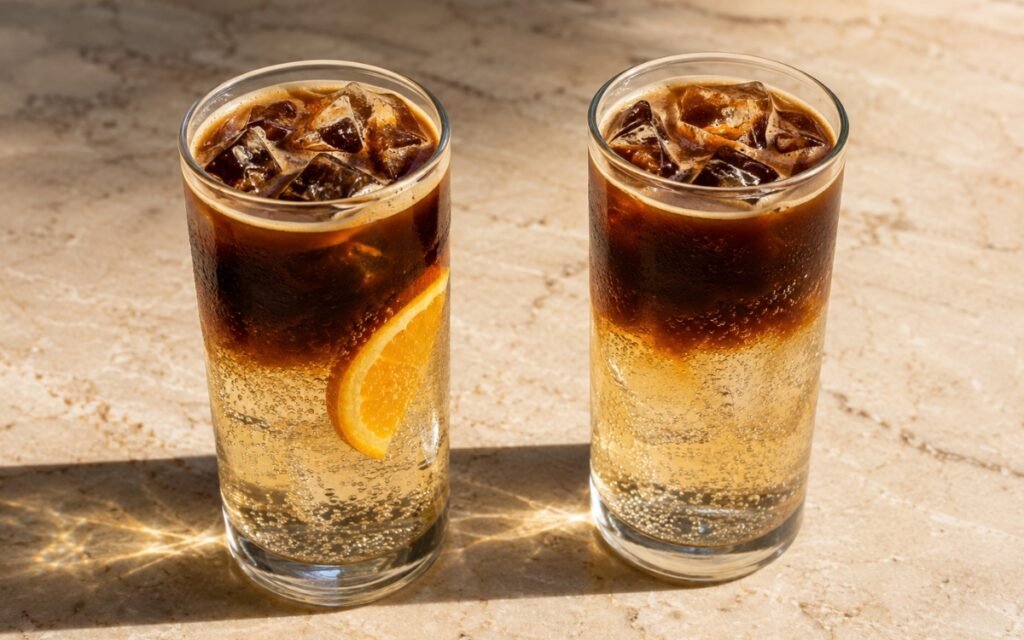
Espresso Tonic Mocktail
Cooled fresh espresso gently layered over chilled, fully sparkling tonic water for a crisp, bitter, minimal drink.
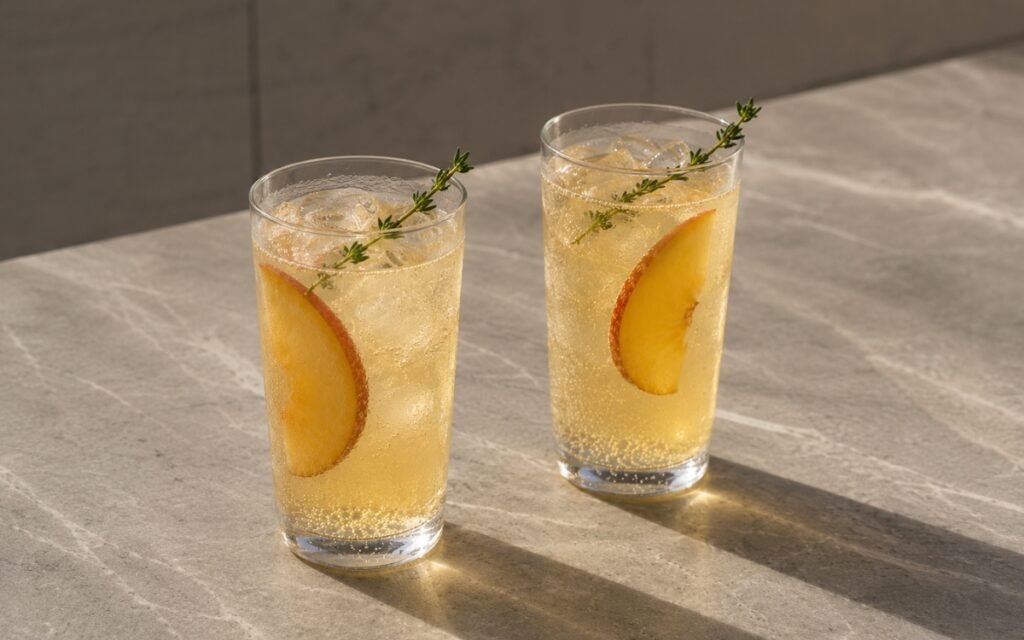
Peach White Tea Spritzer Mocktail
Peaches simmered in thin slices, white tea steeped at 70–85°C with thyme — honey dissolved while warm, topped with club soda. Light, floral, and refined.
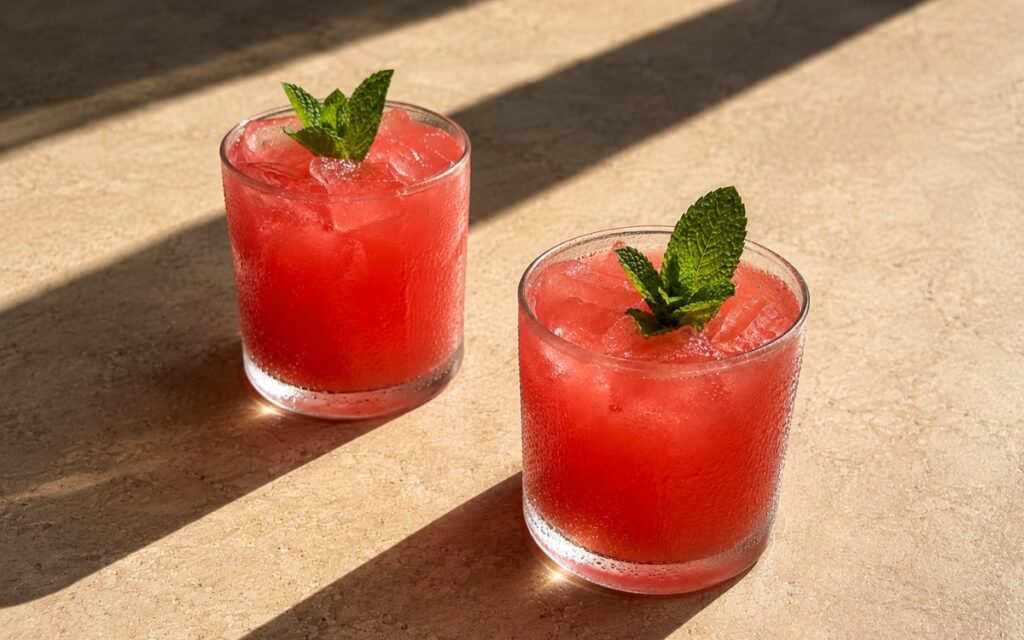
Watermelon Agua Fresca
Juicy watermelon blended with lime zest and mint, ultra-refreshing, cooling, and cleanly simple for hot days.
You might also like
You might also like
Grapefruit Rosemary Infused Water
Grapefruit pulp pith-free and mashed, rosemary rolled lightly — grapefruit slices cold-infused in 3L water for 1–4 hours, removed. Clean-bitter, herbal, and grown-up.
Grapefruit Green Iced Tea (Peel-Infused)
Green tea at 75–80°C for 2–3 minutes, grapefruit peel infused cold 3–5 minutes — honey and a pinch of salt, no juice, chilled. Bold, aromatic, acid-free.
Raspberry Orange Infused Water
Orange pulp and raspberries very lightly pressed — whole fruit cold-infused in 3L water for 1–4 hours, removed. Warm coral-pink, fragrant, and hydrating.
Strawberry Basil Smash Mocktail
Ingredients
Method
- Add the 350g of hulled strawberries to a large bowl. Using a fork or potato masher, mash thoroughly until the strawberries are mostly broken down — a juicy, slightly chunky mixture with some visible pieces remaining rather than a completely smooth purée. The remaining texture is intentional: this is a smash rather than a smoothie, and the visible strawberry pieces distributed through the finished drink are part of both the visual appeal and the eating experience. Mash to the point where the majority of the fruit has released its juice but small pieces remain intact. Add the 45g of honey and the zest of ¼ lemon directly to the mashed strawberries. Stir well until the honey is fully incorporated and the lemon zest is evenly distributed. Honey’s specific floral sweetness is particularly well-suited to this preparation rather than granulated sugar — it dissolves immediately into the wet strawberry mixture without any heating required, and its aromatic compounds specifically complement the strawberry’s own floral, fruity sweetness in a way that plain sugar’s neutral sweetness does not. The lemon zest contributes a fragrant, aromatic citrus thread — a small quantity at ¼ lemon’s worth, present as background brightness rather than citrus flavour in the foreground.
- Add the 12 roughly torn or chopped basil leaves to the strawberry mixture. Fold them through gently using a large spoon — 3–4 slow, deliberate folding motions that distribute the basil through the mash without crushing the leaves aggressively. This technique distinction — folding rather than mashing — is what makes the basil’s contribution aromatic and pleasantly herbal rather than grassy and slightly bitter. When basil leaves are mashed or muddled aggressively, the cell walls rupture completely, releasing chlorophyll alongside the pleasant volatile aromatic compounds — the chlorophyll contributing a specifically grassy, slightly vegetal note that competes with the strawberry’s sweetness. When folded, the leaves release their surface aromatics through gentle contact with the acidic, sweet strawberry mixture while the cell walls remain largely intact, producing a specifically cleaner, sweeter, more floral basil character. Because this drink relies entirely on fresh fruit and fresh basil rather than a cooked-and-strained syrup, it is at its absolute best when prepared immediately before serving — the strawberries and basil at their most vivid and fragrant in the first 5 minutes after mashing. Prepared mash that waits begins to macerate: the strawberries release more liquid, the basil starts to darken, and both the visual appeal and the freshness of flavour diminish progressively.
- Divide the strawberry basil mash evenly among four short, wide glasses — tumblers or rocks glasses with a wide base and mouth show the visible fruit pieces most attractively. Add a large ice cube or several smaller cubes to each glass. The large cube preference is specifically for this format: large cubes melt slower than small cubes, keeping the drink cold for longer without progressive dilution that washes out the fresh strawberry flavour before the glass is finished. Pour approximately 150ml of chilled club soda over each glass — pouring gently down the inner side to preserve the carbonation. Stir once or twice with a bar spoon or long stirrer — not to fully blend the mash into the club soda but to distribute the fruit pieces and basil loosely through the glass so every sip encounters some mash alongside the sparkling water. The correct finished appearance is a lightly mixed, slightly cloudy pink drink with visible strawberry pieces and basil leaves throughout — not a uniform, fully mixed red liquid. Slice each of the 4 garnish strawberries from the tip toward the hull, stopping before cutting through completely, and perch on the rim of each glass. Place one fresh basil leaf on top of the ice. Serve immediately — this drink exists only in the window when the strawberries are vibrant, the basil is aromatic, and the club soda is fully sparkling.