
Classic Fresh Lemonade
Every flavoured lemonade in this collection is built on this foundation — the simple syrup, the fresh lemon juice, the cold water, and the salt. The foundation matters specifically because there is nothing else. No fruit addition to compensate for a weak syrup, no botanical to add complexity over a flat base, no carbonation to make a mild lemonade feel more vivid. Classic lemonade is three decisions correctly made: the acid, the sweet, and the dilution — each adjustable and each tasted carefully before the pitcher is finished. The simple syrup made without reduction — sugar dissolved in water, removed from heat, cooled — not a concentrated simple syrup with a reduced volume but specifically a standard simple syrup that maintains the starting water volume. The lemon juice added to the cold combined base rather than the warm syrup. The salt at ⅛ tsp in the full volume — the same sub-threshold amplifier that appears throughout this collection, specifically necessary in the classic preparation where its absence is most detectable and its presence is most clarifying. The final drink should be crisp and bright on first sip, refreshing through the entire glass, and specifically clean at the finish — none of the heaviness that characterises over-sweetened, under-acid commercial lemonade.

Prep Time : 15 min
Cook Time : 5 min
Servings : 8
15 min
5 min
8
Ingredients
For the Classic Fresh Lemonade
• 240–300ml fresh lemon juice — approximately 5–7 medium lemons; start with 240ml
• 100g white granulated sugar — this one on Amazon
• 240ml water — for the simple syrup
• 960ml–1.2 litres ice-cold water — for dilution; start with 960ml, adjust after tasting
• ⅛ tsp fine sea salt
For Serving
• Ice cubes
• Lemon slices
This post may contain affiliate links. As an Amazon Associate I earn from qualifying purchases, at no additional cost to you.
Directions
- Make the Simple Syrup Without Reduction
Combine the 100g of white sugar and 240ml of water in a small saucepan. Place over medium heat and stir continuously until the sugar has dissolved completely — the liquid should be clear and the sugar visibly absent, at which point the syrup is ready. Remove from the heat immediately, specifically before any simmering reduction begins. The instruction not to reduce is the single most specific technique point in this preparation. The goal is a standard simple syrup at a 1:1 sugar-to-water ratio by weight, maintaining approximately the starting water volume. A reduced syrup has a higher sugar-to-water ratio — the same sweetness requires a smaller volume, which changes the dilution dynamics of the finished lemonade and makes precise balancing harder. A non-reduced standard simple syrup has a predictable, consistent sweetness per millilitre that makes the adjustment steps in the pitcher directly and reliably calibratable. Allow to cool completely. - Juice the Lemons
Juice 5–7 medium lemons until you have 240–300ml of fresh juice. Remove seeds, but specifically do not over-strain — a small amount of natural lemon pulp in the juice contributes both texture and flavour. The fine particles of lemon pulp contain concentrated flavour compounds from the membrane tissues that surround each juice cell; a completely strained, entirely clear lemon juice has a slightly flatter flavour than the same juice with its natural fine pulp content. Lemon variety and season affect both the juice quantity per lemon and the acid concentration. Peak-season lemons — the period when lemons have the highest citric acid content and the most vivid aromatic character, typically mid-winter through spring in the Northern Hemisphere — produce more juice per lemon and more specifically aromatic juice than out-of-season fruit. Always taste the juice before building the lemonade to gauge the specific acidity of the batch being used. - Build the Lemonade
In a large pitcher, combine 240ml of fresh lemon juice, approximately two-thirds of the cooled simple syrup (approximately 65ml), 960ml of ice-cold water, and the ⅛ tsp of fine sea salt. Stir thoroughly. Starting with two-thirds of the syrup rather than all of it is the specific approach that prevents over-sweetening during construction: lemon juice acidity varies meaningfully between batches, and a lemonade built with the full syrup for a particularly tart batch of lemons may be perfectly balanced while the same quantity for a milder batch produces an over-sweet result. The adjustment step that follows is specifically more useful when there is remaining syrup to add incrementally. Taste with full attention to each dimension. The drink at this stage should taste noticeably tart, specifically bright, and clean — not aggressively acidic, not neutral, and not sweet. The brightness should be vivid and the finish should be clean rather than lingering with acidity. If the acidity feels aggressive rather than pleasant, add more simple syrup in small increments. If the brightness seems muted, add more lemon juice. If the concentration is too intense for a long, refreshing drink, add more cold water. The salt’s sub-threshold presence is the preparation’s most important invisible decision. At ⅛ tsp in the full volume, the salt amplifies the lemon’s citric character into a more specifically vivid, more precisely lemon-tasting result than the same preparation without it. The classic lemonade without salt tastes of lemon and sugar water; with the salt it tastes specifically of lemon — a distinction that is immediately detectable in a side-by-side comparison and impossible to unknow once identified. - Chill and Serve
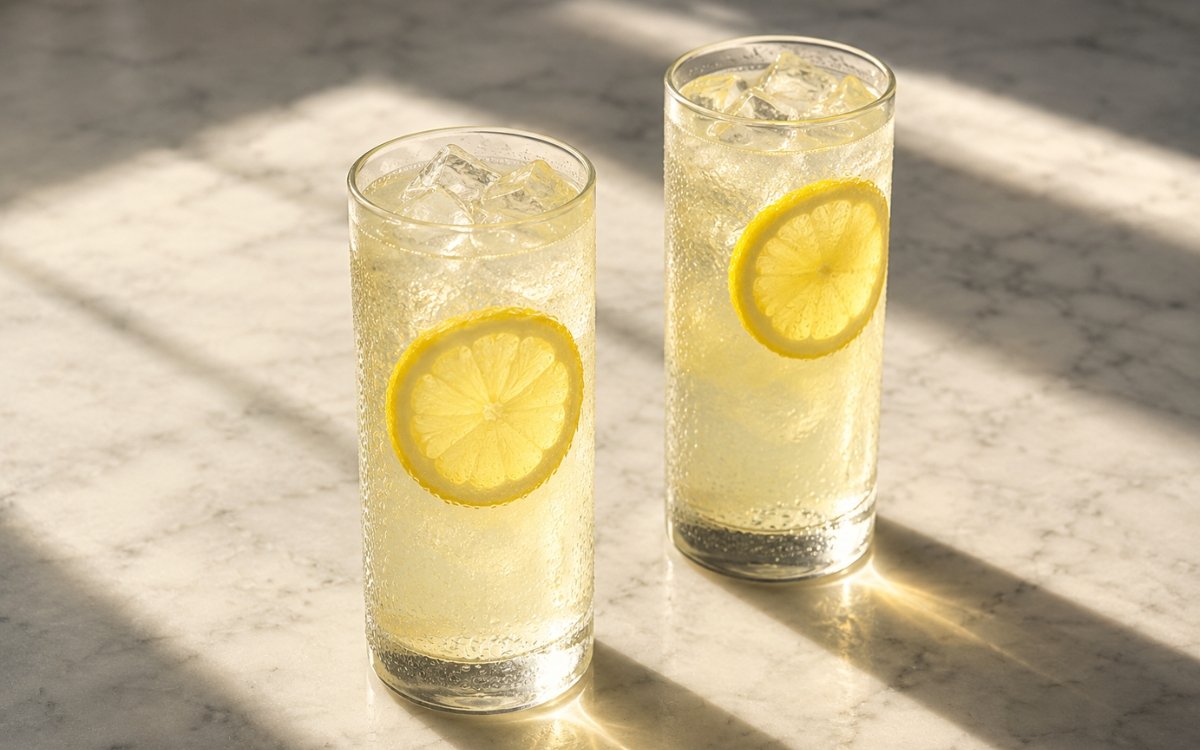
Refrigerate for 1–2 hours until completely cold. The chill period is important for two reasons: the temperature reduction specifically makes the lemon’s acidity taste more refreshing and less aggressive, and the integration period allows the simple syrup’s sugar molecules to fully distribute through the cold water for even sweetness throughout the pitcher rather than localised sweet spots. Fill glasses generously with ice. Pour the chilled lemonade over the ice. Garnish with a lemon slice. Serve very cold — classic lemonade’s refreshing quality is specifically at its best at the coldest serving temperature.
*Notes :
- The three-ingredient balance of classic lemonade — acid, sweet, dilution — has specific ratios that produce the most widely appreciated result as a starting point, while remaining adjustable to individual preference. The starting point in this recipe — 240ml lemon juice to 100g sugar to 960ml total water — produces a specifically tart, moderately sweet, clearly lemon-forward result that leans slightly toward the acidic end of the spectrum. This is specifically the correct calibration for a classic lemonade: a preparation that leans sweet produces a pleasant but specifically less refreshing drink; one that leans tart is more specifically vivid, more immediately refreshing, and more specifically characterful.
- The quality of the lemons is the entire basis of the finished drink — there is no secondary ingredient to compensate for mild or old lemons. Fresh, fragrant, specifically aromatic lemons at room temperature (which yield more juice than cold lemons) produce the most vivid lemon juice. Older lemons with dried, slightly shrunken rinds have lost a proportion of their volatile aromatic compounds and produce a less specifically aromatic juice regardless of acid content.
Why This Recipe Works
This recipe works because the simple syrup is made without reduction — maintaining a predictable, calibratable sweetness per millilitre. The lemon juice is fresh and retains natural fine pulp for texture and flavour depth.
The syrup is added incrementally in the pitcher to allow precise balancing. And the salt is present at the specific sub-threshold quantity that makes the lemon taste more specifically of itself.
Ingredient Breakdown
Simple Syrup Without Reduction
The predictable sweetness calibration — standard ratio maintained for reliable, adjustable balancing during pitcher construction.
Fresh Lemon Juice with Fine Natural Pulp
The flavour-complex acid — natural pulp particles contributing membrane-concentrated flavour compounds alongside the juice’s citric acidity.
Two-Thirds Syrup Added First
The over-sweetening prevention approach — starting below the full quantity allows incremental upward adjustment.
⅛ tsp Salt
The lemon-character amplifier — the preparation’s most invisible and most important decision; sub-threshold presence making the lemon taste specifically more of itself.
Flavor Structure Explained
This Classic fresh lemonade follows a minimal balance model:
- Bright citrus core (fresh lemon juice)
- Clean balancing sweetness (simple syrup)
- Flavor-enhancing salinity (pinch of salt)
- Pure refreshing finish (uncluttered acid-sweet structure)
Lemon defines the entire foundation with vivid citric acidity, sharp brightness, and unmistakable freshness. Simple syrup provides neutral sweetness whose role is not to add flavor, but to balance the acidity just enough to make the drink refreshing instead of harsh. A tiny amount of salt subtly intensifies the lemon’s natural flavor, making the citrus taste clearer, sharper, and more expressive without becoming noticeably salty. Because no additional flavors compete for attention, the drink succeeds entirely through precision and balance — a direct interaction between acid, sweetness, and refreshment.
Common Mistakes to Avoid
- Reducing the Simple Syrup – Reduction changes the sugar-to-water ratio and makes precise balancing harder. Always a standard simple syrup without reduction.
- Over-Straining the Lemon Juice – Removing all natural pulp produces a slightly flatter, less specifically lemon-flavoured result. Always keep the fine natural pulp content.
- Adding All the Syrup Without Tasting First – Lemon acidity varies between batches. Always start with two-thirds and adjust.
- Serving Without the Salt – The salt makes a specifically detectable difference in how vivid the lemon character tastes. Always include it.
- Not Chilling Long Enough – The cold temperature specifically enhances the lemon’s refreshing quality and the sugar’s complete distribution. Always the full 1–2 hours.
Variations
With Honey
Replace the white sugar with 80g of mild honey for the syrup — honey’s floral warmth adds aromatic complexity while the lemon’s acidity prevents the honey character from being sweet-dominant.
With Sparkling Water
Replace the ice-cold still water with chilled sparkling water — add right before serving. This preparation becomes the Classic Sparkling Lemonade linked below.
With Fresh Ginger
Add 10g of thinly sliced fresh ginger to the saucepan during the syrup — removed during straining. The ginger’s warmth produces a specifically more complex, more warming result while the lemon remains primary.
With Vanilla
Add ¼ tsp of pure vanilla extract to the cooled syrup — the vanilla’s aromatic warmth softens the lemon’s sharpness into a specifically rounder, more dessert-adjacent direction.
Storage & Make-Ahead
Simple syrup can be refrigerated in a sealed jar for up to 2 weeks.
Once assembled, classic lemonade can be refrigerated for up to 3 days. During storage, the fresh aromatic quality of the lemon gradually becomes slightly less pronounced, although the overall flavor remains good. For the freshest taste, it is best enjoyed within 48 hours.
Assembled glasses are not suitable for storage and should be served immediately.
Frequently Asked Questions
Why not reduce the simple syrup?
A standard simple syrup at a 1:1 sugar-to-water ratio has a predictable, consistent sweetness per millilitre that makes the balancing steps in the pitcher directly calibratable. A reduced syrup has a higher sugar concentration — the same sweetness comes from a smaller volume, which disrupts the predictable ratio and makes it harder to add sweetness incrementally without accidentally over-sweetening.
Why keep natural lemon pulp rather than straining the juice completely?
The fine membrane particles in natural lemon juice contain concentrated flavour compounds from the lemon’s internal structure that contribute both textural interest and a slightly more complex, more specifically lemon-character flavour than juice strained completely clear. The difference is subtle but specifically detectable.
Why add syrup incrementally rather than all at once?
Lemon juice’s citric acid concentration varies between batches, varieties, and seasons. A batch with higher natural acidity needs more syrup to reach the same perceived balance; a milder batch needs less. Starting at two-thirds of the syrup and adjusting upward after tasting produces the correctly balanced result for any specific batch of lemons rather than assuming a fixed balance that may or may not be correct.
Why is the salt so important for a drink this simple?
In a preparation with no secondary ingredient, the salt’s sub-threshold amplification of the lemon’s character is the difference between lemonade that tastes of lemon and lemonade that tastes of sweetened lemon water. The amplification is specifically detectable: side-by-side comparison of the salted and unsalted version shows the salted one as more vivid, more precisely lemon, more specifically itself. It is the preparation’s only complexity-adding ingredient.
What other lemonade preparations share this foundation?
The Mint Lemonade Spritz — French Style builds on this classic base with mint cold infusion, honey as a secondary sweetener, and white verjus for additional complexity — the French brasserie-inspired elevated version. The Classic Sparkling Lemonade shares this exact preparation in a sparkling format — the same three-ingredient balance with carbonation replacing still water for a more vivid, more immediately refreshing result. The Lime Lemonade — Limeade shares the structural approach — clean simple syrup, fresh-pressed acid, cold water, salt — with lime’s sharper, more specifically tropical citrus character replacing lemon.
Nutrition Facts
( per serving )
Calories
~65 kcal
Protein
0 g
Fat
0 g
Carbs
17 g
Calories
~65 kcal
Protein
0 g
Fat
0 g
Carbs
17 g
Related Recipes
Related Recipes

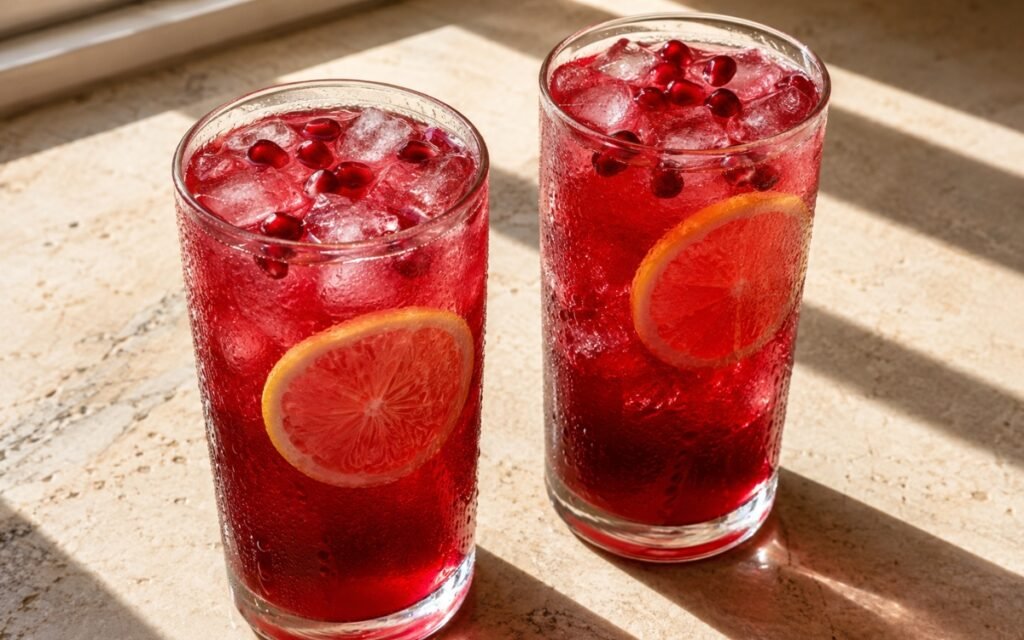
Pomegranate Lemonade
Honey-lemon syrup with zest off heat, 500ml pure pomegranate juice — fresh lemon, salt for anti-astringency, cold water, chilled. Ruby-red and grown-up.
Guava Lemonade
Cold-extracted lemon zest and juice combined with pink guava nectar for a smooth, fragrant, pink-orange tropical lemonade.
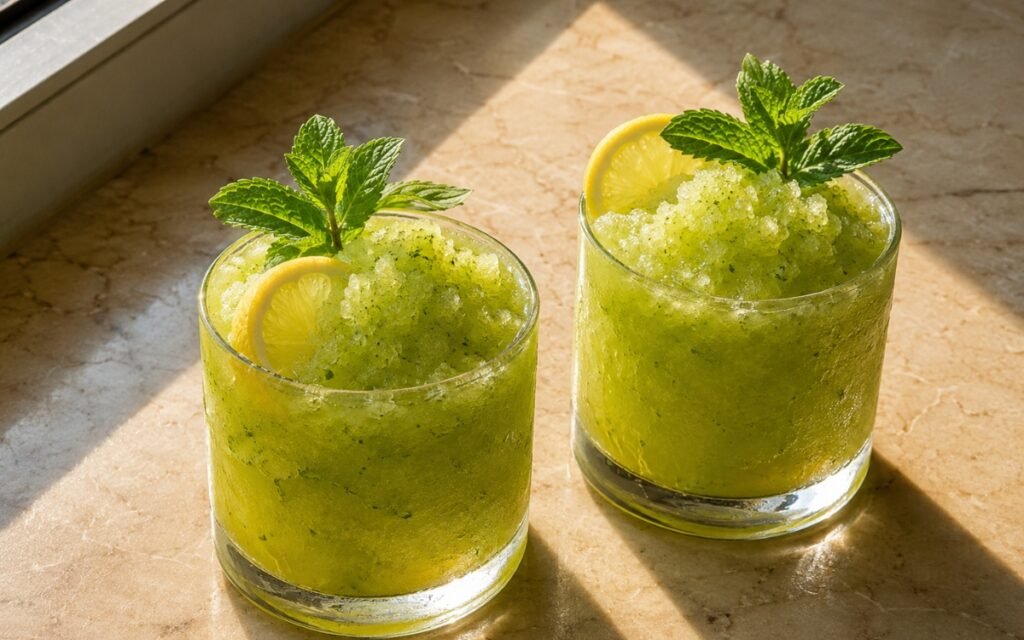
Mint Lemonade — Blended
Lemon zest syrup off heat, mint added last to blender — blended 15–25 seconds maximum, served immediately for slushy icy texture. Aromatic, cool, and bright.

You might also like
You might also like
Mango Iced Green Tea
Green tea at 75–80°C for 2–3 minutes, mango simmered into a light unreduced syrup, deseeded chili infused cold 3–5 minutes — chilled. Bright, tropical, gently edged.
Verbena Peach Iced Black Tea
Light black tea at 90–95°C for 2½–3 minutes, peach syrup made separately, verbena clapped and infused cold 8–12 minutes — lemon peel, chilled. Floral, aromatic, softly fruity.
Fresh Peach Iced Tea
Black tea at 90–95°C for 2½–3 minutes, raw peach slices cold-infused 45–60 minutes — strained cleanly, honey, chilled. Bright, fresh, fruit-forward.



Classic Fresh Lemonade
Ingredients
Method
- Combine the 100g of white sugar and 240ml of water in a small saucepan. Place over medium heat and stir continuously until the sugar has dissolved completely — the liquid should be clear and the sugar visibly absent, at which point the syrup is ready. Remove from the heat immediately, specifically before any simmering reduction begins. The instruction not to reduce is the single most specific technique point in this preparation. The goal is a standard simple syrup at a 1:1 sugar-to-water ratio by weight, maintaining approximately the starting water volume. A reduced syrup has a higher sugar-to-water ratio — the same sweetness requires a smaller volume, which changes the dilution dynamics of the finished lemonade and makes precise balancing harder. A non-reduced standard simple syrup has a predictable, consistent sweetness per millilitre that makes the adjustment steps in the pitcher directly and reliably calibratable. Allow to cool completely.
- Juice 5–7 medium lemons until you have 240–300ml of fresh juice. Remove seeds, but specifically do not over-strain — a small amount of natural lemon pulp in the juice contributes both texture and flavour. The fine particles of lemon pulp contain concentrated flavour compounds from the membrane tissues that surround each juice cell; a completely strained, entirely clear lemon juice has a slightly flatter flavour than the same juice with its natural fine pulp content. Lemon variety and season affect both the juice quantity per lemon and the acid concentration. Peak-season lemons — the period when lemons have the highest citric acid content and the most vivid aromatic character, typically mid-winter through spring in the Northern Hemisphere — produce more juice per lemon and more specifically aromatic juice than out-of-season fruit. Always taste the juice before building the lemonade to gauge the specific acidity of the batch being used.
- In a large pitcher, combine 240ml of fresh lemon juice, approximately two-thirds of the cooled simple syrup (approximately 65ml), 960ml of ice-cold water, and the ⅛ tsp of fine sea salt. Stir thoroughly. Starting with two-thirds of the syrup rather than all of it is the specific approach that prevents over-sweetening during construction: lemon juice acidity varies meaningfully between batches, and a lemonade built with the full syrup for a particularly tart batch of lemons may be perfectly balanced while the same quantity for a milder batch produces an over-sweet result. The adjustment step that follows is specifically more useful when there is remaining syrup to add incrementally. Taste with full attention to each dimension. The drink at this stage should taste noticeably tart, specifically bright, and clean — not aggressively acidic, not neutral, and not sweet. The brightness should be vivid and the finish should be clean rather than lingering with acidity. If the acidity feels aggressive rather than pleasant, add more simple syrup in small increments. If the brightness seems muted, add more lemon juice. If the concentration is too intense for a long, refreshing drink, add more cold water. The salt’s sub-threshold presence is the preparation’s most important invisible decision. At ⅛ tsp in the full volume, the salt amplifies the lemon’s citric character into a more specifically vivid, more precisely lemon-tasting result than the same preparation without it. The classic lemonade without salt tastes of lemon and sugar water; with the salt it tastes specifically of lemon — a distinction that is immediately detectable in a side-by-side comparison and impossible to unknow once identified.
- Refrigerate for 1–2 hours until completely cold. The chill period is important for two reasons: the temperature reduction specifically makes the lemon’s acidity taste more refreshing and less aggressive, and the integration period allows the simple syrup’s sugar molecules to fully distribute through the cold water for even sweetness throughout the pitcher rather than localised sweet spots. Fill glasses generously with ice. Pour the chilled lemonade over the ice. Garnish with a lemon slice. Serve very cold — classic lemonade’s refreshing quality is specifically at its best at the coldest serving temperature.