
Southern Sweet Tea — Light Version
Southern Sweet Tea — Light Version is the one preparation in this collection that deliberately breaks from the temperature and timing discipline governing every other black tea recipe here — and does so specifically because the Southern sweet tea tradition requires it. Where every other black tea preparation holds at 90–95°C for a maximum of 3 minutes to avoid harshness, this recipe calls for a full boil and a 5-minute steep, because Southern sweet tea’s defining character comes from a specifically stronger, bolder base that dissolves sugar completely and produces the particular smooth, full-bodied, slightly rounder character that the tradition is built on. The longer steep at higher temperature does produce more tannins than the careful preparations elsewhere in this collection — but the sugar dissolved into the still-hot tea specifically softens and rounds those tannins in a way that creates the distinctly smooth, iconic Southern result rather than a simply harsh one. The sugar goes in while the tea is still hot, which is the single most important practical detail in this entire recipe: granulated sugar dissolved into hot tea integrates completely, while sugar added to cold tea settles and distributes unevenly regardless of stirring. The light version calibrates the sweetness deliberately lower than the traditional preparation, staying clearly sweet but landing somewhere between full Southern sweet tea and a lightly sweetened iced tea — closer to the former in character, restrained enough for those who find the traditional version too specifically sweet.

Prep Time : 10 min
Steep Time : 5 min
Servings : 8
10 min
5 min
8
Ingredients
For the Tea Base
• 1.65 litres water
• 6 black tea bags — Orange Pekoe or Luzianne-style blend — this one on Amazon
For the Sweetening
• 65–100g white sugar — 65g for a lighter, drier result; up to 100g for a sweeter, more traditionally Southern version
For Serving
• Ice
• Lemon slices — optional
This post may contain affiliate links. As an Amazon Associate I earn from qualifying purchases, at no additional cost to you.
Directions
- Boil and Steep
Bring the water to a full boil. Remove from the heat, add the 6 black tea bags, and steep for 5 minutes. This is the only preparation in this collection that calls for full boiling water and an extended 5-minute steep — both are intentional here rather than errors, since Southern sweet tea’s specific character comes from a stronger, fuller-bodied base that the gentler brewing temperatures elsewhere in this collection specifically do not produce. The 5-minute steep at boiling temperature creates the concentrated, slightly bold tea that gives Southern sweet tea its characteristic depth. - Remove the Tea Bags
Remove the tea bags without squeezing them. Even in a preparation that accepts a longer steep and higher temperature than the rest of this collection, squeezing still pulls out an extra bitterness from the most concentrated liquid held inside the bags — a bitterness that even the sugar cannot fully smooth over. - Sweeten While Hot
While the tea is still hot, stir in 65g of white sugar until fully dissolved. Taste and add more gradually, up to 100g total, if you want a sweeter result. Dissolving the sugar into hot tea is the non-negotiable step that the notes address directly: granulated sugar added to cold tea will not dissolve cleanly regardless of how long or how vigorously it is stirred. The sweet tea tradition dissolves sugar into the hot brew specifically because this is the only way to produce the completely smooth, fully integrated sweetness that the preparation is known for. - Chill and InfusCool the Teae
Let the sweetened tea cool to room temperature. If the tea tastes too strong or specifically tannic at this stage — a sign the particular bag brand used extracts more aggressively than expected — add a small splash of cold water to soften the concentration slightly before chilling. - Chill
Refrigerate for 1–2 hours until fully cold and refreshing. The cold rest is specifically important here: the sugar-tannin interaction that makes Southern sweet tea smooth rather than harsh develops most clearly once the tea is fully cold. - Serve
Fill glasses with ice, pour over the chilled sweet tea, and garnish with a lemon slice if desired. Serve cold, smooth, sweet, and clean — sweet tea, not syrup tea.
*Notes :
- Do not add sugar after chilling unless it is dissolved as a simple syrup first. Granulated sugar stirred into cold tea produces a specific gritty undissolved layer at the bottom of the glass or pitcher that cannot be corrected by stirring alone — always dissolve into the hot brew.
- For a sweeter but still restrained version, use the full 100g of sugar — this still sits below the full traditional Southern sweet tea level, which often uses 150g or more per comparable volume.
- For a drier, more tea-forward version that is recognisably sweet tea in character but lighter on the palate, stay closer to 65g. The tea’s own natural character becomes more present at the lower sugar quantity.
- Orange Pekoe is the specifically traditional choice for Southern sweet tea in the United States — Luzianne is the most commonly cited brand in the American South for this preparation specifically, and its blend is calibrated for sweet tea brewing in a way that generic supermarket black tea blends are not. A Ceylon or light breakfast blend will work but produces a slightly different, less characteristically Southern result.
Why This Recipe Works
This recipe works because it specifically honours the tradition rather than adapting it toward the rest of this collection’s approach — boiling water, longer steep, and hot sugar dissolution are all correct here rather than technical shortcuts.
The sugar dissolved into the hot tea specifically smooths and rounds the additional tannins the longer steep introduces, producing the characteristic Southern result rather than a simply stronger iced tea.
And the light version calibration keeps the sweetness clearly present while staying at a level that remains genuinely drinkable across a full glass rather than becoming cloying.
Ingredient Breakdown
Full Boil and 5-Minute Steep
The tradition-specific exception — the only preparation in this collection that deliberately brews longer and hotter, specifically because the Southern sweet tea character requires it.
Sugar Dissolved Into Hot Tea
The non-negotiable step — the only way to achieve completely smooth, fully integrated sweetness rather than gritty undissolved settling.
65–100g White Sugar
The light-version calibration — clearly sweet but specifically below the traditional full-sweetness level.
Orange Pekoe or Luzianne-Style Blend
The tradition-appropriate tea — calibrated for this preparation in a way generic blends are not.
Flavor Structure Explained
This Southern Sweet Tea follows a layered balance model:
- Full-bodied tea core (black tea)
- Gentle sweetness (white sugar)
- Smooth rounded body (hot sugar integration)
- Clean tea structure (careful brewing)
- Classic refreshing finish (balanced Southern style)
Black tea defines the foundation with a fuller body and deeper flavor than most iced tea preparations, providing richness and structure without developing bitterness. White sugar supplies the drink’s defining sweetness, but at a restrained level that preserves the recognizable character of Southern sweet tea while avoiding the heavy, syrup-like quality of the traditional version. Dissolving the sugar while the tea is hot creates a smooth, integrated sweetness that feels part of the tea rather than layered on top of it. The result is an iced tea that remains clean, rounded, and unmistakably Southern in style, balancing body, sweetness, and refreshment in equal measure.
Common Mistakes to Avoid
- Brewing at Below-Boiling Temperature – Produces a tea that is specifically lighter and cleaner in character rather than the full-bodied Southern base. This is the one preparation in this collection where the boil is correct.
- Squeezing the Tea Bags – Adds bitterness that the sugar cannot fully smooth over. Always remove gently.
- Adding Sugar to Cold or Room-Temperature Tea – Produces undissolved, gritty settling. Always dissolve into the hot brew.
- Using the Wrong Tea – A generic breakfast blend or an herbal tea will not produce the characteristically Southern result. Always Orange Pekoe or a Luzianne-style blend.
- Serving Before Fully Chilled – The tannin-sugar interaction specifically needs the cold rest to develop the smooth, rounded Southern character. Always chill the full 1–2 hours.
Variations
With Lemon
Stir in 1–2 tablespoons of fresh lemon juice to the cooled, sweetened tea for a lemon sweet tea — the most common Southern variation.
With Mint
Add a small handful of lightly clapped fresh mint leaves to the pitcher during the final chill for 15 minutes, then remove, for the mint sweet tea direction.
Full Traditional Sweet Tea
Use 120–150g of sugar instead of 65–100g for the full-sweetness traditional Southern version.
Unsweetened Version
Omit the sugar entirely and serve with lemon and ice for an unsweetened Southern-style iced tea that still benefits from the stronger, bolder brew.
Storage & Make-Ahead
The sweetened tea base can be refrigerated for up to 3 days. Southern sweet tea is one of the most stable preparations in this collection and holds its flavor exceptionally well during storage.
Once assembled, the pitcher is best enjoyed within 2 days. Stir well before serving to ensure the flavor remains evenly distributed.
Frequently Asked Questions
Why does this recipe use boiling water and a 5-minute steep when every other black tea recipe in this collection uses 90–95°C for 2½–3 minutes?
Southern sweet tea’s character specifically comes from a stronger, fuller-bodied base than the precise, bitterness-avoiding approach used elsewhere. The sugar dissolved into the hot, more-extracted tea specifically rounds and softens the additional tannins in a way that produces the characteristically smooth Southern result. Applied to a gently brewed tea without sugar, this longer steep would produce something harsh; applied here, it produces something specifically right.
Why does the sugar have to go in while the tea is hot?
Granulated sugar requires warmth to dissolve completely and integrate evenly. Added to cold tea, it settles undissolved at the bottom regardless of how long it is stirred. The entire smooth, completely sweet character of Southern sweet tea comes from complete integration during the hot stage.
What is the difference between the light version and the full traditional version?
The full traditional Southern sweet tea typically uses 120–150g or more of sugar per comparable volume, producing a specifically sweet-first flavour that is the defining characteristic of the tradition. The light version here uses 65–100g — clearly sweet and recognisably sweet tea in character, but with the tea’s own flavour more present alongside the sweetness.
What other iced black tea preparations share this approach?
The Lemon Mint Iced Black Tea shares the black tea base in a specifically herb-lifted, lemon-bright direction with honey rather than sugar and the gentler brewing approach. The Basil Lemon Iced Tea shares the honey-sweetened, botanical approach with basil’s warmer herbal character. The Classic Iced Black Tea shares the clean, restrained black tea approach at the precise 90–95°C, 2½–3 minute brewing standard — the most direct contrast in technique to this preparation.
Nutrition Facts
( per serving )
Calories
~40-55 kcal
Protein
0 g
Fat
0 g
Carbs
10–14 g
Calories
~40-55 kcal
Protein
0 g
Fat
0 g
Carbs
10–14 g
Related Recipes
Related Recipes

Classic Iced White Tea
White tea at 75–80°C for 3–4 minutes, honey dissolved while slightly warm, lemon peel infused cold 3–4 minutes — chilled. Pale, delicate, sophisticated.
Mint Green Iced Tea
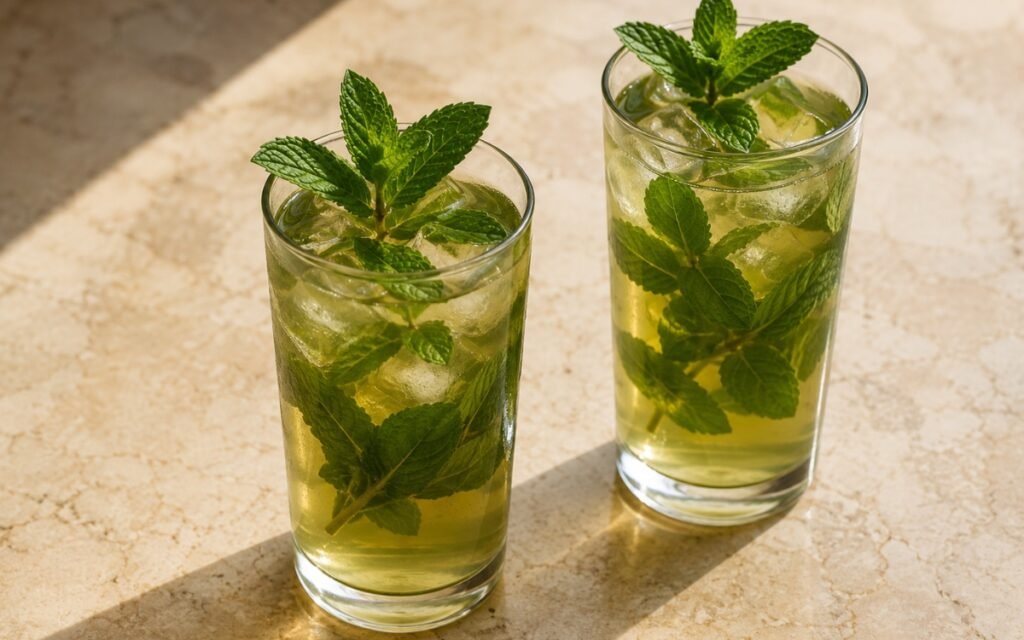
Green tea at 75–80°C for 2–3 minutes, mint clapped and infused cold 8–15 minutes, tasted from 8 — honey, chilled. Bold, cooling, and clean.
Classic Iced Black Tea
Black tea at 90–95°C for 2½–3 minutes, honey dissolved warm, lemon peel infused cold 5–10 minutes — chilled. Crisp, clean, timeless.


You might also like
You might also like
Thyme Lemon Orange Green Tea Cooler
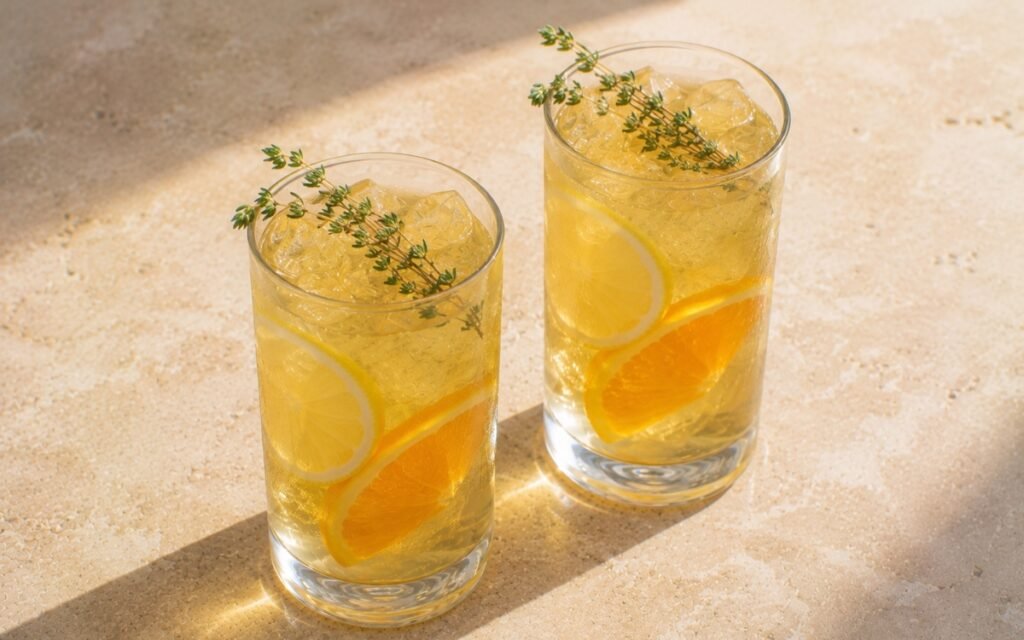
Green tea at 75–80°C for 2–3 minutes, thyme clapped and infused cold — orange juice for softness, lemon juice for sharpness, honey, chilled. Bright and lightly herbal.
Basil Lemon Iced Tea
Ceylon black tea at 90–95°C for 2½–3 minutes, basil clapped and infused cold 10–15 minutes — lemon peel and juice, honey, chilled. Dry, green, and fresh.
Orange Mint Infused Water
Orange pulp mashed, mint clapped in two stages — orange slices and fresh leaves cold-infused in 3L water for 1–4 hours, removed. Warm citrus and cool mint.



Southern Sweet Tea — Light Version
Ingredients
Method
- Bring the water to a full boil. Remove from the heat, add the 6 black tea bags, and steep for 5 minutes. This is the only preparation in this collection that calls for full boiling water and an extended 5-minute steep — both are intentional here rather than errors, since Southern sweet tea’s specific character comes from a stronger, fuller-bodied base that the gentler brewing temperatures elsewhere in this collection specifically do not produce. The 5-minute steep at boiling temperature creates the concentrated, slightly bold tea that gives Southern sweet tea its characteristic depth.
- Remove the tea bags without squeezing them. Even in a preparation that accepts a longer steep and higher temperature than the rest of this collection, squeezing still pulls out an extra bitterness from the most concentrated liquid held inside the bags — a bitterness that even the sugar cannot fully smooth over.
- While the tea is still hot, stir in 65g of white sugar until fully dissolved. Taste and add more gradually, up to 100g total, if you want a sweeter result. Dissolving the sugar into hot tea is the non-negotiable step that the notes address directly: granulated sugar added to cold tea will not dissolve cleanly regardless of how long or how vigorously it is stirred. The sweet tea tradition dissolves sugar into the hot brew specifically because this is the only way to produce the completely smooth, fully integrated sweetness that the preparation is known for.
- Let the sweetened tea cool to room temperature. If the tea tastes too strong or specifically tannic at this stage — a sign the particular bag brand used extracts more aggressively than expected — add a small splash of cold water to soften the concentration slightly before chilling.
- Refrigerate for 1–2 hours until fully cold and refreshing. The cold rest is specifically important here: the sugar-tannin interaction that makes Southern sweet tea smooth rather than harsh develops most clearly once the tea is fully cold.
- Fill glasses with ice, pour over the chilled sweet tea, and garnish with a lemon slice if desired. Serve cold, smooth, sweet, and clean — sweet tea, not syrup tea.