
Mint Lemonade — Blended
Every other lemonade in this collection is built and chilled in advance. This one is built and served in the same motion — the blended preparation specifically requiring immediate service because mint’s behaviour in a high-speed blender is the preparation’s most consequential technical variable. Mint’s pleasant aromatic character — primarily menthol, menthone, and the various volatile menthol esters responsible for its specifically cool, clean, aromatic freshness — is released in two distinct phases during blending. In the first 15–20 seconds at high speed, the surface cell-wall rupture releases the pleasant volatile aromatic compounds cleanly into the surrounding liquid. In the subsequent 30–60 seconds, the continued blade action breaks through to the chlorophyll-rich inner cell contents, releasing chlorophyll and various terpene compounds that produce the specifically grassy, slightly bitter, vegetal note that immediately identifies over-blended mint. The brief blend — specifically stopping when the mixture is smooth and slushy rather than completely uniform and pourable — is the entire technique difference between mint lemonade that tastes specifically cool and aromatic and mint lemonade that tastes of blended lawn. The ice provides both the slushy texture that distinguishes this from the still and sparkling preparations and the cold temperature that makes the blended mint’s volatile aromatic compounds more specifically vivid on the palate. Serve immediately. Do not store.
Prep Time : 15 min
Cook Time : 5 min
Servings : 8
15 min
5 min
8
Ingredients
For the Lemon Structure
• Clean pulp or segments from 2–3 lemons — seeds and all tough membranes removed; no white pith
For the Peel-Infused Simple Syrup
• 180ml water
• 150g white granulated sugar — this one on Amazon
• Zest of 2 lemons — yellow part only, no white pith; added off heat
For the Blended Lemonade Base
• 240ml fresh lemon juice — approximately 5–6 lemons
• 120–150ml peel-infused simple syrup — start with 120ml; adjust after tasting
• 360–480ml ice-cold water — start with 360ml; add more if needed for texture
• 140–200g ice cubes — start with 140g for a lighter slushy; 200g for a thicker, colder result
• ½ cup fresh mint leaves — loosely packed; approximately 15g
• Pinch of fine sea salt
For Serving
• Lemon slices
• Fresh mint leaves
This post may contain affiliate links. As an Amazon Associate I earn from qualifying purchases, at no additional cost to you.
Directions
- Make the Peel-Infused Simple Syrup
Combine the 180ml of water and 150g of white sugar in a small saucepan over medium heat. Stir until completely dissolved and clear. Remove from heat immediately. Add the zest of 2 lemons. Cover and steep for 8–10 minutes. Strain completely. Allow to cool. The peel-infused syrup is the same preparation used across the citrus lemonade collection — the lemon zest’s aromatic terpene oils extracted into the warm syrup at the 8–10 minute window that captures the pleasant volatile compounds ahead of the bitter ones. In the blended preparation, the syrup’s aromatic depth is specifically more important than in the still version because the blending process partially diminishes the fresh lemon juice’s volatile aromatic character through agitation and temperature increase. The syrup’s cooked-in peel-oil depth provides the aromatic foundation that remains stable through blending. - Prepare the Lemon Pulp
Segment 2–3 lemons, removing all seeds and every piece of tough membrane and white pith. In a blended preparation the pith removal is even more specifically important than in the muddled-pulp preparations: the blender applies significantly more mechanical force than gentle mashing, fully rupturing every pith cell and extracting its bitter limonin and naringin compounds into the surrounding liquid in a way that gentle mashing does not. Any pith in the blended preparation will produce a specifically pervasive, integrated bitterness in the finished drink that cannot be corrected after blending. - Build the Blender
Add the ingredients to the blender in the following sequence for the most efficient, most controlled blend: the ice cubes first, then the lemon pulp, then the fresh lemon juice, then the 120ml of peel-infused syrup, then the 360ml of ice-cold water, then the pinch of salt. Add the fresh mint leaves last — on top of all other ingredients. This sequence places the ice at the bottom where the blades engage most efficiently, the liquids distributed through the solids for even processing, and the mint leaves at the top where they will be drawn into the vortex from above rather than immediately engaged by the blades at maximum speed from below. Placing the mint last and at the top delays its contact with the blades fractionally, reducing the total time the mint is in direct high-speed blade contact. - Blend Briefly — The Most Critical Step
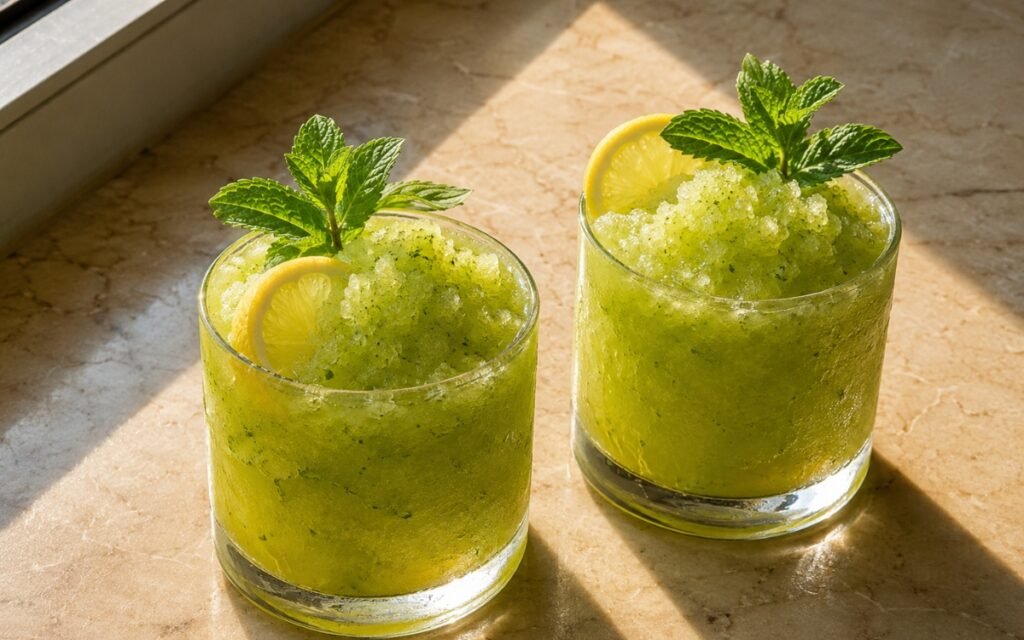
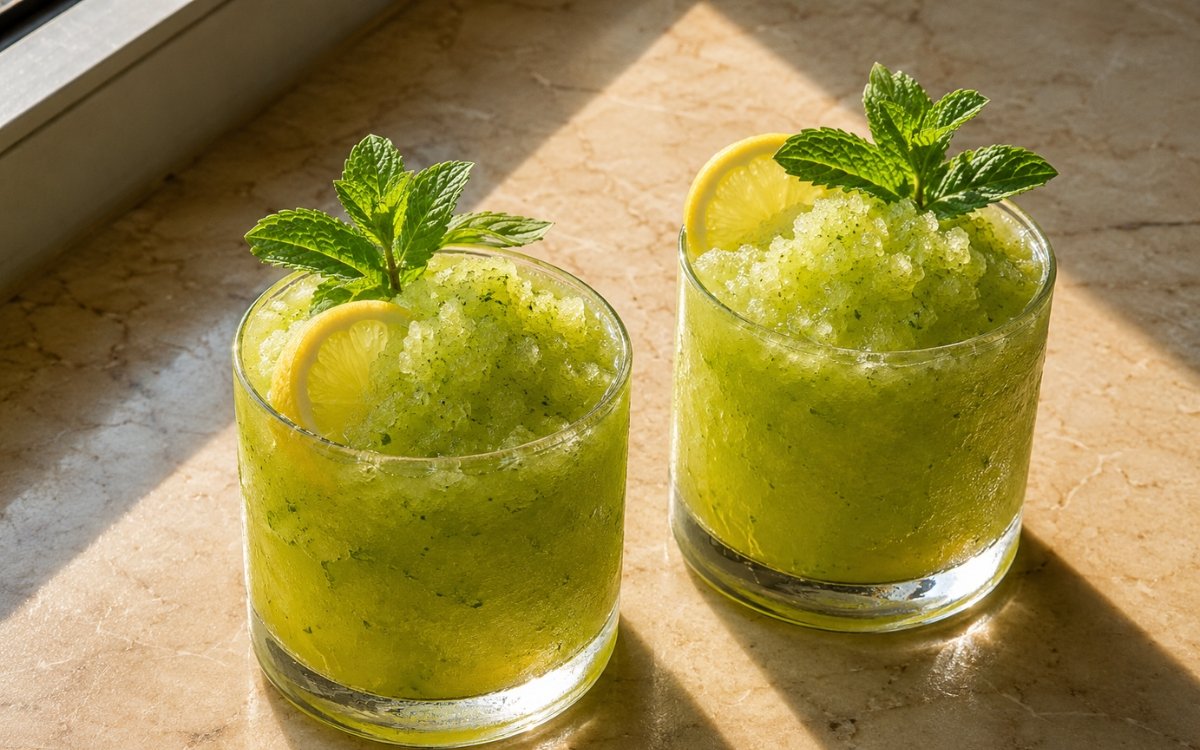
Blend at high speed for 15–25 seconds only — starting the timer when the blender reaches its maximum speed after the ramp-up. The target end state is a pale green, slushy, cold mixture where the ice is broken down into fine granular pieces and the mint is distributed throughout as small flecks of green. The mixture should pour with some resistance — visibly thicker and colder than a liquid, with a texture between a slushie and a thick drink. The visual signs of correct blending: pale green colour (not dark or vivid green), visible small ice flecks throughout, a vortex that is moving but not fully smooth in the blender jar. The visual signs of over-blending: vivid, dark green colour indicating chlorophyll release; completely smooth, fully pourable texture indicating the ice has been fully liquidised and the mixture has warmed from friction; absence of any ice-textural quality. If the blender requires longer than 25 seconds to achieve the slushy-smooth target state, the issue is likely with the blender’s power rather than the blend time — under-powered blenders require multiple short pulses rather than a sustained high-speed blend to avoid the over-blending problem. - Taste, Adjust, and Serve Immediately
Taste directly from the blender. If the acidity is too sharp, add a small amount of additional peel-infused syrup (not plain sugar) and pulse once or twice. If the concentration is too intense, add 60ml more ice-cold water and pulse once. If the texture is too thin and liquid, add 30–40g more ice and pulse briefly. The adjustments should be minimal — the starting formula is calibrated to produce the correct result without significant adjustment. Pour immediately into glasses. Add lemon slices to each glass and several fresh mint leaves on top for the aromatic impression above the rim. Serve within 2–3 minutes of blending — the ice melts progressively, the texture collapses from slushy toward liquid, and the mint’s volatile aromatic character diminishes. This is specifically not a make-ahead preparation.
*Notes :
- The specific character of blended lemonade is the slushy texture and the cold intensity that no still or sparkling preparation can replicate — each sip delivers not only the flavour but a physical cold that is specifically more intense and more immediately refreshing than chilled liquid. This tactile cold quality is what the ice-blended format provides and why the preparation specifically requires immediate service: as the ice melts and the temperature rises toward that of a cold liquid, the specific additional refreshment quality that the slushy texture provides disappears.
- The water quantity range of 360–480ml is deliberately wide because different blenders produce different amounts of heat during blending, different ice qualities (crushed vs cubed, freshly frozen vs older) behave differently in the blender, and different preferences for slushy texture versus liquid texture require different proportions. The starting point of 360ml produces a distinctly slushy result in most blenders; if the result is too thick, additional water brings it to the preferred texture.
Why This Recipe Works
This recipe works because the peel-infused syrup provides the stable aromatic foundation that survives blending. The mint is added last and blended briefly — specifically stopping before chlorophyll release.
The pith is completely excluded to prevent the blender’s mechanical action from extracting integrated bitterness. And the ice provides both the slushy texture and the cold intensity that specifically defines this preparation’s appeal.
Ingredient Breakdown
Brief Blend (15–25 Seconds Maximum)
The technique’s defining constraint — mint’s pleasant volatile aromatics released in the first phase of blending; chlorophyll and grassy compounds released in the subsequent phase; always stopping in the first phase.
Mint Added Last and on Top
The blade-contact delay technique — mint placed above the liquid ingredients and drawn into the vortex from above rather than being at maximum-speed blade contact from the start.
Peel-Infused Syrup as Aromatic Foundation
The texture and cold-intensity mechanism — slushy texture and physical cold that no chilled liquid can replicate; requires immediate service before melting.
Ice Cubes Blended In
Orange juice adds natural sweetness, fruit body, and volume. It balances verjus sharpness and gives the drink a recognizable sangria flavor profile. Freshly squeezed juice provides cleaner aromatics and better integration than packaged juice.
Immediate Service (No Storage)
The quality preservation requirement — mint aromatics diminish, texture collapses, and the specific appeal disappears within minutes of blending.
Flavor Structure Explained
This Blended mint lemonade follows a layered balance model:
- Sharp citrus core (fresh lemon juice)
- Cool aromatic freshness (mint)
- Icy textured refreshment (blended ice)
- Deep citrus-mint aromatics (peel syrup and blended herbs)
- Intensified cold finish (slushy structure)
Lemon defines the foundation with vivid acidity and sharp citrus brightness that immediately energize the palate. Mint provides the defining cooling contrast through menthol-forward freshness and strong aromatic lift, especially amplified by the drink’s extremely cold temperature. The blended ice creates a granular slushy texture that changes the drinking experience entirely, making each sip feel physically colder and more refreshing than standard lemonade. Peel-infused syrup contributes concentrated citrus oils, while the blended mint releases additional aromatics throughout the drink, deepening the flavor beyond simple lemon-and-mint sharpness. The result is a preparation built as much around texture and temperature as flavor itself.
Common Mistakes to Avoid
- Blending Beyond 25 Seconds – The transition from aromatic mint to chlorophyll-grassy mint occurs within seconds of the correct end point. Always stop at 15–25 seconds.
- Including Pith in the Lemon Pulp – The blender extracts pith bitterness completely into the liquid. Always remove all pith before blending.
- Adding Mint at the Bottom of the Blender – Mint placed at the blades from the beginning has maximum sustained blade contact. Always add mint on top as the last ingredient.
- Storing the Blended Lemonade – Texture, aromatic character, and the specific slushy quality all diminish rapidly. Always serve immediately.
- Over-Adding Water – Too much water produces a thin, liquid result without slushy texture. Always start at 360ml and add only if needed.
Variations
With Cucumber
Add 80g of roughly chopped peeled cucumber to the blender with the other ingredients — the cucumber’s cool, mineral character alongside mint and lemon produces a specifically spa-adjacent, cooling version.
With Ginger
Add 8g of thinly sliced fresh ginger to the blender — the ginger’s sharp warmth alongside mint and lemon produces a more assertive, more warming direction.
With Basil Instead of Mint
Replace the mint with ½ cup of loosely packed fresh basil leaves at the same brief blend time — producing the Basil Lemonade Blended preparation in the same format.
With Frozen Lemon Chunks
Replace the ice cubes with 150g of frozen lemon juice cubes (lemon juice frozen in an ice cube tray) — the lemon ice provides both the slushy texture and additional lemon flavour concentration as the frozen lemon dilutes.
Storage & Make-Ahead
Peel-infused syrup can be refrigerated for up to 2 weeks, making it an excellent component to prepare well in advance.
The lemon base, without the ice and mint, can be pre-mixed by combining the lemon juice, syrup, and water, then refrigerated for up to 2 days. For the freshest flavor and texture, add the ice and mint to the blender only at the moment of serving.
Once blended, the lemonade is not suitable for storage and should be served within 2 to 3 minutes.
Frequently Asked Questions
Why must blending be so brief?
Mint contains pleasant aromatic menthol compounds in the outer surface cells that release during the first phase of high-speed blending. Continued blending accesses the inner cell contents, releasing chlorophyll and various terpene compounds that produce the grassy, bitter, specifically vegetal note that characterises over-blended mint. The 15–25 second window captures the pleasant phase without entering the unpleasant one.
Why add mint last and on top?
Mint placed on top of the other ingredients is drawn into the blender vortex from above rather than being at direct, maximum-speed blade contact from the moment blending begins. This fractionally reduces the total time the mint is in high-speed blade contact, extending the pleasant-phase window slightly and allowing a more controlled brief blend.
Why does this preparation have no storage time?
Three simultaneous issues develop after serving: the ice melts, progressively converting the slushy texture to a liquid one; the mint’s volatile aromatic compounds — released into the liquid by blending — evaporate progressively; and the chlorophyll released during blending begins affecting the colour and flavour over time. The preparation’s specific appeal disappears within minutes and is gone within 15–20 minutes.
What other herbal lemonade preparations share this direction?
The Basil Lemonade Blended shares the identical blended format with basil rather than mint — the same technique and timing applied to a differently flavoured herb, requiring the same brief-blend precision. The Mint Lemonade Spritz — French Style shares the mint-and-lemon combination in a sparkling, cold-infusion format — the same primary flavours in the most structurally different possible preparation. The Raspberry Basil Lemonade shares the fruit-and-herb lemonade direction with basil, raspberry, and lime rather than mint and lemon — a differently flavoured but structurally comparable herbal lemonade.
Nutrition Facts
( per serving )
Calories
~65 kcal
Protein
0 g
Fat
0 g
Carbs
17 g
Calories
~65 kcal
Protein
0 g
Fat
0 g
Carbs
17 g
Related Recipes
Related Recipes

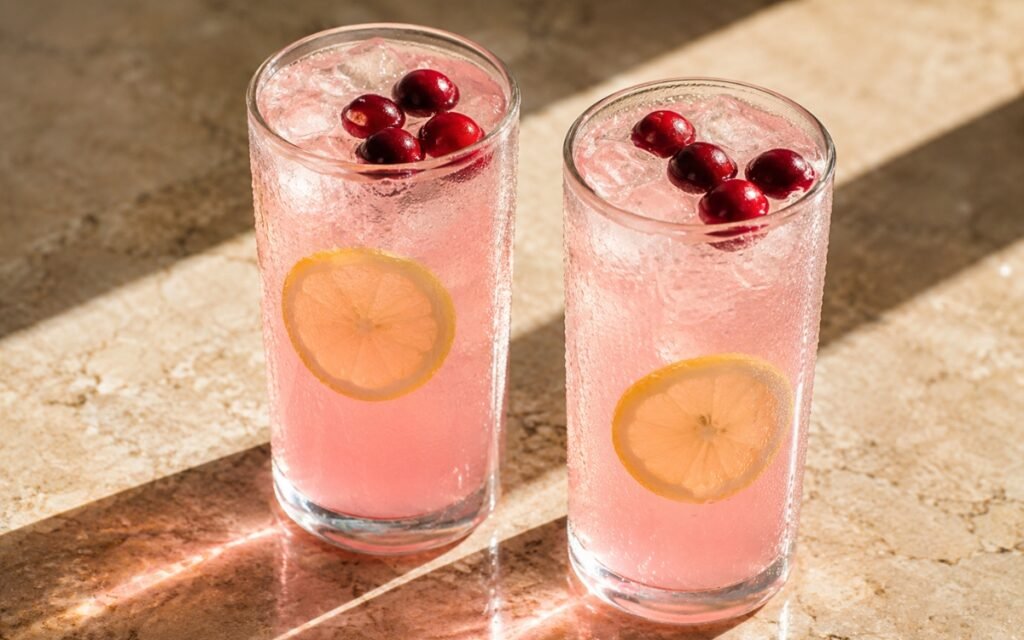
Fresh Pink Lemonade
Cranberries simmered for extraction, not reduction — vivid fluid syrup combined with fresh lemon juice and salt. Naturally pink, tart, and crisp.
Honey Lemonade
Fresh lemon juice and honey-infused lemon zest combined with cold water for a simple, golden lemonade.
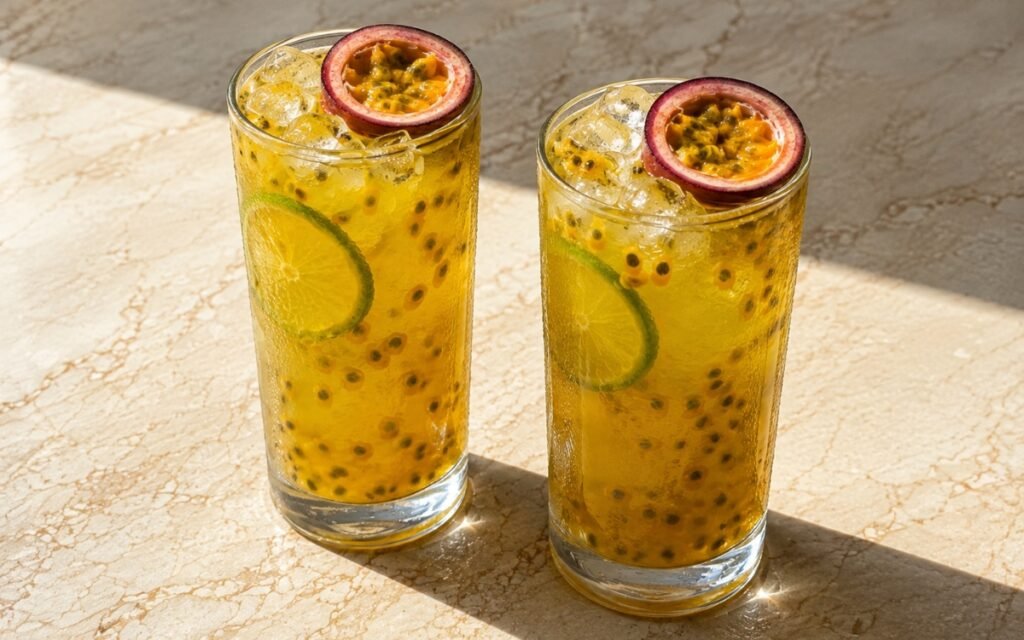
Passion Fruit Lime Lemonade
Fresh lemon and lime juice combined with entirely uncooked passion fruit pulp for a bright, tart, vivid tropical lemonade.

You might also like
You might also like
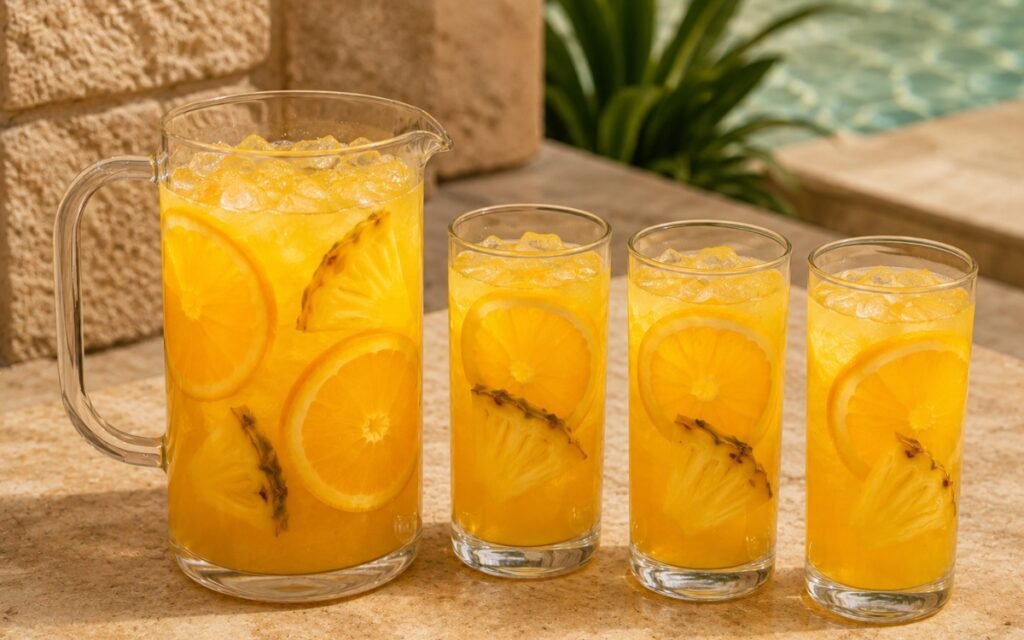
Pineapple Orange Pitcher Drink
Dual orange and lemon zest steeped in light brown sugar syrup — combined with pineapple juice, orange juice, lemon for brightness, salt, cold water, chilled. Tropical and vivid.
Strawberry Lime Infused Water
Strawberries lightly mashed and cold-infused with lime slices in 3L water — removed after 4 hours before lime peel turns bitter. Fresh, vivid, and hydrating.
Iced Tea Lemonade Pitcher
Ceylon tea at 90–95°C for 3 minutes, dual lemon and lime zest off heat — 180ml each lemon and lime juice, cold water, chilled. Lemonade leads, tea supports.

Mint Lemonade — Blended
Ingredients
Method
- Combine the 180ml of water and 150g of white sugar in a small saucepan over medium heat. Stir until completely dissolved and clear. Remove from heat immediately. Add the zest of 2 lemons. Cover and steep for 8–10 minutes. Strain completely. Allow to cool. The peel-infused syrup is the same preparation used across the citrus lemonade collection — the lemon zest’s aromatic terpene oils extracted into the warm syrup at the 8–10 minute window that captures the pleasant volatile compounds ahead of the bitter ones. In the blended preparation, the syrup’s aromatic depth is specifically more important than in the still version because the blending process partially diminishes the fresh lemon juice’s volatile aromatic character through agitation and temperature increase. The syrup’s cooked-in peel-oil depth provides the aromatic foundation that remains stable through blending.
- Segment 2–3 lemons, removing all seeds and every piece of tough membrane and white pith. In a blended preparation the pith removal is even more specifically important than in the muddled-pulp preparations: the blender applies significantly more mechanical force than gentle mashing, fully rupturing every pith cell and extracting its bitter limonin and naringin compounds into the surrounding liquid in a way that gentle mashing does not. Any pith in the blended preparation will produce a specifically pervasive, integrated bitterness in the finished drink that cannot be corrected after blending.
- Add the ingredients to the blender in the following sequence for the most efficient, most controlled blend: the ice cubes first, then the lemon pulp, then the fresh lemon juice, then the 120ml of peel-infused syrup, then the 360ml of ice-cold water, then the pinch of salt. Add the fresh mint leaves last — on top of all other ingredients. This sequence places the ice at the bottom where the blades engage most efficiently, the liquids distributed through the solids for even processing, and the mint leaves at the top where they will be drawn into the vortex from above rather than immediately engaged by the blades at maximum speed from below. Placing the mint last and at the top delays its contact with the blades fractionally, reducing the total time the mint is in direct high-speed blade contact.
- Blend at high speed for 15–25 seconds only — starting the timer when the blender reaches its maximum speed after the ramp-up. The target end state is a pale green, slushy, cold mixture where the ice is broken down into fine granular pieces and the mint is distributed throughout as small flecks of green. The mixture should pour with some resistance — visibly thicker and colder than a liquid, with a texture between a slushie and a thick drink. The visual signs of correct blending: pale green colour (not dark or vivid green), visible small ice flecks throughout, a vortex that is moving but not fully smooth in the blender jar. The visual signs of over-blending: vivid, dark green colour indicating chlorophyll release; completely smooth, fully pourable texture indicating the ice has been fully liquidised and the mixture has warmed from friction; absence of any ice-textural quality. If the blender requires longer than 25 seconds to achieve the slushy-smooth target state, the issue is likely with the blender’s power rather than the blend time — under-powered blenders require multiple short pulses rather than a sustained high-speed blend to avoid the over-blending problem.
- Taste directly from the blender. If the acidity is too sharp, add a small amount of additional peel-infused syrup (not plain sugar) and pulse once or twice. If the concentration is too intense, add 60ml more ice-cold water and pulse once. If the texture is too thin and liquid, add 30–40g more ice and pulse briefly. The adjustments should be minimal — the starting formula is calibrated to produce the correct result without significant adjustment. Pour immediately into glasses. Add lemon slices to each glass and several fresh mint leaves on top for the aromatic impression above the rim. Serve within 2–3 minutes of blending — the ice melts progressively, the texture collapses from slushy toward liquid, and the mint’s volatile aromatic character diminishes. This is specifically not a make-ahead preparation.