Ingredients
Method
Make the Peel-Infused Simple Syrup
- Combine the 180ml of water and 150g of white sugar in a small saucepan over medium heat. Stir until completely dissolved and clear. Remove from heat immediately. Add the zest of 2 lemons. Cover and steep for 8–10 minutes. Strain completely. Allow to cool. The peel-infused syrup is the same preparation used across the citrus lemonade collection — the lemon zest's aromatic terpene oils extracted into the warm syrup at the 8–10 minute window that captures the pleasant volatile compounds ahead of the bitter ones. In the blended preparation, the syrup's aromatic depth is specifically more important than in the still version because the blending process partially diminishes the fresh lemon juice's volatile aromatic character through agitation and temperature increase. The syrup's cooked-in peel-oil depth provides the aromatic foundation that remains stable through blending.
Prepare the Lemon Pulp
- Segment 2–3 lemons, removing all seeds and every piece of tough membrane and white pith. In a blended preparation the pith removal is even more specifically important than in the muddled-pulp preparations: the blender applies significantly more mechanical force than gentle mashing, fully rupturing every pith cell and extracting its bitter limonin and naringin compounds into the surrounding liquid in a way that gentle mashing does not. Any pith in the blended preparation will produce a specifically pervasive, integrated bitterness in the finished drink that cannot be corrected after blending.
Build the Blender
- Add the ingredients to the blender in the following sequence for the most efficient, most controlled blend: the ice cubes first, then the lemon pulp, then the fresh lemon juice, then the 120ml of peel-infused syrup, then the 360ml of ice-cold water, then the pinch of salt. Add the fresh mint leaves last — on top of all other ingredients. This sequence places the ice at the bottom where the blades engage most efficiently, the liquids distributed through the solids for even processing, and the mint leaves at the top where they will be drawn into the vortex from above rather than immediately engaged by the blades at maximum speed from below. Placing the mint last and at the top delays its contact with the blades fractionally, reducing the total time the mint is in direct high-speed blade contact.
Blend Briefly — The Most Critical Step
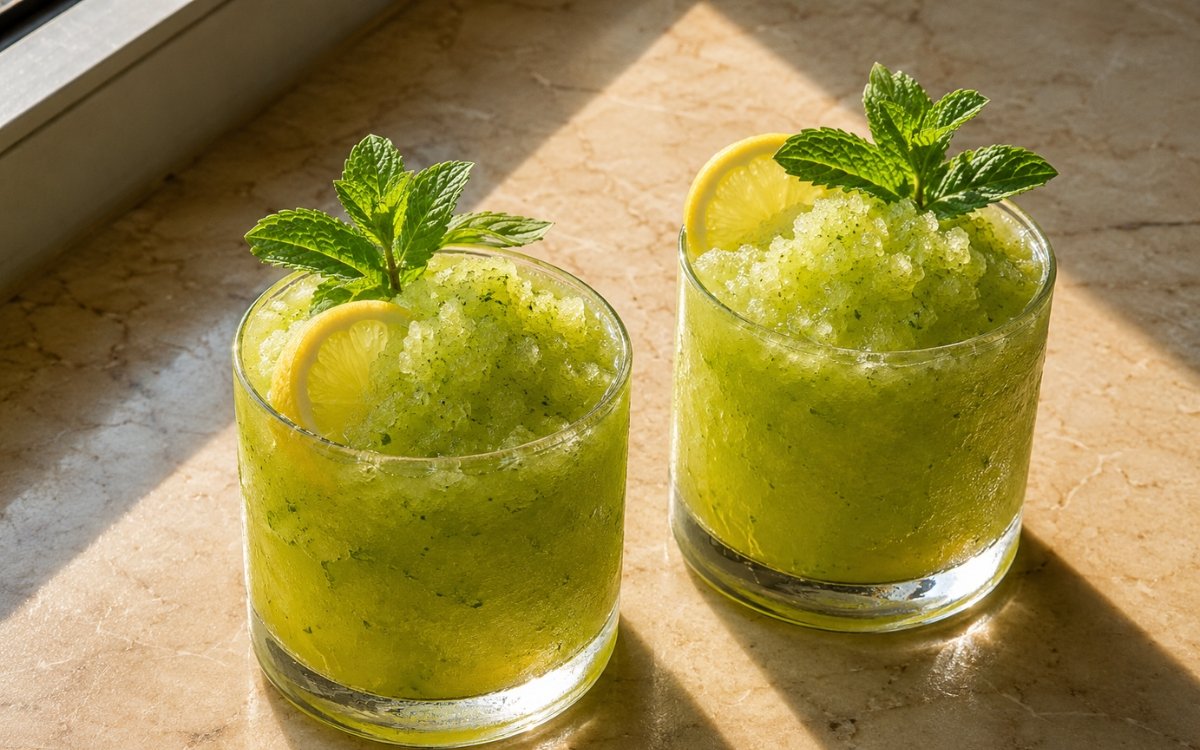
- Blend at high speed for 15–25 seconds only — starting the timer when the blender reaches its maximum speed after the ramp-up. The target end state is a pale green, slushy, cold mixture where the ice is broken down into fine granular pieces and the mint is distributed throughout as small flecks of green. The mixture should pour with some resistance — visibly thicker and colder than a liquid, with a texture between a slushie and a thick drink. The visual signs of correct blending: pale green colour (not dark or vivid green), visible small ice flecks throughout, a vortex that is moving but not fully smooth in the blender jar. The visual signs of over-blending: vivid, dark green colour indicating chlorophyll release; completely smooth, fully pourable texture indicating the ice has been fully liquidised and the mixture has warmed from friction; absence of any ice-textural quality. If the blender requires longer than 25 seconds to achieve the slushy-smooth target state, the issue is likely with the blender's power rather than the blend time — under-powered blenders require multiple short pulses rather than a sustained high-speed blend to avoid the over-blending problem.
Taste, Adjust, and Serve Immediately
- Taste directly from the blender. If the acidity is too sharp, add a small amount of additional peel-infused syrup (not plain sugar) and pulse once or twice. If the concentration is too intense, add 60ml more ice-cold water and pulse once. If the texture is too thin and liquid, add 30–40g more ice and pulse briefly. The adjustments should be minimal — the starting formula is calibrated to produce the correct result without significant adjustment. Pour immediately into glasses. Add lemon slices to each glass and several fresh mint leaves on top for the aromatic impression above the rim. Serve within 2–3 minutes of blending — the ice melts progressively, the texture collapses from slushy toward liquid, and the mint's volatile aromatic character diminishes. This is specifically not a make-ahead preparation.
Notes
The specific character of blended lemonade is the slushy texture and the cold intensity that no still or sparkling preparation can replicate — each sip delivers not only the flavour but a physical cold that is specifically more intense and more immediately refreshing than chilled liquid. This tactile cold quality is what the ice-blended format provides and why the preparation specifically requires immediate service: as the ice melts and the temperature rises toward that of a cold liquid, the specific additional refreshment quality that the slushy texture provides disappears.
The water quantity range of 360–480ml is deliberately wide because different blenders produce different amounts of heat during blending, different ice qualities (crushed vs cubed, freshly frozen vs older) behave differently in the blender, and different preferences for slushy texture versus liquid texture require different proportions. The starting point of 360ml produces a distinctly slushy result in most blenders; if the result is too thick, additional water brings it to the preferred texture.