Ingredients
Method
Prepare the Orange Pulp and Press the Raspberries
- Segment 1 orange, removing seeds and membranes with clean pulp retained. Place the orange pulp and the first cup of raspberries in the large pitcher together. Using the back of a spoon, press the fruit gently — the lightest pressing applied to any fruit in this collection's infused water preparations. The raspberry pressing technique requires specific restraint for a reason not present with blueberries, strawberries, or cucumber: raspberries contain numerous small seeds that, under even moderate pressure, crack open and release bitter, more tannic seed compounds into the surrounding liquid. Beyond the seed bitterness, crushed seeds produce small particulate matter that makes the water murky and visually less appealing. The correct press is just sufficient to crack the skin of approximately half the raspberries, releasing the vivid pink-red juice from the outer flesh while the seeds remain largely intact. The raspberry pieces should be visibly cracked and juice-releasing but not significantly compressed. The orange pulp mashing alongside the raspberries is slightly firmer — orange's membrane structure is less seed-problematic, and the pulp benefits from moderate pressing to release its juice and aromatic esters into the medium. The combined gentle press allows the orange and raspberry to begin infusing simultaneously from the first moment.
Optional Honey and Salt
- Pre-dissolve any honey in warm water. Add to the pitcher with the 1–2 small pinches of fine sea salt.
Build and Infuse
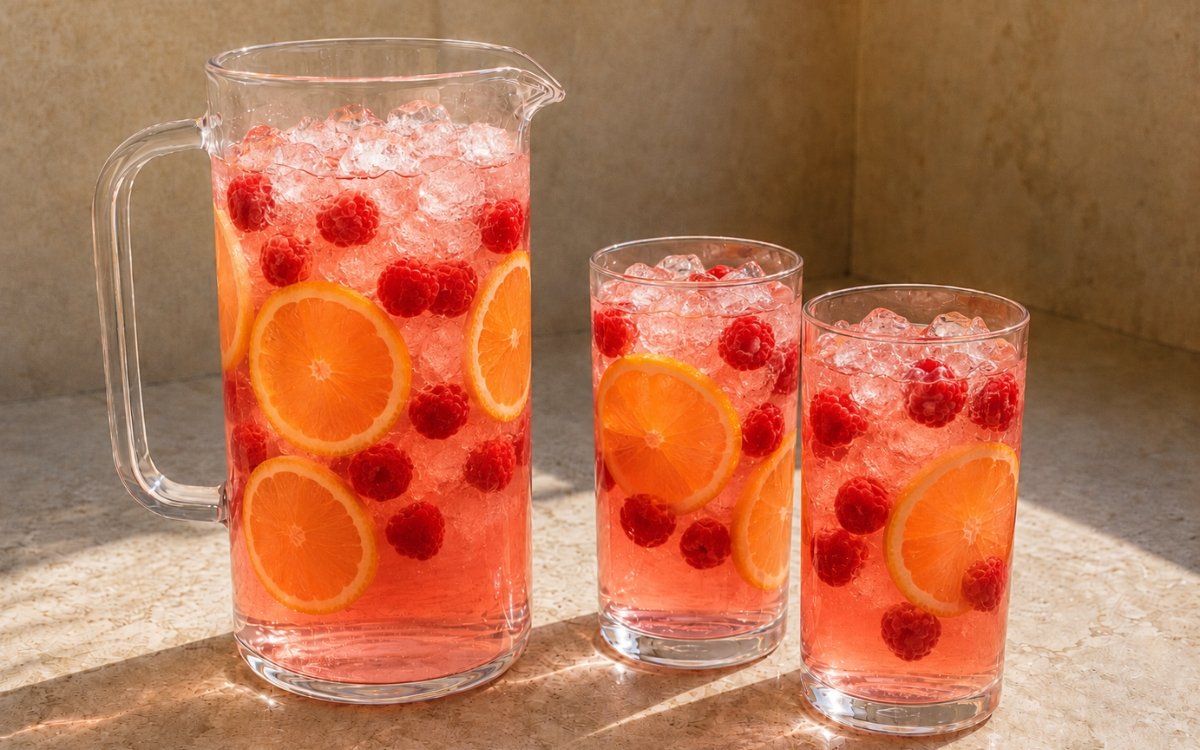
- Pour the 3 litres of ice-cold water into the pitcher. Add the whole raspberries — their intact skins will release colour and aromatic compounds progressively and specifically more slowly than the pressed base berries, providing both the visual presence of whole vivid red-pink spheres throughout the water and a secondary slower infusion. Add the thinly sliced oranges. Stir gently once or twice. The combination's colour development during infusion is specifically warm and layered — raspberry's pink-red anthocyanins blending with orange's warm amber to produce a progressively deeper, specifically warm coral-pink as the infusion develops. The colour and aroma are most vivid at 2–4 hours. Cover and refrigerate for 1–4 hours. At 1 hour: pale, subtle, and specifically clean — the suggestion of raspberry and orange. At 4 hours: the deepest vivid coral-pink colour and the most specifically present raspberry-orange aromatic character within the clean infused-water range. After 4 hours, remove all orange slices and raspberry pieces. The orange peel's limonoid compounds extract progressively; the raspberries become flat, seedy, and dull without the fresh aromatic quality of the infusion period. Serve immediately after removal or refrigerate the strained water for up to 24 hours.
Notes
The raspberry-orange combination works specifically because of the complementary aromatic character of the two fruits. Raspberry's primary pleasant aromatic compounds — furanones and various esters including α-ionone — are specifically warm-fruity in quality, sharing some aromatic space with orange's own warm citrus esters. The combination produces a specifically more fragrant, more specifically summer-aromatic water than either fruit alone because the overlapping warm-fruity register amplifies rather than competes.
A few raspberry seeds settling at the bottom of the pitcher during infusion are normal and do not affect quality. If a completely clear, seed-free result is preferred for serving, pouring through a fine sieve into a clean pitcher just before serving produces the clearest possible result.