Ingredients
Method
Make the Brown Sugar Citrus Syrup
- Combine the 100g of light brown sugar and 240ml of water in a small saucepan over low heat. Stir until the sugar completely dissolves and the liquid is clear — the light brown sugar's slight colour from its molasses fraction will give the syrup a warm golden-amber appearance. Remove from the heat immediately. Add the orange and lemon zest simultaneously. Cover and steep for 5–8 minutes. The dual-zest infusion provides the most specific and most important aromatic contribution to this preparation: orange zest's concentrated limonene, valencene, and various warm citrus esters; and lemon zest's specifically brighter citral and limonene fractions. The two together in the warm syrup produce a specifically unified, complex citrus-peel aromatic depth that is more layered than either zest alone and that specifically bridges the pineapple juice's tropical character and the orange juice's warm sweetness. Strain the zest. Allow to cool completely.
Build the Pitcher
- Add the clean orange pulp from 2 oranges (seeds, membranes, and pith removed) to the large pitcher. Muddle gently — the orange pulp providing the same natural citrus texture and additional peel-adjacent aromatic complexity that the pulp component adds in the orange lemonade preparation, with slightly more body than lemon pulp and a specifically warmer orange-citrus character. Add the cooled brown sugar citrus syrup, 500ml of pineapple juice, 250ml of fresh orange juice, 60ml of fresh lemon juice, 1.5 litres of ice-cold water, and the 2 pinches of fine sea salt. Stir thoroughly. The pineapple juice quality is the preparation's most consequential ingredient decision. Fresh-pressed pineapple juice — from a whole pineapple processed through a juicer — produces the most vivid, most volatile, most specifically aromatic result. High-quality not-from-concentrate pineapple juice from a reputable brand (Tropicana, Innocent, or comparable) produces a good, consistent, specifically tropical result. Low-quality canned pineapple juice or pineapple concentrate dissolved in water produces the flat, metallic, specifically processed result that the recipe brief accurately describes. Taste with the pineapple-orange crowd assessment: the drink should be specifically tropical and specifically bright — pineapple's vivid, aromatic, warm-tropical character and orange's round, sweet citrus note together producing a specifically summery, endlessly drinkable combination. The lemon juice's function is specifically not to add lemon flavour but to provide the sub-threshold acid sharpening that prevents the combined pineapple-and-orange warmth from sitting flat. At 60ml in 2.3 litres the lemon is below the perception threshold as a distinct flavour; it is present specifically as a quality that makes the pineapple and orange taste more vivid and more precisely themselves. If the combined preparation tastes specifically sweet and flat despite the lemon juice — the pineapple juice may be lower quality or the oranges under-ripe; add lemon juice in 15ml increments up to 90ml. If too intense — more cold water up to 2 litres.
Chill, Stir, and Serve
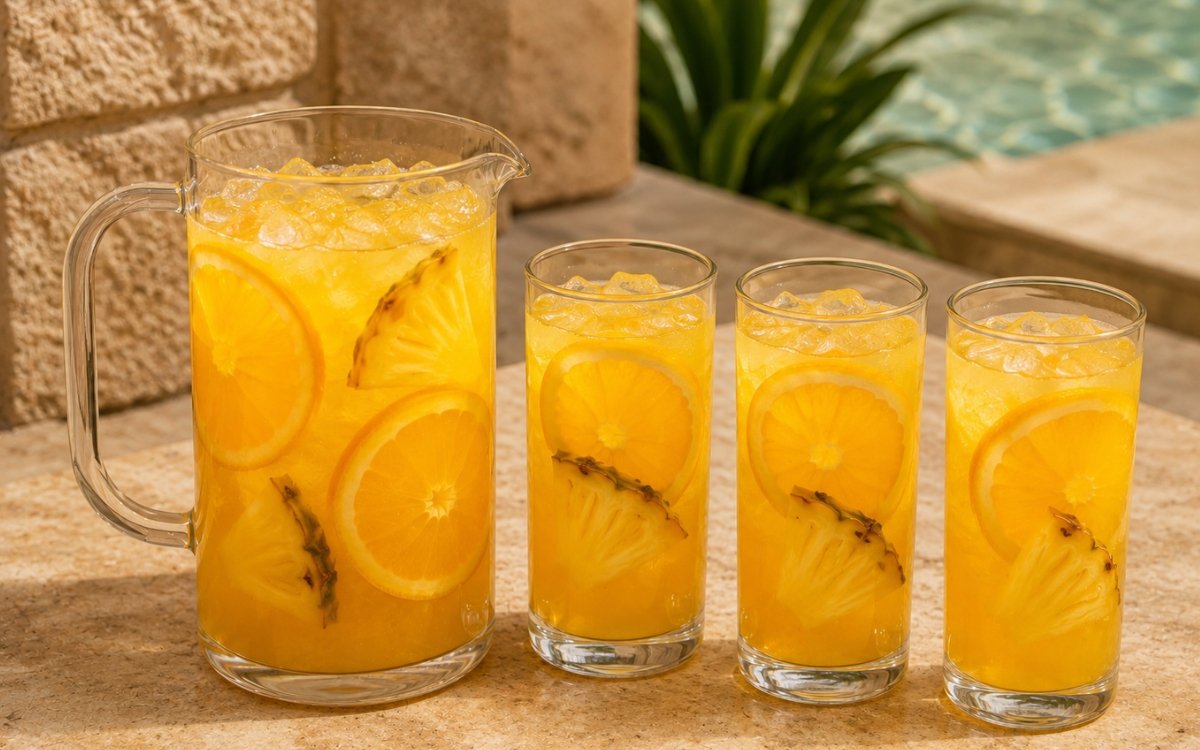
- Cover and refrigerate for 1–2 hours. Stir once before the first pour and between pours. Add orange and pineapple garnish pieces immediately before service — prepared pineapple slices hold their visual quality for approximately 20 minutes before browning at the cut surfaces. Serve cold over ice.
Notes
Fresh pineapple juice from a whole pineapple specifically requires strain through a fine-mesh sieve after juicing — pineapple's bromelain-rich fibrous fraction produces a very cloudy, textured juice that clarifies to a cleaner appearance after straining. For a crowd pitcher where visual clarity is important, always strain fresh pineapple juice before using.
The orange pulp base is from 2 oranges — the same two-orange pulp quantity as the orange lemonade's single-batch preparation at the crowd level. This reflects the orange's larger size relative to the lemon and the fact that orange pulp's contribution — warmer, larger-segment texture compared to lemon's finer pulp — is visible and specifically appealing in a crowd pitcher at higher quantity.