
Fresh Pineapple Lemonade
Pineapple is the most naturally complex of all the fruits used in lemonade preparations in this collection — simultaneously the sweetest, the most acidic, and the most specifically aromatic, with a flavour built from dozens of volatile esters (primarily ethyl 2-methylbutanoate and various furanones) that produce its characteristically vivid, tropical, immediately identifiable character. Like watermelon, it cannot be cooked without losing what makes it specifically pineapple: heat converts these volatile esters into a flatter, slightly caramelised, canned-pineapple-adjacent result within minutes. The preparation is therefore the same cold-process approach: blend, strain, combine with a separately made syrup. The syrup specifically infused with fresh ginger off heat for 5 minutes — the briefest herb or spice infusion in this collection, and deliberately so. The ginger’s function here is specifically a background lift rather than a detectable ginger note: the 5-minute steep in the warm syrup extracts enough of the gingerol’s aromatic character to make the finished lemonade taste more specifically vivid and more sharply tropical without any identifiable ginger flavour being present to a taster who doesn’t know it is there. The sugar quantity is deliberately lower than other lemonade preparations — 50–70g — because pineapple’s natural sugar content is the highest of any fruit in this collection and the lemonade requires far less added sweetness than a fruit with lower natural sugars.
Prep Time : 15 min
Cook Time : 5 min
Servings : 8
15 min
5 min
8
Ingredients
For the Pineapple Lemonade
• 1kg fresh pineapple flesh — cubed, core removed
• 50–70g white granulated sugar — this one on Amazon
• 240ml water — for the ginger syrup
• ½–1 tsp freshly grated ginger — start with ½ tsp for subtle background lift
• 180–240ml fresh lemon juice — approximately 4–6 lemons; start with 180ml
• 500–800ml ice-cold water — for dilution; start with 500ml, adjust after tasting
• ⅛ tsp fine sea salt
For Serving
• Ice cubes
For the Garnish
• Lemon slices
• Fresh pineapple slices
This post may contain affiliate links. As an Amazon Associate I earn from qualifying purchases, at no additional cost to you.
Directions
- Blend and Strain the Pineapple
Cut the 1kg of fresh pineapple flesh into rough cubes after removing the core — the core is specifically harder, more fibrous, and more astringent than the surrounding flesh, and its inclusion in the blend produces a slightly bitter, more fibrous result. Add the cubed pineapple flesh to a blender. Blend at high speed for 30–40 seconds until completely smooth — the pineapple’s high water content produces a vivid, yellow-gold liquid almost immediately. The blend at this stage will be slightly frothy from the bromelain enzyme (pineapple’s naturally occurring protease) agitating during blending; this foam settles during straining. Strain through a fine-mesh sieve into a large pitcher or jug, pressing firmly on the fibrous solids. Pineapple’s fibrous matrix holds a meaningful proportion of its juice — firm pressing rather than gentle pressing is specifically required to extract the maximum yield, unlike the gentle pressing used for watermelon’s more water-dominant composition. Press until the fibrous solids in the sieve feel relatively dry. Discard the solids. The strained pineapple juice should be a clear, vivid gold — specifically fragrant with pineapple’s characteristic tropical aroma. - Make the Ginger-Infused Simple Syrup
Combine the 240ml of water and 50g of white sugar in a small saucepan. Place over medium heat and stir until the sugar dissolves completely. Bring just to a gentle simmer — no reduction is needed or beneficial. Remove from the heat immediately. Stir in ½ tsp of freshly grated ginger. Allow to steep for exactly 5 minutes — no more. The 5-minute window is the most deliberately brief infusion of any ingredient in this collection, and specifically calibrated for a background-lift function rather than a flavour presence. In 5 minutes in the warm off-heat syrup, the ginger’s primary volatile aromatic compounds — including various gingerols and zingiberene — transfer into the syrup at a concentration that sharpens the perception of the pineapple’s tropical character and provides a barely-detectable warmth at the finish, without producing a result where ginger is identifiable as a separate flavour. At 10 minutes the ginger character becomes more noticeable; at 15 minutes or more it competes with the pineapple rather than amplifying it. Always strain at exactly 5 minutes. Strain out all ginger and allow the syrup to cool completely. - Combine and Adjust
In the large pitcher containing the strained pineapple juice, add the cooled ginger syrup, 180ml of fresh lemon juice, 500ml of ice-cold water, and the ⅛ tsp of fine sea salt. Stir thoroughly. Taste carefully. The salt’s function in this preparation is particularly specific: pineapple’s high sugar content and high acidity together can produce a flavour that reads as sweet-and-tart without specifically tasting of pineapple’s distinctive tropical character. The ⅛ tsp at sub-threshold concentration specifically amplifies the perception of the volatile aromatic compounds responsible for pineapple’s tropical identity — making it taste more specifically of itself in the same way it amplifies watermelon and strawberry in those preparations. Adjust carefully: if the pineapple’s tropical character is vivid and the balance needs brightening, add lemon juice up to 240ml total; if the concentration is too intense, add more cold water up to 800ml total; if the pineapple was particularly mild or under-ripe, add additional syrup up to 70g total dissolved in warm water. The correctly balanced pineapple lemonade should be bright, tropical, and sharply refreshing with the grapefruit-like citrus edge that naturally ripe pineapple provides. - Chill, Stir, and Serve
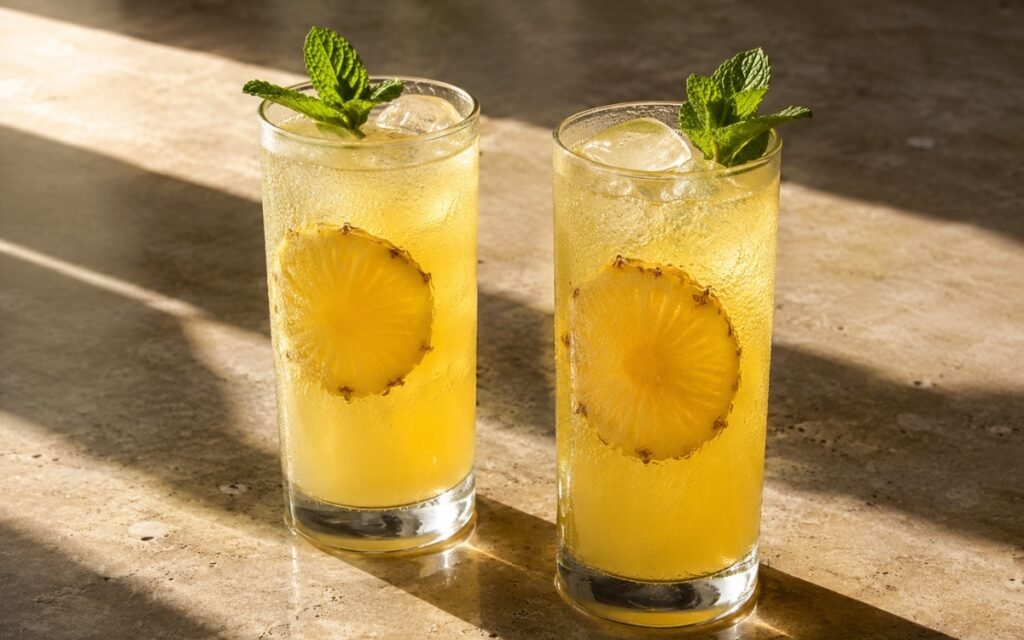
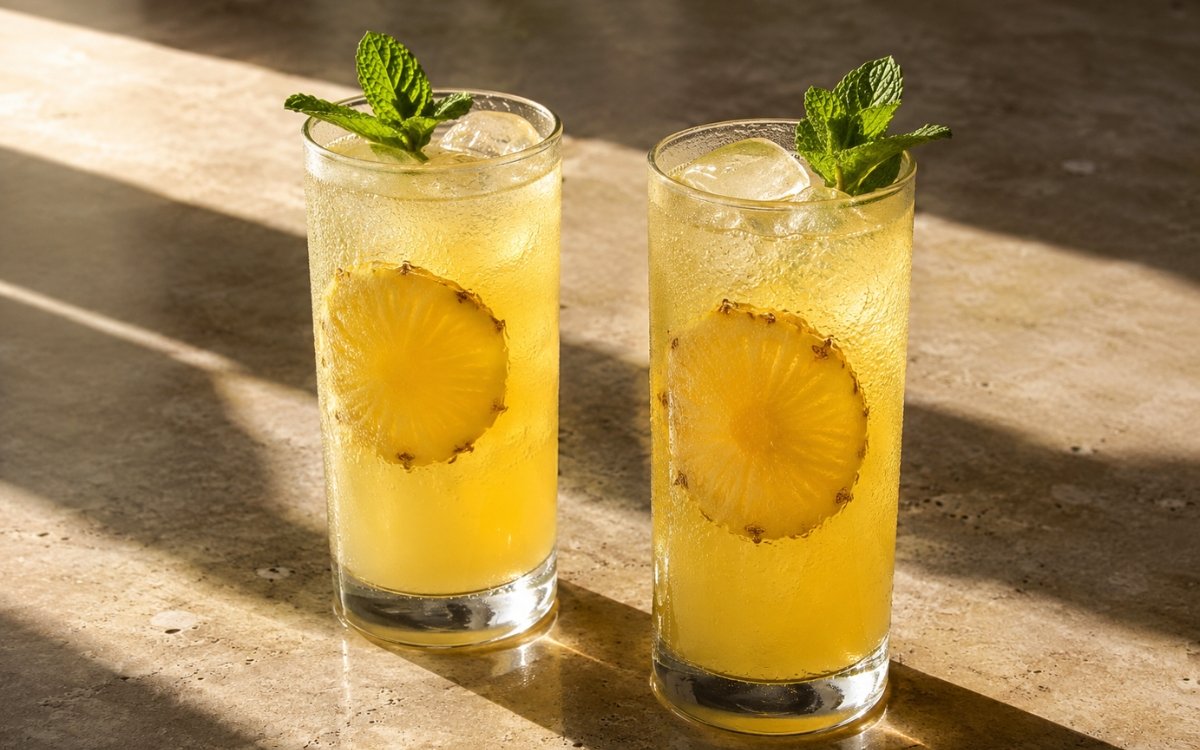
Refrigerate for 1–2 hours until completely cold and the ginger syrup’s aromatic depth has integrated. Stir the pitcher well before serving — fresh pineapple juice separates progressively during storage in the same way watermelon juice does, with the finer juice particles settling toward the bottom and clearer liquid rising above. Stir before every pour for even distribution. Fill glasses with ice. Pour the chilled pineapple lemonade over the ice. Garnish with a lemon slice and a slice of fresh pineapple. Serve immediately.
*Notes :
- Fresh pineapple contains bromelain — a naturally occurring protease enzyme that breaks down proteins. This is relevant to preparation in two practical ways: first, bromelain produces the slight tingling sensation on the tongue and lips that some people experience when eating raw pineapple, which is present at low levels in the finished lemonade; second, bromelain in a cold drink environment remains active and will produce a gradual textural change if the drink sits for extended periods. The lemonade is best served within 48 hours of preparation; beyond this, the bromelain’s activity can slightly alter the texture of any protein-adjacent compounds in the mixture.
- Pineapple variety affects the finished lemonade meaningfully. Smooth Cayenne (the standard commercial pineapple in most markets) produces a good, consistent, specifically tropical result. Gold or MD2 varieties — sweeter, more aromatic, with a specifically more intense tropical character — produce the most vivid finished lemonade if available. Both produce excellent results; the sugar quantity should be adjusted downward for the sweeter Gold varieties.
Why This Recipe Works
This recipe works because the pineapple is processed cold — its volatile tropical aromatic compounds preserved completely — and the syrup provides the sweetness and the background ginger lift without cooking the primary ingredient. The ginger is infused for precisely 5 minutes to contribute aromatic sharpening without detectable flavour.
The salt amplifies the pineapple’s tropical aromatic identity at sub-threshold concentration. And the low sugar quantity acknowledges pineapple’s high natural sweetness rather than over-sweetening.
Ingredient Breakdown
Pineapple Blended and Strained Cold (No Cooking)
The fundamental technique decision — heat-sensitive ester compounds that produce tropical aromatic character preserved completely by cold processing.
Core Removed Before Blending
The astringency elimination — the harder, more fibrous core’s different flavour profile excluded for the most specifically fresh, sweet pineapple character.
Ginger-Infused Syrup (5-Minute Steep Only)
The background aromatic lift — the briefest infusion in this collection, contributing barely-detectable warmth that amplifies pineapple’s tropical vividness without adding ginger flavour.
50–70g Sugar (Deliberately Low)
The sweetness calibration for high natural-sugar fruit — pineapple’s natural sugars require minimal added sweetness compared to other fruits.
⅛ tsp Salt
The tropical aromatic amplifier — specifically effective at making pineapple’s characteristic volatile compounds taste more vivid and more precisely tropical.
Flavor Structure Explained
This Fresh pineapple lemonade follows a layered balance model:
- Tropical fruit core (pineapple)
- Bright citrus contrast (lemon juice)
- Subtle warming depth (ginger syrup)
- Flavor-enhancing salinity (pinch of salt)
- Fresh vibrant finish (cold-processed fruit character)
Pineapple defines the foundation with intense tropical sweetness, lively acidity, and aromatic freshness preserved through cold preparation rather than cooking. Lemon juice sharpens the profile with clean citric brightness, preventing the pineapple from feeling overly rich or sugary. Ginger syrup adds a restrained warmth underneath the fruit, subtly intensifying the tropical character without becoming an obvious spice note. A small amount of salt quietly amplifies all the major flavors, making the fruit and citrus taste more vivid and focused. The result is a bright, energetic lemonade built around freshness, tropical intensity, and immediate refreshment.
Common Mistakes to Avoid
- Cooking the Pineapple – Heat converts the volatile esters responsible for fresh pineapple’s tropical character into a canned, flat, cooked-fruit result. Never cook the pineapple.
- Including the Core – The core’s astringent, harder character produces a slightly bitter, less specifically fruity result. Always remove before blending.
- Steeping Ginger Beyond 5 Minutes – Beyond 5 minutes the ginger character becomes identifiable as ginger rather than as a background sharpener. Always strain at exactly 5 minutes.
- Adding Too Much Sugar – Pineapple’s natural sweetness is the highest of any fruit in this lemonade collection. Always start at 50g and add more only after tasting.
- Not Stirring Before Serving – Pineapple juice separates progressively. Always stir before every pour.
Variations
With Coconut Water
Replace the ice-cold still water component with coconut water — the coconut’s mild tropical sweetness alongside the pineapple produces the tropical combination that is the Pineapple Coconut Sparkling Mocktail’s direction.
With Mint
Add 12 lightly clapped fresh mint leaves to the combined lemonade before chilling — steep cold for 15–20 minutes then strain. The mint’s cool freshness alongside pineapple is the direction of the Mint Pineapple White Tea Cooler.
Sparkling Version
Replace the ice-cold still water with chilled sparkling water — add right before serving. The carbonation amplifies the pineapple’s aromatic compounds and makes the bright, tropical character more vivid at each sip.
With Turmeric
Add ¼ tsp of ground turmeric to the ginger syrup — the turmeric’s warm, slightly earthy depth alongside the ginger and pineapple produces a specifically more assertive, more tropical-spiced result.
Storage & Make-Ahead
Strained pineapple juice is best used within 4 to 6 hours of pressing to preserve its brightest tropical aroma and flavor. Over time, bromelain activity and oxidation gradually reduce its fresh character.
Once assembled, the pineapple lemonade can be refrigerated for up to 48 hours. Stir it well before each serving, as separation may occur during storage. The flavor is at its most vibrant within the first 24 hours.
Assembled glasses are not suitable for storage and should be served immediately.
Frequently Asked Questions
Why is the pineapple never cooked?
Pineapple’s tropical aromatic character comes primarily from volatile ester compounds — particularly ethyl 2-methylbutanoate — that produce its specifically vivid, immediately recognisable tropical identity. These compounds evaporate rapidly at cooking temperatures, leaving a flatter, slightly caramelised result without the fresh, vivid character of the raw fruit. Cold blending and straining preserves them completely.
Why is only ½ tsp of ginger used and why only 5 minutes?
The ginger’s function is specifically a background aromatic lift rather than a detectable flavour — providing a barely-perceptible sharpening of the tropical character that makes the finished lemonade taste more specifically vivid. At ½ tsp steeped for 5 minutes, the ginger is below the detection threshold for most tasters while its aromatic contribution is measurably present. More ginger or a longer steep would shift it from amplifier to competitor.
Why is the sugar quantity lower than other lemonade preparations?
Pineapple’s natural sugar content — approximately 10–12g of sugar per 100g of fresh flesh — is the highest of any fruit used in lemonade preparations in this collection. The naturally present sugars provide a meaningful proportion of the drink’s sweetness without any addition; starting at 50g acknowledges this and prevents over-sweetening.
What other tropical preparations share this direction?
The Pineapple Coconut Sparkling Mocktail shares the pineapple as primary flavour in a sparkling format with coconut water providing the tropical secondary note — a specifically lighter, more effervescent direction. The Mint Pineapple White Tea Cooler shares the pineapple base with white tea’s structural depth and mint’s cool freshness — a more complex, more layered preparation. The Fresh Mango Lemonade shares the tropical-fruit-and-lemon format — mango’s specifically different tropical warmth and sweetness alongside lemon producing a comparable sharp, refreshing, fruit-forward result.
Nutrition Facts
( per serving )
Calories
~75 kcal
Protein
0 g
Fat
0 g
Carbs
20 g
Calories
~75 kcal
Protein
0 g
Fat
0 g
Carbs
20 g
Related Recipes
Related Recipes

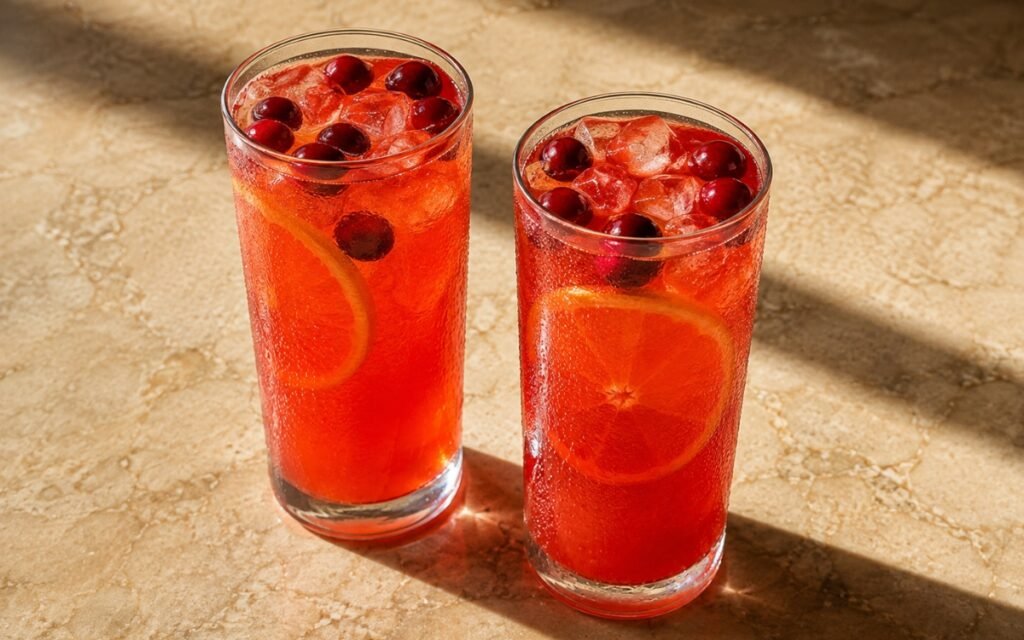
Cranberry Orange Lemonade
Cold-extracted lemon zest and juice combined with gently extracted cranberries cooked in orange juice for a vivid red-orange, tart lemonade.
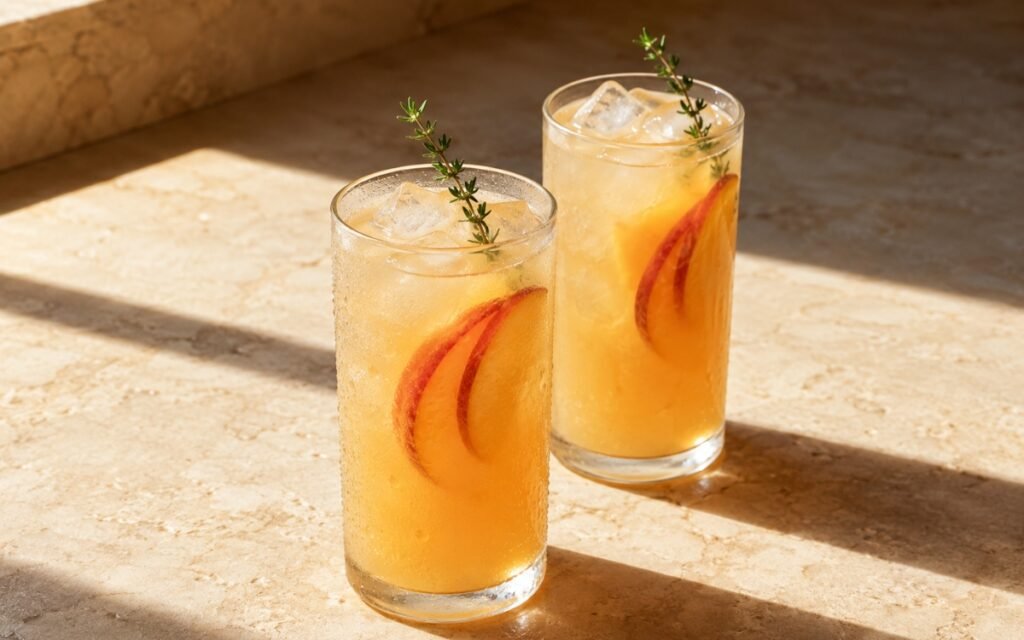
Fresh Peach Lemonade
Ripe peaches simmered with sugar for 10–12 minutes, pressed through a sieve — fresh lemon juice and cold water added, chilled. Sweet, tart, and intensely peachy.
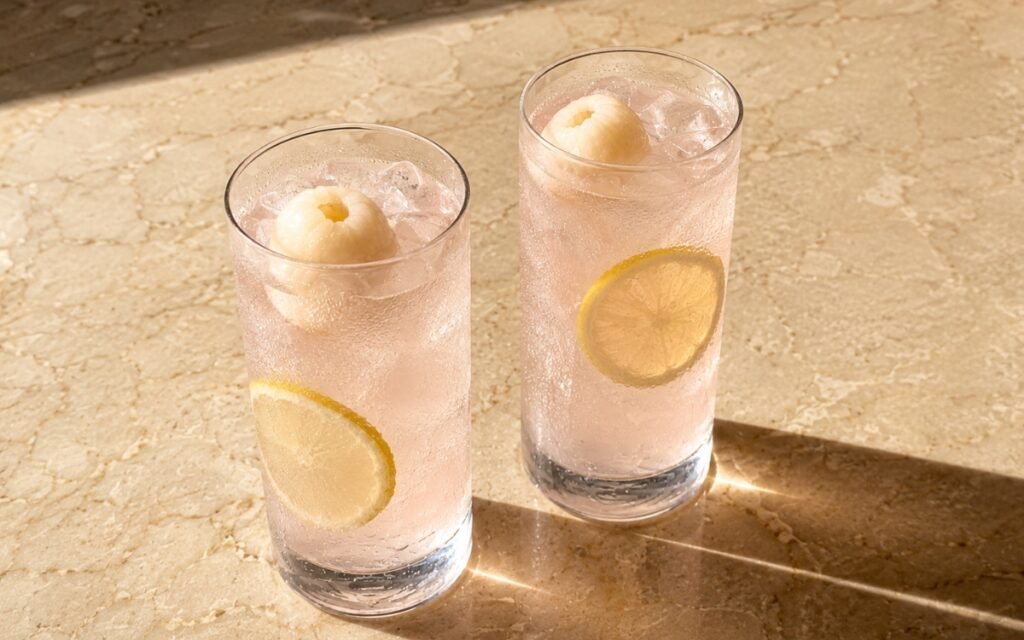
Lychee Lemonade
Cold-extracted lemon zest and juice combined with blended, twice-strained lychee for a pale, delicate, floral lemonade.
You might also like
You might also like
Strawberry Lemonade Pitcher Drink
Honey-strawberry syrup with lemon zest plus fresh strawberries cold-strained — both combined with lemon juice, salt, cold water, fully strained for the crowd pitcher. Bright and vivid.
Hibiscus Ginger Orange White Tea Cooler
White tea at 75–80°C for 3–4 minutes, hibiscus and ginger infused together 6–8 minutes — orange juice as the structural bridge, honey, chilled. Vivid, tart, balanced.
Fresh Berry Green Iced Tea
Green tea at 75–80°C for 2–3 minutes, mixed berries lightly crushed and cold-infused 30–45 minutes — strained cleanly, honey, chilled. Light, crisp, delicately fruity.
Fresh Pineapple Lemonade
Ingredients
Method
- Cut the 1kg of fresh pineapple flesh into rough cubes after removing the core — the core is specifically harder, more fibrous, and more astringent than the surrounding flesh, and its inclusion in the blend produces a slightly bitter, more fibrous result. Add the cubed pineapple flesh to a blender. Blend at high speed for 30–40 seconds until completely smooth — the pineapple’s high water content produces a vivid, yellow-gold liquid almost immediately. The blend at this stage will be slightly frothy from the bromelain enzyme (pineapple’s naturally occurring protease) agitating during blending; this foam settles during straining. Strain through a fine-mesh sieve into a large pitcher or jug, pressing firmly on the fibrous solids. Pineapple’s fibrous matrix holds a meaningful proportion of its juice — firm pressing rather than gentle pressing is specifically required to extract the maximum yield, unlike the gentle pressing used for watermelon’s more water-dominant composition. Press until the fibrous solids in the sieve feel relatively dry. Discard the solids. The strained pineapple juice should be a clear, vivid gold — specifically fragrant with pineapple’s characteristic tropical aroma.
- Combine the 240ml of water and 50g of white sugar in a small saucepan. Place over medium heat and stir until the sugar dissolves completely. Bring just to a gentle simmer — no reduction is needed or beneficial. Remove from the heat immediately. Stir in ½ tsp of freshly grated ginger. Allow to steep for exactly 5 minutes — no more. The 5-minute window is the most deliberately brief infusion of any ingredient in this collection, and specifically calibrated for a background-lift function rather than a flavour presence. In 5 minutes in the warm off-heat syrup, the ginger’s primary volatile aromatic compounds — including various gingerols and zingiberene — transfer into the syrup at a concentration that sharpens the perception of the pineapple’s tropical character and provides a barely-detectable warmth at the finish, without producing a result where ginger is identifiable as a separate flavour. At 10 minutes the ginger character becomes more noticeable; at 15 minutes or more it competes with the pineapple rather than amplifying it. Always strain at exactly 5 minutes. Strain out all ginger and allow the syrup to cool completely.
- In the large pitcher containing the strained pineapple juice, add the cooled ginger syrup, 180ml of fresh lemon juice, 500ml of ice-cold water, and the ⅛ tsp of fine sea salt. Stir thoroughly. Taste carefully. The salt’s function in this preparation is particularly specific: pineapple’s high sugar content and high acidity together can produce a flavour that reads as sweet-and-tart without specifically tasting of pineapple’s distinctive tropical character. The ⅛ tsp at sub-threshold concentration specifically amplifies the perception of the volatile aromatic compounds responsible for pineapple’s tropical identity — making it taste more specifically of itself in the same way it amplifies watermelon and strawberry in those preparations. Adjust carefully: if the pineapple’s tropical character is vivid and the balance needs brightening, add lemon juice up to 240ml total; if the concentration is too intense, add more cold water up to 800ml total; if the pineapple was particularly mild or under-ripe, add additional syrup up to 70g total dissolved in warm water. The correctly balanced pineapple lemonade should be bright, tropical, and sharply refreshing with the grapefruit-like citrus edge that naturally ripe pineapple provides.
- Refrigerate for 1–2 hours until completely cold and the ginger syrup’s aromatic depth has integrated. Stir the pitcher well before serving — fresh pineapple juice separates progressively during storage in the same way watermelon juice does, with the finer juice particles settling toward the bottom and clearer liquid rising above. Stir before every pour for even distribution. Fill glasses with ice. Pour the chilled pineapple lemonade over the ice. Garnish with a lemon slice and a slice of fresh pineapple. Serve immediately.