Ingredients
Method
Blend and Strain the Pineapple
- Cut the 1kg of fresh pineapple flesh into rough cubes after removing the core — the core is specifically harder, more fibrous, and more astringent than the surrounding flesh, and its inclusion in the blend produces a slightly bitter, more fibrous result. Add the cubed pineapple flesh to a blender. Blend at high speed for 30–40 seconds until completely smooth — the pineapple's high water content produces a vivid, yellow-gold liquid almost immediately. The blend at this stage will be slightly frothy from the bromelain enzyme (pineapple's naturally occurring protease) agitating during blending; this foam settles during straining. Strain through a fine-mesh sieve into a large pitcher or jug, pressing firmly on the fibrous solids. Pineapple's fibrous matrix holds a meaningful proportion of its juice — firm pressing rather than gentle pressing is specifically required to extract the maximum yield, unlike the gentle pressing used for watermelon's more water-dominant composition. Press until the fibrous solids in the sieve feel relatively dry. Discard the solids. The strained pineapple juice should be a clear, vivid gold — specifically fragrant with pineapple's characteristic tropical aroma.
Make the Ginger-Infused Simple Syrup
- Combine the 240ml of water and 50g of white sugar in a small saucepan. Place over medium heat and stir until the sugar dissolves completely. Bring just to a gentle simmer — no reduction is needed or beneficial. Remove from the heat immediately. Stir in ½ tsp of freshly grated ginger. Allow to steep for exactly 5 minutes — no more. The 5-minute window is the most deliberately brief infusion of any ingredient in this collection, and specifically calibrated for a background-lift function rather than a flavour presence. In 5 minutes in the warm off-heat syrup, the ginger's primary volatile aromatic compounds — including various gingerols and zingiberene — transfer into the syrup at a concentration that sharpens the perception of the pineapple's tropical character and provides a barely-detectable warmth at the finish, without producing a result where ginger is identifiable as a separate flavour. At 10 minutes the ginger character becomes more noticeable; at 15 minutes or more it competes with the pineapple rather than amplifying it. Always strain at exactly 5 minutes. Strain out all ginger and allow the syrup to cool completely.
Combine and Adjust
- In the large pitcher containing the strained pineapple juice, add the cooled ginger syrup, 180ml of fresh lemon juice, 500ml of ice-cold water, and the ⅛ tsp of fine sea salt. Stir thoroughly. Taste carefully. The salt's function in this preparation is particularly specific: pineapple's high sugar content and high acidity together can produce a flavour that reads as sweet-and-tart without specifically tasting of pineapple's distinctive tropical character. The ⅛ tsp at sub-threshold concentration specifically amplifies the perception of the volatile aromatic compounds responsible for pineapple's tropical identity — making it taste more specifically of itself in the same way it amplifies watermelon and strawberry in those preparations. Adjust carefully: if the pineapple's tropical character is vivid and the balance needs brightening, add lemon juice up to 240ml total; if the concentration is too intense, add more cold water up to 800ml total; if the pineapple was particularly mild or under-ripe, add additional syrup up to 70g total dissolved in warm water. The correctly balanced pineapple lemonade should be bright, tropical, and sharply refreshing with the grapefruit-like citrus edge that naturally ripe pineapple provides.
Chill, Stir, and Serve
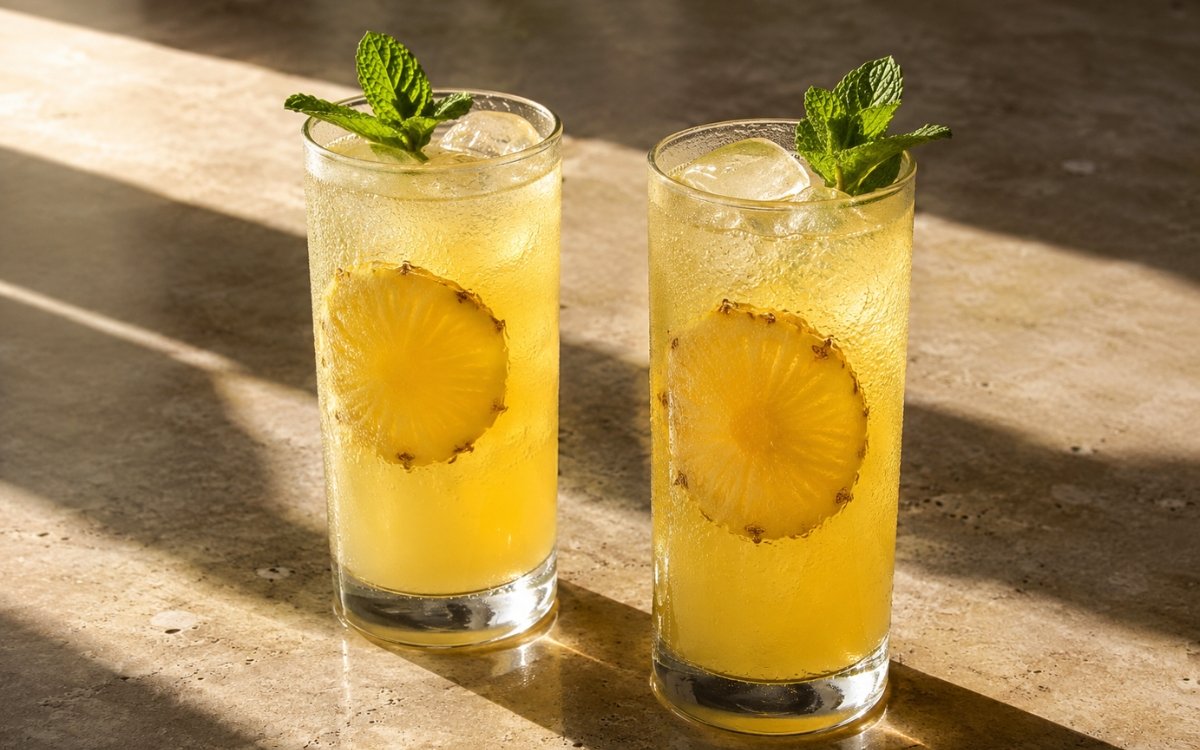
- Refrigerate for 1–2 hours until completely cold and the ginger syrup's aromatic depth has integrated. Stir the pitcher well before serving — fresh pineapple juice separates progressively during storage in the same way watermelon juice does, with the finer juice particles settling toward the bottom and clearer liquid rising above. Stir before every pour for even distribution. Fill glasses with ice. Pour the chilled pineapple lemonade over the ice. Garnish with a lemon slice and a slice of fresh pineapple. Serve immediately.
Notes
Fresh pineapple contains bromelain — a naturally occurring protease enzyme that breaks down proteins. This is relevant to preparation in two practical ways: first, bromelain produces the slight tingling sensation on the tongue and lips that some people experience when eating raw pineapple, which is present at low levels in the finished lemonade; second, bromelain in a cold drink environment remains active and will produce a gradual textural change if the drink sits for extended periods. The lemonade is best served within 48 hours of preparation; beyond this, the bromelain's activity can slightly alter the texture of any protein-adjacent compounds in the mixture.
Pineapple variety affects the finished lemonade meaningfully. Smooth Cayenne (the standard commercial pineapple in most markets) produces a good, consistent, specifically tropical result. Gold or MD2 varieties — sweeter, more aromatic, with a specifically more intense tropical character — produce the most vivid finished lemonade if available. Both produce excellent results; the sugar quantity should be adjusted downward for the sweeter Gold varieties.