Ingredients
Method
Lightly Crush the Pineapple Base
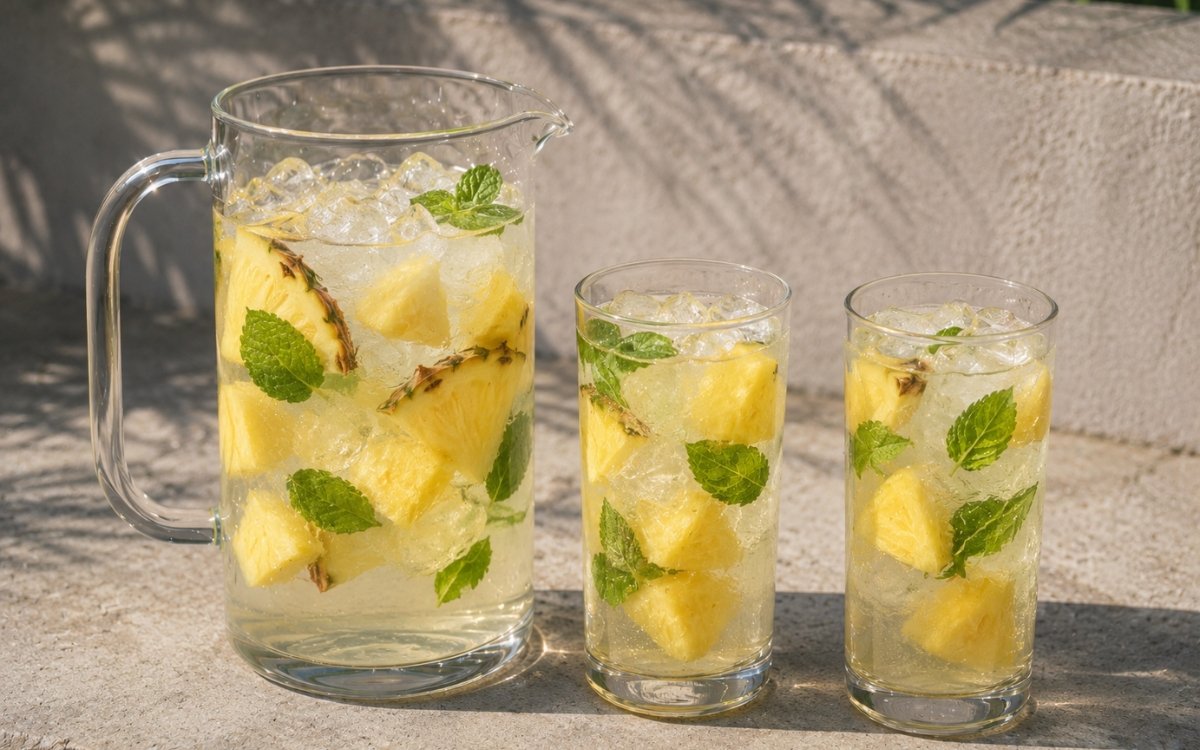
- Add the first cup of pineapple chunks to the large pitcher. Using the back of a spoon or a muddler, press each piece once — firmly enough to crack the dense pineapple flesh and release the vivid golden juice and aromatic compounds from the interior. Pineapple's denser, more fibrous texture compared to watermelon or strawberry requires slightly more deliberate pressure than those fruits, but the same principle applies: enough to crack and release, not enough to reduce to a fibrous, pulpy mass that produces murky water rather than clean infusion. The correctly crushed pineapple pieces should be visibly cracked, releasing vivid juice, with their chunk integrity largely preserved. Pineapple's primary aromatic compounds for cold infusion — ethyl 2-methylbutanoate and various tropical esters — are the same volatile compounds that make fresh pineapple specifically fragrant and are preserved by the cold process in the same way as in the fresh pineapple lemonade. These compounds release progressively into the surrounding cold water over the 1–4 hour infusion period, producing the specific tropical aromatic quality that makes pineapple infused water immediately identifiable.
Clap the Mint and Add to Base
- Hold the 20–30 fresh mint leaves between both palms and bring together firmly in a single clap. The audible sound and immediately released menthol aroma indicate correct bruising of the surface aromatic cells. Add the clapped mint leaves to the pitcher immediately alongside the crushed pineapple. The clapped mint leaves begin infusing their menthol and menthone aromatic compounds into the pitcher medium simultaneously with the pineapple's tropical esters — the two cold infusions occurring in parallel from the first moment rather than sequentially. The pineapple's warm, tropical sweetness and the mint's specifically cool, fresh aromatic freshness begin integrating in the same medium immediately.
Optional Honey and Salt
- Pre-dissolve any honey in warm water. Add with the 1–2 small pinches of fine sea salt. Pineapple's natural sugar content is the highest of any fruit used in the infused water preparations — when honey is added, the very minimal 15g quantity at the lower end of the range is the appropriate starting point, as pineapple's natural sugars already provide more background sweetness than watermelon or cucumber.
Build and Infuse
- Pour the 3 litres of ice-cold water into the pitcher. Add the 2 cups of pineapple slices or chunks. Stir gently once or twice. Cover and refrigerate for 1–4 hours. At 1 hour: a subtle, clean tropical freshness with barely perceptible mint coolness. At 2 hours: the pleasant mid-point where both pineapple and mint are more specifically present. At 4 hours: maximum of the pleasantly infused range — vivid tropical-fruit and cool-mint aromatic combination. The fermentation warning is the most specific quality management point of any infused water in this collection. Pineapple's bromelain enzyme remains active in cold water and continues processing the surrounding sugar molecules over time; combined with pineapple's high natural sugar content, extended contact begins producing a slightly off, vaguely sour-fermented note at temperatures above approximately 6–8°C. In a refrigerator held at 4°C this process is slower; in a warmer environment (a table at a party, for example) it is faster. Always keep the pitcher refrigerated when not serving, and always remove the pineapple pieces at the 4-hour mark. The mint's grassy shift in neutral cold water is more gradual than in acidic mediums but is also present; always remove with the pineapple. Serve well chilled directly from the pitcher, or over ice.
Notes
Fresh pineapple is specifically required — canned pineapple's heat-processing specifically destroys the volatile aromatic esters responsible for pineapple's tropical character, leaving a sweet, mildly pineapple-adjacent flavour without the vivid, specifically fresh-fruit aromatic quality that makes this infused water refreshing. The bromelain enzyme is also deactivated by the canning process, eliminating the fermentation risk alongside the fresh character simultaneously. Canned pineapple produces a functional but specifically less aromatic and less vivid result.
The absence of citrus in this preparation is worth emphasising as a deliberate choice — the cool, aromatic freshness of the clapped mint leaves performs the brightening function that lemon, lime, or orange slices would provide in the other preparations. Adding citrus rounds to this pitcher is an option for those who specifically want the citrus dimension, but the preparation is specifically designed to work without it.