Ingredients
Method
Brew the White Tea
- Heat 1 litre of water to 70–75°C. This lower temperature protects white tea’s delicate floral and honeyed notes. If the water is too hot, the tea can turn papery, dull, and lightly astringent within the steeping window. If the water is too cool, the tea will not release enough character in 3–4 minutes. Add 8 or 9 white tea bags. Steep for 3–4 minutes. This slightly longer window works because white tea extracts more gently than green tea at a lower temperature. Remove all bags at the same time without squeezing. Squeezing the bags can push a papery note from the concentrated liquid back into the pitcher.
Dissolve Sugar and Cool
- Heat 1 litre of water to 70–75°C. This lower temperature protects white tea’s delicate floral and honeyed notes. If the water is too hot, the tea can turn papery, dull, and lightly astringent within the steeping window. If the water is too cool, the tea will not release enough character in 3–4 minutes. Add 8 or 9 white tea bags. Steep for 3–4 minutes. This slightly longer window works because white tea extracts more gently than green tea at a lower temperature. Remove all bags at the same time without squeezing. Squeezing the bags can push a papery note from the concentrated liquid back into the pitcher.
Infuse the Strawberry and Lemon Zest
- Add the thinly sliced strawberries and lemon zest at the same time. Press the strawberry slices once with the back of a spoon, just enough to release a little juice and aroma without turning them into a mash. In this pitcher, strawberry is not meant to dominate the drink. It adds fragrance, a pale blush color, and a gentle fresh-fruit note. The warm tea, cooling from about 65–70°C through the infusion, draws out that aroma without pushing the strawberries toward a cooked or jammy flavor. Cover and steep for 8–10 minutes. The extract should be pale blush-pink and lightly fragrant, with strawberry sitting beside the white tea rather than covering it. Do not go past 10 minutes. As the mixture cools, extraction slows, and the less pleasant inner-cell flavors from the strawberries can start to come through.
Strain Completely
- Strain through a fine-mesh sieve, pressing gently but firmly on the strawberry and zest solids. Keep all strawberry pulp and seeds out of the strained extract. This matters because white tea is clear and delicate. Leftover pulp can cloud the drink, dull the pale color, and keep changing the flavor as the pitcher rests in the refrigerator. A clean strain keeps the finished drink light, clear, and fresh. Let the extract cool completely.
Build the Pitcher
- Pour the cooled strawberry white tea extract into a large pitcher. Add 1.8 litres of ice-cold water. Stir gently. This pitcher uses no juice in the final build. The only liquid components are the infused tea extract and cold water. That keeps the drink tea-forward and subtle. Adding strawberry juice would turn it into a fruit drink with tea in the background, which is a different style altogether. Taste the pitcher. It should be pale, lightly fragrant, and clean, with a soft strawberry aroma and a faint white tea background. If the strawberry is barely noticeable, the infusion may have been too short or the strawberries may have been mild; a longer cold rest can help the flavor develop. If the tea seems very quiet after dilution, that is normal for this style. It should read as delicacy and clarity rather than strong tea flavor.
Chill and Serve
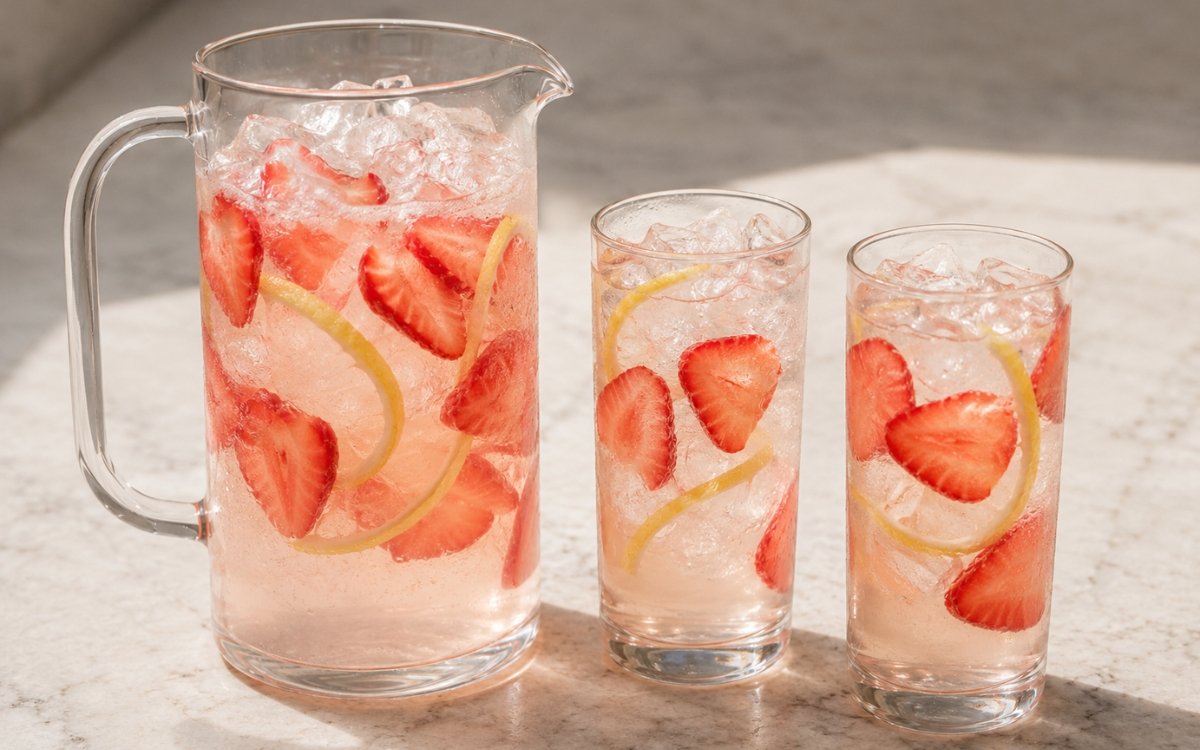
- Cover and refrigerate for 1–2 hours. Prepare fresh strawberry slices immediately before service. Stir once before the first pour. Garnish each glass with 2–3 fresh strawberry slices and an optional lemon peel twist. Serve cold.
Notes
The sweetener choice matters in this pitcher because the drink is so restrained. Light brown sugar adds a faint warmth that can be pleasant with white tea, but it is also the most noticeable sweetener option. For a cleaner version suited to brunch, afternoon tea, or a more elegant summer drink, use white sugar or mild honey. For a casual gathering where a little warmth is welcome, light brown sugar works well.
The 24-hour best-use window matters more here than for any other drink in the crowd collection. White tea's most volatile aromatic compounds — the delicate, faintly floral, honeyed fraction — diminish rapidly once extracted and diluted. The preparation's defining quality is its freshness and delicacy; both are most present within the first 12 hours and clearly diminished at 36 hours.