
Lychee Rose Spritzer Mocktail
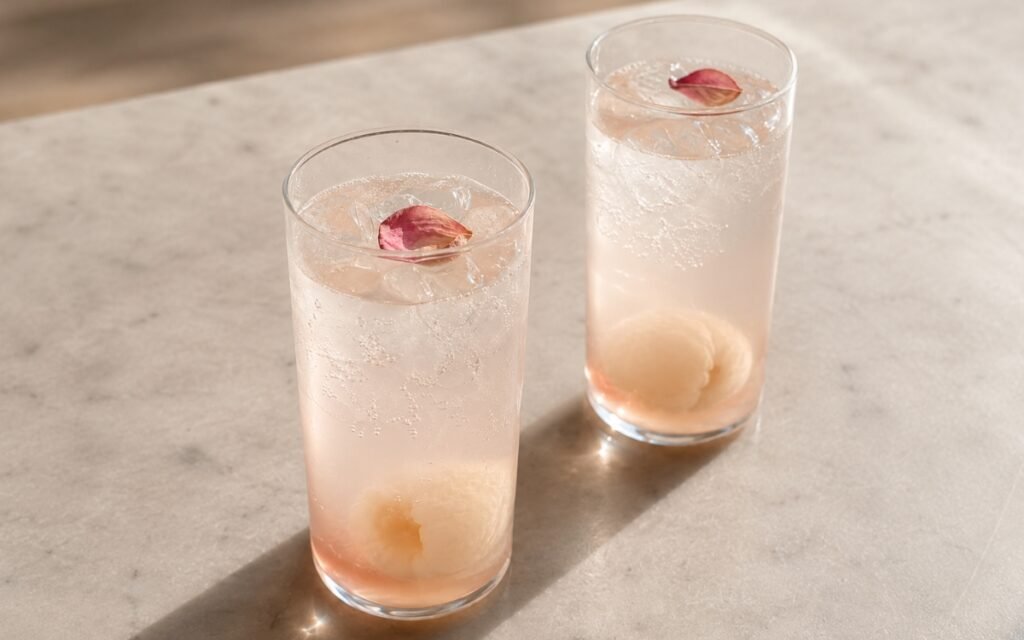
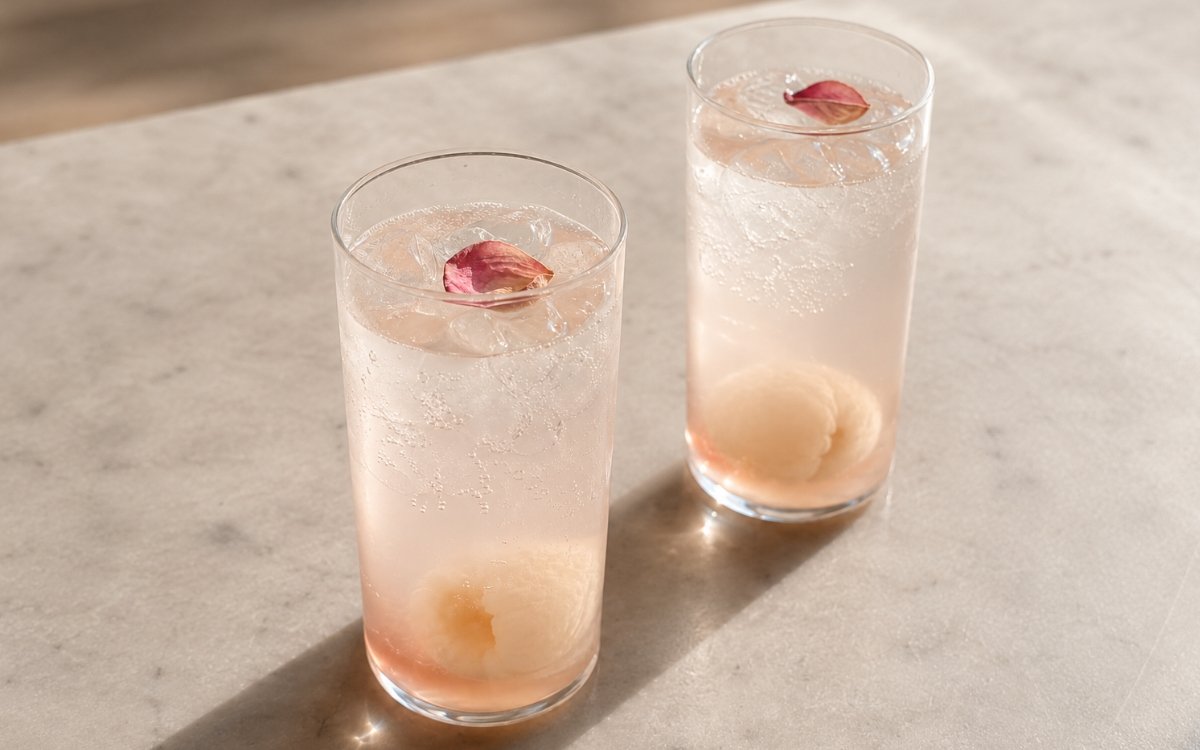
Lychee and rose is among the most specifically harmonious flavour pairings in Asian and Middle Eastern drink culture — the two sharing a primary aromatic compound, geraniol, that is responsible for both the lychee’s characteristic sweet, musky, tropical-floral character and the rose’s specifically warm, sweet, classic floral fragrance. When combined, these two geraniol-dominant aromatics amplify each other rather than competing, producing a flavour depth that is specifically more than either ingredient alone. The rose steeped off heat in just-simmered water, covered, for the preserved floral aromatic extraction that is standard throughout this collection’s botanical preparations. Honey dissolved into the warm rose infusion while still hot. The lychee juice added cold after the infusion cools completely — preserving its volatile aromatic compounds intact from the bottle to the glass. A whole peeled lychee in the bottom of each tall glass beneath the ice — visible through the glass as the preparation’s visual signature and, when encountered at the end of the drink, a burst of cold raw lychee flavour. A single rose petal floating on the surface. The most delicate and elegant mocktail in this collection.
Prep Time : 5 min
Steep Time : 10 min
Servings : 4
5 min
10 min
4
Ingredients
For the Rose-Lychee Base
• 250ml lychee juice — preferably high-quality canned lychee syrup strained from canned lychees, or a quality commercial lychee juice — this one on Amazon
• 250ml water
• 2 tbsp dried rose petals, food-grade — this one on Amazon
• 80g honey — this one on Amazon
For the Garnish
• 4 whole fresh lychees, peeled and pitted — or canned lychees if fresh are unavailable
• 4 food-grade edible rose petals
This post may contain affiliate links. As an Amazon Associate I earn from qualifying purchases, at no additional cost to you.
Directions
- Build the Rose Infusion
Pour the 250ml of water into a small saucepan and bring just to a gentle simmer over medium heat. Remove from the heat the moment simmering begins. Add the 2 tbsp of dried rose petals immediately and cover the saucepan. Allow to steep covered for 10 minutes. The covered off-heat steeping technique is the same applied in the blackcurrant rose fizz and the orange blossom preparations — rose’s primary aromatic compounds (geraniol, citronellol, and the damascenone family responsible for the classic rose fragrance) are volatile and escape readily as steam from an uncovered vessel at any temperature. The cover traps them within the headspace above the steeping liquid, condensing them back into the infusion as the temperature declines. At 10 minutes the infusion has extracted a meaningful concentration of these floral compounds without developing the slightly sharp, astringent note that longer steeping can produce from the petal’s tannin content. The finished infusion should be pale pink-gold and specifically fragrant — unmistakably rose in aroma. Strain through a fine-mesh sieve into a clean jug, discarding the rose petals. - Dissolve the Honey
While the rose infusion is still warm — immediately after straining — whisk in the 80g of honey until completely dissolved. The residual warmth of the infusion is sufficient to dissolve the honey smoothly without any additional heating. Honey is the specifically correct sweetener for this preparation: its own aromatic compounds include geraniol among the floral volatiles from the nectar sources the bees visited — producing a specific aromatic resonance with both the rose and the lychee that white sugar’s neutral sweetness would not. In a preparation built on the shared geraniol character of lychee and rose, the honey’s own geraniol contribution is a specifically apposite addition rather than a coincidental one. - Add Lychee Juice After Cooling
Allow the rose-honey infusion to cool completely to room temperature — approximately 15–20 minutes. This cooling step is specifically important for lychee juice: lychee’s primary aromatic character is carried by geraniol, rose oxide, and various esters that are simultaneously the most aromatic and the most heat-sensitive compounds in the fruit. Added to a warm infusion these compounds would begin evaporating immediately; added to a room-temperature infusion they are preserved completely and distribute evenly through the base. Once cooled, stir in the 250ml of lychee juice. For the best result, use the syrup from a quality can of lychees — the sweet, intensely fragrant liquid surrounding canned lychees is a concentrated form of lychee juice specifically suited to drink-making. Commercial lychee juice is an acceptable alternative provided it tastes genuinely of lychee rather than vaguely sweet with artificial fruit character. Stir to combine. Transfer to the refrigerator and chill completely. - Prepare the Glass and Assemble
Before filling the glasses with ice, place one whole peeled lychee at the bottom of each tall glass. The whole lychee in the bottom is the presentation detail that most distinguishes this mocktail visually — visible through the glass beneath the ice and the pale pink drink, it functions as both a visual signature and a flavour element that the drinker encounters when the drink is nearly finished. The lychee’s cold temperature after refrigeration and the glass’s ice keep it cold throughout; the final sip or spoonful of the drink, including the cold raw lychee, provides a specifically more intense burst of lychee flavour than the diluted, ice-chilled base above. Add ice cubes on top of the lychee, filling the glass generously. Divide the chilled rose-lychee base evenly among the four glasses — approximately 125ml per glass, filling to approximately halfway. Top each glass with approximately 125ml of chilled club soda, poured gently down the inner side of the glass to preserve the carbonation. Stir once or twice gently. Float a single dried food-grade rose petal on the surface of each drink — placing it gently flat on the liquid surface where the carbonation will keep it moving slightly with each bubble. Serve immediately.
*Notes :
- The geraniol connection between lychee and rose is one of the most documented flavour pairing harmonies in modern food science. Geraniol — a naturally occurring monoterpenoid alcohol — is the primary aromatic compound in both rose petals and lychee fruit, and the reason that these two ingredients, from entirely different parts of the world and different botanical families, produce an amplifying combination rather than a competing one when paired. A drink containing both rose and lychee has, in effect, a doubled concentration of its shared primary aromatic compound, producing the specific depth and specifically harmonious complexity that makes this combination a classic in East Asian and Middle Eastern dessert and drink traditions.
- The quality difference between premium canned lychees and budget versions is significant. Premium canned lychees in syrup — usually sourced from China, Thailand, or South Africa — have a specifically sweet, intensely fragrant syrup with genuinely vivid lychee aroma. Budget versions in heavy simple syrup have a more muted, less specifically lychee-forward character. For a drink where lychee is the primary fruit flavour, the syrup quality is the primary determinant of the base’s quality.
Why This Mocktail Works
This recipe works because the rose and lychee share geraniol as a primary aromatic compound — producing an amplifying combination rather than a competing one. The rose infusion is made covered and off heat to preserve the volatile floral aromatics.
The honey’s own geraniol-containing floral notes specifically resonate with both primary ingredients. And the lychee juice is added cold after the infusion cools completely, preserving its volatile aromatic character intact.
Ingredient Breakdown
Rose Petal Infusion (Covered, Off-Heat Steep)
The floral aromatic base — geraniol and damascenone compounds preserved by covered off-heat steeping; the first of the two geraniol-dominant ingredients.
Honey (Dissolved in Warm Infusion)
The aromatic-resonant sweetener — honey’s own geraniol-containing floral compounds specifically complementary to both rose and lychee.
Lychee Juice (Added Cold After Infusion Cools)
The primary tropical-floral fruit character — geraniol and rose oxide preserved by cold addition; the second of the two geraniol-dominant ingredients producing the amplifying combination.
Whole Peeled Lychee in Bottom of Glass
The visual signature and flavour surprise — visible through the glass, encountered with the final sip, providing a burst of cold raw lychee intensity.
Single Rose Petal Floating on Surface
The aromatic visual element — floating petal providing the first visual impression and a subtle additional floral aroma at each sip.
Flavor Structure Explained
This Lychee rose spritzer follows a layered balance model:
- Floral tropical core (lychee and rose)
- Gentle sweet foundation (honey)
- Light sparkling freshness (club soda)
- Delicate aromatic complexity (shared floral compounds)
- Fresh fruit finish (whole lychee garnish)
Lychee and rose define the foundation together, creating a seamless floral-tropical character that feels more unified than two separate flavors. Their shared aromatic qualities reinforce one another, producing a sweet, fragrant profile that is both delicate and intensely expressive. Honey supports this pairing with soft floral sweetness that rounds the aromatics without competing with them. Club soda introduces lightness and crisp carbonation, preventing the floral richness from becoming heavy and keeping the drink refreshing. The whole lychee at the bottom provides a final burst of concentrated fruit flavor and texture, adding a fresh contrast to the sparkling, diluted drink above it.
Common Mistakes to Avoid
- Not Covering During the Rose Steep – Uncovered, the geraniol and damascenone aromatics escape as steam. Always cover during the full 10-minute steep.
- Adding Lychee Juice to Warm Infusion – Warm temperature begins evaporating lychee’s volatile aromatics immediately. Always cool completely before adding.
- Using Low-Quality Lychee Juice or Syrup – The base’s lychee character is determined entirely by the juice quality. Always high-quality canned lychee syrup or genuinely fragrant commercial lychee juice.
- Forgetting the Lychee in the Glass Bottom – The whole lychee is the visual signature and the flavour element that makes this preparation specifically more than lychee-and-rose-soda. Always place before filling with ice.
- Using Decorative Rather Than Food-Grade Rose Petals – Non-culinary rose petals may contain pesticides, fragrance oils, or dyes. Always verify food-grade.
Variations
With Lemon Grass
Add 1 stalk of lemongrass — roughly bruised and cut into 5cm pieces — to the saucepan alongside the rose petals during the off-heat steep. The lemongrass’s specifically citrusy-floral character is classically paired with lychee in East Asian desserts and provides a refreshing dimension alongside the rose.
With Cardamom
Add 3 lightly crushed cardamom pods to the water during the simmer and remove with the rose petals when straining — the cardamom’s warm, sweet-floral depth is specifically complementary to both rose and lychee in a Middle Eastern direction.
With Sparkling Rosé Water
Replace the club soda with chilled sparkling mineral water for a softer, less sharply carbonated finish — the mineral water’s neutral character specifically allows the delicate lychee-rose combination to be more prominent.
With Raspberry
Add 8–10 fresh raspberries to the bottom of each glass alongside the whole lychee — the raspberry’s sharp, fruity tartness provides a counterpoint to the sweet, floral lychee-rose combination.
Storage & Make-Ahead
Rose-lychee base can be refrigerated in a sealed jar for up to 3 days. The floral notes of the rose are most vibrant during the first 48 hours, as the aromatic geraniol compounds gradually diminish over time. The lychee flavor remains stable throughout the storage period. For the best balance of floral aroma and fruit flavor, the base is best used within 24 to 48 hours of preparation.
Once assembled, the drinks are not suitable for storage and should be served immediately after preparation.
Frequently Asked Questions
Why does lychee and rose work so specifically well together?
Both lychee and rose share geraniol as a primary aromatic compound — a naturally occurring terpene alcohol responsible for lychee’s sweet, musky, tropical-floral character and for rose’s characteristic warm, sweet, classic floral fragrance. When combined, two geraniol-dominant ingredients produce an amplifying effect rather than a competing one — the shared primary aromatic compound doubling in concentration and creating a specifically more complex, more intensely floral combination than either alone.
What is the best lychee juice to use?
The syrup from a quality can of whole lychees in syrup is specifically recommended — it is a concentrated form of lychee juice with the most vivid, most genuinely fragrant lychee character of any commercially available format. Premium brands sourced from China or Thailand produce notably more fragrant syrups. Commercial lychee juice is acceptable if it tastes and smells genuinely of fresh lychee rather than vaguely sweet artificial fruit character.
Why does the whole lychee go in the bottom of the glass?
The whole lychee at the glass’s base serves two functions: it is visible through the glass as the preparation’s visual signature, identifying the drink as lychee-based before the first sip. And it is encountered with the final sip or spooned out at the end, providing a burst of cold, raw, specifically more intense lychee flavour that contrasts with the diluted, chilled, sparkling preparation above it.
Why food-grade rose petals specifically?
Rose petals sold for non-food applications (potpourri, bath products, weddings) are often treated with pesticides, synthetic fragrance oils, dyes, or other substances not safe for consumption. Always verify food-grade or culinary-grade on the packaging before using in any edible preparation.
What other rose-based mocktails share this floral character?
The Rose Hibiscus Mocktail uses the same rose foundation in combination with hibiscus’s tart, anthocyanin-rich depth — a more vivid, more acidic, more dramatically coloured preparation that pairs rose’s floral warmth with hibiscus’s specific tartness. The Blackcurrant Rose Fizz Mocktail uses rose similarly as a separately infused floral base combined with a deeply tart, wine-adjacent berry — both preparations treating rose as an aromatic foundation rather than a dominant primary flavour, each pairing it with a different secondary character.
Nutrition Facts
( per serving )
Calories
~85 kcal
Protein
0 g
Fat
0 g
Carbs
22 g
Calories
~85 kcal
Protein
0 g
Fat
0 g
Carbs
22 g
Related Recipes
Related Recipes

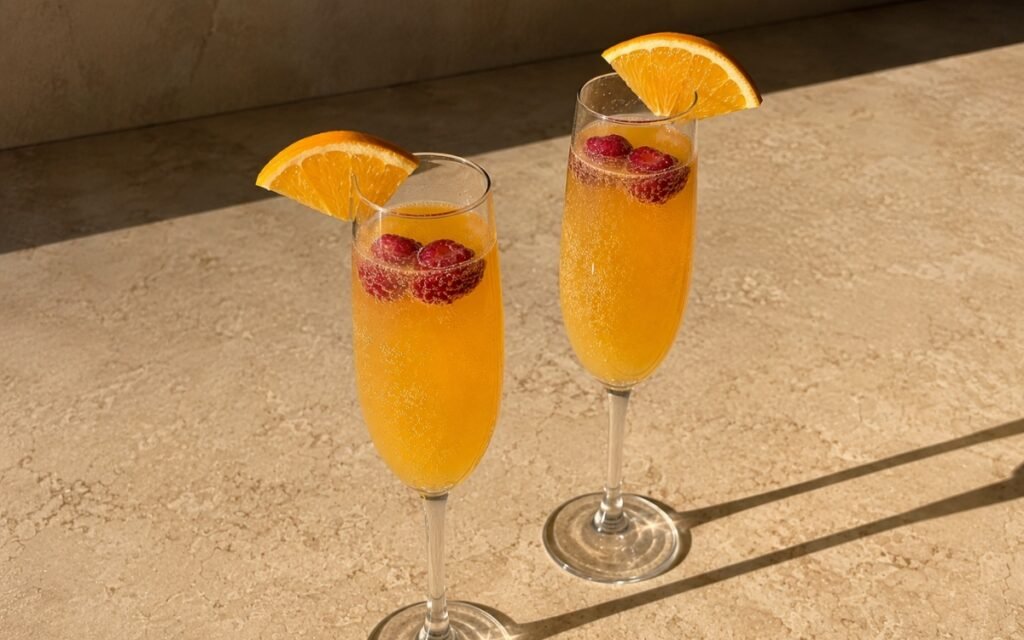
Classic Mimosa Mocktail
Bright orange juice with lively bubbles creates a crisp, lightly sweet brunch spritz with clean, balanced energy.
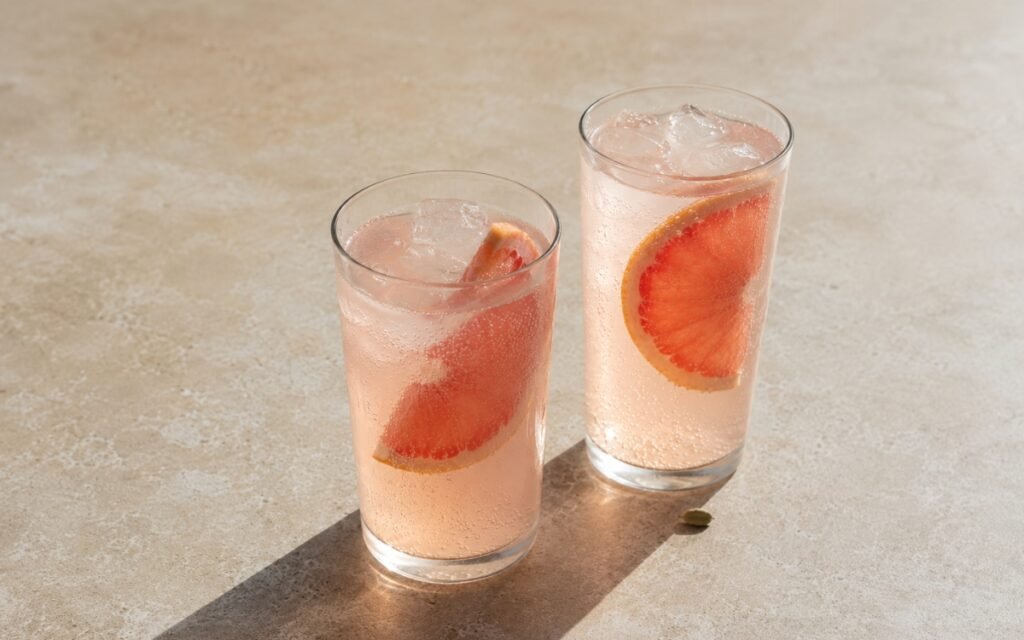
Grapefruit Cardamom Tonic Mocktail
Fresh grapefruit with cardamom warmth over tonic water — pale blush, bitter, and aromatic.
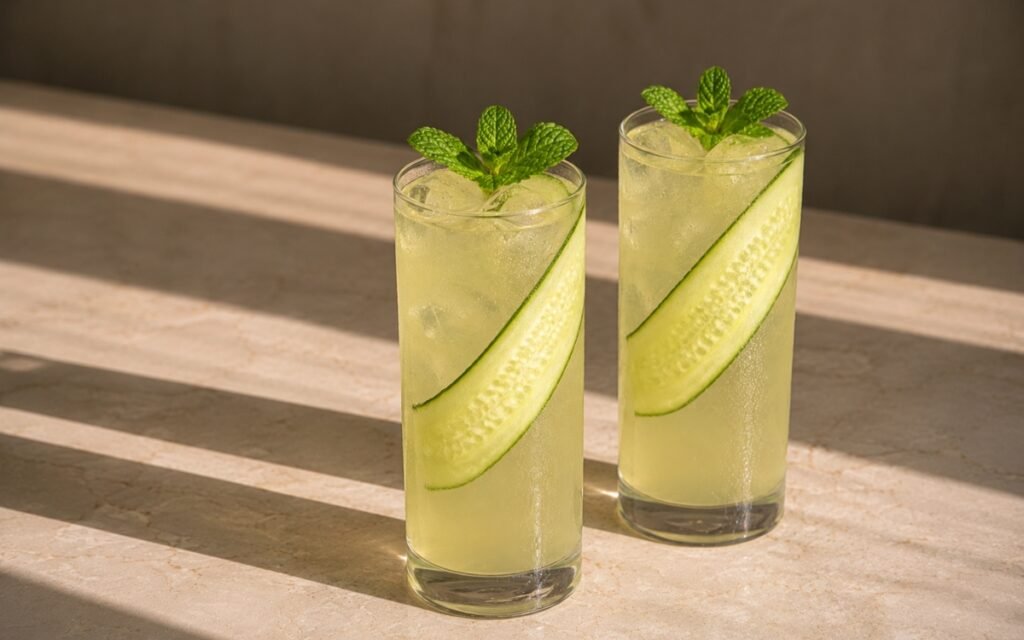
Cucumber Agua Fresca
Ultra-refreshing cucumber agua fresca with lime and subtle jalapeño heat, light, crisp, deeply hydrating green refreshment.
You might also like
You might also like
Light Lemon Verbena Iced Tea
Lemon verbena steeped exactly 10–15 minutes, honey dissolved warm, lemon juice added cold — chilled overnight. Floral, clean, and caffeine-free.
Sparkling Ginger Lemonade
Ginger simmered with honey 8–10 minutes, lemon zest off heat — concentrated base chilled, club soda side-poured right before serving. Sharp, hot, and fizzy.
Hibiscus Strawberry Lemonade
Hibiscus tea steeped 5–7 minutes, strawberries blended with hibiscus tea — honey dissolved warm, lemon cold, rested 30 minutes. Vivid ruby, tart, and fruity.
Lychee Rose Spritzer Mocktail
Ingredients
Method
- Pour the 250ml of water into a small saucepan and bring just to a gentle simmer over medium heat. Remove from the heat the moment simmering begins. Add the 2 tbsp of dried rose petals immediately and cover the saucepan. Allow to steep covered for 10 minutes. The covered off-heat steeping technique is the same applied in the blackcurrant rose fizz and the orange blossom preparations — rose’s primary aromatic compounds (geraniol, citronellol, and the damascenone family responsible for the classic rose fragrance) are volatile and escape readily as steam from an uncovered vessel at any temperature. The cover traps them within the headspace above the steeping liquid, condensing them back into the infusion as the temperature declines. At 10 minutes the infusion has extracted a meaningful concentration of these floral compounds without developing the slightly sharp, astringent note that longer steeping can produce from the petal’s tannin content. The finished infusion should be pale pink-gold and specifically fragrant — unmistakably rose in aroma. Strain through a fine-mesh sieve into a clean jug, discarding the rose petals.
- While the rose infusion is still warm — immediately after straining — whisk in the 80g of honey until completely dissolved. The residual warmth of the infusion is sufficient to dissolve the honey smoothly without any additional heating. Honey is the specifically correct sweetener for this preparation: its own aromatic compounds include geraniol among the floral volatiles from the nectar sources the bees visited — producing a specific aromatic resonance with both the rose and the lychee that white sugar’s neutral sweetness would not. In a preparation built on the shared geraniol character of lychee and rose, the honey’s own geraniol contribution is a specifically apposite addition rather than a coincidental one.
- Allow the rose-honey infusion to cool completely to room temperature — approximately 15–20 minutes. This cooling step is specifically important for lychee juice: lychee’s primary aromatic character is carried by geraniol, rose oxide, and various esters that are simultaneously the most aromatic and the most heat-sensitive compounds in the fruit. Added to a warm infusion these compounds would begin evaporating immediately; added to a room-temperature infusion they are preserved completely and distribute evenly through the base. Once cooled, stir in the 250ml of lychee juice. For the best result, use the syrup from a quality can of lychees — the sweet, intensely fragrant liquid surrounding canned lychees is a concentrated form of lychee juice specifically suited to drink-making. Commercial lychee juice is an acceptable alternative provided it tastes genuinely of lychee rather than vaguely sweet with artificial fruit character. Stir to combine. Transfer to the refrigerator and chill completely.
- Before filling the glasses with ice, place one whole peeled lychee at the bottom of each tall glass. The whole lychee in the bottom is the presentation detail that most distinguishes this mocktail visually — visible through the glass beneath the ice and the pale pink drink, it functions as both a visual signature and a flavour element that the drinker encounters when the drink is nearly finished. The lychee’s cold temperature after refrigeration and the glass’s ice keep it cold throughout; the final sip or spoonful of the drink, including the cold raw lychee, provides a specifically more intense burst of lychee flavour than the diluted, ice-chilled base above. Add ice cubes on top of the lychee, filling the glass generously. Divide the chilled rose-lychee base evenly among the four glasses — approximately 125ml per glass, filling to approximately halfway. Top each glass with approximately 125ml of chilled club soda, poured gently down the inner side of the glass to preserve the carbonation. Stir once or twice gently. Float a single dried food-grade rose petal on the surface of each drink — placing it gently flat on the liquid surface where the carbonation will keep it moving slightly with each bubble. Serve immediately.