Ingredients
Method
Build the Rose Infusion
- Pour the 250ml of water into a small saucepan and bring just to a gentle simmer over medium heat. Remove from the heat the moment simmering begins. Add the 2 tbsp of dried rose petals immediately and cover the saucepan. Allow to steep covered for 10 minutes. The covered off-heat steeping technique is the same applied in the blackcurrant rose fizz and the orange blossom preparations — rose's primary aromatic compounds (geraniol, citronellol, and the damascenone family responsible for the classic rose fragrance) are volatile and escape readily as steam from an uncovered vessel at any temperature. The cover traps them within the headspace above the steeping liquid, condensing them back into the infusion as the temperature declines. At 10 minutes the infusion has extracted a meaningful concentration of these floral compounds without developing the slightly sharp, astringent note that longer steeping can produce from the petal's tannin content. The finished infusion should be pale pink-gold and specifically fragrant — unmistakably rose in aroma. Strain through a fine-mesh sieve into a clean jug, discarding the rose petals.
Dissolve the Honey
- While the rose infusion is still warm — immediately after straining — whisk in the 80g of honey until completely dissolved. The residual warmth of the infusion is sufficient to dissolve the honey smoothly without any additional heating. Honey is the specifically correct sweetener for this preparation: its own aromatic compounds include geraniol among the floral volatiles from the nectar sources the bees visited — producing a specific aromatic resonance with both the rose and the lychee that white sugar's neutral sweetness would not. In a preparation built on the shared geraniol character of lychee and rose, the honey's own geraniol contribution is a specifically apposite addition rather than a coincidental one.
Add Lychee Juice After Cooling
- Allow the rose-honey infusion to cool completely to room temperature — approximately 15–20 minutes. This cooling step is specifically important for lychee juice: lychee's primary aromatic character is carried by geraniol, rose oxide, and various esters that are simultaneously the most aromatic and the most heat-sensitive compounds in the fruit. Added to a warm infusion these compounds would begin evaporating immediately; added to a room-temperature infusion they are preserved completely and distribute evenly through the base. Once cooled, stir in the 250ml of lychee juice. For the best result, use the syrup from a quality can of lychees — the sweet, intensely fragrant liquid surrounding canned lychees is a concentrated form of lychee juice specifically suited to drink-making. Commercial lychee juice is an acceptable alternative provided it tastes genuinely of lychee rather than vaguely sweet with artificial fruit character. Stir to combine. Transfer to the refrigerator and chill completely.
Prepare the Glass and Assemble
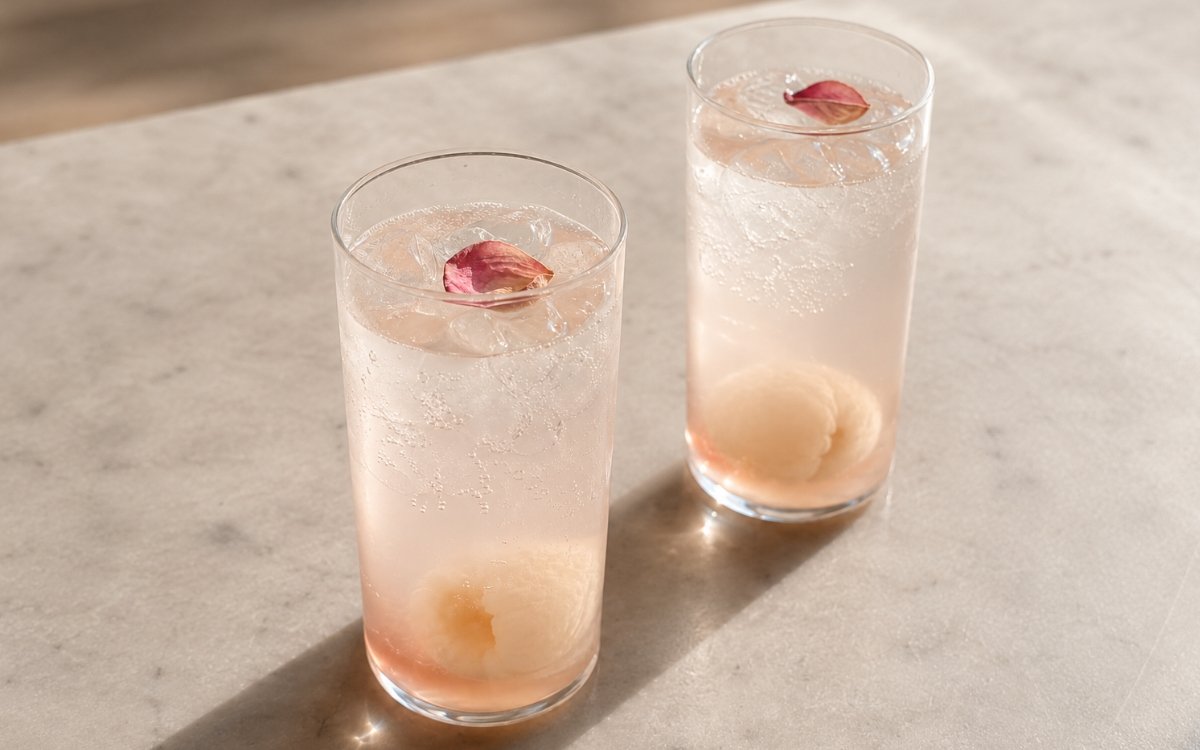
- Before filling the glasses with ice, place one whole peeled lychee at the bottom of each tall glass. The whole lychee in the bottom is the presentation detail that most distinguishes this mocktail visually — visible through the glass beneath the ice and the pale pink drink, it functions as both a visual signature and a flavour element that the drinker encounters when the drink is nearly finished. The lychee's cold temperature after refrigeration and the glass's ice keep it cold throughout; the final sip or spoonful of the drink, including the cold raw lychee, provides a specifically more intense burst of lychee flavour than the diluted, ice-chilled base above. Add ice cubes on top of the lychee, filling the glass generously. Divide the chilled rose-lychee base evenly among the four glasses — approximately 125ml per glass, filling to approximately halfway. Top each glass with approximately 125ml of chilled club soda, poured gently down the inner side of the glass to preserve the carbonation. Stir once or twice gently. Float a single dried food-grade rose petal on the surface of each drink — placing it gently flat on the liquid surface where the carbonation will keep it moving slightly with each bubble. Serve immediately.
Notes
The geraniol connection between lychee and rose is one of the most documented flavour pairing harmonies in modern food science. Geraniol — a naturally occurring monoterpenoid alcohol — is the primary aromatic compound in both rose petals and lychee fruit, and the reason that these two ingredients, from entirely different parts of the world and different botanical families, produce an amplifying combination rather than a competing one when paired. A drink containing both rose and lychee has, in effect, a doubled concentration of its shared primary aromatic compound, producing the specific depth and specifically harmonious complexity that makes this combination a classic in East Asian and Middle Eastern dessert and drink traditions.
The quality difference between premium canned lychees and budget versions is significant. Premium canned lychees in syrup — usually sourced from China, Thailand, or South Africa — have a specifically sweet, intensely fragrant syrup with genuinely vivid lychee aroma. Budget versions in heavy simple syrup have a more muted, less specifically lychee-forward character. For a drink where lychee is the primary fruit flavour, the syrup quality is the primary determinant of the base's quality.