
Basil Mango White Iced Tea
Basil Mango White Iced Tea is built around an unusual technique that sets it apart from every other herbal preparation in this collection: rather than infusing basil in warm or cold tea, the basil is blended directly into the mango itself. This isn’t a substitution made for convenience — blending basil with mango specifically protects its volatile aromatic oils better than steeping ever could. Mango’s natural sugars and mild acidity slow oxidation, while its soft fats help bind the basil’s aromatic compounds, keeping the herb tasting fresh, clean, and genuinely green rather than cooked or heavy, even after straining and chilling. The white tea base follows the same careful low-temperature discipline as every white tea preparation in this collection — 75–80°C, never boiling, because the bitterness and lost floral sweetness that higher heat introduces would compete directly with mango’s tropical brightness. Lemon peel infuses briefly for fragrance alone, and honey stays deliberately restrained, since ripe mango already carries substantial natural sweetness. The most common challenge in this drink is keeping white tea perceptible at all — mango is assertive enough that it’s easy to lose the tea entirely, which is why the mango basil liquid is added gradually and tasted rather than poured in all at once. The result is tropical without being sweet and herbal without being assertive — more refined than a mango drink has any right to be.

Prep Time : 20 min
Cook Time : 5 min
Servings : 8
20 min
5 min
8
Ingredients
For the White Tea Base
• 1.65 litres water
• 6 white tea bags — Pai Mu Tan (White Peony) — this one on Amazon
For the Mango Basil Smash
• 2 ripe mangoes — peeled and cubed; about 350–400g flesh
• 1 packed cup fresh basil leaves — about 20–25g
For the Botanical & Sweetening
• 1 strip lemon peel — yellow part only, no white pith
• 2–3 Tbsp mild honey — to taste; start with 2 Tbsp — this one on Amazon
For Serving
• Ice
• Fresh basil leaves
• Mango cubes
This post may contain affiliate links. As an Amazon Associate I earn from qualifying purchases, at no additional cost to you.
Directions
- Brew the White Tea Carefully
Heat the 1.65 litres of water to 75–80°C — never boil, as white tea becomes bitter and loses its floral sweetness at higher temperatures. If needed, rest boiled water for 4–5 minutes before brewing. Add the 6 tea bags and steep for 3–4 minutes, then remove gently without squeezing. Let cool to lukewarm. - Add the Lemon Peel
Infuse the one strip of pith-free lemon peel in the warm tea for exactly 5 minutes, then remove. This adds aromatic brightness without acidity. Over-infusing introduces bitterness and disrupts the drink’s otherwise delicate balance. - Sweeten Lightly
Stir in 2 tablespoons of mild honey while the tea is still warm, so it dissolves evenly. Taste — the sweetness should stay restrained since ripe mango will add substantial natural sugars of its own. Cool the tea fully before the next step. - Prepare and Strain the Mango Basil Smash
Blend the ripe mango with the fresh basil briefly until smooth but not heated by the blending process. Strain through a fine sieve without pressing, to keep the liquid clear, light, and clean-tasting. The basil’s protection here comes specifically from the mango itself — its natural sugars and mild acidity slow oxidation while its soft fats help bind the basil’s aromatic compounds, which is why this blended approach keeps the herb tasting bright rather than dulled. - Combine and Taste
Stir about 200ml of the mango-basil liquid into the cooled tea. Adjust slightly if needed — mango and basil should lift the profile while white tea remains subtly present underneath. Add more gradually and taste as you go rather than committing to the full 240ml range at once. - Chill Fully
Refrigerate for 1–2 hours. Full chilling sharpens the basil’s aroma, softens the overall sweetness, and integrates every element into a clean, cohesive drink. - Serve
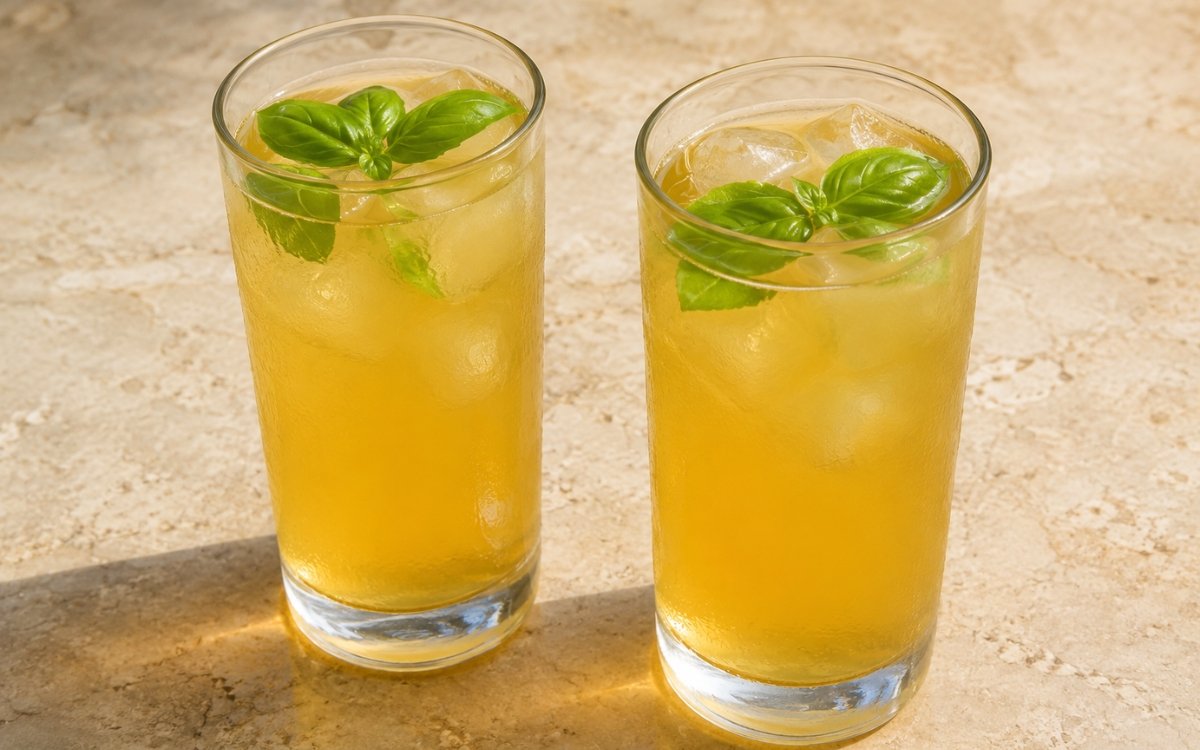
Fill glasses generously with ice. Pour the chilled tea over the ice and garnish with a fresh basil leaf and a cube or two of fresh mango. Serve immediately while the basil aroma is at its most expressive and the mango brightness is at its peak.
*Notes :
- The mango basil smash is the defining technique of this recipe. Blending basil directly with mango protects its volatile oils better than steeping in tea ever could. Mango’s natural sugars and mild acidity slow oxidation, while its soft fats help bind aromatic compounds. This keeps the basil tasting fresh, clean, and bright even after straining and chilling — the exact character the drink depends on.
- Mango ripeness has the strongest influence on sweetness, colour, and overall tropical depth. Alphonso, Ataulfo, or Kent varieties blend smoothly and strain cleanly thanks to low fibre and high natural sugars. More fibrous types like Tommy Atkins can still work but may need extra straining. Regardless of variety, mango must be fully ripe — fragrant, slightly soft to pressure, and sweet when tasted raw. Underripe fruit produces a thin, flat smash that cannot carry the basil or balance the tea properly.
- Maintaining a clear white tea presence is the most common balance challenge. Mango is assertive, so the suggested 200–240ml smash range is only a guideline. Always taste as you add — stop once the tea begins fading too far into the background. When white tea disappears completely, the drink becomes mango basil juice rather than a refined botanical iced tea with structure.
Why This Recipe Works
This recipe works because basil is blended into the mango rather than steeped in tea, protecting its volatile aromatic oils through mango’s own natural sugars, acidity, and soft fats — a technique unique to this preparation in the entire collection. White tea is brewed at the precise low temperature its delicate character requires.
Lemon peel adds fragrance without disturbing the balance. Honey stays restrained because ripe mango already provides ample sweetness. And the mango basil liquid is added gradually and tasted, preserving white tea’s presence rather than letting it disappear.
Ingredient Breakdown
White Tea Brewed at 75–80°C for 3–4 Minutes
The soft, structural backbone — present enough to anchor the drink against mango’s assertiveness.
Mango Basil Smash, Blended Together
The defining technique — basil’s volatile oils protected by mango’s sugars, acidity, and fats, keeping the herb bright rather than dulled.
Lemon Peel for Fragrance Only
The finishing aromatic lift — five minutes, then removed before any bitterness develops.
Restrained Honey
The sweetness calibration — minimal, since ripe mango already carries substantial natural sugar.
Flavor Structure Explained
This Basil Mango White Iced Tea follows a layered balance model:
- Tropical fruit core (mango)
- Fresh herbal character (basil)
- Delicate tea backbone (white tea)
- Gentle citrus aromatics (lemon peel)
- Clean refined finish (fruit-herb-tea balance)
Mango and basil define the foundation together, creating a profile that is simultaneously tropical, bright, and green. Mango contributes rich fruit aromatics and natural sweetness, while basil adds fresh herbal complexity that keeps the tropical character lively and distinctive. White tea provides the structural framework beneath these dominant flavors, supplying subtle floral notes and a refined backbone that prevents the drink from reading as simple fruit juice. Lemon peel contributes a light layer of citrus fragrance that briefly lifts the aroma without introducing noticeable acidity. Honey smooths and integrates the flavors, softening transitions while remaining largely invisible as a separate taste. The result is an iced tea built around tropical freshness, herbal clarity, and delicate tea-driven refinement.
Common Mistakes to Avoid
- Boiling the Water for White Tea – Introduces bitterness and destroys floral sweetness. Always 75–80°C.
- Steeping Basil in the Tea Instead of Blending With Mango – Loses the protective effect that keeps basil bright. Always blend the two together.
- Pressing the Mango Basil Smash Through the Sieve – Introduces fibrous pulp that clouds the liquid. Always let it drain without pressing.
- Adding the Full Mango Basil Liquid at Once – Risks overwhelming the white tea entirely. Always add gradually and taste.
- Using Underripe Mango – Produces a thin, flat smash that cannot carry the basil or balance the tea. Always use fully ripe, fragrant fruit.
Variations
With Strawberry
Replace half the mango with fresh strawberries in the smash for a brighter, less tropical direction, in the spirit of the Basil Strawberry White Iced Tea.
With Lime
Add a small squeeze of fresh lime juice to the mango basil smash before straining for extra brightness.
On Green Tea
Substitute green tea for white tea — 6 bags brewed at 75–80°C for 2–3 minutes — for a slightly more structured, grassy foundation, in the direction of the Mango Iced Green Tea.
Sparkling Version
Build the tea at a slightly higher mango basil concentration, chill, and top with cold sparkling water just before serving.
Storage & Make-Ahead
Mango basil smash is best used within a few hours of blending and straining, before oxidation begins to dull its bright flavor and color.
Brewed and sweetened white tea, before the mango basil mixture is added, can be refrigerated for up to 2 days.
Once assembled, the tea is best enjoyed within 24 hours, when the basil’s fresh aroma and the mango’s vibrant flavor are at their most vivid.
Frequently Asked Questions
Why blend the basil with mango instead of infusing it in the tea like other herbs in this collection?
Basil infused directly in warm or cold liquid loses its brightness relatively quickly and can turn flat or grassy. Blending it with mango instead protects its volatile aromatic oils — mango’s natural sugars and acidity slow oxidation, while its soft fats help bind the aromatic compounds, keeping the basil tasting fresh and clean even after straining and a full chill.
How do I know if I’ve added too much mango basil liquid?
Taste as you add it. If the white tea’s gentle floral presence has faded entirely and the drink tastes purely of mango and basil with no sense of tea underneath, you’ve added too much. The goal is mango and basil lifting the profile while white tea remains subtly, but genuinely, present.
Does mango variety really make that much difference?
Yes. Alphonso, Ataulfo, and Kent mangoes have low fibre and high natural sugar, which blend smoothly and strain cleanly. More fibrous varieties like Tommy Atkins can still work but may need additional straining passes. Regardless of variety, the mango must be fully ripe — underripe fruit produces a thin, flat smash that can’t properly carry the basil or balance the tea.
What other mango and basil-forward preparations share this approach?
The Mango Green Tea Lemonade shares mango as the primary tropical flavour layered with green tea in a lemonade format. The Mango Iced Green Tea shares the mango-and-tea combination on a green tea base rather than white. The Basil Strawberry White Iced Tea shares the white tea and basil pairing with strawberry’s brighter, less tropical fruit character in place of mango.
Nutrition Facts
( per serving )
Calories
~45 kcal
Protein
0 g
Fat
0 g
Carbs
11 g
Calories
~45 kcal
Protein
0 g
Fat
0 g
Carbs
11 g
Related Recipes
Related Recipes

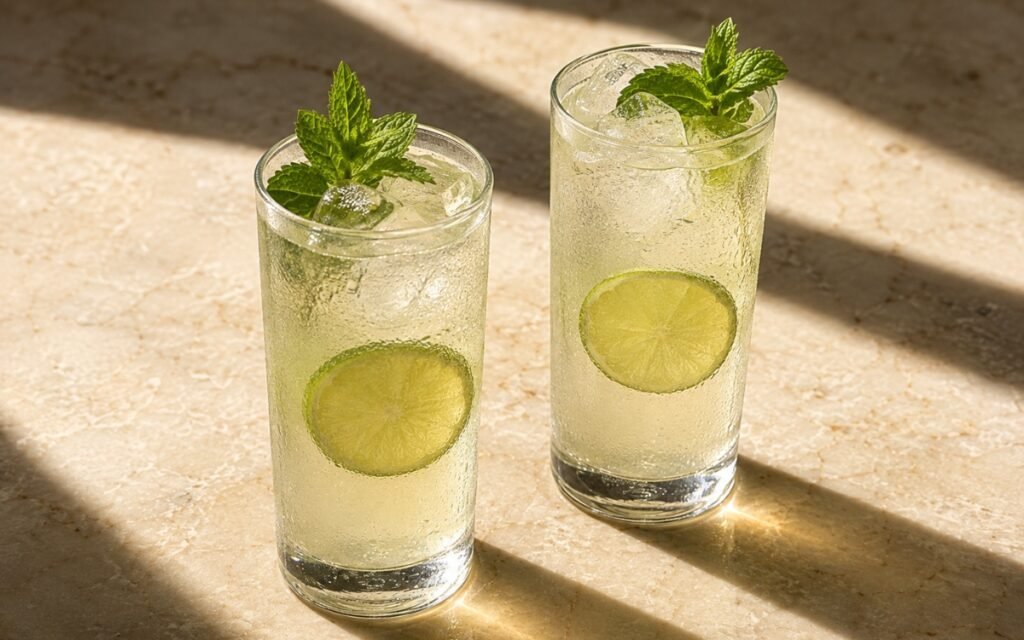
Mint Lime White Tea Cooler
Properly brewed white tea combined with a cold-style mint-lime infusion and fresh lime juice for a pale, clean, elegant iced tea cooler.
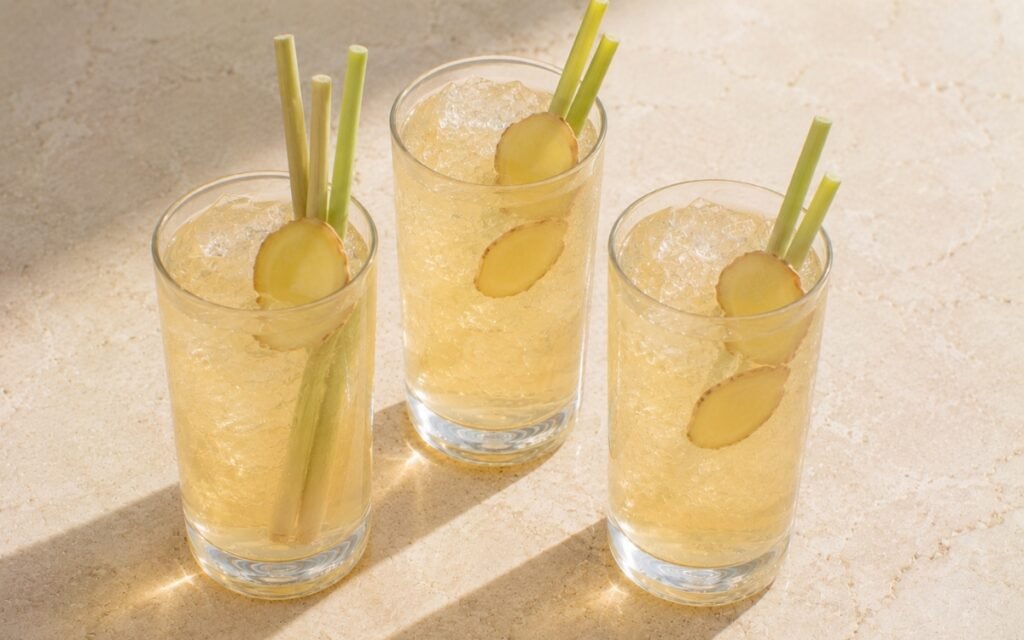
Lemongrass Ginger White Iced Tea
White tea at 75–80°C for 3–4 minutes, lemongrass bruised and infused with ginger 8–10 minutes — mild honey, chilled. Bright, citrus-herbal, gently warming.
Sage Citrus Iced Black Tea
Black tea at 90–95°C for 2½–3 minutes, sage clapped and infused cold, tasted periodically — lemon peel and juice, honey, chilled. Structured and herbal.

You might also like
You might also like
Black Tea Orange Pitcher
Ceylon tea at 90–95°C for 3 minutes, dual citrus zest off heat — 750ml orange juice for warm rounded body, cold water, chilled. Tea-forward with orange lift.
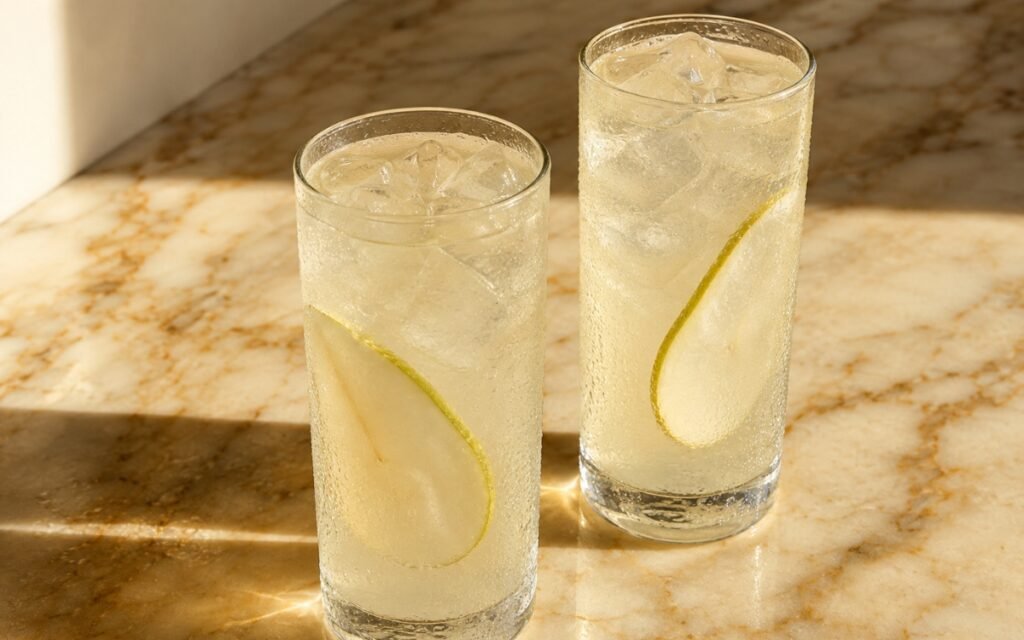
Pear Lemonade
Ripe pears at low heat with honey, lemon zest off heat — 150ml lemon only so pear leads, salt, cold water, chilled. Pale, delicate, and pear-forward.
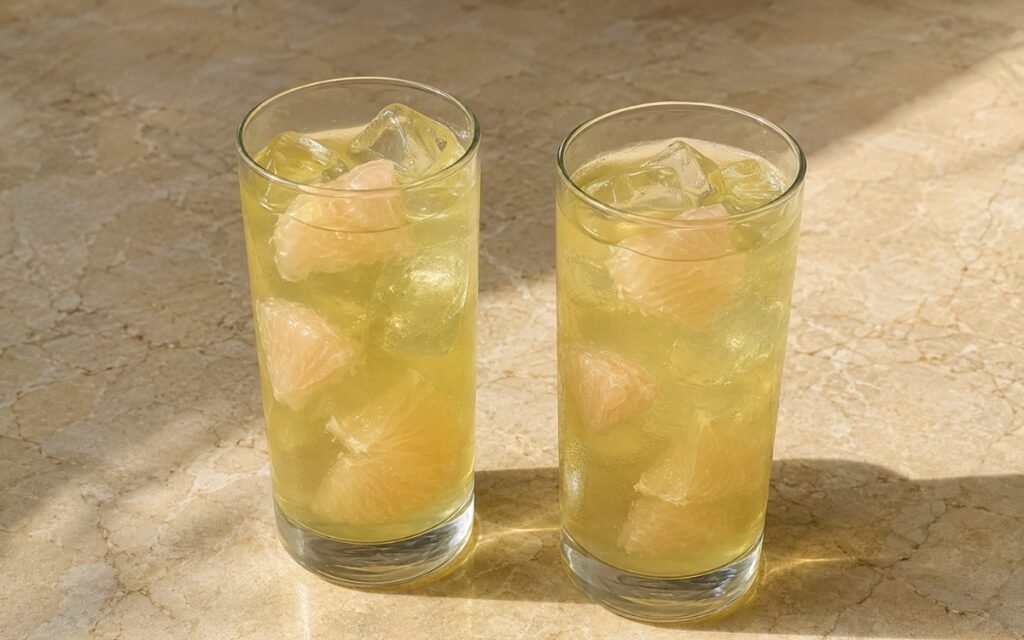
Pomelo Green Iced Tea
Green tea at 75–80°C for 2–3 minutes, pomelo segments infused cold 15–20 minutes — honey and a pinch of salt, strained, chilled. Light, aromatic, complex.

Basil Mango White Iced Tea
Ingredients
Method
- Heat the 1.65 litres of water to 75–80°C — never boil, as white tea becomes bitter and loses its floral sweetness at higher temperatures. If needed, rest boiled water for 4–5 minutes before brewing. Add the 6 tea bags and steep for 3–4 minutes, then remove gently without squeezing. Let cool to lukewarm.
- Infuse the one strip of pith-free lemon peel in the warm tea for exactly 5 minutes, then remove. This adds aromatic brightness without acidity. Over-infusing introduces bitterness and disrupts the drink’s otherwise delicate balance.
- Stir in 2 tablespoons of mild honey while the tea is still warm, so it dissolves evenly. Taste — the sweetness should stay restrained since ripe mango will add substantial natural sugars of its own. Cool the tea fully before the next step.
- Blend the ripe mango with the fresh basil briefly until smooth but not heated by the blending process. Strain through a fine sieve without pressing, to keep the liquid clear, light, and clean-tasting. The basil’s protection here comes specifically from the mango itself — its natural sugars and mild acidity slow oxidation while its soft fats help bind the basil’s aromatic compounds, which is why this blended approach keeps the herb tasting bright rather than dulled.
- Stir about 200ml of the mango-basil liquid into the cooled tea. Adjust slightly if needed — mango and basil should lift the profile while white tea remains subtly present underneath. Add more gradually and taste as you go rather than committing to the full 240ml range at once.
- Refrigerate for 1–2 hours. Full chilling sharpens the basil’s aroma, softens the overall sweetness, and integrates every element into a clean, cohesive drink.
- Fill glasses generously with ice. Pour the chilled tea over the ice and garnish with a fresh basil leaf and a cube or two of fresh mango. Serve immediately while the basil aroma is at its most expressive and the mango brightness is at its peak.