Ingredients
Method
Brew the White Tea Carefully
- Heat the 1.65 litres of water to 75–80°C — never boil, as white tea becomes bitter and loses its floral sweetness at higher temperatures. If needed, rest boiled water for 4–5 minutes before brewing. Add the 6 tea bags and steep for 3–4 minutes, then remove gently without squeezing. Let cool to lukewarm.
Add the Lemon Peel
- Infuse the one strip of pith-free lemon peel in the warm tea for exactly 5 minutes, then remove. This adds aromatic brightness without acidity. Over-infusing introduces bitterness and disrupts the drink's otherwise delicate balance.
Sweeten Lightly
- Stir in 2 tablespoons of mild honey while the tea is still warm, so it dissolves evenly. Taste — the sweetness should stay restrained since ripe mango will add substantial natural sugars of its own. Cool the tea fully before the next step.
Prepare and Strain the Mango Basil Smash
- Blend the ripe mango with the fresh basil briefly until smooth but not heated by the blending process. Strain through a fine sieve without pressing, to keep the liquid clear, light, and clean-tasting. The basil's protection here comes specifically from the mango itself — its natural sugars and mild acidity slow oxidation while its soft fats help bind the basil's aromatic compounds, which is why this blended approach keeps the herb tasting bright rather than dulled.
Combine and Taste
- Stir about 200ml of the mango-basil liquid into the cooled tea. Adjust slightly if needed — mango and basil should lift the profile while white tea remains subtly present underneath. Add more gradually and taste as you go rather than committing to the full 240ml range at once.
Chill Fully
- Refrigerate for 1–2 hours. Full chilling sharpens the basil's aroma, softens the overall sweetness, and integrates every element into a clean, cohesive drink.
Serve
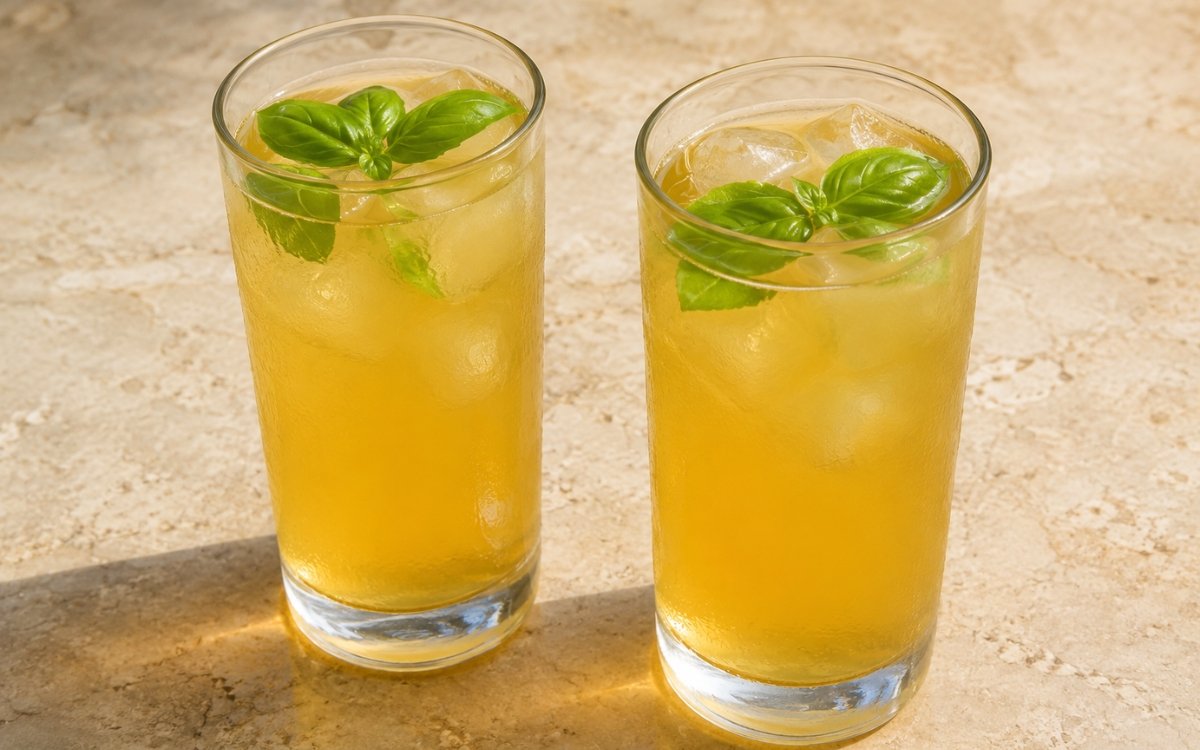
- Fill glasses generously with ice. Pour the chilled tea over the ice and garnish with a fresh basil leaf and a cube or two of fresh mango. Serve immediately while the basil aroma is at its most expressive and the mango brightness is at its peak.
Notes
The mango basil smash is the defining technique of this recipe. Blending basil directly with mango protects its volatile oils better than steeping in tea ever could. Mango's natural sugars and mild acidity slow oxidation, while its soft fats help bind aromatic compounds. This keeps the basil tasting fresh, clean, and bright even after straining and chilling — the exact character the drink depends on.
Mango ripeness has the strongest influence on sweetness, colour, and overall tropical depth. Alphonso, Ataulfo, or Kent varieties blend smoothly and strain cleanly thanks to low fibre and high natural sugars. More fibrous types like Tommy Atkins can still work but may need extra straining. Regardless of variety, mango must be fully ripe — fragrant, slightly soft to pressure, and sweet when tasted raw. Underripe fruit produces a thin, flat smash that cannot carry the basil or balance the tea properly.
Maintaining a clear white tea presence is the most common balance challenge. Mango is assertive, so the suggested 200–240ml smash range is only a guideline. Always taste as you add — stop once the tea begins fading too far into the background. When white tea disappears completely, the drink becomes mango basil juice rather than a refined botanical iced tea with structure.