
Lemongrass Ginger White Iced Tea
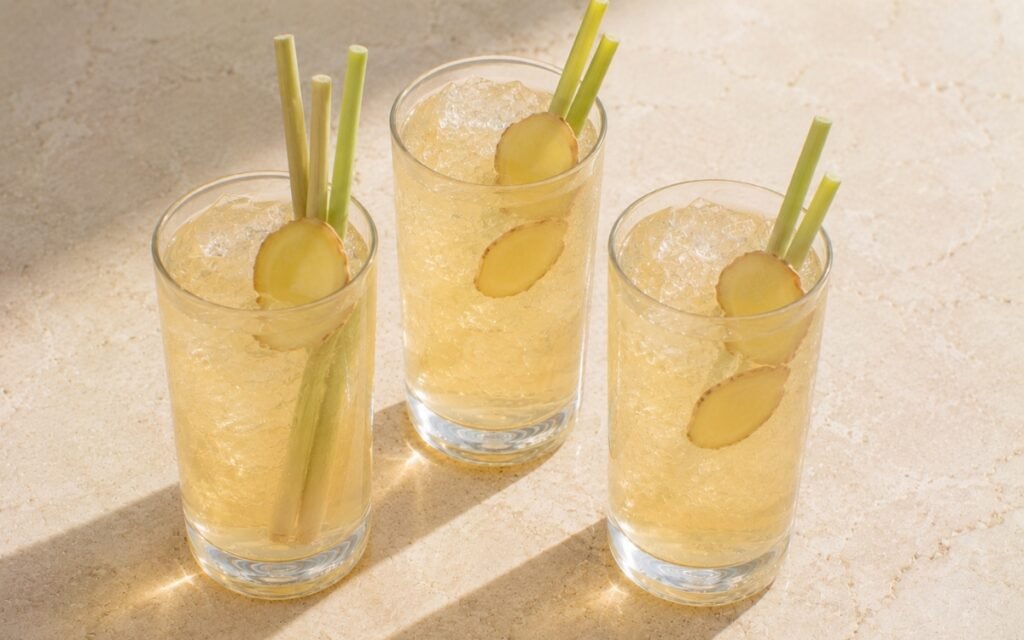
Lemongrass Ginger White Iced Tea brings together the bright citrus-herbal character of fresh lemongrass and the gentle warming depth of fresh ginger on a delicate white tea base — a pairing that reads as both familiar and distinctly original, floral, softly spiced, and unmistakably Southeast Asian in its aromatic sensibility without requiring any exotic technique or hard-to-find ingredients. The white tea brews at the same careful 75–80°C as every white tea preparation in this collection, because boiling water strips white tea of its natural floral sweetness and introduces an astringency that specifically amplifies ginger’s sharpness rather than letting it stay gentle. The lemongrass technique is the recipe’s defining detail: bruised firmly along its length with the back of a heavy knife, never chopped, because the essential oils are locked inside the fibrous stalk structure and need mechanical force to release cleanly — chopping instead releases woody, bitter cellulose compounds that bruising carefully avoids. Ginger is used in deliberately conservative quantity, six to eight thin slices infused alongside the lemongrass for 8–10 minutes, producing a warmth that’s felt at the finish of each sip rather than identified upfront as spice. Honey, as in every white tea preparation here, must stay mild and neutral — there’s nothing else in this drink assertive enough to mask a stronger variety.
Prep Time : 15 min
Cook Time : 5 min
Servings : 8
15 min
5 min
8
Ingredients
For the White Tea Base
• 1.65 litres water
• 6 white tea bags — Pai Mu Tan (White Peony) — this one on Amazon
For the Botanical Flavoring
• 2 fresh lemongrass stalks — outer layers removed, inner part sliced
• 6–8 thin slices fresh ginger — about 10–12g
• 2–3 Tbsp mild honey — to taste; start with 2 Tbsp — this one on Amazon
For Serving
• Ice
• Fresh lemongrass stalks — cut into short segments
• Thin ginger slices — optional, for garnish
This post may contain affiliate links. As an Amazon Associate I earn from qualifying purchases, at no additional cost to you.
Directions
- Brew the White Tea
Heat the 1.65 litres of water to 75–80°C — do not boil. Boiling water strips white tea of its natural floral sweetness and introduces an astringency that amplifies ginger’s sharpness. No thermometer? Boil, then rest uncovered for 4–5 minutes. Add the 6 white tea bags and steep for 3–4 minutes. Remove gently without squeezing. - Prepare the Lemongrass
Remove and discard the dry, papery outer layers until you reach the pale, fragrant inner core. Trim the woody top, leaving only the lower 15–18cm. Lay each stalk flat and bruise firmly along its length with the back of a heavy knife — press hard enough to crack the structure and release the oils. Slice into 5–6cm segments. Do not chop — chopping releases woody, bitter cellulose compounds that bruising carefully avoids. - Infuse Lemongrass and Ginger
Add the bruised lemongrass segments and ginger slices to the lukewarm white tea. Infuse for 8–10 minutes, tasting at the 8-minute mark. Look for a clean citrus-herbal aroma from the lemongrass and a gentle warmth from the ginger — present at the back of the palate, not assertive at the front. Strain both out promptly once that balance is reached. - Sweeten While Warm
Stir in 2 tablespoons of mild honey while the tea is still warm. Honey must dissolve in warm liquid to distribute evenly — cold liquid leaves it pooled at the bottom. Taste carefully. Add up to 1 additional tablespoon only if the ginger feels sharp or the overall profile tastes flat. Allow to cool fully to room temperature before chilling. - Chill and Serve
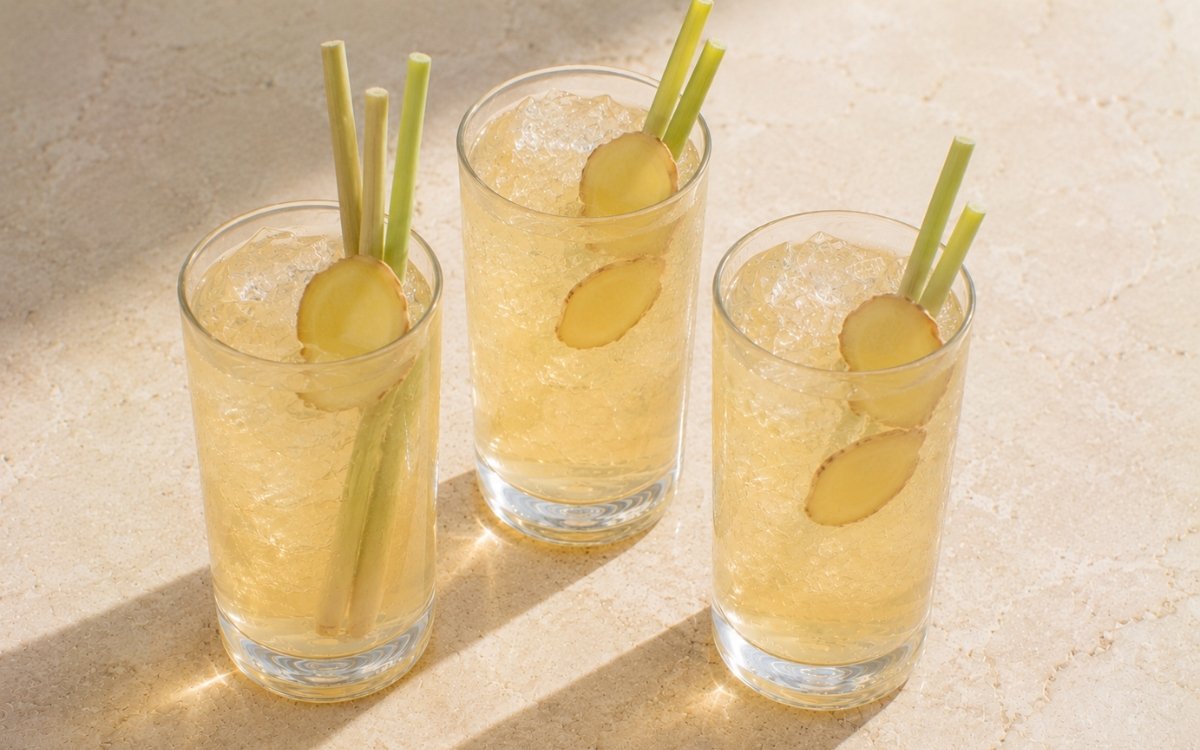
Refrigerate for 1–2 hours until completely cold. Full chilling is essential — the lemongrass aroma brightens, ginger warmth resolves into a clean background note, and honey integrates invisibly. Fill glasses with ice, pour, and garnish with a short lemongrass segment and an optional thin ginger slice. Serve immediately.
*Notes :
- Lemongrass bruising — not chopping — is the technique that determines whether the infusion tastes bright and citrusy or woody and flat. The essential oils are locked inside the fibrous stalk structure and need mechanical force to release cleanly. Bruise firmly with the back of a knife along the full length before slicing into segments.
- Ginger quantity in this recipe is deliberately conservative. Six to eight thin slices infused for 8–10 minutes in warm white tea produces gentle warmth — felt at the finish of each sip, not identified as spice. If it burns, the slices were too thick or the infusion ran too long. Reduce contact time before adjusting quantity.
- Mild honey is non-negotiable for keeping the aromatic profile clean and focused. Acacia or clover honey integrates without competing. Strongly flavoured varieties — buckwheat, raw wildflower — assert themselves against the lemongrass and muddy the drink’s precise, elegant character.
- White tea must remain a detectable presence. If it has completely disappeared behind the botanicals, either the infusion ran too long or the honey quantity was excessive. Pai Mu Tan has enough natural body to hold its own — lighter varieties like Silver Needle may not.
Why This Recipe Works
This recipe works because lemongrass is bruised rather than chopped, releasing its bright citrus-herbal oils without the woody bitterness mechanical cutting would introduce. White tea is brewed at the precise low temperature that protects its floral sweetness and keeps it from amplifying ginger’s natural sharpness.
Lemongrass and ginger infuse together within a single tasted window, calibrated so ginger contributes warmth rather than heat. And mild honey integrates the whole without ever competing with the lemongrass’s precise aromatic character.
Ingredient Breakdown
White Tea Brewed at 75–80°C for 3–4 Minutes
The structural backbone — Pai Mu Tan specifically chosen to hold its own against the botanicals.
Lemongrass Bruised, Never Chopped
The bright citrus-herbal lift — mechanical force releasing oils without the bitterness chopping introduces.
Ginger, Conservative Quantity and Time
The background warmth — felt at the finish rather than identified as spice.
Mild, Neutral Honey
The integrating sweetener — necessary specifically because nothing else here can mask a stronger variety.
Flavor Structure Explained
This Lemongrass Ginger White Iced Tea follows a layered balance model:
- Delicate tea core (white tea)
- Bright botanical character (lemongrass)
- Gentle warming depth (ginger)
- Integrated floral sweetness (honey)
- Clean elegant finish (tea-herb-spice harmony)
White tea defines the foundation with soft floral notes, subtle sweetness, and a refined structure that quietly supports the drink. Lemongrass provides the defining aromatic layer, contributing bright citrus-like freshness and a clean herbal lift that gives the tea its distinctive character. Ginger adds a secondary dimension of warmth, appearing primarily at the finish as gentle depth rather than immediate spice or heat. Honey smooths the transitions between tea, herb, and spice, creating cohesion while remaining restrained enough that sweetness never becomes a focal point. The result is an iced tea built around elegance, where floral softness, botanical brightness, and subtle warmth exist in careful balance.
Common Mistakes to Avoid
- Boiling the Water for White Tea – Strips floral sweetness and amplifies ginger’s sharpness. Always 75–80°C.
- Chopping the Lemongrass Instead of Bruising It – Releases woody, bitter cellulose compounds. Always bruise firmly with the back of a knife first.
- Using Thick Ginger Slices or Over-Infusing – Produces a burning sharpness rather than gentle warmth. Always thin slices and the 8–10 minute window.
- Using a Strongly Flavoured Honey – Competes with the lemongrass and muddies the drink’s precise character. Always mild and neutral.
- Letting the Botanicals Overwhelm the Tea – If white tea disappears entirely, the infusion ran too long or the honey was excessive. Always taste for balance.
Variations
With Lime
Add a strip of lime peel alongside the lemongrass and ginger during the infusion for an extra citrus dimension.
With Mint
Add a small handful of lightly clapped fresh mint during the final chill for a cooler, brighter finish.
With Coconut Water
Replace half the white tea base with coconut water for a softer, more tropical direction that pairs naturally with lemongrass.
Sparkling Version
Build the tea at a slightly higher concentration, chill, and top with cold sparkling water just before serving.
Storage & Make-Ahead
Brewed and sweetened white tea, before the botanical infusion is added, can be refrigerated for up to 2 days.
Once assembled, the tea is best enjoyed within 24 hours, when the lemongrass and ginger aromas are at their most vibrant and expressive.
Frequently Asked Questions
Why does the lemongrass need to be bruised rather than simply chopped?
Lemongrass’s essential oils are locked inside its fibrous stalk structure. Chopping cuts through that structure but also releases woody, bitter cellulose compounds along with the oils. Bruising firmly along the length cracks the structure and releases the bright, citrusy oils cleanly, without the bitterness that chopping introduces.
Why is the ginger quantity kept so conservative compared to some other ginger-based drinks?
This recipe is built around ginger as a background note — felt as warmth at the finish of each sip rather than identified upfront as spice. Six to eight thin slices over 8–10 minutes in warm tea achieves that gentle presence; more ginger, thicker slices, or longer infusion shifts it toward an assertive heat that competes with the lemongrass rather than supporting it.
Why is mild honey specifically required here rather than any honey on hand?
Lemongrass’s aromatic profile is precise and relatively delicate compared to bolder fruit or citrus flavours elsewhere in this collection. A strongly flavoured honey like buckwheat asserts itself against that precision and muddies the drink’s clean character, while a mild variety like acacia or clover integrates invisibly into the background.
What other white tea preparations share this approach?
The Passion Fruit White Iced Tea shares the same careful white tea brewing discipline with passion fruit’s tart, tropical brightness in place of lemongrass and ginger. The Basil Mango White Iced Tea shares the white tea foundation with a tropical fruit-and-herb pairing built on a different protective technique. The Chamomile Honey White Iced Tea shares the same emphasis on mild, neutral honey and a botanical infusion that demands careful timing to stay clean rather than heavy.
Nutrition Facts
( per serving )
Calories
~30 kcal
Protein
0 g
Fat
0 g
Carbs
8 g
Calories
~30 kcal
Protein
0 g
Fat
0 g
Carbs
8 g
Related Recipes
Related Recipes

Cherry Rosemary Black Iced Tea
Properly brewed black tea layered with a gently simmered cherry concentrate and an off-heat rosemary infusion for a deep, fruity iced tea.
Light Cucumber Mint Green Tea
Japanese green tea at 75–80°C for 2–3 minutes, cucumber pressed for clean juice — mint cold-infused 20–30 minutes, lime added, chilled 2–4 hours. Cool and clean.
Basil Mango White Iced Tea
White tea at 75–80°C for 3–4 minutes, mango blended with basil and strained — lemon peel, light honey, chilled. Tropical, green, and clean.


You might also like
You might also like
Fresh Mango Lemonade
Mango simmered at medium-low heat with lime zest, ginger off heat exactly 2 minutes — lemon and lime juice added cold, chilled. Tropical, golden, and bright.
Meyer Lemon Lemonade
Meyer lemon zest steeped 8–10 minutes for floral aromatics, syrup starting at 100ml for natural sweetness — fresh juice, salt, chilled. Soft, floral, and elegantly balanced.
Hibiscus White Iced Tea
White tea at 75–80°C for 3–4 minutes, hibiscus infused 4–6 minutes for vivid ruby color — strained promptly, honey, chilled. Bright, tart, floral.



Lemongrass Ginger White Iced Tea (with Honey)
Ingredients
Method
- Heat the 1.65 litres of water to 75–80°C — do not boil. Boiling water strips white tea of its natural floral sweetness and introduces an astringency that amplifies ginger’s sharpness. No thermometer? Boil, then rest uncovered for 4–5 minutes. Add the 6 white tea bags and steep for 3–4 minutes. Remove gently without squeezing.
- Remove and discard the dry, papery outer layers until you reach the pale, fragrant inner core. Trim the woody top, leaving only the lower 15–18cm. Lay each stalk flat and bruise firmly along its length with the back of a heavy knife — press hard enough to crack the structure and release the oils. Slice into 5–6cm segments. Do not chop — chopping releases woody, bitter cellulose compounds that bruising carefully avoids.
- Add the bruised lemongrass segments and ginger slices to the lukewarm white tea. Infuse for 8–10 minutes, tasting at the 8-minute mark. Look for a clean citrus-herbal aroma from the lemongrass and a gentle warmth from the ginger — present at the back of the palate, not assertive at the front. Strain both out promptly once that balance is reached.
- Stir in 2 tablespoons of mild honey while the tea is still warm. Honey must dissolve in warm liquid to distribute evenly — cold liquid leaves it pooled at the bottom. Taste carefully. Add up to 1 additional tablespoon only if the ginger feels sharp or the overall profile tastes flat. Allow to cool fully to room temperature before chilling.
- Refrigerate for 1–2 hours until completely cold. Full chilling is essential — the lemongrass aroma brightens, ginger warmth resolves into a clean background note, and honey integrates invisibly. Fill glasses with ice, pour, and garnish with a short lemongrass segment and an optional thin ginger slice. Serve immediately.