
Thyme Grapefruit Sparkling Cooler
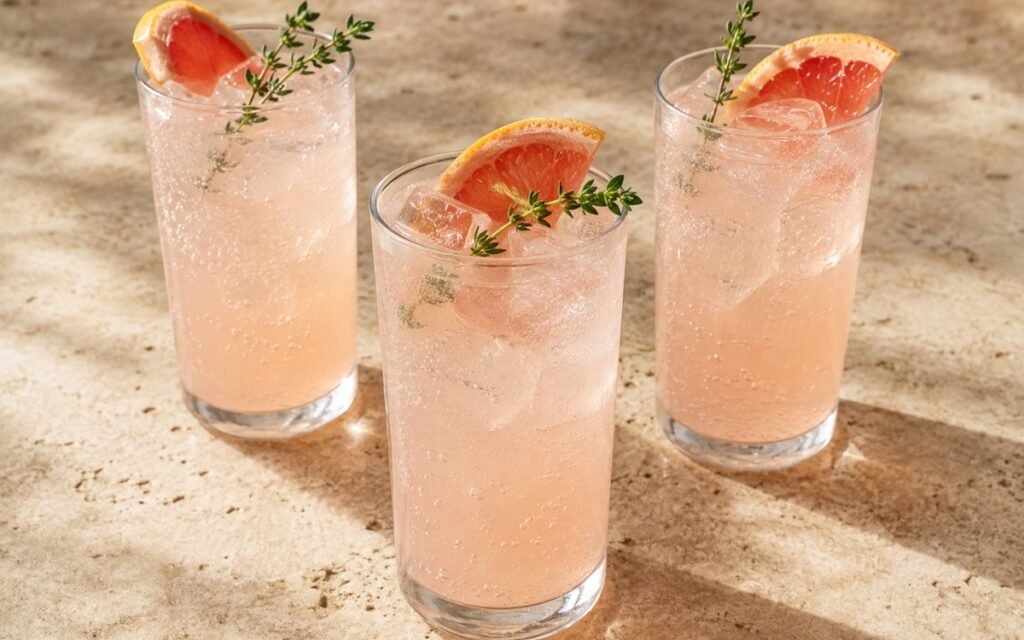
Thyme Grapefruit Sparkling Cooler is the only preparation in this thyme-and-citrus group built with no tea base at all — just a clean herbal-and-citrus-peel infusion in plain boiled water, sharpened with fresh grapefruit juice and finished with ice-cold club soda. The thyme infusion behaves differently here than it does in any tea preparation in this collection: boiled water rather than warm tea extracts aromatic compounds faster and more aggressively, which is why the window tightens to 8–10 minutes rather than the gentler ranges used elsewhere, and why the resulting infusion should smell clearly herbal and citrusy rather than savoury — if it smells like chicken stock, the thyme has gone too far. Grapefruit peel and grapefruit juice perform genuinely distinct, non-interchangeable roles: the peel, infused warm alongside the thyme, perfumes the base with bright citrus oils and contributes almost no acidity; the juice, stirred in once the base has cooled, provides the structural acid, natural sweetness, and characteristic bitter-citrus edge that the peel cannot. Club soda here is a functional ingredient rather than a garnish — it lowers calorie density, softens the herbal and citrus intensity into something refreshing rather than overwhelming, and provides the carbonation that keeps the whole drink feeling alive. The result is dry, botanical, and crisp, looking and tasting far more considered than anything that comes from a bottle.
Prep Time : 15 min
Cook Time : 5 min
Servings : 8
15 min
5 min
8
Ingredients
For the Botanical Infusion Base
• 3½ cups (840ml) water
• 10–12 fresh thyme sprigs
• 2 strips grapefruit peel — pink part only, no white pith
For the Citrus & Balance
• ¾ cup (180ml) fresh grapefruit juice — strained
• 2–3 Tbsp mild honey — to taste; start with 2 Tbsp — this one on Amazon
To Finish
• 3½ cups (840ml) ice-cold club soda — this one on Amazon
For Serving
• Ice
• Fresh thyme sprigs
• Grapefruit wedges
This post may contain affiliate links. As an Amazon Associate I earn from qualifying purchases, at no additional cost to you.
Directions
- Prepare the Thyme
Rinse the 10–12 fresh thyme sprigs thoroughly under cold water and shake off excess moisture. Gently clap each sprig between your palms once or twice to crack the stems lightly and begin releasing the essential oils. Do not chop, bruise aggressively, or strip the leaves from the stems — rough handling releases harsh, heavy compounds that make thyme taste cooked and dull rather than fresh and aromatic. The goal at this stage is fragrance, not intensity. - Make the Botanical Infusion
Bring the 3½ cups of water to a full boil, then remove from heat immediately. Add the prepared thyme sprigs and the two strips of grapefruit peel — pink part only, with no white pith attached. Pith introduces a sharp, unpleasant bitterness that is very difficult to balance once it enters the liquid. Cover the pot and allow the infusion to develop for 8–10 minutes, checking the aroma at the 8-minute mark. You’re looking for a strong, clean herbal and citrus fragrance — present and assertive without smelling medicinal or soapy. Strain out both the thyme and the peel promptly once that point is reached. Extended contact pushes both ingredients past their best and into bitter, heavy territory that will undermine the drink’s dry, crisp character. - Sweeten While Warm
While the infusion is still warm, stir in 2 tablespoons of mild honey until completely dissolved. Honey must be added to warm liquid to dissolve evenly — cold liquid leaves it pooled at the bottom regardless of how long you stir. Taste and consider the balance carefully. The infusion should taste slightly bitter and sharply herbal at this stage — that is correct. Add up to 1 additional tablespoon of honey only if the bitterness feels genuinely aggressive rather than structured and intentional. Allow the sweetened base to cool fully to room temperature before adding citrus. - Add the Grapefruit Juice
Stir in the ¾ cup (180ml) of freshly squeezed, strained grapefruit juice. Always add citrus to a cooled base — warm liquid dulls the brightness and mutes the fresh aromatic quality that makes grapefruit effective here. The juice provides the drink’s primary acidity, natural fruit sweetness, and characteristic bitter-citrus edge. Taste the base at this point — it should feel sharp, structured, and slightly austere. The club soda will soften and lift everything once added. Do not attempt to correct perceived sharpness with extra honey at this stage. - Chill the Base Thoroughly
Refrigerate the finished base for 1–2 hours until completely cold. This step is essential for two reasons: a warm base will flatten the carbonation of the club soda instantly when combined, and the thyme aroma and grapefruit bitterness both sharpen and clarify at cold temperature, giving the finished drink its clean, focused character. Do not rush this step. - Finish with Club Soda
Just before serving, pour the ice-cold club soda gently into the chilled base. Stir slowly and minimally — aggressive mixing destroys carbonation and defeats the purpose of using sparkling water. The ratio of base to club soda is approximately 60:40, which keeps the herbal and citrus flavours prominent while the carbonation provides lift and crispness. Serve immediately — carbonation begins dissipating the moment the soda is added. - Serve
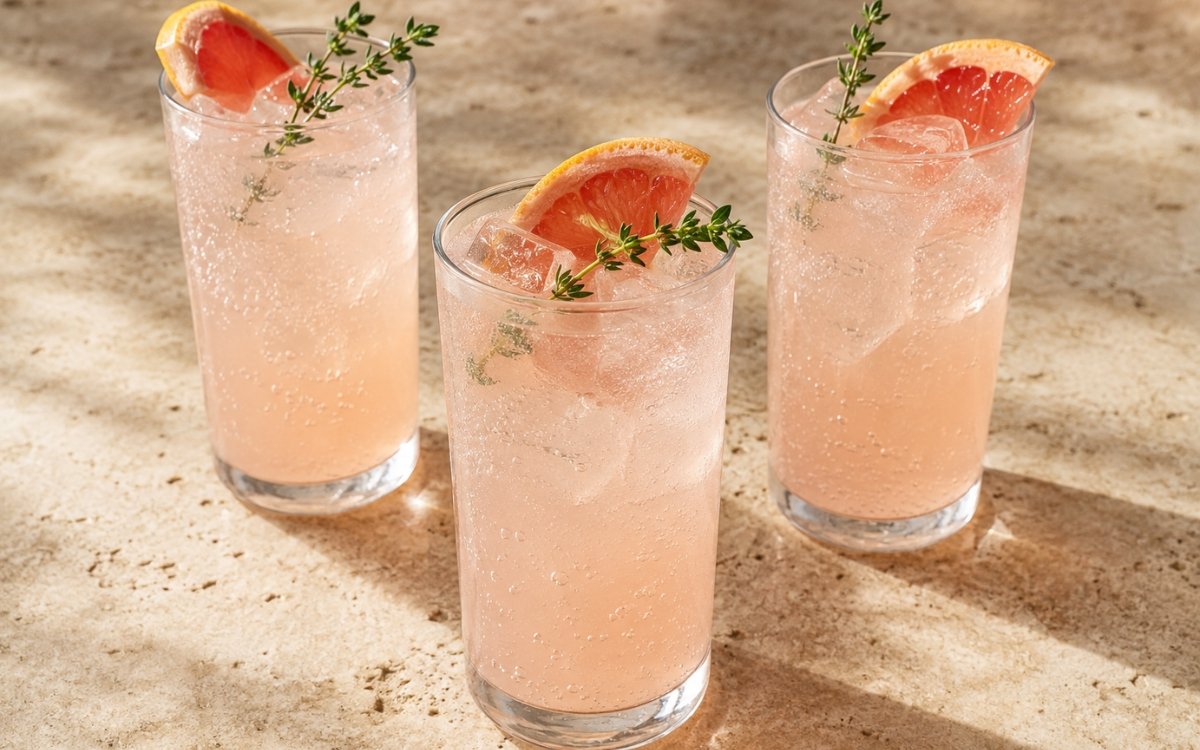
Fill glasses generously with ice. Pour the finished sparkling cooler over the ice and garnish with a fresh thyme sprig and a grapefruit wedge. Serve immediately while the carbonation is at its peak and the aroma is fully alive.
*Notes :
- Thyme infusion in a boiled water base behaves differently from thyme infused in tea. The higher starting temperature extracts aromatic compounds faster and more aggressively, which is why the 8–10 minute window must be respected closely. The finished infusion should smell clearly herbal and citrusy — clean and assertive, never soapy, piney, or reminiscent of a savoury dish. If it smells like chicken stock, the thyme infused too long.
- Grapefruit peel and grapefruit juice serve genuinely distinct functions in this recipe and cannot substitute for one another. The peel releases fragrant citrus oils during the warm infusion that perfume the entire base with a bright, aromatic complexity — it contributes almost no acidity. The juice, added cold after straining, provides the drink’s structural acidity, natural sweetness, and characteristic bitter-citrus flavour. Remove one and the drink loses either its aromatic depth or its structural foundation.
- Club soda is a functional ingredient, not a garnish. It reduces calorie density, lowers the intensity of the herbal and citrus flavours to a refreshing rather than overwhelming level, and provides the carbonation that keeps the drink feeling alive and crisp in the glass. Still water at the same volume would produce a drink that is flat, heavy, and far less refreshing. Always use ice-cold club soda added at the last possible moment before serving — warm soda added early is the fastest way to ruin the finished drink.
- Honey variety matters for this recipe more than it might in sweeter drinks, precisely because the honey is used in such restraint. Strongly flavoured varieties like buckwheat or raw wildflower will assert themselves and compete with the thyme and grapefruit rather than smoothing them. Acacia, clover, or orange blossom honey integrate cleanly and invisibly, which is exactly the role they need to play here.
Why This Recipe Works
This recipe works because the thyme infusion in boiled water is treated with its own specific timing rather than the gentler windows used in tea-based preparations. Grapefruit peel and grapefruit juice are kept entirely separate, each performing a job the other cannot.
The base is chilled fully before the soda is added, protecting carbonation and sharpening the herbal and citrus character simultaneously. And club soda goes in last, minimally stirred, treated as a functional component rather than an afterthought.
Ingredient Breakdown
Thyme Clapped, Infused 8–10 Minutes in Boiled Water
The herbal backbone — a faster, more aggressive extraction than tea-based infusions, requiring tighter timing.
Grapefruit Peel (Aromatic) and Grapefruit Juice (Structural)
The two-stage citrus contribution — fragrance without acid, then acid and sweetness without fragrance.
Mild Honey, Added Warm
The restrained sweetener — chosen specifically for neutrality, since nothing else here can mask a stronger variety.
Ice-Cold Club Soda, Added Last
The functional finish — carbonation, lift, and dilution to a refreshing rather than overwhelming intensity.
Flavor Structure Explained
This Thyme Grapefruit Sparkling Cooler follows a layered balance model:
- Bitter-citrus core (grapefruit)
- Fresh herbal character (thyme)
- Gentle balancing sweetness (honey)
- Crisp sparkling structure (club soda)
- Dry refreshing finish (bitterness-herb balance)
Grapefruit defines the foundation with bright acidity, subtle sweetness, and a characteristic bitter-citrus edge that gives the drink its distinctly mature profile. Thyme provides the defining aromatic layer, contributing clean herbal freshness and botanical complexity that intertwine naturally with the grapefruit’s citrus oils. Honey softens the sharper edges of the bitterness, creating balance while allowing the drink’s dry character to remain intact. Club soda transforms the structure by adding effervescence and lightness, lifting the aromatics and making the overall profile feel more crisp and refreshing. The result is a sparkling cooler built around bitterness, herbal freshness, and carbonation, delivering a lively and sophisticated drinking experience.
Common Mistakes to Avoid
- Leaving Thyme and Grapefruit Peel In Past 10 Minutes – Both shift toward bitter, heavy, savoury territory. Always strain promptly.
- Including White Pith With the Grapefruit Peel – Introduces sharp, difficult-to-balance bitterness. Always pink part only.
- Adding Grapefruit Juice to a Warm Base – Dulls brightness and mutes the fresh aromatic quality. Always cool the base first.
- Adding Club Soda Early or Stirring Aggressively – Flattens the carbonation immediately. Always add last, minimally stirred, just before serving.
- Using a Strongly Flavoured Honey – Competes with the thyme and grapefruit rather than smoothing them. Always mild and neutral.
Variations
With Rosemary
Replace the thyme with rosemary, in the spirit of the Rosemary Grapefruit White Tea Cooler, for a bolder, more piney botanical direction.
With Orange
Replace the grapefruit peel and juice with orange for a sweeter, less bitter result, in the direction of the Thyme Lemon Orange Green Tea Cooler.
With Mint
Add a small handful of lightly clapped fresh mint to the chilled base before adding the soda, for a cooler, brighter finish.
Still Version
Replace the club soda with still ice-cold water at the same ratio for a quieter, non-carbonated cooler.
Storage & Make-Ahead
The chilled base, before the club soda is added, can be refrigerated in a sealed container for up to 2 days.
Once the club soda has been added, the cooler is not suitable for storage and should be served immediately. The carbonation dissipates quickly after mixing, reducing the drink’s freshness and effervescence.
Frequently Asked Questions
Why does the thyme infusion use a different timing window here than in the tea-based thyme recipes?
Boiled water extracts aromatic compounds faster and more aggressively than warm tea does, because the starting temperature is higher and there’s no tea base to share the extraction with. The 8–10 minute window reflects this faster pace — left any longer, the thyme shifts from herbal and bright into something heavier and more savoury, almost stock-like.
Why use both grapefruit peel and grapefruit juice instead of just the juice?
They contribute different things entirely. The peel, infused warm, releases fragrant citrus oils that perfume the whole base with aromatic complexity but add almost no acidity. The juice, added cold, provides the structural acid, sweetness, and bitter-citrus edge. Using only the juice would leave the drink missing its aromatic depth; using only the peel would leave it missing its structural foundation.
Why is club soda described as functional rather than just a garnish?
Club soda does real work in this recipe: it lowers the calorie density, tempers the herbal and citrus intensity into something refreshing rather than overwhelming, and provides the carbonation that keeps the drink feeling lively. Still water at the same volume would leave the drink flat and considerably less refreshing — the carbonation itself is part of the flavour experience.
What other grapefruit and thyme preparations share this approach?
The Grapefruit Rosemary Infused Water shares the grapefruit-and-herb pairing at the most restrained, cold-infusion end of the spectrum, without any added juice or carbonation. The Rosemary Grapefruit White Tea Cooler shares the grapefruit-and-honey structure on a white tea base with rosemary in place of thyme. The Thyme Lemon Orange Green Tea Cooler shares thyme’s herbal character on a green tea base with a sweeter, dual-citrus orange-and-lemon direction in place of grapefruit’s bitterness.
How long does it stay fresh after mixing?
Once carbonation is added, the drink is best within 1–2 hours. After that it will still taste good but lose texture and aromatic lift.
Nutrition Facts
( per serving )
Calories
~30 kcal
Protein
0 g
Fat
0 g
Carbs
7 g
Calories
~30 kcal
Protein
0 g
Fat
0 g
Carbs
7 g
Related Recipes
Related Recipes

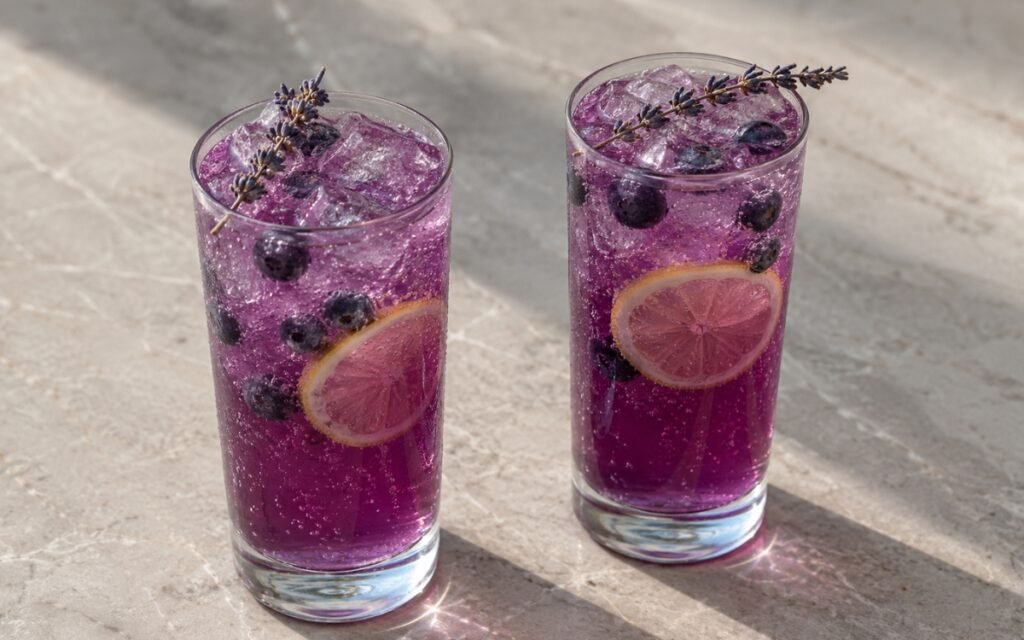
Blueberry Lavender Lemonade
Lavender steeped off heat for exactly 15–25 minutes — blueberries blended with lemon juice for vivid purple, club soda added right before serving. Deep purple and floral.
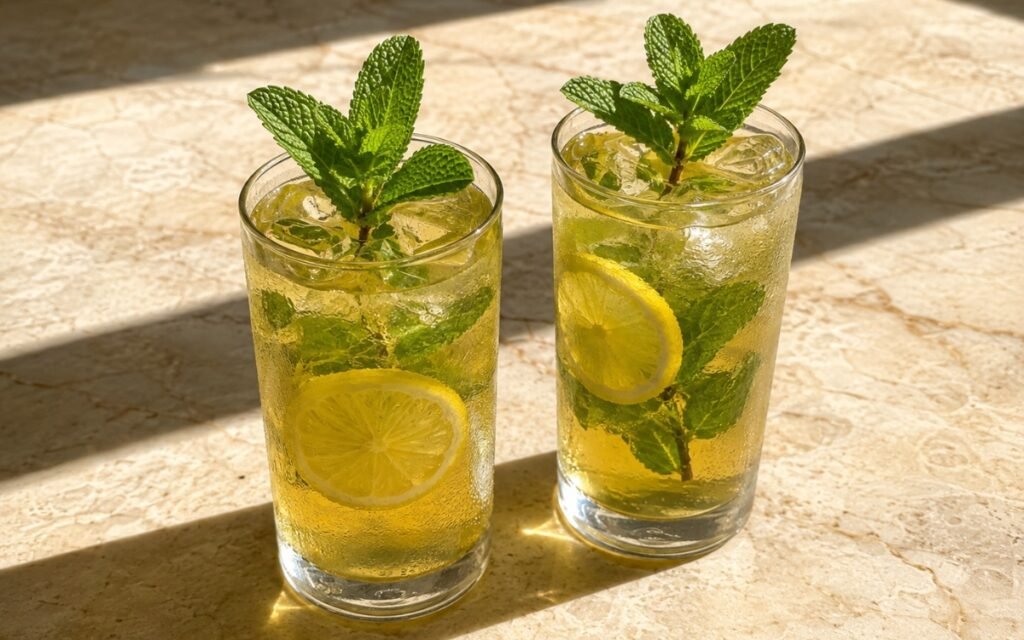
Jasmine Mint Iced Green Tea
Properly brewed jasmine green tea finished with a cold mint infusion and fresh lemon for a light, floral, clean-tasting iced tea.
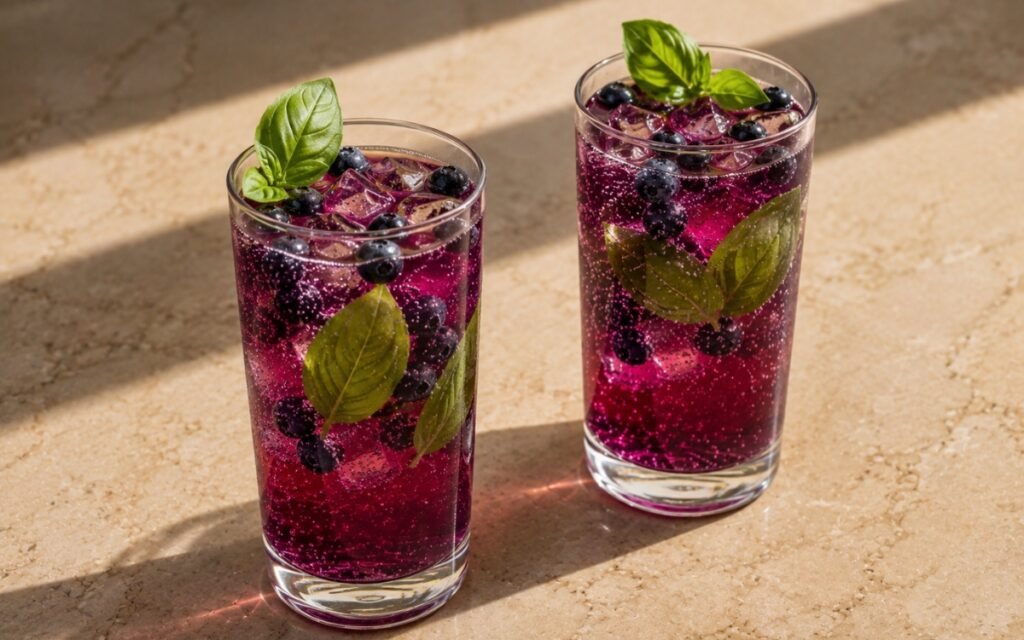
Basil Blueberry Sparkling Herbal Cooler
Concentrated white tea, basil blended into blueberries and strained — combined with the tea, finished with gentle club soda, chilled. Herbal and lively.
You might also like
You might also like
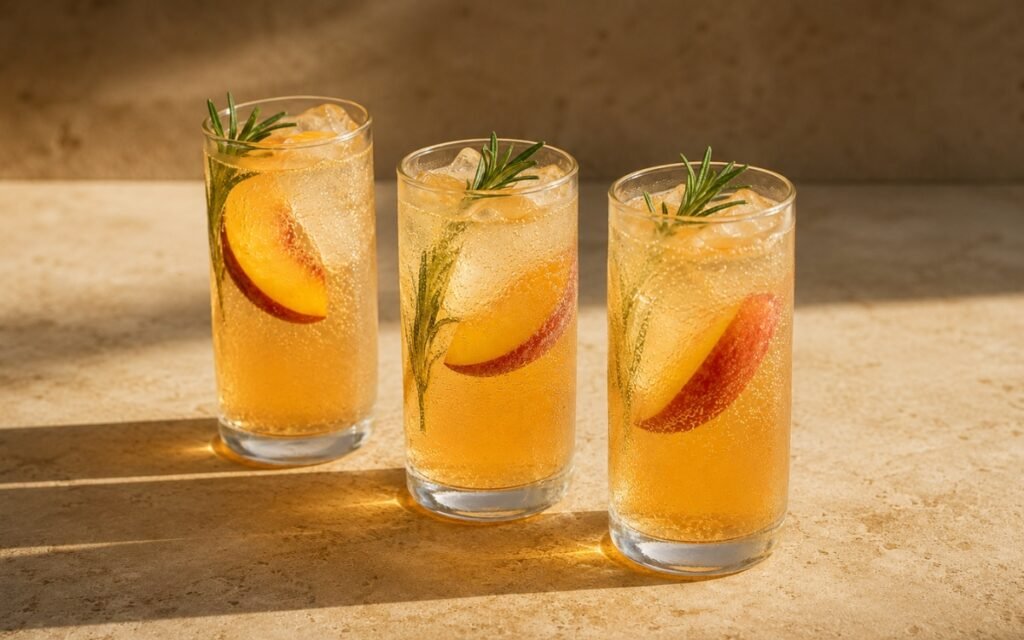
Peach Rosemary Sparkling Mocktail
Sweet golden peach, rosemary depth, and lemon zest over sparkling water — warm and refreshing.
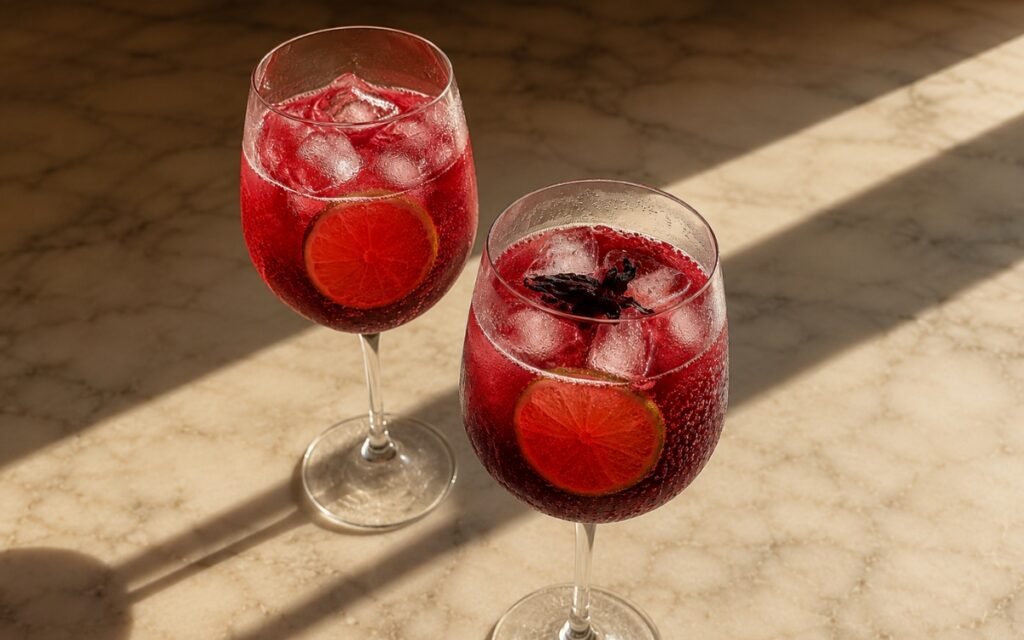
Hibiscus Lime Fizz Mocktail
A ruby-magenta sparkling hibiscus mocktail with honey and fresh lime, chilled and topped with club soda in wine glasses.
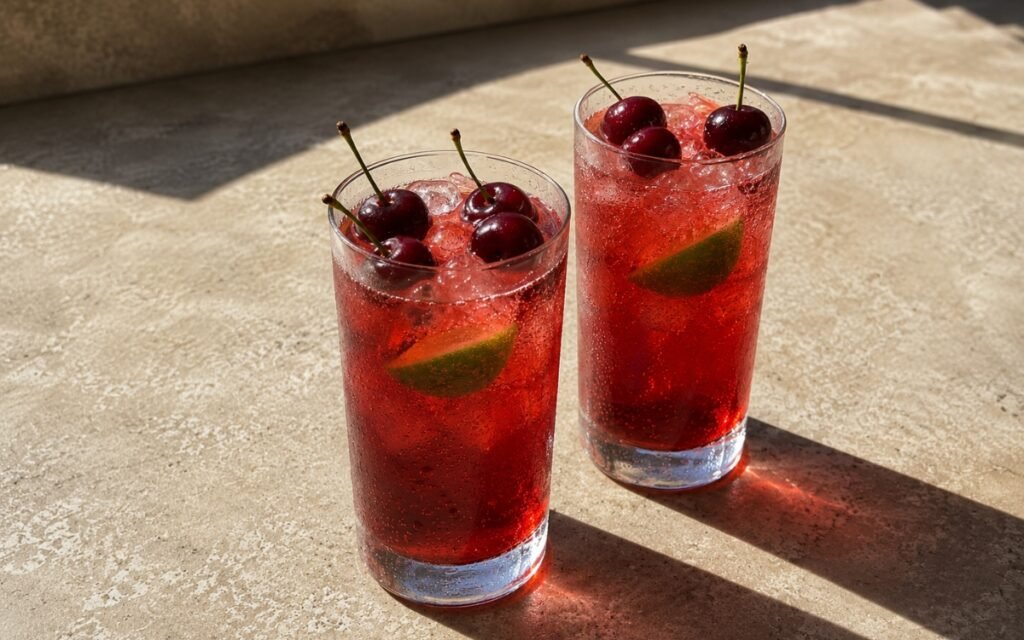
Cherry Lime Rickey Mocktail
Dark cherries with lime juice and white verjus over club soda — sharp, fruity, and classic.
Thyme Grapefruit Sparkling Cooler (with Honey)
Ingredients
Method
- Rinse the 10–12 fresh thyme sprigs thoroughly under cold water and shake off excess moisture. Gently clap each sprig between your palms once or twice to crack the stems lightly and begin releasing the essential oils. Do not chop, bruise aggressively, or strip the leaves from the stems — rough handling releases harsh, heavy compounds that make thyme taste cooked and dull rather than fresh and aromatic. The goal at this stage is fragrance, not intensity.
- Bring the 1.2 litres of water to a full boil, then remove from heat immediately. Add the prepared thyme sprigs and the two strips of grapefruit peel — pink part only, with no white pith attached. Pith introduces a sharp, unpleasant bitterness that is very difficult to balance once it enters the liquid. Cover the pot and allow the infusion to develop for 8–10 minutes, checking the aroma at the 8-minute mark. You’re looking for a strong, clean herbal and citrus fragrance — present and assertive without smelling medicinal or soapy. Strain out both the thyme and the peel promptly once that point is reached. Extended contact pushes both ingredients past their best and into bitter, heavy territory that will undermine the drink’s dry, crisp character.
- While the infusion is still warm, stir in 2 tablespoons of mild honey until completely dissolved. Honey must be added to warm liquid to dissolve evenly — cold liquid leaves it pooled at the bottom regardless of how long you stir. Taste and consider the balance carefully. The infusion should taste slightly bitter and sharply herbal at this stage — that is correct. Add up to 1 additional tablespoon of honey only if the bitterness feels genuinely aggressive rather than structured and intentional. Allow the sweetened base to cool fully to room temperature before adding citrus.
- Stir in the ¾ cup (180ml) of freshly squeezed, strained grapefruit juice. Always add citrus to a cooled base — warm liquid dulls the brightness and mutes the fresh aromatic quality that makes grapefruit effective here. The juice provides the drink’s primary acidity, natural fruit sweetness, and characteristic bitter-citrus edge. Taste the base at this point — it should feel sharp, structured, and slightly austere. The club soda will soften and lift everything once added. Do not attempt to correct perceived sharpness with extra honey at this stage.
- Refrigerate the finished base for 1–2 hours until completely cold. This step is essential for two reasons: a warm base will flatten the carbonation of the club soda instantly when combined, and the thyme aroma and grapefruit bitterness both sharpen and clarify at cold temperature, giving the finished drink its clean, focused character. Do not rush this step.
- Just before serving, pour the ice-cold club soda gently into the chilled base. Stir slowly and minimally — aggressive mixing destroys carbonation and defeats the purpose of using sparkling water. The ratio of base to club soda is approximately 60:40, which keeps the herbal and citrus flavours prominent while the carbonation provides lift and crispness. Serve immediately — carbonation begins dissipating the moment the soda is added.
- Fill glasses generously with ice. Pour the finished sparkling cooler over the ice and garnish with a fresh thyme sprig and a grapefruit wedge. Serve immediately while the carbonation is at its peak and the aroma is fully alive.