Ingredients
Method
Prepare the Thyme
- Rinse the 10–12 fresh thyme sprigs thoroughly under cold water and shake off excess moisture. Gently clap each sprig between your palms once or twice to crack the stems lightly and begin releasing the essential oils. Do not chop, bruise aggressively, or strip the leaves from the stems — rough handling releases harsh, heavy compounds that make thyme taste cooked and dull rather than fresh and aromatic. The goal at this stage is fragrance, not intensity.
Make the Botanical Infusion
- Bring the 1.2 litres of water to a full boil, then remove from heat immediately. Add the prepared thyme sprigs and the two strips of grapefruit peel — pink part only, with no white pith attached. Pith introduces a sharp, unpleasant bitterness that is very difficult to balance once it enters the liquid. Cover the pot and allow the infusion to develop for 8–10 minutes, checking the aroma at the 8-minute mark. You're looking for a strong, clean herbal and citrus fragrance — present and assertive without smelling medicinal or soapy. Strain out both the thyme and the peel promptly once that point is reached. Extended contact pushes both ingredients past their best and into bitter, heavy territory that will undermine the drink's dry, crisp character.
Sweeten While Warm
- While the infusion is still warm, stir in 2 tablespoons of mild honey until completely dissolved. Honey must be added to warm liquid to dissolve evenly — cold liquid leaves it pooled at the bottom regardless of how long you stir. Taste and consider the balance carefully. The infusion should taste slightly bitter and sharply herbal at this stage — that is correct. Add up to 1 additional tablespoon of honey only if the bitterness feels genuinely aggressive rather than structured and intentional. Allow the sweetened base to cool fully to room temperature before adding citrus.
Add the Grapefruit Juice
- Stir in the ¾ cup (180ml) of freshly squeezed, strained grapefruit juice. Always add citrus to a cooled base — warm liquid dulls the brightness and mutes the fresh aromatic quality that makes grapefruit effective here. The juice provides the drink's primary acidity, natural fruit sweetness, and characteristic bitter-citrus edge. Taste the base at this point — it should feel sharp, structured, and slightly austere. The club soda will soften and lift everything once added. Do not attempt to correct perceived sharpness with extra honey at this stage.
Chill the Base Thoroughly
- Refrigerate the finished base for 1–2 hours until completely cold. This step is essential for two reasons: a warm base will flatten the carbonation of the club soda instantly when combined, and the thyme aroma and grapefruit bitterness both sharpen and clarify at cold temperature, giving the finished drink its clean, focused character. Do not rush this step.
Finish with Club Soda
- Just before serving, pour the ice-cold club soda gently into the chilled base. Stir slowly and minimally — aggressive mixing destroys carbonation and defeats the purpose of using sparkling water. The ratio of base to club soda is approximately 60:40, which keeps the herbal and citrus flavours prominent while the carbonation provides lift and crispness. Serve immediately — carbonation begins dissipating the moment the soda is added.
Serve
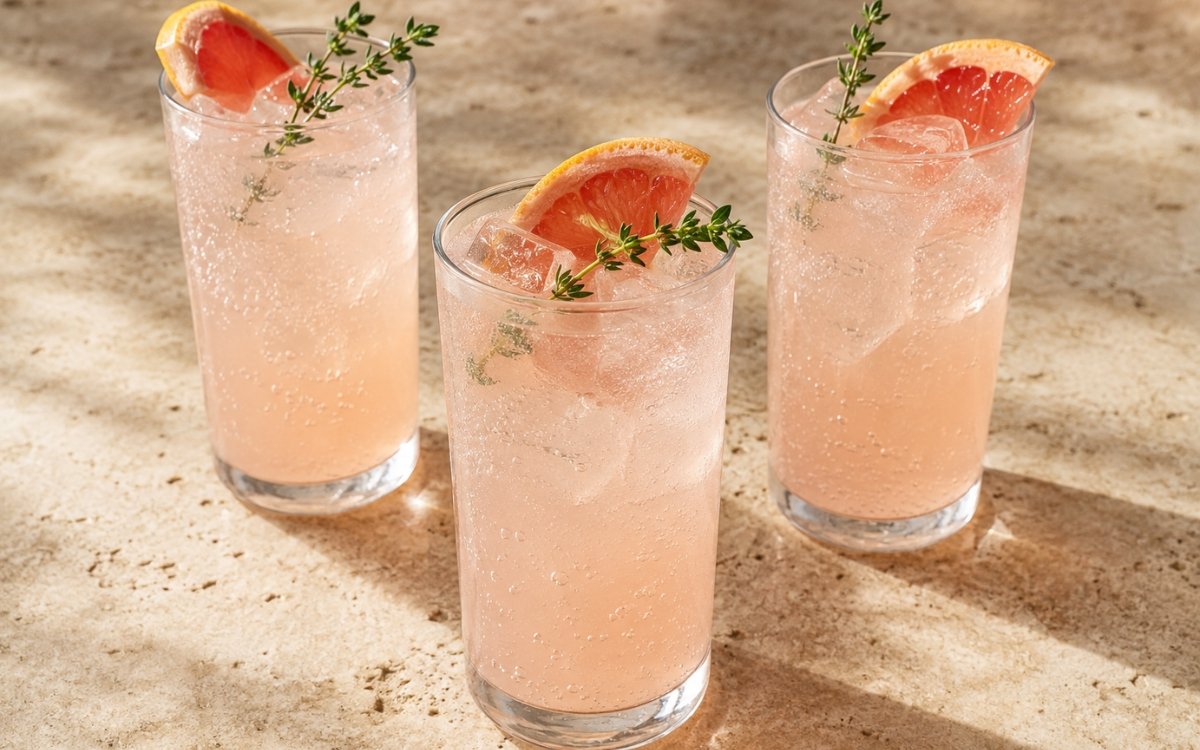
- Fill glasses generously with ice. Pour the finished sparkling cooler over the ice and garnish with a fresh thyme sprig and a grapefruit wedge. Serve immediately while the carbonation is at its peak and the aroma is fully alive.
Notes
Thyme infusion in a boiled water base behaves differently from thyme infused in tea. The higher starting temperature extracts aromatic compounds faster and more aggressively, which is why the 8–10 minute window must be respected closely. The finished infusion should smell clearly herbal and citrusy — clean and assertive, never soapy, piney, or reminiscent of a savoury dish. If it smells like chicken stock, the thyme infused too long.
Grapefruit peel and grapefruit juice serve genuinely distinct functions in this recipe and cannot substitute for one another. The peel releases fragrant citrus oils during the warm infusion that perfume the entire base with a bright, aromatic complexity — it contributes almost no acidity. The juice, added cold after straining, provides the drink's structural acidity, natural sweetness, and characteristic bitter-citrus flavour. Remove one and the drink loses either its aromatic depth or its structural foundation.
Club soda is a functional ingredient, not a garnish. It reduces calorie density, lowers the intensity of the herbal and citrus flavours to a refreshing rather than overwhelming level, and provides the carbonation that keeps the drink feeling alive and crisp in the glass. Still water at the same volume would produce a drink that is flat, heavy, and far less refreshing. Always use ice-cold club soda added at the last possible moment before serving — warm soda added early is the fastest way to ruin the finished drink.
Honey variety matters for this recipe more than it might in sweeter drinks, precisely because the honey is used in such restraint. Strongly flavoured varieties like buckwheat or raw wildflower will assert themselves and compete with the thyme and grapefruit rather than smoothing them. Acacia, clover, or orange blossom honey integrate cleanly and invisibly, which is exactly the role they need to play here.