
Raspberry Lemon Shrub Fizz Mocktail
A shrub — the drinking vinegar preparation that has appeared in some form in every culture that has preserved fruit with acid since at least the 18th century — built on the cold-process method where the fruit, sugar, and vinegar work together without heat over 8 hours or overnight. The sugar draws moisture from the raspberries through osmosis, dissolving into the released juice to form a concentrated fruit syrup while simultaneously the white wine vinegar extracts the raspberry’s deeper, more complex flavour compounds and preserves the entire preparation. The result is a concentrate that is simultaneously sweet, sharply acidic, and deeply fruity — brighter and more complex than any cooked raspberry syrup because the cold process preserves the fresh fruit’s aromatic compounds intact. Fresh lemon juice stirred in after straining for the clean, vivid citrus brightness that works alongside the white wine vinegar’s deeper tang rather than competing with it. Poured over ice with club soda and served immediately. The fizz worth making a batch of.
Prep Time : 10 min
Maceration Time: 8 hr
Servings : 4
10 min
8 hr
4
Ingredients
For the Raspberry Lemon Shrub
• 250g fresh raspberries
• 120g granulated sugar
• 120ml white wine vinegar — this one on Amazon
• Zest of 1 lemon
• 45ml fresh lemon juice — stirred in after straining
For the Garnish
• 1 lemon, thinly sliced
• 60g fresh raspberries
This post may contain affiliate links. As an Amazon Associate I earn from qualifying purchases, at no additional cost to you.
Directions
- Build the Shrub
Add the 250g of fresh raspberries, 120g of granulated sugar, 120ml of white wine vinegar, and the zest of 1 lemon to a clean jar or non-reactive bowl — glass, ceramic, or food-grade plastic. Using a fork or muddler, gently mash the raspberries until each berry has been broken down and its juice is visible, the sugar has come into contact with both the juice and the vinegar, and the mixture appears uniformly pink-red and wet. The mashing does not need to produce a smooth purée — raspberry pieces remaining are acceptable and desirable, as their continued surface contact with the vinegar and sugar during the maceration period contributes to the shrub’s complexity. A shrub — also called a drinking vinegar — is one of the oldest fruit preservation techniques in culinary history. The combination of sugar and vinegar applied to raw fruit works through two simultaneous processes: the sugar’s osmotic pressure draws moisture and flavour from the fruit cells into the surrounding medium; and the vinegar’s acetic acid extracts colour, flavour compounds, and aromatic character from the fruit while preserving the entire mixture against spoilage. Critically, both processes occur cold — no heat is required and none is applied — meaning every volatile aromatic compound in the raw raspberry and the lemon zest remains intact throughout the maceration period. A cold-process shrub made with great raspberries tastes specifically more complex, more bright, and more alive than a cooked raspberry syrup of equivalent concentration because the fresh fruit’s aromatic character has not been diminished by heat. White wine vinegar specifically rather than red wine, cider, or balsamic: white wine vinegar’s clean, moderately sharp acidity has a specifically neutral-fruity character that carries the raspberry flavour without adding wine’s tannins, cider’s apple note, or balsamic’s sweetness. It is the transparent acid medium that allows the raspberry and lemon to dominate. - Cold Maceration (8 Hours Minimum)
Cover the jar or bowl tightly with a lid or plastic wrap. Refrigerate for a minimum of 8 hours — overnight is the standard and specifically convenient preparation window. During the maceration period, check the mixture after the first hour to see the osmotic process beginning: the sugar will have largely dissolved into the raspberry juice and the mixture will appear noticeably more liquid than at preparation. After 8 hours the sugar should be completely dissolved, the raspberries should be fully collapsed and pressed-looking, the liquid should be a deep, brilliant ruby-magenta, and the aroma should be intensely fruity, sharply acidic, and specifically more complex than fresh raspberry juice alone. The shrub can macerate for up to 48 hours in the refrigerator — longer maceration produces a more complex, more deeply flavoured result as the vinegar continues its extraction. - Strain and Add Lemon Juice
Strain the macerated mixture through a fine-mesh sieve set over a clean jug, pressing firmly on the raspberry solids — more firmly than the pomegranate seeds in the sparkler, because the raspberry flesh at this stage has given up most of its liquid and the remaining solids are primarily fibre and seeds. Press until the solids are relatively dry. Discard the solids. The finished strained shrub should be a clear, brilliant deep pink-magenta, intensely aromatic, and taste specifically sweet, sharply acidic, and deeply fruity simultaneously — the characteristic flavour of a well-made drinking vinegar. Stir in the 45ml of fresh lemon juice. The lemon juice is the addition that transforms the shrub from a preserve-adjacent concentrate into a drink-ready component: the white wine vinegar provides the shrub’s characteristic deep, complex, slightly wine-adjacent acidity; the fresh lemon juice provides a different, cleaner, more immediately bright citrus acidity that sits on top of the vinegar’s depth rather than being the same character. Together they produce the specifically layered acidic profile of this fizz — sharp on the top register from the lemon, complex on the mid register from the white wine vinegar. The lemon juice is added after straining rather than macerating with the fruit because its volatile aromatic compounds do not need the 8-hour extraction process — they are contributed fresh and immediately at this stage. Transfer to the refrigerator and chill until cold before assembly. The shrub at this stage is concentrated — it will be significantly diluted by the club soda and ice at serving. - Assemble and Serve
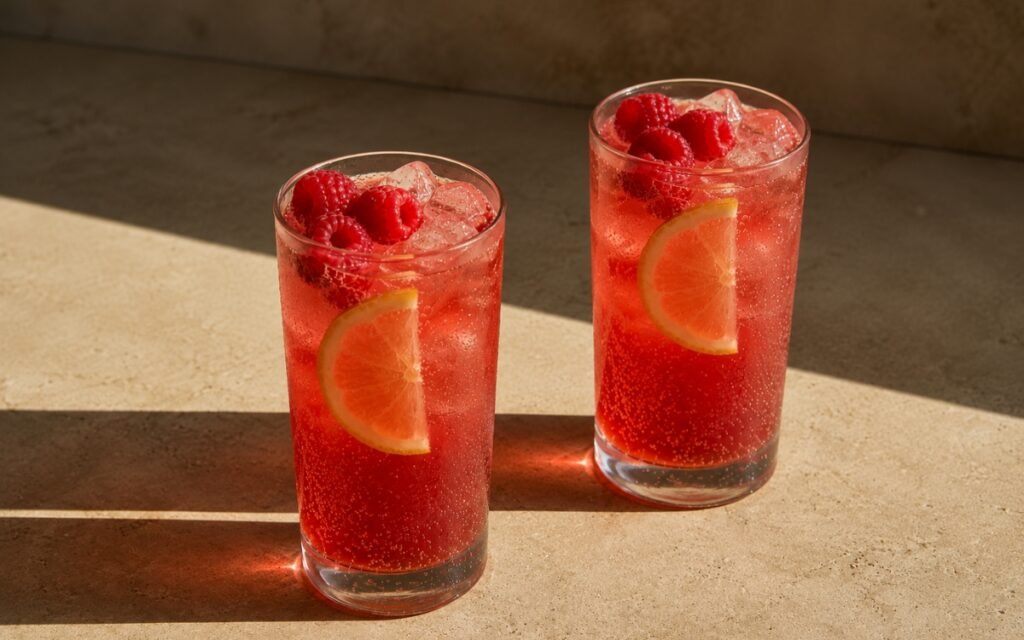
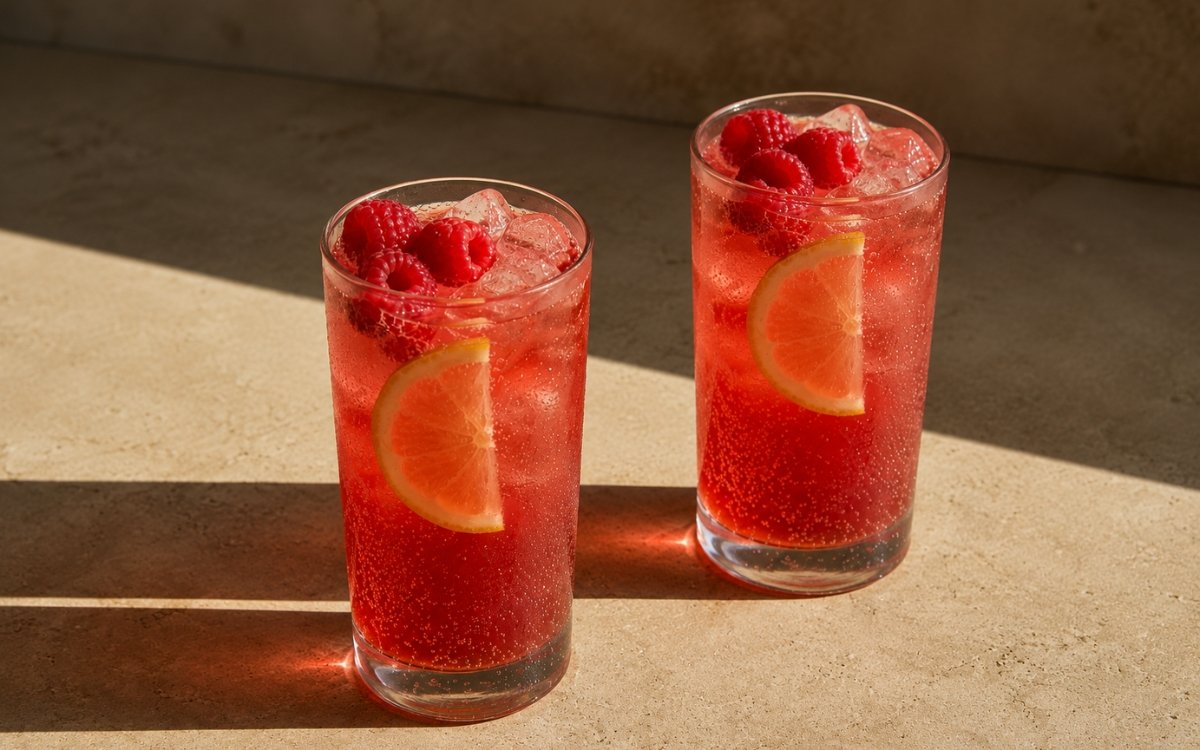
Fill four tall glasses generously with ice. Divide the chilled raspberry lemon shrub evenly — approximately 80–85ml per glass. The shrub’s concentration at this serving quantity is calibrated to the 125ml of club soda that follows — producing a drink that is vivid in raspberry flavour, clearly acidic, and noticeably more complex than a simple raspberry-and-soda combination. Stir briefly against the ice to chill further. Top each glass with approximately 125ml of chilled club soda, poured gently down the inner side to preserve carbonation. Stir once or twice gently. Press a thin lemon slice against the inner side of each glass. Add a small handful of fresh raspberries to each glass — they will float or sink to rest on the ice, their vivid red against the deep pink drink providing the garnish that is also, if they are eaten, a small burst of raw raspberry freshness against the concentrated shrub character of the drink.
*Notes :
- The shrub format — cold-process fruit, sugar, and vinegar — produces a shelf-stable concentrated syrup that keeps refrigerated for up to 4 weeks because the vinegar’s acidity prevents microbial growth. The longer it keeps, the more the flavours integrate and round: a shrub at day one is more sharply acidic and vivid; at day seven it is more harmonious and slightly mellower in its acid edge. This makes it the most make-ahead-appropriate preparation in this entire mocktail collection — a jar of raspberry lemon shrub can be made on Sunday and provide a perfectly assembled mocktail in 2 minutes every day of the following week.
- Granulated white sugar rather than honey or brown sugar is specifically correct for the cold-process shrub: white sugar dissolves completely at cold temperature through the raspberry juice’s moisture, and its neutral sweetness allows the raspberry and white wine vinegar’s characters to express without the additional aromatic complexity that honey or molasses would introduce. In a cooked syrup honey or brown sugar adds desirable character; in a cold-process shrub they compete with the fruit and vinegar’s own complexity.
Why This Mocktail Works
This recipe works because the cold-process maceration preserves every volatile aromatic compound in the raw raspberry and lemon zest intact — producing a more complex, more specifically fresh-fruit-forward concentrate than any cooked method.
The white wine vinegar is the specifically neutral-fruity acid medium that carries the raspberry without adding its own prominent flavour.
And the lemon juice added after straining contributes the clean, bright citrus top note that distinguishes this fizz from a plain raspberry-vinegar-and-soda preparation.
Ingredient Breakdown
Raspberries, Sugar, White Wine Vinegar, Lemon Zest (Cold Maceration, 8+ Hours)
The shrub foundation — osmotic sugar extraction and vinegar acid extraction working simultaneously at cold temperature to produce a complex, flavour-preserved concentrate.
White Wine Vinegar (Rather Than Cider or Red Wine)
The transparent acid medium — clean, moderately sharp, specifically neutral-fruity; carrying the raspberry without adding competing flavour.
Granulated White Sugar (Rather Than Honey)
The neutral osmotic agent — dissolves completely in cold fruit juice; allowing the fruit and vinegar to express without aromatic competition.
Fresh Lemon Juice (Added After Straining)
The clean citrus top note — a different, brighter acidity than the vinegar’s deeper tang; combined they produce a layered acidic profile more complex than either alone.
8+ Hours Cold Maceration
The flavour preservation technique — cold process preserving the raw raspberry’s aromatic compounds that heat would destroy.
Flavor Structure Explained
This Raspberry lemon shrub fizz follows a layered balance model:
- Concentrated fruit core (raspberry)
- Deep fermented acidity (white wine vinegar)
- WiBright citrus acidity (lemon juice)
- Balanced sweetness (macerated sugar)
- Crisp sparkling finish (club soda)
Raspberry defines the foundation with concentrated sweetness, floral fruit character, and depth developed through extended maceration. White wine vinegar creates the defining shrub layer, adding a mature, wine-like acidity that gives the drink complexity beyond a standard fruit soda. Lemon contributes a second, brighter acid layer that sits above the vinegar, providing freshness and sharpness. Sugar balances both acids, transforming them from aggressive tartness into a structured and refreshing profile. Club soda completes the drink with lively carbonation, lifting the fruit and acid notes and creating a crisp, highly refreshing finish.
Common Mistakes to Avoid
- Not Macerating Long Enough – Less than 4 hours produces insufficient extraction — the sugar may not fully dissolve and the raspberry’s flavour is less deeply drawn into the vinegar medium.
- Using Red Wine Vinegar or Cider Vinegar – Red wine vinegar adds tannin-adjacent complexity that competes with the raspberry; cider vinegar adds an apple note. White wine vinegar is specifically the neutral, transparent acid for this fruit.
- Using Brown Sugar or Honey – Their own aromatic complexity competes with the raspberry and vinegar in a cold-process preparation. Always white granulated sugar.
- Adding Lemon Juice During Maceration – The lemon juice’s fresh aromatic compounds would be extracted by the 8-hour acid environment and partially transformed. Always add fresh after straining.
- Pressing the Solids Too Timidly – The pressed raspberry solids still contain a significant proportion of the shrub’s flavour after maceration. Press firmly for full extraction.
Variations
With Strawberry
Replace half the raspberries with 125g of hulled, halved strawberries — the strawberry’s lower acidity and higher sweetness produces a slightly softer, more rounded shrub with the raspberry providing the characteristic sharpness.
With Basil
Add 8 fresh basil leaves to the jar alongside the raspberries and vinegar at the start of maceration — the basil’s aromatic character extracts into the vinegar over 8 hours as a background herbal complexity. Remove with the raspberry solids when straining.
With Apple Cider Vinegar
Replace the white wine vinegar with apple cider vinegar for a slightly more complex, slightly more apple-adjacent result — a different shrub character that is equally valid and specifically good with autumn fruit combinations.
Spiced Version
Add 1 cinnamon stick and 3 black peppercorns to the jar during maceration — the spice compounds extract slowly into the vinegar over 8 hours, producing a spiced raspberry shrub that is specifically appropriate for autumn serving.
Storage & Make-Ahead
Raspberry lemon shrub, before the lemon juice is added, can be refrigerated for up to 4 weeks. The white wine vinegar acts as a preservative, and the flavor continues to deepen and integrate during the first week of storage. For the best result, add the lemon juice just before serving or up to 24 hours in advance.
Once the lemon juice has been added, the shrub can be refrigerated for up to 2 weeks. Over longer storage periods, the fresh lemon flavor gradually becomes less pronounced.
Assembled drinks are not suitable for storage and should be served immediately after preparation.
Frequently Asked Questions
What is a shrub?
A shrub — also called a drinking vinegar — is a fruit preserve made from fruit, sugar, and vinegar without heat. The sugar draws moisture from the fruit through osmosis to create a concentrated syrup; the vinegar extracts flavour and preserves the mixture. The cold-process method (no cooking) preserves the raw fruit’s aromatic compounds intact, producing a more complex and more specifically fresh-tasting result than cooked alternatives. Shrubs have a long history in American and European food traditions, appearing in 18th century recipe books as both culinary preserves and drink components.
Why no cooking?
Heat destroys the volatile aromatic compounds in raw fruit — the specific aromatic freshness of raw raspberries present at the beginning of the maceration is preserved completely in the cold-process because no temperature is ever reached that would evaporate them. A cold-process shrub tastes specifically more of fresh, raw fruit than a cooked one at the same concentration.
Why white wine vinegar rather than apple cider vinegar?
White wine vinegar has a clean, moderately sharp acidity with a specifically neutral-fruity character — it carries the raspberry without adding its own prominent flavour. Apple cider vinegar is a fully acceptable alternative with a slightly more complex, slightly apple-adjacent character; both produce good results but the white wine vinegar is the more transparent acid medium for this fruit.
How long can the shrub keep?
The vinegar preserves the shrub against microbial growth — refrigerated, the strained shrub without added lemon juice keeps for up to 4 weeks. The flavour improves over the first week as the acid and fruit flavours integrate. It is specifically the most make-ahead-friendly preparation in this mocktail collection.
What other berry-based mocktails share this acidic, fruit-forward character?
The Blackberry Mojito Mocktail and the Raspberry Mojito Mocktail share the same tart berry and bright citrus flavour palette — both working with similar acidity levels but built on a blend of lime juice and white verjus rather than the vinegar-based shrub technique. The mojito versions are more immediately fresh and herbal with mint; the shrub fizz is more complex and more specifically acidic from the vinegar’s depth alongside the lemon’s brightness.
Nutrition Facts
( per serving )
Calories
~110 kcal
Protein
0 g
Fat
0 g
Carbs
28 g
Calories
~110 kcal
Protein
0 g
Fat
0 g
Carbs
28 g
Related Recipes
Related Recipes

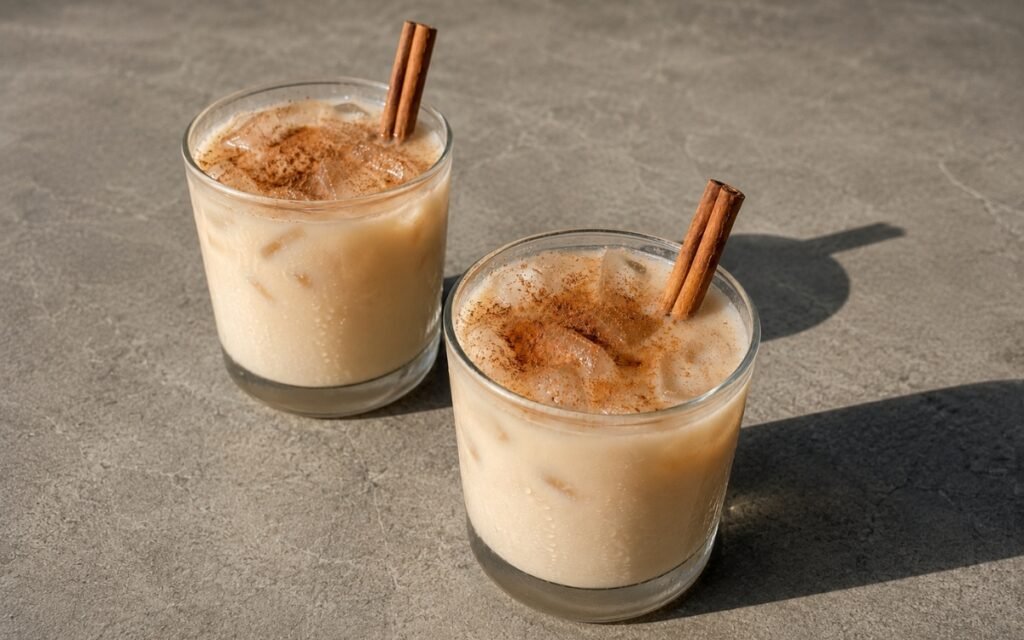
Chocolate Cinnamon Horchata
Velvety rice horchata with cinnamon and dark chocolate, creamy, aromatic, deeply comforting with a refined edge.
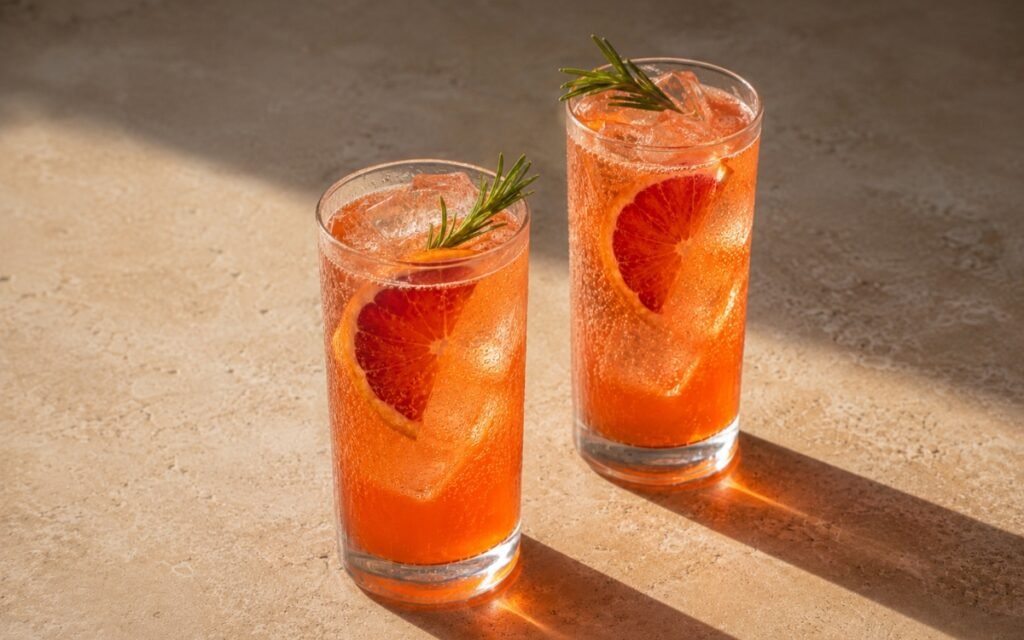
Blood Orange Spritzer
Juicy blood orange fizz with subtle rosemary depth, lightly bittersweet, aromatic, and perfectly lifted with bubbles.
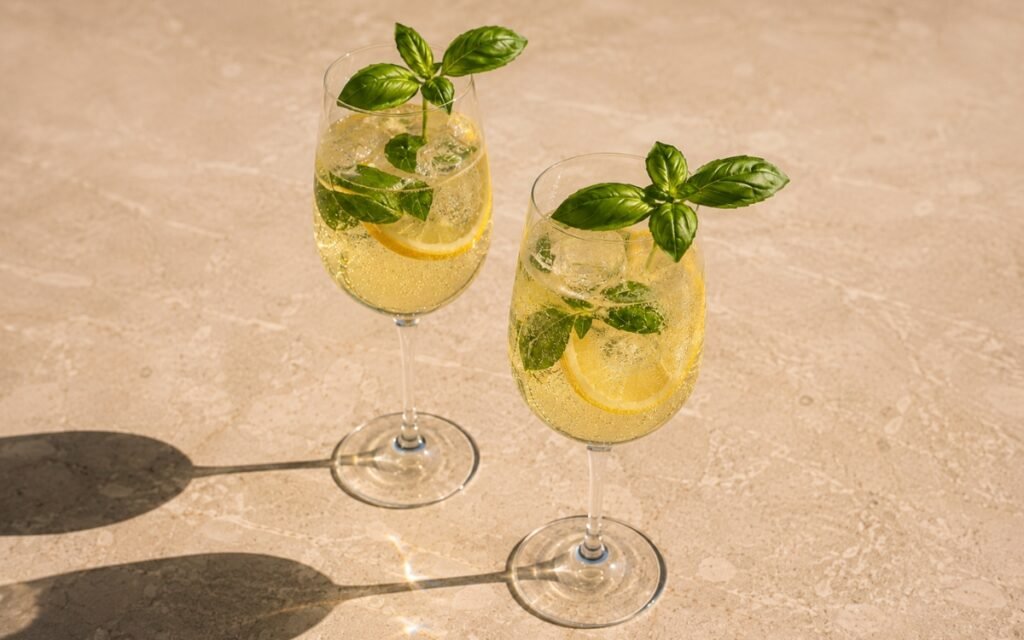
Lemon Basil Spritz Mocktail
Zesty lemon and fresh basil with lively bubbles create a sharp, herbaceous spritz that drinks clean and grown-up.
You might also like
You might also like
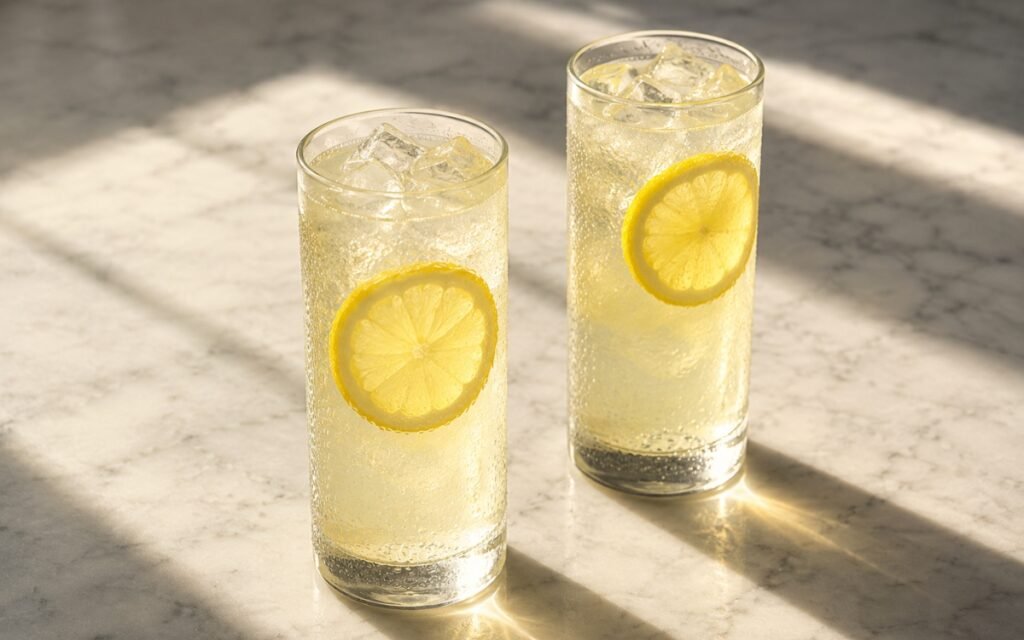
Classic Fresh Lemonade
Pale-yellow still lemonade made with a light homemade syrup, fresh lemon juice and a pinch of salt, served very cold over ice.
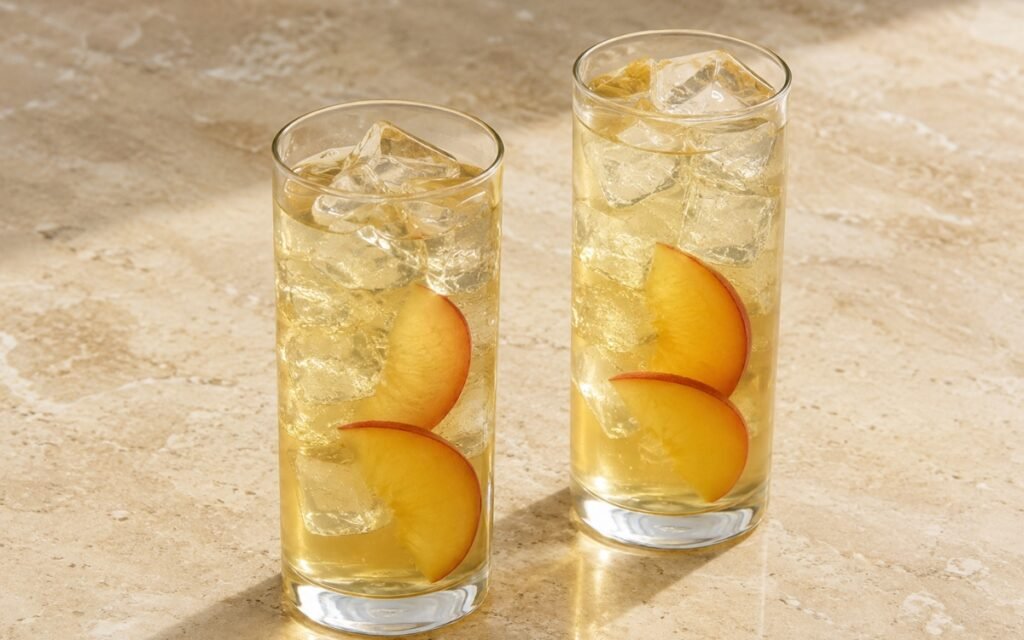
Fresh Peach Green Iced Tea
Green tea at 75–80°C for 2–3 minutes, raw peach slices cold-infused 30–45 minutes — strained promptly, honey, chilled. Light, clean, delicately fruity.
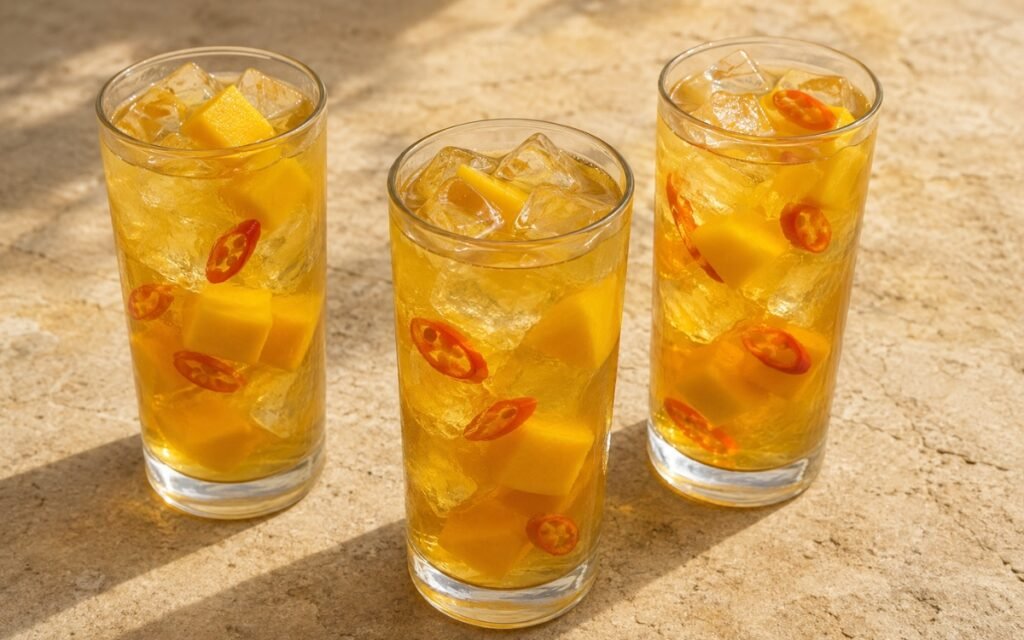
Mango Iced Green Tea
Green tea at 75–80°C for 2–3 minutes, mango simmered into a light unreduced syrup, deseeded chili infused cold 3–5 minutes — chilled. Bright, tropical, gently edged.
Raspberry Lemon Shrub Fizz Mocktail
Ingredients
Method
- Add the 250g of fresh raspberries, 120g of granulated sugar, 120ml of white wine vinegar, and the zest of 1 lemon to a clean jar or non-reactive bowl — glass, ceramic, or food-grade plastic. Using a fork or muddler, gently mash the raspberries until each berry has been broken down and its juice is visible, the sugar has come into contact with both the juice and the vinegar, and the mixture appears uniformly pink-red and wet. The mashing does not need to produce a smooth purée — raspberry pieces remaining are acceptable and desirable, as their continued surface contact with the vinegar and sugar during the maceration period contributes to the shrub’s complexity. A shrub — also called a drinking vinegar — is one of the oldest fruit preservation techniques in culinary history. The combination of sugar and vinegar applied to raw fruit works through two simultaneous processes: the sugar’s osmotic pressure draws moisture and flavour from the fruit cells into the surrounding medium; and the vinegar’s acetic acid extracts colour, flavour compounds, and aromatic character from the fruit while preserving the entire mixture against spoilage. Critically, both processes occur cold — no heat is required and none is applied — meaning every volatile aromatic compound in the raw raspberry and the lemon zest remains intact throughout the maceration period. A cold-process shrub made with great raspberries tastes specifically more complex, more bright, and more alive than a cooked raspberry syrup of equivalent concentration because the fresh fruit’s aromatic character has not been diminished by heat. White wine vinegar specifically rather than red wine, cider, or balsamic: white wine vinegar’s clean, moderately sharp acidity has a specifically neutral-fruity character that carries the raspberry flavour without adding wine’s tannins, cider’s apple note, or balsamic’s sweetness. It is the transparent acid medium that allows the raspberry and lemon to dominate.
- Cover the jar or bowl tightly with a lid or plastic wrap. Refrigerate for a minimum of 8 hours — overnight is the standard and specifically convenient preparation window. During the maceration period, check the mixture after the first hour to see the osmotic process beginning: the sugar will have largely dissolved into the raspberry juice and the mixture will appear noticeably more liquid than at preparation. After 8 hours the sugar should be completely dissolved, the raspberries should be fully collapsed and pressed-looking, the liquid should be a deep, brilliant ruby-magenta, and the aroma should be intensely fruity, sharply acidic, and specifically more complex than fresh raspberry juice alone. The shrub can macerate for up to 48 hours in the refrigerator — longer maceration produces a more complex, more deeply flavoured result as the vinegar continues its extraction.
- Strain the macerated mixture through a fine-mesh sieve set over a clean jug, pressing firmly on the raspberry solids — more firmly than the pomegranate seeds in the sparkler, because the raspberry flesh at this stage has given up most of its liquid and the remaining solids are primarily fibre and seeds. Press until the solids are relatively dry. Discard the solids. The finished strained shrub should be a clear, brilliant deep pink-magenta, intensely aromatic, and taste specifically sweet, sharply acidic, and deeply fruity simultaneously — the characteristic flavour of a well-made drinking vinegar. Stir in the 45ml of fresh lemon juice. The lemon juice is the addition that transforms the shrub from a preserve-adjacent concentrate into a drink-ready component: the white wine vinegar provides the shrub’s characteristic deep, complex, slightly wine-adjacent acidity; the fresh lemon juice provides a different, cleaner, more immediately bright citrus acidity that sits on top of the vinegar’s depth rather than being the same character. Together they produce the specifically layered acidic profile of this fizz — sharp on the top register from the lemon, complex on the mid register from the white wine vinegar. The lemon juice is added after straining rather than macerating with the fruit because its volatile aromatic compounds do not need the 8-hour extraction process — they are contributed fresh and immediately at this stage. Transfer to the refrigerator and chill until cold before assembly. The shrub at this stage is concentrated — it will be significantly diluted by the club soda and ice at serving.
- Fill four tall glasses generously with ice. Divide the chilled raspberry lemon shrub evenly — approximately 80–85ml per glass. The shrub’s concentration at this serving quantity is calibrated to the 125ml of club soda that follows — producing a drink that is vivid in raspberry flavour, clearly acidic, and noticeably more complex than a simple raspberry-and-soda combination. Stir briefly against the ice to chill further. Top each glass with approximately 125ml of chilled club soda, poured gently down the inner side to preserve carbonation. Stir once or twice gently. Press a thin lemon slice against the inner side of each glass. Add a small handful of fresh raspberries to each glass — they will float or sink to rest on the ice, their vivid red against the deep pink drink providing the garnish that is also, if they are eaten, a small burst of raw raspberry freshness against the concentrated shrub character of the drink.