Ingredients
Method
Build the Shrub
- Add the 250g of fresh raspberries, 120g of granulated sugar, 120ml of white wine vinegar, and the zest of 1 lemon to a clean jar or non-reactive bowl — glass, ceramic, or food-grade plastic. Using a fork or muddler, gently mash the raspberries until each berry has been broken down and its juice is visible, the sugar has come into contact with both the juice and the vinegar, and the mixture appears uniformly pink-red and wet. The mashing does not need to produce a smooth purée — raspberry pieces remaining are acceptable and desirable, as their continued surface contact with the vinegar and sugar during the maceration period contributes to the shrub's complexity. A shrub — also called a drinking vinegar — is one of the oldest fruit preservation techniques in culinary history. The combination of sugar and vinegar applied to raw fruit works through two simultaneous processes: the sugar's osmotic pressure draws moisture and flavour from the fruit cells into the surrounding medium; and the vinegar's acetic acid extracts colour, flavour compounds, and aromatic character from the fruit while preserving the entire mixture against spoilage. Critically, both processes occur cold — no heat is required and none is applied — meaning every volatile aromatic compound in the raw raspberry and the lemon zest remains intact throughout the maceration period. A cold-process shrub made with great raspberries tastes specifically more complex, more bright, and more alive than a cooked raspberry syrup of equivalent concentration because the fresh fruit's aromatic character has not been diminished by heat. White wine vinegar specifically rather than red wine, cider, or balsamic: white wine vinegar's clean, moderately sharp acidity has a specifically neutral-fruity character that carries the raspberry flavour without adding wine's tannins, cider's apple note, or balsamic's sweetness. It is the transparent acid medium that allows the raspberry and lemon to dominate.
Cold Maceration (8 Hours Minimum)
- Cover the jar or bowl tightly with a lid or plastic wrap. Refrigerate for a minimum of 8 hours — overnight is the standard and specifically convenient preparation window. During the maceration period, check the mixture after the first hour to see the osmotic process beginning: the sugar will have largely dissolved into the raspberry juice and the mixture will appear noticeably more liquid than at preparation. After 8 hours the sugar should be completely dissolved, the raspberries should be fully collapsed and pressed-looking, the liquid should be a deep, brilliant ruby-magenta, and the aroma should be intensely fruity, sharply acidic, and specifically more complex than fresh raspberry juice alone. The shrub can macerate for up to 48 hours in the refrigerator — longer maceration produces a more complex, more deeply flavoured result as the vinegar continues its extraction.
Strain and Add Lemon Juice
- Strain the macerated mixture through a fine-mesh sieve set over a clean jug, pressing firmly on the raspberry solids — more firmly than the pomegranate seeds in the sparkler, because the raspberry flesh at this stage has given up most of its liquid and the remaining solids are primarily fibre and seeds. Press until the solids are relatively dry. Discard the solids. The finished strained shrub should be a clear, brilliant deep pink-magenta, intensely aromatic, and taste specifically sweet, sharply acidic, and deeply fruity simultaneously — the characteristic flavour of a well-made drinking vinegar. Stir in the 45ml of fresh lemon juice. The lemon juice is the addition that transforms the shrub from a preserve-adjacent concentrate into a drink-ready component: the white wine vinegar provides the shrub's characteristic deep, complex, slightly wine-adjacent acidity; the fresh lemon juice provides a different, cleaner, more immediately bright citrus acidity that sits on top of the vinegar's depth rather than being the same character. Together they produce the specifically layered acidic profile of this fizz — sharp on the top register from the lemon, complex on the mid register from the white wine vinegar. The lemon juice is added after straining rather than macerating with the fruit because its volatile aromatic compounds do not need the 8-hour extraction process — they are contributed fresh and immediately at this stage. Transfer to the refrigerator and chill until cold before assembly. The shrub at this stage is concentrated — it will be significantly diluted by the club soda and ice at serving.
Assemble and Serve
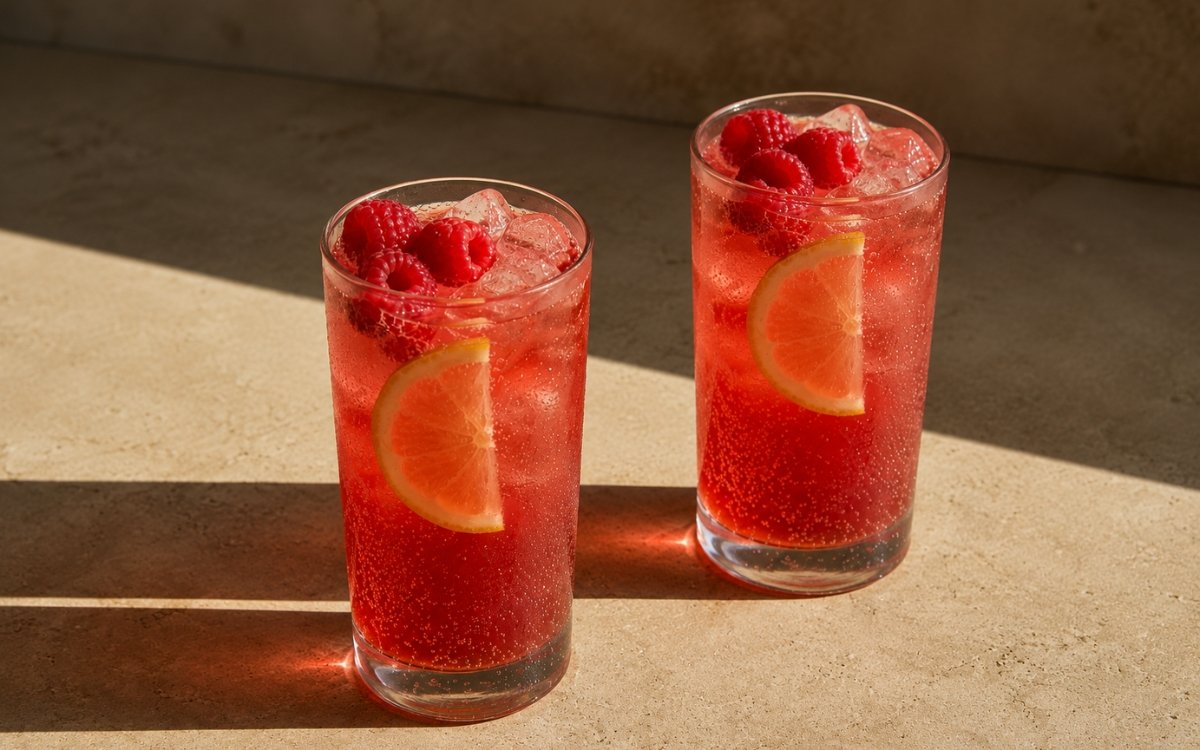
- Fill four tall glasses generously with ice. Divide the chilled raspberry lemon shrub evenly — approximately 80–85ml per glass. The shrub's concentration at this serving quantity is calibrated to the 125ml of club soda that follows — producing a drink that is vivid in raspberry flavour, clearly acidic, and noticeably more complex than a simple raspberry-and-soda combination. Stir briefly against the ice to chill further. Top each glass with approximately 125ml of chilled club soda, poured gently down the inner side to preserve carbonation. Stir once or twice gently. Press a thin lemon slice against the inner side of each glass. Add a small handful of fresh raspberries to each glass — they will float or sink to rest on the ice, their vivid red against the deep pink drink providing the garnish that is also, if they are eaten, a small burst of raw raspberry freshness against the concentrated shrub character of the drink.
Notes
The shrub format — cold-process fruit, sugar, and vinegar — produces a shelf-stable concentrated syrup that keeps refrigerated for up to 4 weeks because the vinegar's acidity prevents microbial growth. The longer it keeps, the more the flavours integrate and round: a shrub at day one is more sharply acidic and vivid; at day seven it is more harmonious and slightly mellower in its acid edge. This makes it the most make-ahead-appropriate preparation in this entire mocktail collection — a jar of raspberry lemon shrub can be made on Sunday and provide a perfectly assembled mocktail in 2 minutes every day of the following week.
Granulated white sugar rather than honey or brown sugar is specifically correct for the cold-process shrub: white sugar dissolves completely at cold temperature through the raspberry juice's moisture, and its neutral sweetness allows the raspberry and white wine vinegar's characters to express without the additional aromatic complexity that honey or molasses would introduce. In a cooked syrup honey or brown sugar adds desirable character; in a cold-process shrub they compete with the fruit and vinegar's own complexity.