
Light Raspberry Mint Iced White Tea
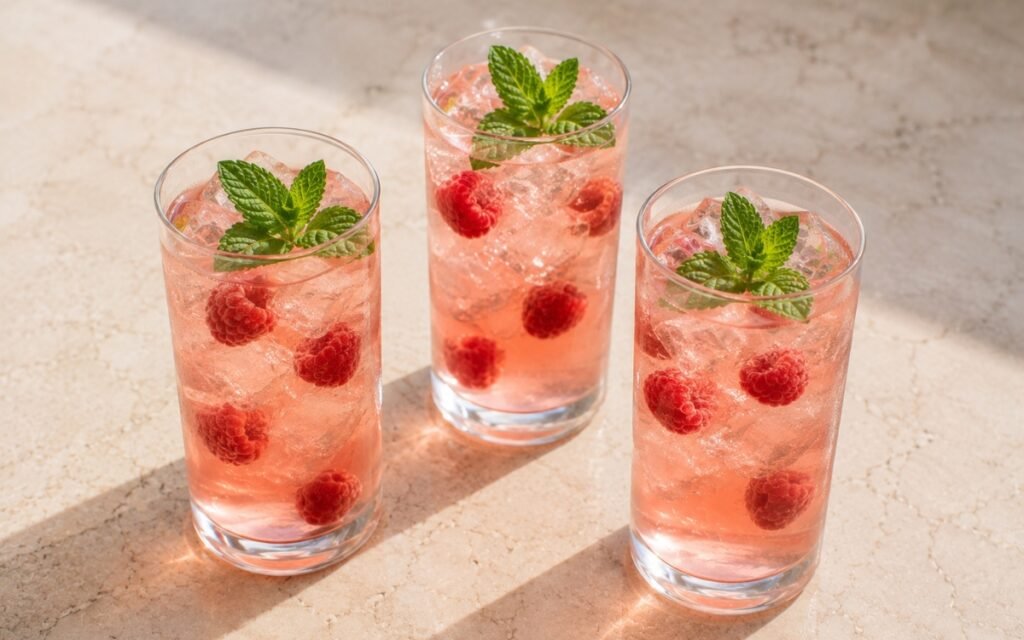
Raspberry and white tea share a specific aromatic compatibility that makes this combination work without complexity: raspberry’s high natural acidity and vivid fruity character are specifically complementary to white tea’s soft, faintly floral, lightly tannic base — the raspberry providing the vivid, assertive fruitiness and the white tea providing the clean structure that prevents the drink from tasting like raspberry juice over ice. The raspberries blended with lemon juice and water rather than with the white tea — unlike the strawberry preparations in this collection where blending with tea begins the integration — because raspberry’s natural acidity and intense pigmentation mean the lemon-and-water blend produces the most vivid, clean, least tea-coloured purée before straining, which is then combined with the white tea for the integration to occur in the pitcher. The mint cold-infused for the 10–15 minute window in the combined mixture — shortened from longer preparations because raspberry’s natural citric and malic acid content creates a moderately acidic medium that accelerates the grassy shift in mint beyond the correct window. Clean, refreshing, lightly sweet, delicately fruity, and specifically ultra-drinkable.
Prep Time : 10 min
Steep Time : 3–5 min
Servings : 8
10 min
3–5 min
8
Ingredients
For the Raspberry Mint Tea
• 1.65 litres water, divided — 1.4L for the white tea, 250ml for the raspberry blend
• 7 white tea bags — this one on Amazon
• 125–150g fresh raspberries — start with 125g
• 45ml fresh lemon juice — approximately 1½ lemons
• 3 tbsp honey — approximately 60g — this one on Amazon
• ½ cup fresh mint leaves — approximately 15g, lightly clapped
For Serving
• Ice cubes
• Fresh raspberries
• Fresh mint leaves
This post may contain affiliate links. As an Amazon Associate I earn from qualifying purchases, at no additional cost to you.
Directions
- Brew the White Tea Base
Heat the 1.4 litres of water to 75–80°C. Add the 7 white tea bags and steep for 3–5 minutes. Remove without squeezing. Allow to cool until just warm. The 75–80°C temperature and 3–5 minute window is the same applied throughout this collection’s white tea preparations — the temperature range specifically below the threshold where white tea’s pleasant floral, lightly tannic aromatic compounds give way to harsh astringency. Seven bags for 1.4 litres produces a base sufficiently structured to remain present against the raspberry purée’s vivid fruitiness — fewer bags would produce a white tea character too delicate to be detected in the combined drink. - Dissolve the Honey While Warm
Stir the 3 tbsp of honey into the slightly warm white tea until completely dissolved. The warm tea’s temperature allows full dissolution without any additional heating; the honey distributes evenly through the full volume of the base. Allow to cool completely to room temperature. - Blend the Raspberries with Lemon and Water
Add the 125–150g of fresh raspberries, 45ml of fresh lemon juice, and 250ml of cold water to a blender. The raspberries are blended with lemon juice and water rather than with the cooled white tea — a specific choice that reflects raspberry’s different properties compared to strawberry in this collection. Raspberry’s intensely vivid anthocyanin pigmentation and high natural acidity mean the blend produces a specifically clean, brightly coloured purée in the lemon-and-water medium without the tea’s tannins initially interfering. The resulting clean purée is then added to the white tea in the pitcher where the integration occurs naturally. Blend at high speed for 30–40 seconds until completely smooth. Strain through a fine-mesh sieve into the large pitcher, pressing gently on the raspberry seeds and pulp to extract the maximum vivid juice while keeping the strained liquid specifically clean and light. The seed-free result has a more delicate, more refined texture than an unstrained version; gentle pressing ensures the minimal amount of bitter seed-compound extraction. Discard the strained solids. - Combine the Tea and Raspberry Base
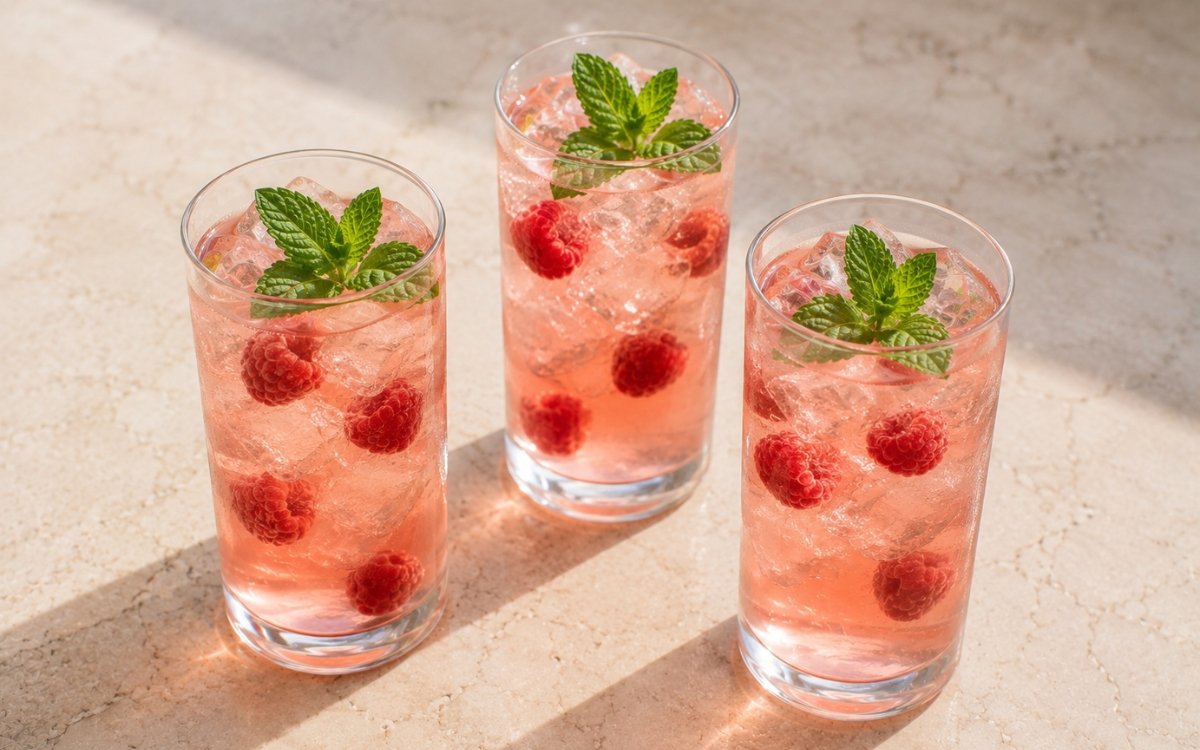
Add the cooled white tea to the pitcher with the strained raspberry juice. Stir until evenly combined. The combined mixture should be a pale, vivid pink — the white tea’s clear, slightly amber character lightening the raspberry’s deeper red into the specific blush-pink that makes this drink visually distinctive. - Cold-Infuse the Mint
Lightly clap the fresh mint leaves between your palms and add to the combined pitcher. Cover and refrigerate for 10–15 minutes — the same shortened window applied in the Light Hibiscus Mint Cooler for the same reason: raspberry’s natural citric and malic acid content creates a moderately acidic medium where mint’s grassy shift occurs more rapidly than in neutral preparations. At 10 minutes the mint’s cool, clean aromatic freshness is cleanly present as the background note that amplifies the drink’s refreshing quality; at 15 minutes the balance is at its maximum. Always remove by the 15-minute mark. Strain out all mint leaves and discard. Continue chilling for 1–2 hours until completely cold. - Adjust and Serve
After chilling, taste once more and adjust if needed: additional honey if the raspberry’s natural acidity is more aggressive than desired; additional lemon juice if brightness is needed. Fill glasses with ice. Pour the chilled raspberry mint white tea over the ice. Add several fresh raspberries to the ice surface and a few fresh mint leaves. Serve immediately.
*Notes :
- The raspberry-and-white-tea pairing works for the same fundamental reason that defines this entire collection’s approach to combining tea bases with fruit: the tea provides structure and a specific aromatic register that the fruit alone lacks, while the fruit provides the vivid, assertive flavour that makes the tea interesting as a cold drink. White tea’s specifically delicate, soft, slightly honeyed character is particularly appropriate for raspberry rather than black or green tea — raspberry’s natural assertiveness is intense enough to be clearly present against white tea’s subtlety while the white tea’s tannic softness specifically complements the raspberry’s tartness in a way that wouldn’t occur with more robustly tannic teas.
- Mint’s role in this preparation is the same background-freshness amplifier it plays across every mint-containing preparation in this collection: present as the aromatic layer that makes the drink feel specifically cooler and more refreshing without any overt mint flavour. The clap rather than muddle technique is more important here than in most preparations because the freshness-amplifying quality of mint is specifically its most volatile surface aromatic compounds — the ones that clapping releases without damaging the leaves into releasing chlorophyll and grassy back-notes.
Why This Recipe Works
This recipe works because the white tea is brewed at the protected temperature that produces soft structure without astringency. The raspberries are blended with lemon and water rather than the tea, producing the cleanest, most vivid purée before straining.
The mint infusion is timed within the shortened window appropriate for the mildly acidic combined medium. And the honey is dissolved while warm, with sweetness adjusted after chilling when cold perception is accurate.
Ingredient Breakdown
White Tea at 75–80°C (3–5 Minutes, 7 Bags)
The delicate structural base — sufficient bags for the raspberry’s fruitiness to remain present rather than overwhelming; temperature and time protecting pleasant aromatic character.
Raspberries Blended with Lemon and Water (Not Tea)
The clean-purée technique — raspberry’s intense pigmentation and acidity producing the most vivid, cleanest result when blended in lemon-water before combining with the tea.
Mint Cold-Infused 10–15 Minutes (Shortened for Acidic Medium)
The background refreshing aromatic — shortened window for raspberry’s mildly acidic medium where grassy shift accelerates.
Honey Dissolved While Warm, Adjusted After Chilling
The calibrated sweetness approach — warm dissolution for even distribution; cold-state tasting for accurate final adjustment.
Flavor Structure Explained
This raspberry mint iced white tea follows a layered balance model:
- Tart berry core (raspberry)
- Delicate tea backbone (white tea)
- Cool herbal freshness (mint)
- Gentle rounded sweetness (honey)
- Bright citrus sharpening (lemon juice)
Raspberry defines the foundation with vivid fruitiness and assertive tartness that give the drink its energetic character. White tea provides structure through soft tannins and faint floral notes, ensuring the drink remains balanced and tea-like rather than becoming simple fruit juice. Mint contributes subtle cooling freshness that enhances the drink’s refreshing quality without overtaking the berry flavor. Honey softens the raspberry’s sharp edges with gentle floral sweetness, creating a smoother and more harmonious profile. Lemon juice sharpens the entire composition, intensifying the fruit, clarifying the tea notes, and keeping the finish bright and clean.
Common Mistakes to Avoid
- Over-Steeping White Tea – Beyond 5 minutes at 75–80°C the tannin development begins. Always precisely 3–5 minutes.
- Blending Raspberries with White Tea (Instead of Lemon-Water) – The tea’s tannins interact with the raspberry’s pigments during blending in a way that produces a slightly more muted, less vivid result. Always blend with lemon and water separately.
- Cold-Infusing Mint Beyond 15 Minutes in the Acidic Medium – The grassy shift is accelerated by raspberry’s acidity. Always remove at 10–15 minutes.
- Not Pressing the Raspberry Solids – The vivid juice is largely held in the solids without pressing. Always press gently for maximum yield.
- Adding Too Much Honey Initially – Honey is easier to add than to reduce; cold perception of sweetness is more accurate than warm. Always start conservatively and adjust after chilling.
Variations
With Basil Instead of Mint
Replace the mint with 10g of fresh basil — clapped and cold-infused for the same 10–15 minutes in the acidic raspberry medium. Basil’s sweet, anise-adjacent character provides a specifically more unusual, more summery Italian direction.
With Hibiscus
Add 1 tbsp of dried hibiscus flowers to the white tea during the steeping period — removed with the tea bags at straining. The hibiscus deepens the colour and adds its tartaric acid alongside the raspberry’s own acidity for a more intensely tart, more vivid result.
With Ginger
Add 8g of thinly sliced fresh ginger to the blender with the raspberries — the ginger’s warmth alongside raspberry’s tartness produces a more assertive, more warming result.
Sparkling Version
Serve 120ml of the chilled tea over ice and top with 80ml of chilled club soda per glass — the carbonation makes the raspberry and mint character more vivid at each sip and moves the preparation toward the Raspberry Lemon Shrub Fizz direction.
Storage & Make-Ahead
Raspberry mint white tea, with the mint strained out, can be refrigerated in a sealed pitcher for up to 3 days. The raspberry maintains its vibrant color throughout storage, while the delicate aromatic qualities of the white tea gradually become slightly less pronounced over time. For the freshest flavor and aroma, it is best enjoyed within 48 hours.
Once assembled, the drinks are not suitable for storage and should be served immediately.
Frequently Asked Questions
Why blend raspberries with lemon and water rather than with the white tea?
Raspberry’s intensely vivid anthocyanin pigments and high natural acidity produce the most vivid, cleanest purée when blended in a neutral lemon-water medium rather than with the white tea’s tannins present. The tannins in the tea interact with the pigments during blending in a way that slightly mutes the colour and produces a less specifically clean result. Blending separately and combining in the pitcher allows the tea’s structure and the raspberry’s fruitiness to integrate naturally without this interaction.
Why is the mint infusion only 10–15 minutes rather than the 20–30 minutes in some other preparations?
Raspberry’s natural citric and malic acid content makes the combined pitcher moderately acidic. In acidic mediums, mint’s aromatic compounds shift toward the grassy, slightly bitter register faster than in neutral ones. The 10–15 minute window captures the clean, cool aromatic freshness before this shift begins.
Why white tea specifically?
White tea’s soft, lightly tannic, faintly floral structure is specifically complementary to raspberry’s tartness — the soft tannins providing structure without competing with the fruit, and the faint floral quality harmonising with both the raspberry’s fruitiness and the mint’s aromatics. Black tea’s robust tannins would overwhelm the delicate balance; green tea’s grassy freshness would create a different direction.
What other raspberry-based preparations share this approach?
The Raspberry Lemonade shares the raspberry-and-citrus combination as the simplest, most direct preparation — no tea, no herbal element, the raspberry and lemon in their most immediately accessible format. The Raspberry Basil Lemonade shares the raspberry-fruit-and-herb direction with basil and lime rather than mint and white tea — a more assertively herbal, more immediately fresh-and-zingy preparation. The Strawberry Rosemary Iced White Tea shares both the white tea base and the berry-with-herb structure — strawberry rather than raspberry and rosemary rather than mint providing a warmer, more botanical direction with the same delicate structural foundation.
Nutrition Facts
( per serving )
Calories
~55 kcal
Protein
0 g
Fat
0 g
Carbs
14 g
Calories
~55 kcal
Protein
0 g
Fat
0 g
Carbs
14 g
Related Recipes
Related Recipes

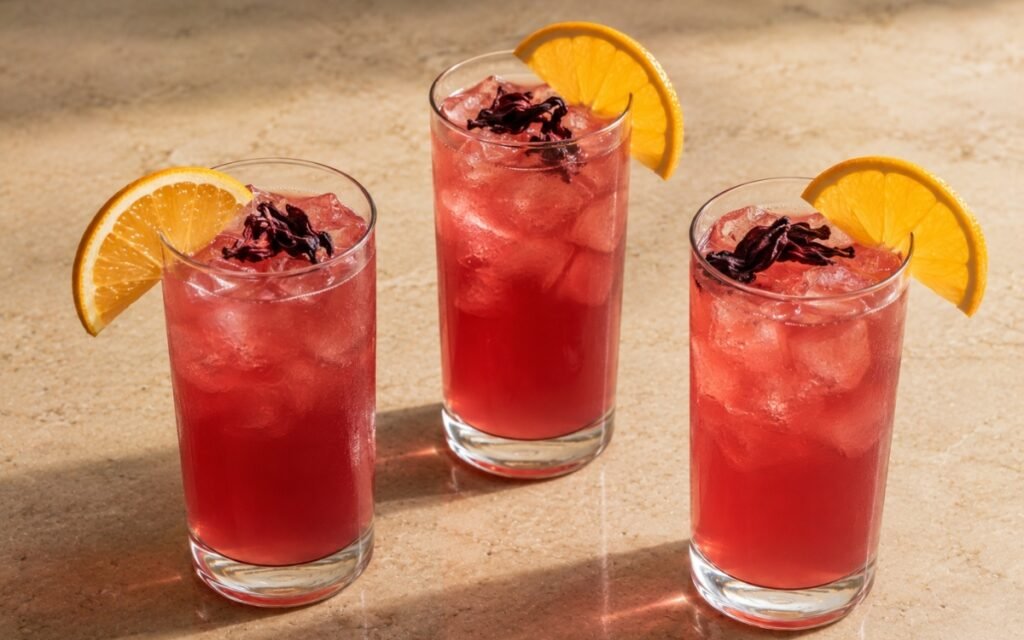
Hibiscus Ginger Orange White Tea Cooler
White tea at 75–80°C for 3–4 minutes, hibiscus and ginger infused together 6–8 minutes — orange juice as the structural bridge, honey, chilled. Vivid, tart, balanced.
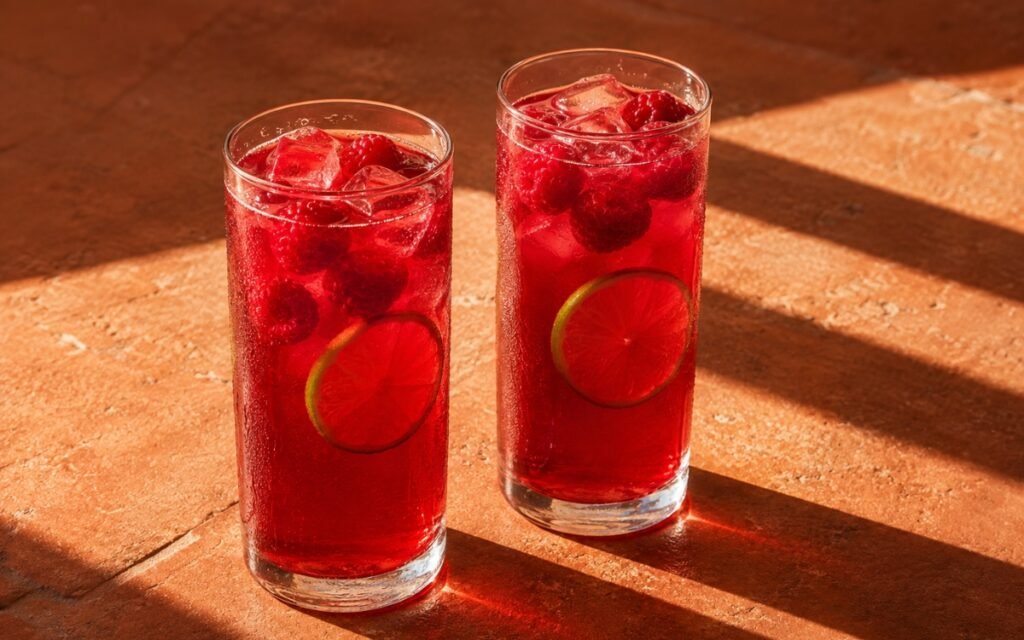
Hibiscus Raspberry Ginger Cooler
Off-heat steeped hibiscus and ginger combined with cold-macerated raspberries and fresh lime juice for a vivid ruby-red, tart cooler.
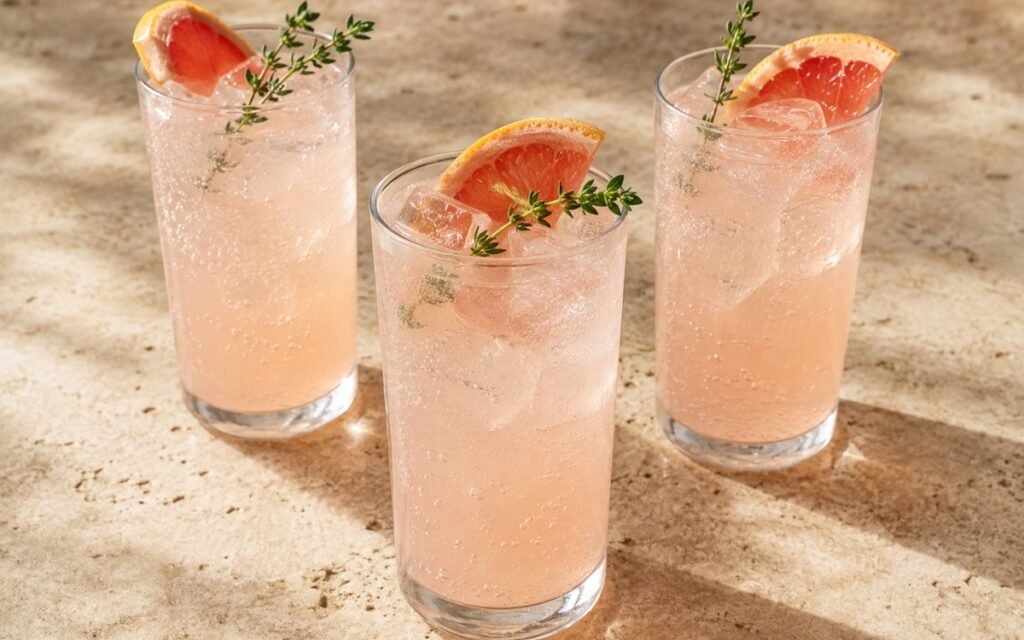
Thyme Grapefruit Sparkling Cooler
Thyme and grapefruit peel infused 8–10 minutes in boiled water — grapefruit juice once cooled, honey, club soda added last. Dry, botanical, crisp.
You might also like
You might also like
Green Tea Lemonade
Sencha at 75–80°C for exactly 2–2½ minutes, bags not squeezed — honey-lemon syrup, fresh lemon, cold water, salt, chilled. Crisp, cool, and herbal-fresh.
Passion Fruit White Iced Tea
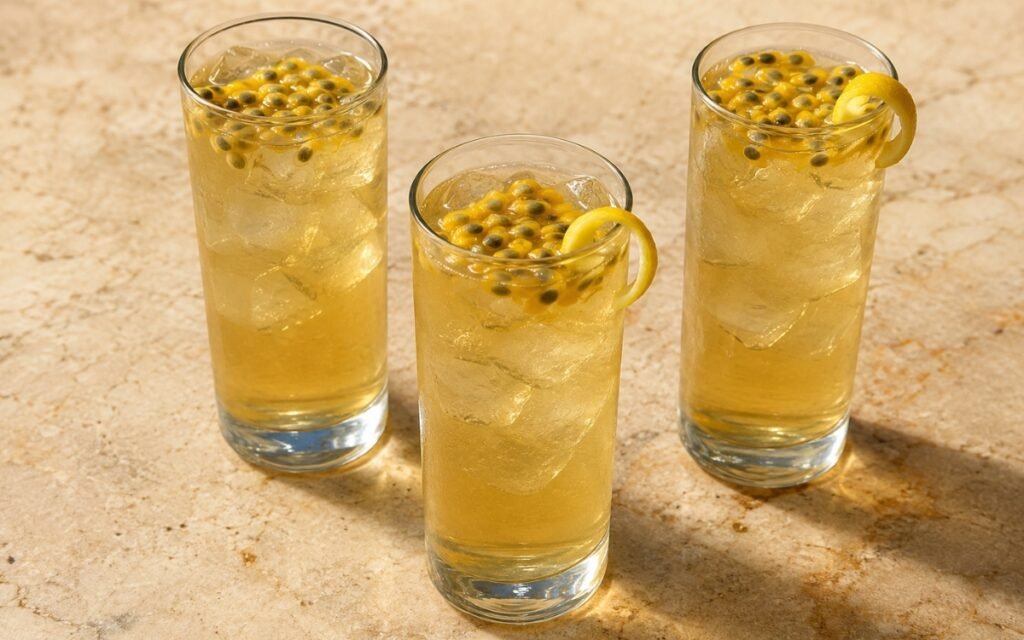
White tea at 75–80°C for 3–4 minutes, lemon peel infused cold, passion fruit gently strained and added gradually — honey, chilled. Bright, tropical, refined.
Cherry Lime Rickey Mocktail
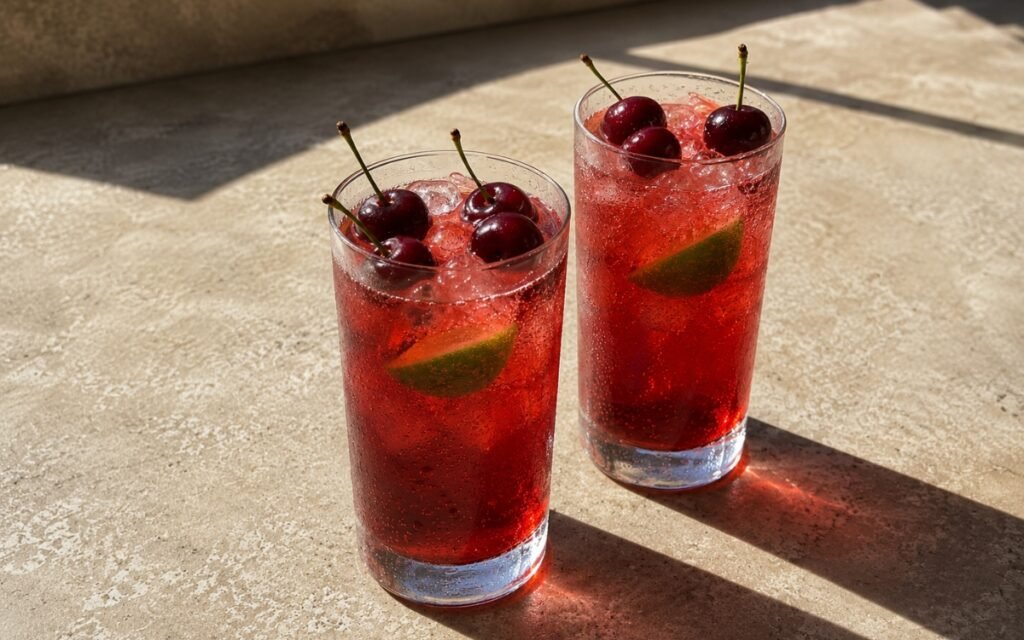
Dark cherries with lime juice and white verjus over club soda — sharp, fruity, and classic.

Light Raspberry Mint Iced White Tea
Ingredients
Method
- Heat the 1.4 litres of water to 75–80°C. Add the 7 white tea bags and steep for 3–5 minutes. Remove without squeezing. Allow to cool until just warm. The 75–80°C temperature and 3–5 minute window is the same applied throughout this collection’s white tea preparations — the temperature range specifically below the threshold where white tea’s pleasant floral, lightly tannic aromatic compounds give way to harsh astringency. Seven bags for 1.4 litres produces a base sufficiently structured to remain present against the raspberry purée’s vivid fruitiness — fewer bags would produce a white tea character too delicate to be detected in the combined drink.
- Stir the 3 tbsp of honey into the slightly warm white tea until completely dissolved. The warm tea’s temperature allows full dissolution without any additional heating; the honey distributes evenly through the full volume of the base. Allow to cool completely to room temperature.
- Add the 125–150g of fresh raspberries, 45ml of fresh lemon juice, and 250ml of cold water to a blender. The raspberries are blended with lemon juice and water rather than with the cooled white tea — a specific choice that reflects raspberry’s different properties compared to strawberry in this collection. Raspberry’s intensely vivid anthocyanin pigmentation and high natural acidity mean the blend produces a specifically clean, brightly coloured purée in the lemon-and-water medium without the tea’s tannins initially interfering. The resulting clean purée is then added to the white tea in the pitcher where the integration occurs naturally. Blend at high speed for 30–40 seconds until completely smooth. Strain through a fine-mesh sieve into the large pitcher, pressing gently on the raspberry seeds and pulp to extract the maximum vivid juice while keeping the strained liquid specifically clean and light. The seed-free result has a more delicate, more refined texture than an unstrained version; gentle pressing ensures the minimal amount of bitter seed-compound extraction. Discard the strained solids.
- Add the cooled white tea to the pitcher with the strained raspberry juice. Stir until evenly combined. The combined mixture should be a pale, vivid pink — the white tea’s clear, slightly amber character lightening the raspberry’s deeper red into the specific blush-pink that makes this drink visually distinctive.
- Lightly clap the fresh mint leaves between your palms and add to the combined pitcher. Cover and refrigerate for 10–15 minutes — the same shortened window applied in the Light Hibiscus Mint Cooler for the same reason: raspberry’s natural citric and malic acid content creates a moderately acidic medium where mint’s grassy shift occurs more rapidly than in neutral preparations. At 10 minutes the mint’s cool, clean aromatic freshness is cleanly present as the background note that amplifies the drink’s refreshing quality; at 15 minutes the balance is at its maximum. Always remove by the 15-minute mark. Strain out all mint leaves and discard. Continue chilling for 1–2 hours until completely cold.
- After chilling, taste once more and adjust if needed: additional honey if the raspberry’s natural acidity is more aggressive than desired; additional lemon juice if brightness is needed. Fill glasses with ice. Pour the chilled raspberry mint white tea over the ice. Add several fresh raspberries to the ice surface and a few fresh mint leaves. Serve immediately.