
Light Hibiscus Mint Cooler
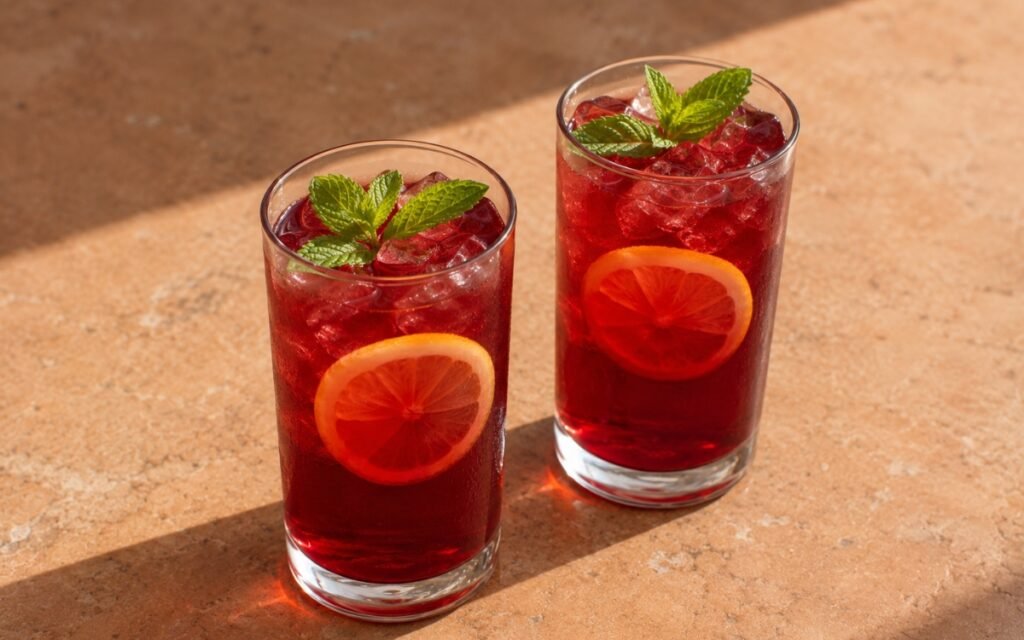
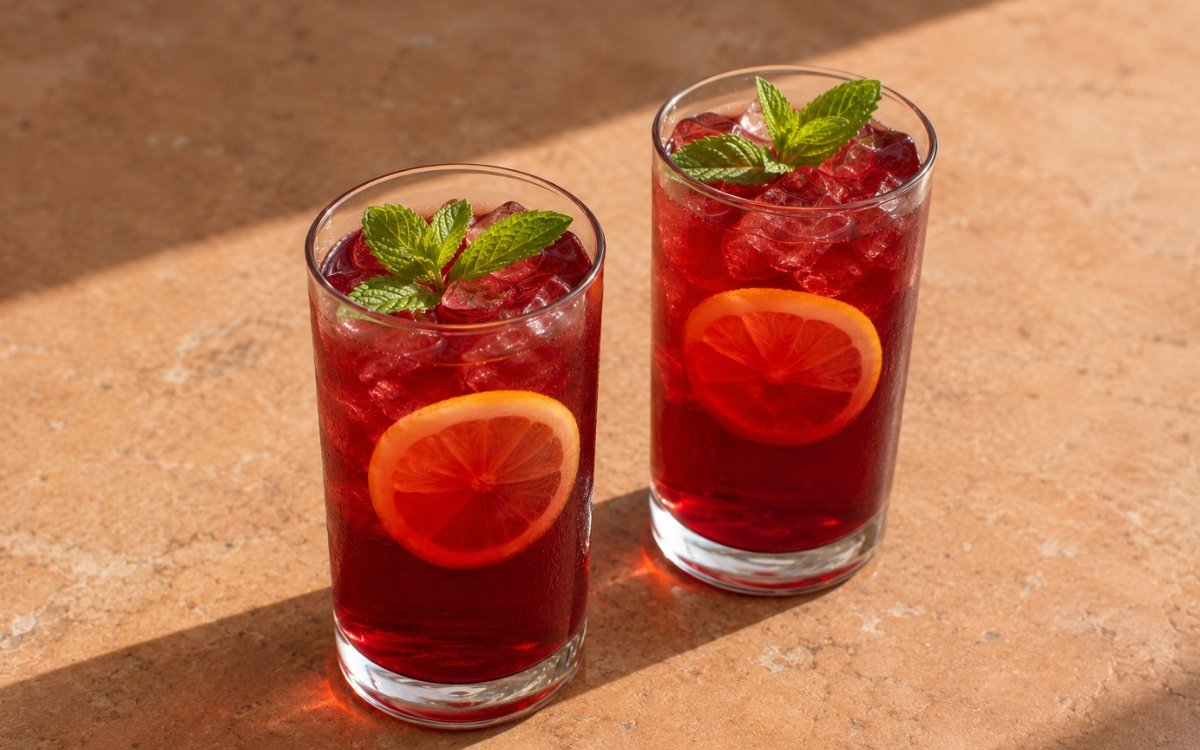
Hibiscus, mint, lemon, and orange blossom water — four ingredients that share a specifically floral aromatic register while each contributing a different dimension: hibiscus’s tartaric acid-driven sharpness and deeply vivid ruby colour; mint’s cool, clean, menthol-adjacent freshness; lemon’s bright, clean citrus acidity; and orange blossom water’s specifically ethereal, warm floral depth. The orange blossom water is present here at the same carefully calibrated 1 tsp quantity applied in the Orange Blossom Fizz Mocktail — and for the same reason: 1 tsp in 1.65 litres produces a barely-perceptible floral warmth that amplifies the hibiscus’s own floral character into something more specifically beautiful; any significant addition beyond this tips immediately into the soapy, perfumed territory that makes orange blossom water one of the most easily misused aromatic ingredients. The mint cold-infused for 10–15 minutes in the cooled hibiscus tea and removed — the same controlled window, the same principle: present as cool background freshness rather than dominant herb flavour. Vibrant ruby-red, tart, floral, sharp, and deeply refreshing.
Prep Time : 10 min
Steep Time : 8–10 min
Servings : 8
10 min
8–10 min
8
Ingredients
For the Hibiscus Mint Cooler
• 1.65 litres water
• 4–5 tbsp dried hibiscus flowers — this one on Amazon
• 3–4 tbsp honey — approximately 60–80g — this one on Amazon
• 45–60ml fresh lemon juice — start with 45ml
• 1 tsp orange blossom water — added precisely — this one on Amazon
• ½ cup fresh mint leaves — approximately 15g, lightly clapped
For Serving
• Ice cubes
• Lemon slices
• Fresh mint leaves
This post may contain affiliate links. As an Amazon Associate I earn from qualifying purchases, at no additional cost to you.
Directions
- Steep the Hibiscus at Near-Boiling Temperature
Heat the 1.65 litres of water to approximately 95°C — just below a full rolling boil. The 95°C temperature for hibiscus in this preparation is specifically higher than the protected temperatures used for white and green teas, and for specific reason: hibiscus flowers do not contain the heat-sensitive aromatic compounds that require temperature protection in tea preparations. Their primary aromatic compounds — the anthocyanin pigments, tartaric and citric acids, and the floral volatile compounds responsible for hibiscus’s characteristic character — are heat-stable and extract efficiently and pleasantly at near-boiling temperatures. At 95°C for 8–10 minutes, the extraction is complete, vivid, and specifically deeply flavoured. Add the dried hibiscus flowers — 4 tablespoons for a brighter, lighter result with moderate tartness; 5 tablespoons for the deepest ruby colour and the most assertively tart, most intensely hibiscus-flavoured result. Cover the vessel and steep for 8–10 minutes. The longer steep time at this higher temperature compared to the Hibiscus Lime Fizz Mocktail’s 10–15 minute off-heat steep reflects the different preparation contexts: the Hibiscus Lime Fizz is a sparkling concentrate intended for dilution with club soda; this cooler is a fuller-volume preparation served directly over ice without carbonation, requiring a more fully developed, more fully extracted base to remain vivid through dilution by ice alone. Strain through a fine-mesh sieve and discard the hibiscus flowers. - Dissolve the Honey While Warm
While the strained hibiscus tea is still warm, stir in 3 tbsp of honey until completely dissolved. The warm tea’s temperature facilitates full dissolution immediately; starting conservatively at 3 tbsp and adjusting after chilling and tasting — when the cold temperature’s effect on perceived sweetness is accurate — prevents over-sweetening during preparation. Allow the sweetened hibiscus tea to cool to lukewarm — not room temperature and specifically not cold at this stage, because the lemon juice and orange blossom water are most effective when added to a lukewarm liquid that has lost the highest-temperature volatility risk but retains enough warmth to allow the aromatic compounds to distribute evenly. - Add Lemon Juice and Orange Blossom Water
Stir in 45ml of fresh lemon juice and exactly 1 tsp of orange blossom water. The order of addition matters slightly — the lemon juice first, which immediately brightens and sharpens the hibiscus’s colour through its anthocyanin-acid interaction, then the orange blossom water. The 1 tsp of orange blossom water in 1.65 litres is the precisely calibrated threshold quantity for this preparation. The orange blossom water’s primary aromatic function here is not to taste of orange blossom but to provide a warm, slightly honeyed, specifically floral depth that amplifies the hibiscus’s own floral register into something noticeably more complex and more beautiful than hibiscus alone. At 1 tsp, this amplification is present but not specifically detectable as orange blossom; the drinker perceives the hibiscus as more specifically floral and more aromatically layered without knowing why. At ½ tbsp or more, the orange blossom water becomes identifiable and rapidly moves toward the perfumed register. Always add precisely 1 tsp and taste before considering any addition — the correct result is a hibiscus tea that seems more specifically floral rather than a drink that tastes of orange blossom. Taste the combined liquid after adding both. If additional brightness is needed, add lemon juice in 5ml increments up to 60ml total. - Cold-Infuse the Mint
Lightly clap the ½ cup of fresh mint leaves between your palms — the surface bruising releasing the aromatic oils without the aggressive cell-wall rupture that muddling causes. Add the clapped mint leaves to the lukewarm hibiscus tea. Refrigerate for 10–15 minutes. The slightly shorter mint infusion window compared to other preparations in this collection — 10–15 minutes here versus 20–30 minutes in some others — reflects the hibiscus’s own assertive tartness: mint’s grassy, bitter shift in an acidic medium occurs faster than in neutral mediums, and the hibiscus tea’s tartaric and citric acid content makes this preparation more acidic than most. At 10 minutes the mint contributes its clean, cool aromatic freshness clearly; at 15 minutes it is at the maximum before the grassy shift begins. Always strain exactly at 10–15 minutes. After straining, continue chilling the finished cooler for 1–2 hours until completely cold. - Adjust and Serve
After the 1–2 hour chill, taste once more and make final adjustments: additional honey if the tartness is more aggressive than preferred after chilling; additional lemon juice if additional brightness is needed; a small additional amount of orange blossom water only if the floral note is genuinely too subtle to detect — add in drops rather than tsp at this stage. Fill glasses with plenty of ice. Pour the chilled cooler over the ice. Garnish with a lemon slice and a few fresh mint leaves. Serve immediately.
*Notes :
- The orange blossom water dosage warning deserves specific emphasis in the extended notes because it is the easiest way to ruin this preparation and because the error is not intuitive. Orange blossom water smells specifically beautiful from the bottle and the instinctive response is often to add more. At 1 tsp in 1.65 litres — approximately 0.5ml per serving — it is present below the detection threshold for most people as a specifically identifiable flavour while meaningfully amplifying the hibiscus’s floral character. This is the correct functional role. At 1 tbsp in the same volume it is detectable and beginning to be prominent; at 2 tbsp it becomes the dominant character and the drink tastes specifically of orange blossom water over ice rather than specifically of hibiscus tea.
- The hibiscus-mint-orange-blossom combination is specifically Mediterranean and Middle Eastern in its aromatic profile — hibiscus is a foundational drink ingredient throughout the Middle East and North Africa; orange blossom water appears in Moroccan, Lebanese, and Egyptian preparations; fresh mint is present throughout the same tradition. The combination resonates together because it represents a historically coherent aromatic tradition.
Why This Recipe Works
This recipe works because the hibiscus is steeped at near-boiling temperature for the full 8–10 minutes needed for a complete, vivid extraction in a non-sparkling format. The orange blossom water is added at the specific sub-detection-threshold quantity that amplifies the hibiscus’s floral character without becoming identifiable.
The mint is cold-infused within the 10–15 minute window shortened from other preparations to account for the hibiscus medium’s increased acidity. And the honey is added conservatively while warm, with the final sweetness adjusted after chilling.
Ingredient Breakdown
Hibiscus at 95°C for 8–10 Minutes
The vivid, fully extracted base — higher temperature and longer steep than white tea preparations; hibiscus’s stable compounds extracting completely at near-boiling for this non-sparkling format.
1 tsp Orange Blossom Water (Floral Amplifier, Not Primary Flavour)
The aromatic enhancer at sub-detection concentration — amplifying hibiscus’s floral character without being identifiable as orange blossom.
Mint Cold-Infused 10–15 Minutes (Shorter Than Other Preparations)
The controlled cool freshness — shortened window for the more acidic hibiscus medium where grassy shift occurs faster.
Lemon Juice Added to Lukewarm (Not Hot, Not Cold)
The brightness addition — lukewarm temperature allowing even distribution while preserving the volatile aromatic character.
Honey Added While Warm, Adjusted After Chilling
The sweetness calibration approach — initial dissolution while warm, final adjustment after chilling when perceived sweetness is accurate.
Flavor Structure Explained
This Light hibiscus mint cooler follows a layered balance model:
- Tart floral core (hibiscus)
- Delicate aromatic lift (orange blossom water)
- Cool herbal freshness (mint)
- Bright citrus sharpening (lemon juice)
- Rounded sweet balance (honey)
Hibiscus defines the foundation with vivid tartness, deep ruby color, and a floral sharpness that immediately dominates the profile. Orange blossom water subtly amplifies the hibiscus’s natural floral qualities, adding warmth and elegance without becoming overtly perfumed. Mint contributes restrained cooling freshness that softens the drink’s intensity and enhances its refreshing quality. Lemon juice sharpens the entire composition, bringing focus and clarity to the tart and floral notes. Honey rounds the sharper acids with gentle sweetness, creating balance while preserving the drink’s bright, refreshing character.
Common Mistakes to Avoid
- Adding More Than 1 tsp of Orange Blossom Water – Any significant addition above 1 tsp rapidly produces a perfumed, soapy result. Always precisely 1 tsp and taste before any further addition.
- Using Decorative Rather Than Food-Grade Hibiscus – Always food-grade dried culinary hibiscus.
- Cold-Infusing Mint Beyond 15 Minutes in the Acidic Hibiscus Medium – The acidic medium accelerates the grassy shift. Always remove at 10–15 minutes.
- Adding Honey After Chilling – Cold honey resists complete dissolution. Always add and dissolve while warm, adjust sweetness after chilling.
- Steeping Hibiscus at Lower Temperature – At temperatures below 85°C the extraction is slower and incomplete for the 8–10 minute window. Always near-boiling (95°C) for this preparation’s volume and format.
Variations
With Ginger
Add 12g of thinly sliced fresh ginger to the hibiscus water during steeping — the ginger’s warmth extracted alongside the hibiscus for a more assertively spiced, more warming version.
Sparkling Version
Serve 120ml of the chilled cooler over ice and top with 80ml of chilled club soda per glass — the carbonation dramatically amplifies the aromatic compounds at each sip and moves the preparation toward the Hibiscus Lime Fizz Mocktail format.
With Lime Instead of Lemon
Replace the lemon juice with lime juice at the same quantity — lime’s sharper, more tropical citrus acidity is specifically complementary to hibiscus’s tart character and is the more traditional pairing in Mexican agua de jamaica.
With Cardamom
Add 4 lightly crushed cardamom pods to the hibiscus during steeping — the cardamom’s warm, sweet-floral depth is one of the most specifically beautiful spice pairings for hibiscus in Middle Eastern drink traditions.
Storage & Make-Ahead
Hibiscus mint cooler, with the mint strained out, can be refrigerated in a sealed pitcher for up to 4 days. Its color remains especially vibrant throughout storage, although the floral notes from the orange blossom water and the bright freshness of the lemon gradually become slightly less pronounced over time. For the best flavor and aroma, it is best enjoyed within 48 hours.
Once assembled, the drinks are not suitable for storage and should be served immediately.
Frequently Asked Questions
Why exactly 1 tsp of orange blossom water and not more?
Orange blossom water at 1 tsp in 1.65 litres is present at approximately 0.5ml per serving — below the detection threshold as a specifically identifiable flavour for most people, while providing a warm, floral aromatic depth that amplifies the hibiscus’s own floral character. Above this quantity it becomes identifiable as orange blossom water and rapidly moves toward the perfumed, soapy character that makes this ingredient one of the most easily over-used in drink-making.
Why steep the hibiscus at 95°C rather than the lower temperatures used for white and green tea?
Hibiscus flowers do not contain the heat-sensitive aromatic compounds that require temperature protection in tea preparations. Their primary colour pigments (anthocyanins) and aromatic-flavour compounds are heat-stable and extract completely and pleasantly at near-boiling temperatures. The 95°C steep is specifically appropriate for a fully extracted, vivid, intensely flavoured non-sparkling cooler where the hibiscus needs to carry the full 1.65 litres without carbonation’s intensity contribution.
Why is the mint infusion only 10–15 minutes rather than the 20–30 minutes in other preparations?
The hibiscus tea’s significant tartaric and citric acid content makes the medium more acidic than most other preparations in this collection. In acidic mediums, basil and mint’s pleasant aromatic compounds shift toward the grassy, bitter register more rapidly than in neutral ones. The shortened window accounts for this accelerated shift.
What other hibiscus-based drinks share this character?
The Hibiscus Lime Fizz Mocktail shares the hibiscus tartness as the primary character with lime rather than lemon and sparkling rather than still — the most directly related preparation in a different serving format. The Hibiscus Strawberry Lemonade shares the hibiscus base with strawberry’s fruity sweetness providing a warmer, more specifically fruity secondary character than this cooler’s floral-cool mint direction. The Hibiscus Peach White Iced Tea shares the hibiscus base in a specifically more complex, more layered format — white tea’s structure and peach’s warmth alongside the hibiscus’s tartness.
Nutrition Facts
( per serving )
Calories
~50 kcal
Protein
0 g
Fat
0 g
Carbs
13 g
Calories
~50 kcal
Protein
0 g
Fat
0 g
Carbs
13 g
Related Recipes
Related Recipes

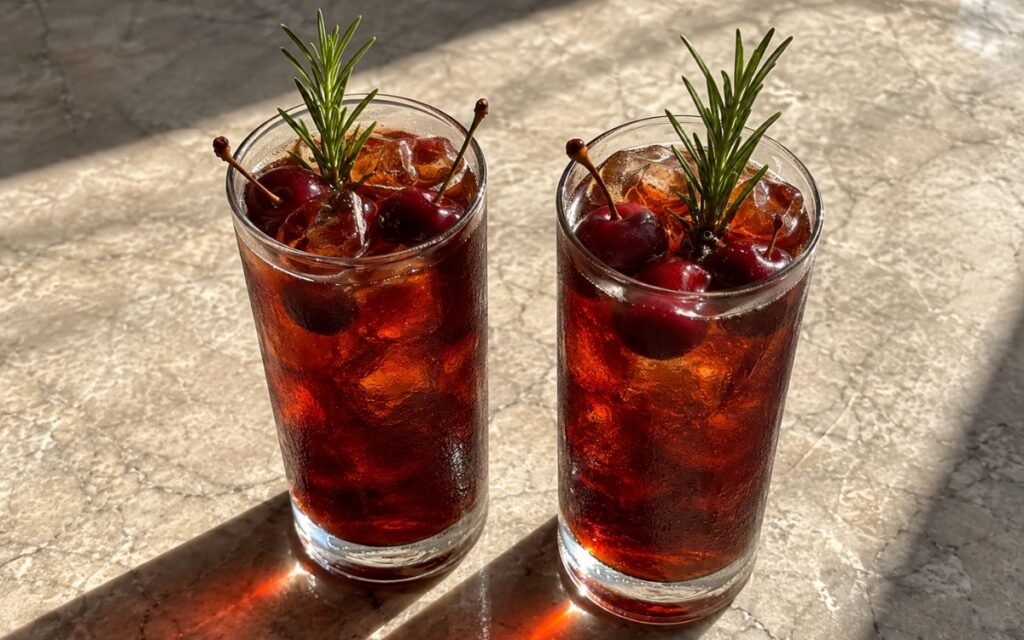
Cherry Rosemary Black Iced Tea
Properly brewed black tea layered with a gently simmered cherry concentrate and an off-heat rosemary infusion for a deep, fruity iced tea.
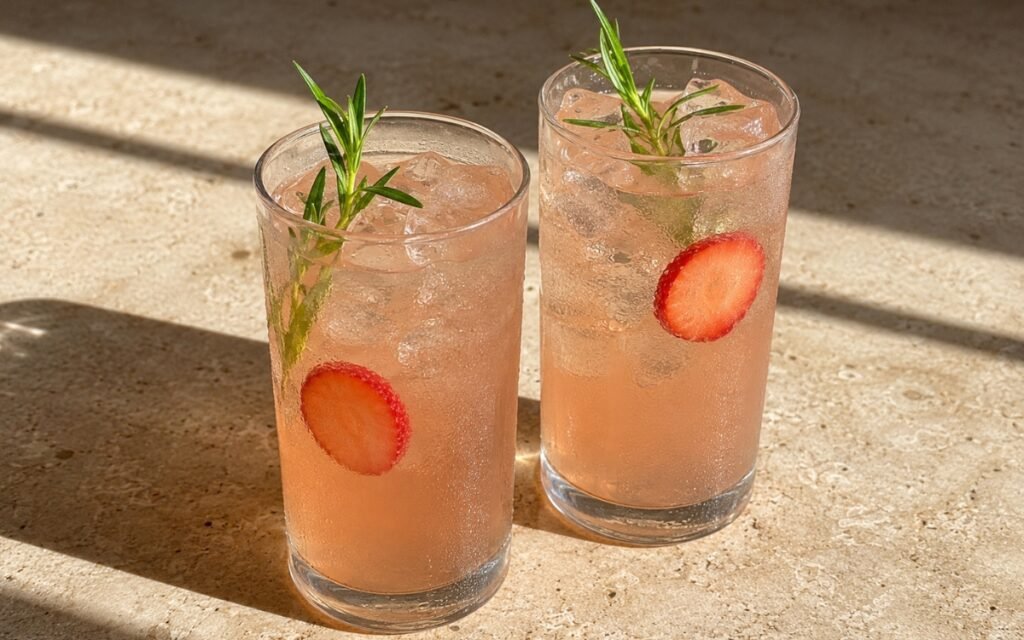
Strawberry Tarragon White Iced Tea
Properly brewed white tea combined with cold-macerated fresh strawberries and a gentle cold tarragon infusion for a light, elegant iced tea.
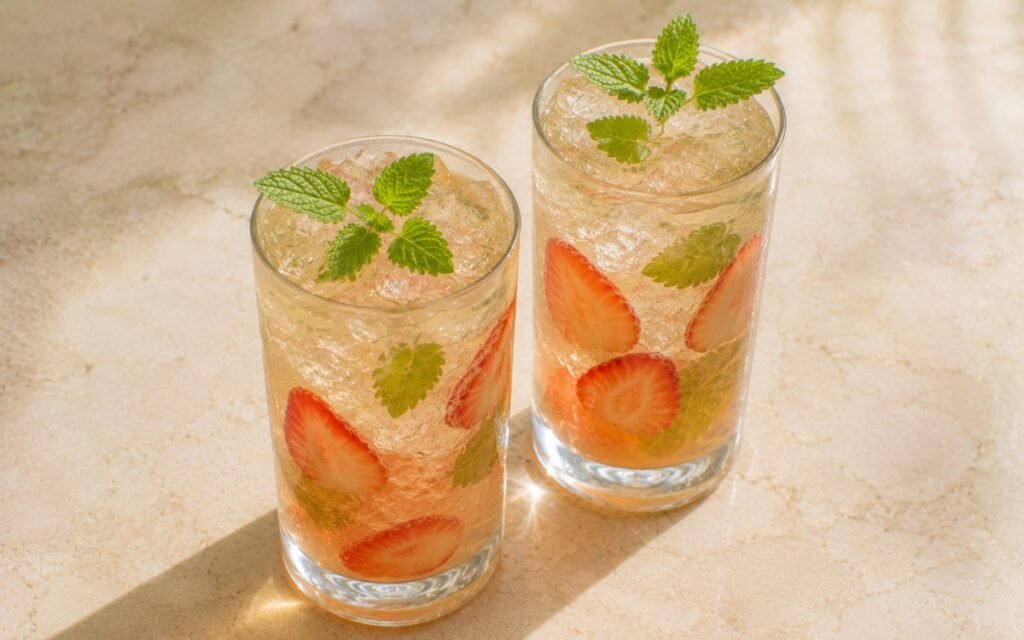
Lemon Balm Strawberry Green Iced Tea
Delicate green iced tea with strained strawberry syrup and fresh lemon balm, chilled and served with strawberry slices.
You might also like
You might also like
Fresh Peach Lemonade
Ripe peaches simmered with sugar for 10–12 minutes, pressed through a sieve — fresh lemon juice and cold water added, chilled. Sweet, tart, and intensely peachy.
Orange Lemonade
Orange and lemon zest steeped off heat 8–10 minutes, pulp mashed — fresh orange juice with 120ml lemon for structural acid, salt, cold water. Juicy and structured.
Lychee Rose Spritzer Mocktail
Rose-infused lychee base with honey over club soda — pale pink, floral, and intensely elegant.
Light Hibiscus Mint Cooler
Ingredients
Method
- Heat the 1.65 litres of water to approximately 95°C — just below a full rolling boil. The 95°C temperature for hibiscus in this preparation is specifically higher than the protected temperatures used for white and green teas, and for specific reason: hibiscus flowers do not contain the heat-sensitive aromatic compounds that require temperature protection in tea preparations. Their primary aromatic compounds — the anthocyanin pigments, tartaric and citric acids, and the floral volatile compounds responsible for hibiscus’s characteristic character — are heat-stable and extract efficiently and pleasantly at near-boiling temperatures. At 95°C for 8–10 minutes, the extraction is complete, vivid, and specifically deeply flavoured. Add the dried hibiscus flowers — 4 tablespoons for a brighter, lighter result with moderate tartness; 5 tablespoons for the deepest ruby colour and the most assertively tart, most intensely hibiscus-flavoured result. Cover the vessel and steep for 8–10 minutes. The longer steep time at this higher temperature compared to the Hibiscus Lime Fizz Mocktail’s 10–15 minute off-heat steep reflects the different preparation contexts: the Hibiscus Lime Fizz is a sparkling concentrate intended for dilution with club soda; this cooler is a fuller-volume preparation served directly over ice without carbonation, requiring a more fully developed, more fully extracted base to remain vivid through dilution by ice alone. Strain through a fine-mesh sieve and discard the hibiscus flowers.
- While the strained hibiscus tea is still warm, stir in 3 tbsp of honey until completely dissolved. The warm tea’s temperature facilitates full dissolution immediately; starting conservatively at 3 tbsp and adjusting after chilling and tasting — when the cold temperature’s effect on perceived sweetness is accurate — prevents over-sweetening during preparation. Allow the sweetened hibiscus tea to cool to lukewarm — not room temperature and specifically not cold at this stage, because the lemon juice and orange blossom water are most effective when added to a lukewarm liquid that has lost the highest-temperature volatility risk but retains enough warmth to allow the aromatic compounds to distribute evenly.
- Stir in 45ml of fresh lemon juice and exactly 1 tsp of orange blossom water. The order of addition matters slightly — the lemon juice first, which immediately brightens and sharpens the hibiscus’s colour through its anthocyanin-acid interaction, then the orange blossom water. The 1 tsp of orange blossom water in 1.65 litres is the precisely calibrated threshold quantity for this preparation. The orange blossom water’s primary aromatic function here is not to taste of orange blossom but to provide a warm, slightly honeyed, specifically floral depth that amplifies the hibiscus’s own floral register into something noticeably more complex and more beautiful than hibiscus alone. At 1 tsp, this amplification is present but not specifically detectable as orange blossom; the drinker perceives the hibiscus as more specifically floral and more aromatically layered without knowing why. At ½ tbsp or more, the orange blossom water becomes identifiable and rapidly moves toward the perfumed register. Always add precisely 1 tsp and taste before considering any addition — the correct result is a hibiscus tea that seems more specifically floral rather than a drink that tastes of orange blossom. Taste the combined liquid after adding both. If additional brightness is needed, add lemon juice in 5ml increments up to 60ml total.
- Lightly clap the ½ cup of fresh mint leaves between your palms — the surface bruising releasing the aromatic oils without the aggressive cell-wall rupture that muddling causes. Add the clapped mint leaves to the lukewarm hibiscus tea. Refrigerate for 10–15 minutes. The slightly shorter mint infusion window compared to other preparations in this collection — 10–15 minutes here versus 20–30 minutes in some others — reflects the hibiscus’s own assertive tartness: mint’s grassy, bitter shift in an acidic medium occurs faster than in neutral mediums, and the hibiscus tea’s tartaric and citric acid content makes this preparation more acidic than most. At 10 minutes the mint contributes its clean, cool aromatic freshness clearly; at 15 minutes it is at the maximum before the grassy shift begins. Always strain exactly at 10–15 minutes. After straining, continue chilling the finished cooler for 1–2 hours until completely cold.
- After the 1–2 hour chill, taste once more and make final adjustments: additional honey if the tartness is more aggressive than preferred after chilling; additional lemon juice if additional brightness is needed; a small additional amount of orange blossom water only if the floral note is genuinely too subtle to detect — add in drops rather than tsp at this stage. Fill glasses with plenty of ice. Pour the chilled cooler over the ice. Garnish with a lemon slice and a few fresh mint leaves. Serve immediately.