Ingredients
Method
Steep the Hibiscus at Near-Boiling Temperature
- Heat the 1.65 litres of water to approximately 95°C — just below a full rolling boil. The 95°C temperature for hibiscus in this preparation is specifically higher than the protected temperatures used for white and green teas, and for specific reason: hibiscus flowers do not contain the heat-sensitive aromatic compounds that require temperature protection in tea preparations. Their primary aromatic compounds — the anthocyanin pigments, tartaric and citric acids, and the floral volatile compounds responsible for hibiscus's characteristic character — are heat-stable and extract efficiently and pleasantly at near-boiling temperatures. At 95°C for 8–10 minutes, the extraction is complete, vivid, and specifically deeply flavoured. Add the dried hibiscus flowers — 4 tablespoons for a brighter, lighter result with moderate tartness; 5 tablespoons for the deepest ruby colour and the most assertively tart, most intensely hibiscus-flavoured result. Cover the vessel and steep for 8–10 minutes. The longer steep time at this higher temperature compared to the Hibiscus Lime Fizz Mocktail's 10–15 minute off-heat steep reflects the different preparation contexts: the Hibiscus Lime Fizz is a sparkling concentrate intended for dilution with club soda; this cooler is a fuller-volume preparation served directly over ice without carbonation, requiring a more fully developed, more fully extracted base to remain vivid through dilution by ice alone. Strain through a fine-mesh sieve and discard the hibiscus flowers.
Dissolve the Honey While Warm
- While the strained hibiscus tea is still warm, stir in 3 tbsp of honey until completely dissolved. The warm tea's temperature facilitates full dissolution immediately; starting conservatively at 3 tbsp and adjusting after chilling and tasting — when the cold temperature's effect on perceived sweetness is accurate — prevents over-sweetening during preparation. Allow the sweetened hibiscus tea to cool to lukewarm — not room temperature and specifically not cold at this stage, because the lemon juice and orange blossom water are most effective when added to a lukewarm liquid that has lost the highest-temperature volatility risk but retains enough warmth to allow the aromatic compounds to distribute evenly.
Add Lemon Juice and Orange Blossom Water
- Stir in 45ml of fresh lemon juice and exactly 1 tsp of orange blossom water. The order of addition matters slightly — the lemon juice first, which immediately brightens and sharpens the hibiscus's colour through its anthocyanin-acid interaction, then the orange blossom water. The 1 tsp of orange blossom water in 1.65 litres is the precisely calibrated threshold quantity for this preparation. The orange blossom water's primary aromatic function here is not to taste of orange blossom but to provide a warm, slightly honeyed, specifically floral depth that amplifies the hibiscus's own floral register into something noticeably more complex and more beautiful than hibiscus alone. At 1 tsp, this amplification is present but not specifically detectable as orange blossom; the drinker perceives the hibiscus as more specifically floral and more aromatically layered without knowing why. At ½ tbsp or more, the orange blossom water becomes identifiable and rapidly moves toward the perfumed register. Always add precisely 1 tsp and taste before considering any addition — the correct result is a hibiscus tea that seems more specifically floral rather than a drink that tastes of orange blossom. Taste the combined liquid after adding both. If additional brightness is needed, add lemon juice in 5ml increments up to 60ml total.
Cold-Infuse the Mint
- Lightly clap the ½ cup of fresh mint leaves between your palms — the surface bruising releasing the aromatic oils without the aggressive cell-wall rupture that muddling causes. Add the clapped mint leaves to the lukewarm hibiscus tea. Refrigerate for 10–15 minutes. The slightly shorter mint infusion window compared to other preparations in this collection — 10–15 minutes here versus 20–30 minutes in some others — reflects the hibiscus's own assertive tartness: mint's grassy, bitter shift in an acidic medium occurs faster than in neutral mediums, and the hibiscus tea's tartaric and citric acid content makes this preparation more acidic than most. At 10 minutes the mint contributes its clean, cool aromatic freshness clearly; at 15 minutes it is at the maximum before the grassy shift begins. Always strain exactly at 10–15 minutes. After straining, continue chilling the finished cooler for 1–2 hours until completely cold.
Adjust and Serve
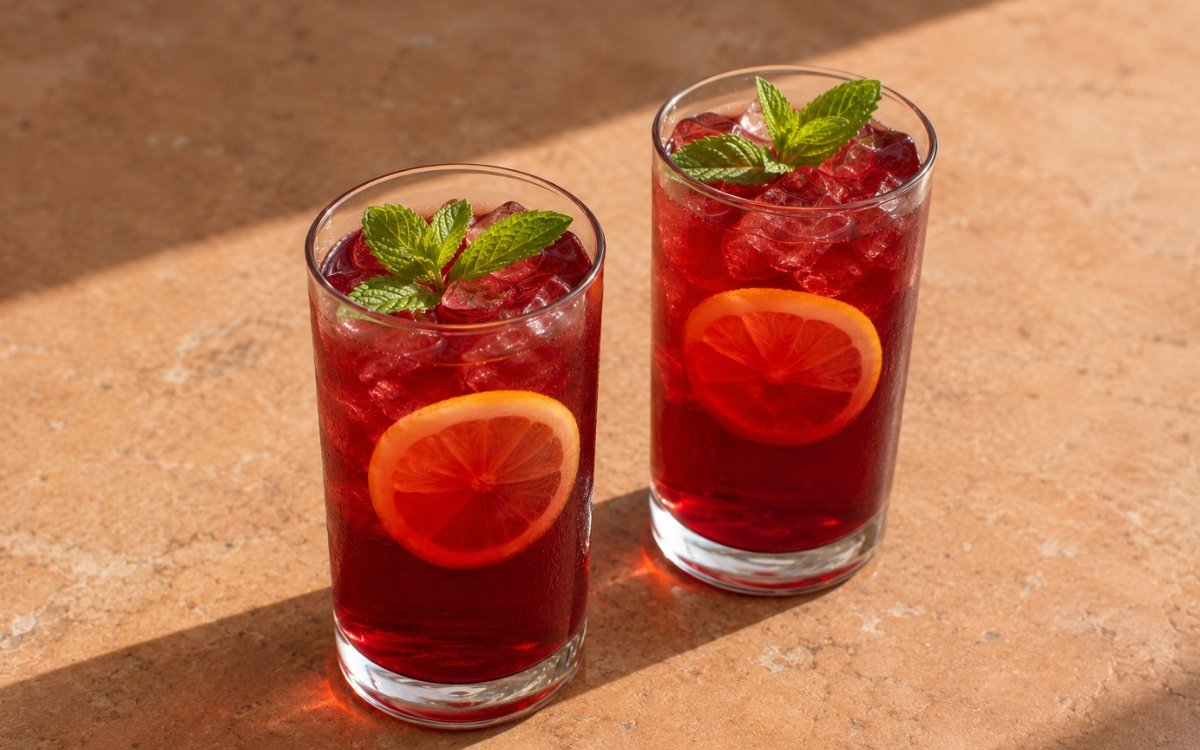
- After the 1–2 hour chill, taste once more and make final adjustments: additional honey if the tartness is more aggressive than preferred after chilling; additional lemon juice if additional brightness is needed; a small additional amount of orange blossom water only if the floral note is genuinely too subtle to detect — add in drops rather than tsp at this stage. Fill glasses with plenty of ice. Pour the chilled cooler over the ice. Garnish with a lemon slice and a few fresh mint leaves. Serve immediately.
Notes
The orange blossom water dosage warning deserves specific emphasis in the extended notes because it is the easiest way to ruin this preparation and because the error is not intuitive. Orange blossom water smells specifically beautiful from the bottle and the instinctive response is often to add more. At 1 tsp in 1.65 litres — approximately 0.5ml per serving — it is present below the detection threshold for most people as a specifically identifiable flavour while meaningfully amplifying the hibiscus's floral character. This is the correct functional role. At 1 tbsp in the same volume it is detectable and beginning to be prominent; at 2 tbsp it becomes the dominant character and the drink tastes specifically of orange blossom water over ice rather than specifically of hibiscus tea.
The hibiscus-mint-orange-blossom combination is specifically Mediterranean and Middle Eastern in its aromatic profile — hibiscus is a foundational drink ingredient throughout the Middle East and North Africa; orange blossom water appears in Moroccan, Lebanese, and Egyptian preparations; fresh mint is present throughout the same tradition. The combination resonates together because it represents a historically coherent aromatic tradition.