Ingredients
Method
Brew the White Tea Base
- Heat the 1.4 litres of water to 75–80°C. Add the 7 white tea bags and steep for 3–5 minutes. Remove without squeezing. Allow to cool until just warm. The 75–80°C temperature and 3–5 minute window is the same applied throughout this collection's white tea preparations — the temperature range specifically below the threshold where white tea's pleasant floral, lightly tannic aromatic compounds give way to harsh astringency. Seven bags for 1.4 litres produces a base sufficiently structured to remain present against the raspberry purée's vivid fruitiness — fewer bags would produce a white tea character too delicate to be detected in the combined drink.
Dissolve the Honey While Warm
- Stir the 3 tbsp of honey into the slightly warm white tea until completely dissolved. The warm tea's temperature allows full dissolution without any additional heating; the honey distributes evenly through the full volume of the base. Allow to cool completely to room temperature.
Blend the Raspberries with Lemon and Water
- Add the 125–150g of fresh raspberries, 45ml of fresh lemon juice, and 250ml of cold water to a blender. The raspberries are blended with lemon juice and water rather than with the cooled white tea — a specific choice that reflects raspberry's different properties compared to strawberry in this collection. Raspberry's intensely vivid anthocyanin pigmentation and high natural acidity mean the blend produces a specifically clean, brightly coloured purée in the lemon-and-water medium without the tea's tannins initially interfering. The resulting clean purée is then added to the white tea in the pitcher where the integration occurs naturally. Blend at high speed for 30–40 seconds until completely smooth. Strain through a fine-mesh sieve into the large pitcher, pressing gently on the raspberry seeds and pulp to extract the maximum vivid juice while keeping the strained liquid specifically clean and light. The seed-free result has a more delicate, more refined texture than an unstrained version; gentle pressing ensures the minimal amount of bitter seed-compound extraction. Discard the strained solids.
Combine the Tea and Raspberry Base
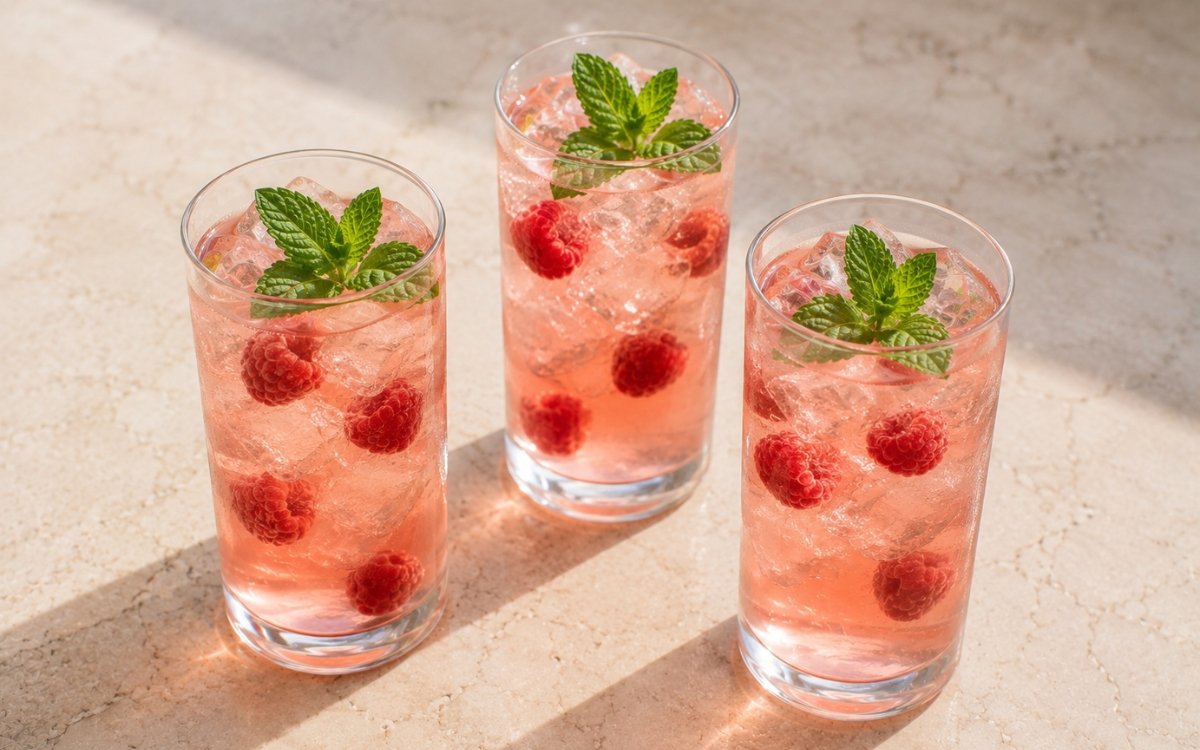
- Add the cooled white tea to the pitcher with the strained raspberry juice. Stir until evenly combined. The combined mixture should be a pale, vivid pink — the white tea's clear, slightly amber character lightening the raspberry's deeper red into the specific blush-pink that makes this drink visually distinctive.
Cold-Infuse the Mint
- Lightly clap the fresh mint leaves between your palms and add to the combined pitcher. Cover and refrigerate for 10–15 minutes — the same shortened window applied in the Light Hibiscus Mint Cooler for the same reason: raspberry's natural citric and malic acid content creates a moderately acidic medium where mint's grassy shift occurs more rapidly than in neutral preparations. At 10 minutes the mint's cool, clean aromatic freshness is cleanly present as the background note that amplifies the drink's refreshing quality; at 15 minutes the balance is at its maximum. Always remove by the 15-minute mark. Strain out all mint leaves and discard. Continue chilling for 1–2 hours until completely cold.
Adjust and Serve
- After chilling, taste once more and adjust if needed: additional honey if the raspberry's natural acidity is more aggressive than desired; additional lemon juice if brightness is needed. Fill glasses with ice. Pour the chilled raspberry mint white tea over the ice. Add several fresh raspberries to the ice surface and a few fresh mint leaves. Serve immediately.
Notes
The raspberry-and-white-tea pairing works for the same fundamental reason that defines this entire collection's approach to combining tea bases with fruit: the tea provides structure and a specific aromatic register that the fruit alone lacks, while the fruit provides the vivid, assertive flavour that makes the tea interesting as a cold drink. White tea's specifically delicate, soft, slightly honeyed character is particularly appropriate for raspberry rather than black or green tea — raspberry's natural assertiveness is intense enough to be clearly present against white tea's subtlety while the white tea's tannic softness specifically complements the raspberry's tartness in a way that wouldn't occur with more robustly tannic teas.
Mint's role in this preparation is the same background-freshness amplifier it plays across every mint-containing preparation in this collection: present as the aromatic layer that makes the drink feel specifically cooler and more refreshing without any overt mint flavour. The clap rather than muddle technique is more important here than in most preparations because the freshness-amplifying quality of mint is specifically its most volatile surface aromatic compounds — the ones that clapping releases without damaging the leaves into releasing chlorophyll and grassy back-notes.