
Hibiscus White Iced Tea
Hibiscus White Iced Tea is the most straightforward expression of the hibiscus-and-white-tea pairing in this collection — no peach syrup, no ginger, no orange juice bridging anything, just white tea and hibiscus alone, sweetened lightly with honey. That simplicity makes precision matter more rather than less: with nothing else to round out or distract from a misstep, both the white tea brewing and the hibiscus infusion need to land correctly on their own. The white tea brews at the same careful 75–80°C used throughout this collection’s white tea preparations, since boiling water strips away its delicate floral character before the hibiscus even has a chance to layer on top of it. Hibiscus itself is one of the most potent botanicals used in this entire collection — a few extra minutes of contact pushes it from brightly tart into harshly acidic, and there’s no straightforward way to correct that once it’s happened. The quantity is given as a range specifically so the floral character can be tuned to preference: two tablespoons for a lighter, gentler tea, three for a sharper, more deeply coloured one. The result is bright, refreshing, delicately tart, and lightly sweet — elegant, cooling, and balanced.

Prep Time : 15 min
Steep Time : 3-4 min
Servings : 8
15 min
3-4 min
8
Ingredients
For the White Tea Base
• 1.65 litres water
• 6 white tea bags — Pai Mu Tan (White Peony) — this one on Amazon
• 2–3 Tbsp mild honey — to taste; start with 2 Tbsp — this one on Amazon
For the Hibiscus Infusion
• 2–3 Tbsp dried hibiscus flowers — 2 Tbsp for a lighter floral tea, 3 Tbsp for a sharper, deeper colour — this one on Amazon
For Serving
• Ice
• Thin strips of fresh lemon peel
• Lemon slices or fresh mint — optional
This post may contain affiliate links. As an Amazon Associate I earn from qualifying purchases, at no additional cost to you.
Directions
- Brew the White Tea
Heat the water to 75–80°C — do not boil. Boiling water strips white tea of its delicate floral sweetness before the hibiscus is even added, and that loss can’t be recovered later. Add the white tea bags and steep for 3–4 minutes. Remove the bags gently without squeezing, since squeezing releases the most concentrated, least pleasant compounds held inside them. - Infuse the Hibiscus
Add the dried hibiscus flowers to the warm white tea and steep for 4–6 minutes, just until a pale ruby colour and gentle tartness develop. Use 2 tablespoons for a lighter, more floral result, or 3 tablespoons if you want a sharper tea with deeper colour. Hibiscus is one of the most potent botanicals used in this collection — a few extra minutes pushes the flavour from brightly tart into harshly acidic and one-dimensional, with no easy way back. - Strain Promptly
Strain out the hibiscus promptly the moment the colour and tartness are where you want them. Do not leave it in longer hoping for more depth — extended contact turns the tea harsh rather than richer, and that shift happens faster than the small quantity of flowers might suggest. - Sweeten While Warm
While the tea is still warm, stir in 2 tablespoons of honey until fully dissolved, taking advantage of the warmth for even integration. Taste and add up to 1 additional tablespoon only if needed. The tea should be lightly sweetened, not sweet — hibiscus’s own tartness is meant to remain clearly present. - Chill
Let the tea cool to room temperature, then refrigerate for 1–2 hours until fully cold and balanced. The cold rest is what lets the white tea’s floral quietness and the hibiscus’s tartness settle into a single cohesive character rather than sitting as two separate impressions. - Serve
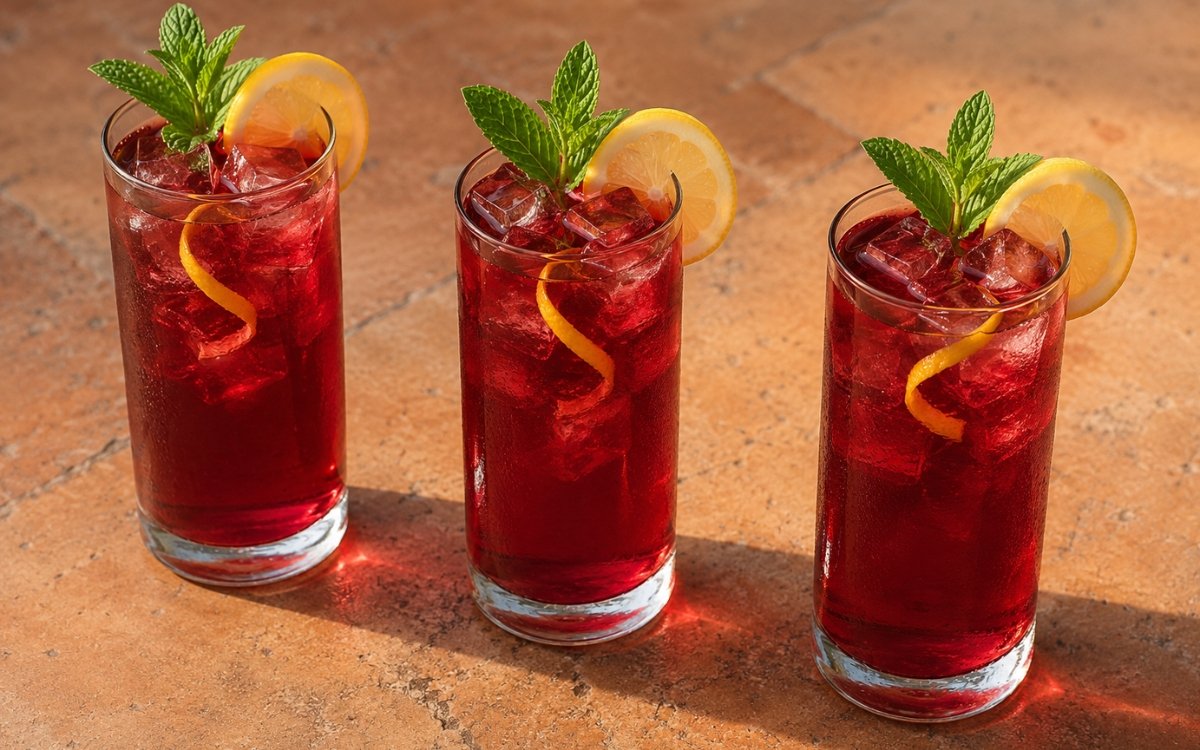
Fill glasses with ice. Pour over the chilled hibiscus white iced tea and garnish with a thin strip of fresh lemon peel, a lemon slice, or fresh mint if desired. Serve cold, lightly tart, floral, and clean.
*Notes :
- Do not garnish the drink itself with dried hibiscus flowers unless you remove them before drinking. They look pretty floating on the surface but are unpleasant to sip on directly, and left in the glass they continue infusing into whatever’s left of the drink.
- If the hibiscus starts tasting too sharp, do not add more honey immediately. First dilute slightly with a splash of cold water, then adjust sweetness only if needed. Honey on top of an over-extracted hibiscus tends to mask the acidity briefly rather than actually balance it, and the result often still tastes sharp underneath.
- Hibiscus intensity varies between brands and batches, so the 4–6 minute window is a starting point rather than an absolute. The colour is a useful secondary indicator — a clear, deep ruby suggests a well-timed infusion, while a duller or browner tone suggests it’s gone slightly too far.
Why This Recipe Works
This recipe works because it asks very little of itself beyond getting two things right: white tea brewed cleanly at the correct low temperature, and hibiscus pulled the moment its tartness and colour reach the right point.
With no syrup or juice to fall back on, both steps carry more weight than they would in a more layered preparation, and the result rewards that attention with a tea that’s genuinely bright and clean rather than muddled.
Ingredient Breakdown
White Tea Brewed at 75–80°C for 3–4 Minutes
The quiet floral foundation — protected from the bitterness boiling water would introduce.
Dried Hibiscus, 4–6 Minutes
he defining tart, ruby-coloured character — potent enough that a few extra minutes shifts it from bright to harsh.
2 vs 3 Tablespoons
The tunable intensity — a lighter floral tea or a sharper, more deeply coloured one, by preference.
2–3 Tbsp Mild Honey
The light sweetener — present to round the tartness, not to erase it.
Flavor Structure Explained
This Hibiscus White Iced Tea follows a restrained balance model:
- Delicate tea core (white tea)
- Bright floral tartness (hibiscus)
- Gentle balancing sweetness (honey)
- Vivid botanical character (hibiscus infusion)
- Clean refreshing finish (tea-hibiscus harmony)
White tea defines the foundation with soft floral notes and a quiet, refined structure that supports the drink without competing for attention. Hibiscus provides the defining character, contributing vivid ruby color, bright tartness, and floral depth that shape both the appearance and flavor of the preparation. Its clean acidity gives the drink precision and freshness while allowing the tea’s delicate qualities to remain present beneath it. Honey lightly smooths the sharper edges, adding balance without diminishing the hibiscus’s naturally vibrant tartness or turning the drink noticeably sweet. The result is an iced tea built around clarity and restraint, where delicate white tea and bright hibiscus remain in elegant balance.
Common Mistakes to Avoid
- Boiling the Water for White Tea – Destroys its delicate floral sweetness before the hibiscus is even added. Always 75–80°C.
- Leaving the Hibiscus In Too Long – Turns harsh and overly acidic within just a few extra minutes. Always strain promptly.
- Adding More Honey to Fix Over-Extracted Hibiscus – Masks rather than corrects the sharpness. Always dilute with water first.
- Garnishing With Loose Dried Hibiscus Flowers Left in the Glass – Continues infusing and is unpleasant to sip on. Always remove before drinking, or use sparingly as a floating garnish you intend to discard.
Variations
With Peach
Add a light peach syrup to the finished base for a softer, fruitier direction, as in the Hibiscus Peach White Iced Tea.
With Ginger and Orange
Add fresh ginger alongside the hibiscus and finish with orange juice for a warmer, more complex result, in the spirit of the Hibiscus Ginger Orange White Tea Cooler.
With Mint
Add a small handful of lightly clapped fresh mint during the final chill for a cooler, brighter finish.
Sparkling Version
Build the tea at a slightly higher concentration, chill, and top with cold sparkling water just before serving.
Storage & Make-Ahead
Brewed and sweetened tea, before chilling, can be refrigerated for up to 2 days.
Once assembled, the tea is best enjoyed within 24 hours, when the hibiscus color is at its most vibrant and its bright, tart flavor is at its freshest.
Frequently Asked Questions
Why does hibiscus need to be removed so promptly compared to other botanicals?
Hibiscus is one of the most potent infusion ingredients used in this entire collection — its tartness develops quickly and continues intensifying with contact, shifting from bright and refreshing to harshly sour within just a few extra minutes. Unlike a slightly over-steeped herb, there’s no straightforward way to correct hibiscus once it’s gone too far.
Why dilute with water instead of adding more honey if the tea tastes too sharp?
Extra honey tends to sit on top of an over-extracted hibiscus tea rather than genuinely balancing it — the sharpness is often still detectable underneath the added sweetness. A splash of cold water actually reduces the concentration of the tart compounds, which is a more direct fix than trying to sweeten past the problem.
Can I use more hibiscus for an even stronger tea?
You can, but stay within a reasonable range — beyond 3 tablespoons in this volume, the infusion time needs to shrink considerably to avoid harshness, and the white tea’s own delicate character risks disappearing entirely behind the hibiscus.
What other hibiscus and white tea preparations share this approach?
The Hibiscus Peach White Iced Tea shares this same white tea and hibiscus foundation with a light peach syrup added for softness and fruit depth. The Hibiscus Ginger Orange White Tea Cooler shares the hibiscus base with ginger’s warmth and orange juice’s bridging sweetness for a more complex, layered result. The Pear White Iced Tea shares the same gentle, low-intervention white tea philosophy with pear’s soft fruit sweetness in place of hibiscus’s tartness.
Nutrition Facts
( per serving )
Calories
~25 kcal
Protein
0 g
Fat
0 g
Carbs
6 g
Calories
~25 kcal
Protein
0 g
Fat
0 g
Carbs
6 g
Related Recipes
Related Recipes

Cold Brew Green Tea
Green tea cold brewed 8–12 hours in cold filtered water — lightly crushed cardamom and lemon zest infused 8–12 minutes, honey loosened in warm water. Ultra-smooth and aromatic.
Southern Sweet Tea (Light Version)
Black tea at full boil for 5 minutes, white sugar dissolved into hot brew immediately — cooled, chilled 1–2 hours. Classic Southern character, lighter and more drinkable.
Fresh Citrus Green Iced Tea
Green tea at 75–80°C for 2–3 minutes, thin peel-on citrus slices cold-infused 15–20 minutes — strained promptly, honey, chilled. Light, bright, and clean.



You might also like
You might also like
Fresh Watermelon Lemonade
Watermelon blended and strained cold, simple syrup separate — lemon juice, zest, and salt added cold, chilled. Vivid pink, crisp, and hydrating.
Lemongrass Ginger White Iced Tea
White tea at 75–80°C for 3–4 minutes, lemongrass bruised and infused with ginger 8–10 minutes — mild honey, chilled. Bright, citrus-herbal, gently warming.
Peach White Tea Spritzer Mocktail
Peaches simmered in thin slices, white tea steeped at 70–85°C with thyme — honey dissolved while warm, topped with club soda. Light, floral, and refined.
Hibiscus White Iced Tea
Ingredients
Method
- Heat the water to 75–80°C — do not boil. Boiling water strips white tea of its delicate floral sweetness before the hibiscus is even added, and that loss can’t be recovered later. Add the white tea bags and steep for 3–4 minutes. Remove the bags gently without squeezing, since squeezing releases the most concentrated, least pleasant compounds held inside them.
- Add the dried hibiscus flowers to the warm white tea and steep for 4–6 minutes, just until a pale ruby colour and gentle tartness develop. Use 2 tablespoons for a lighter, more floral result, or 3 tablespoons if you want a sharper tea with deeper colour. Hibiscus is one of the most potent botanicals used in this collection — a few extra minutes pushes the flavour from brightly tart into harshly acidic and one-dimensional, with no easy way back.
- Strain out the hibiscus promptly the moment the colour and tartness are where you want them. Do not leave it in longer hoping for more depth — extended contact turns the tea harsh rather than richer, and that shift happens faster than the small quantity of flowers might suggest.
- While the tea is still warm, stir in 2 tablespoons of honey until fully dissolved, taking advantage of the warmth for even integration. Taste and add up to 1 additional tablespoon only if needed. The tea should be lightly sweetened, not sweet — hibiscus’s own tartness is meant to remain clearly present.
- Let the tea cool to room temperature, then refrigerate for 1–2 hours until fully cold and balanced. The cold rest is what lets the white tea’s floral quietness and the hibiscus’s tartness settle into a single cohesive character rather than sitting as two separate impressions.
- Fill glasses with ice. Pour over the chilled hibiscus white iced tea and garnish with a thin strip of fresh lemon peel, a lemon slice, or fresh mint if desired. Serve cold, lightly tart, floral, and clean.