Ingredients
Method
Brew the White Tea
- Heat the 1.65 litres of water to 75–80°C — do not boil. Boiling water strips white tea of its natural floral sweetness and introduces an astringency that amplifies ginger's sharpness. No thermometer? Boil, then rest uncovered for 4–5 minutes. Add the 6 white tea bags and steep for 3–4 minutes. Remove gently without squeezing.
Prepare the Lemongrass
- Remove and discard the dry, papery outer layers until you reach the pale, fragrant inner core. Trim the woody top, leaving only the lower 15–18cm. Lay each stalk flat and bruise firmly along its length with the back of a heavy knife — press hard enough to crack the structure and release the oils. Slice into 5–6cm segments. Do not chop — chopping releases woody, bitter cellulose compounds that bruising carefully avoids.
Infuse Lemongrass and Ginger
- Add the bruised lemongrass segments and ginger slices to the lukewarm white tea. Infuse for 8–10 minutes, tasting at the 8-minute mark. Look for a clean citrus-herbal aroma from the lemongrass and a gentle warmth from the ginger — present at the back of the palate, not assertive at the front. Strain both out promptly once that balance is reached.
Sweeten While Warm
- Stir in 2 tablespoons of mild honey while the tea is still warm. Honey must dissolve in warm liquid to distribute evenly — cold liquid leaves it pooled at the bottom. Taste carefully. Add up to 1 additional tablespoon only if the ginger feels sharp or the overall profile tastes flat. Allow to cool fully to room temperature before chilling.
Chill and Serve
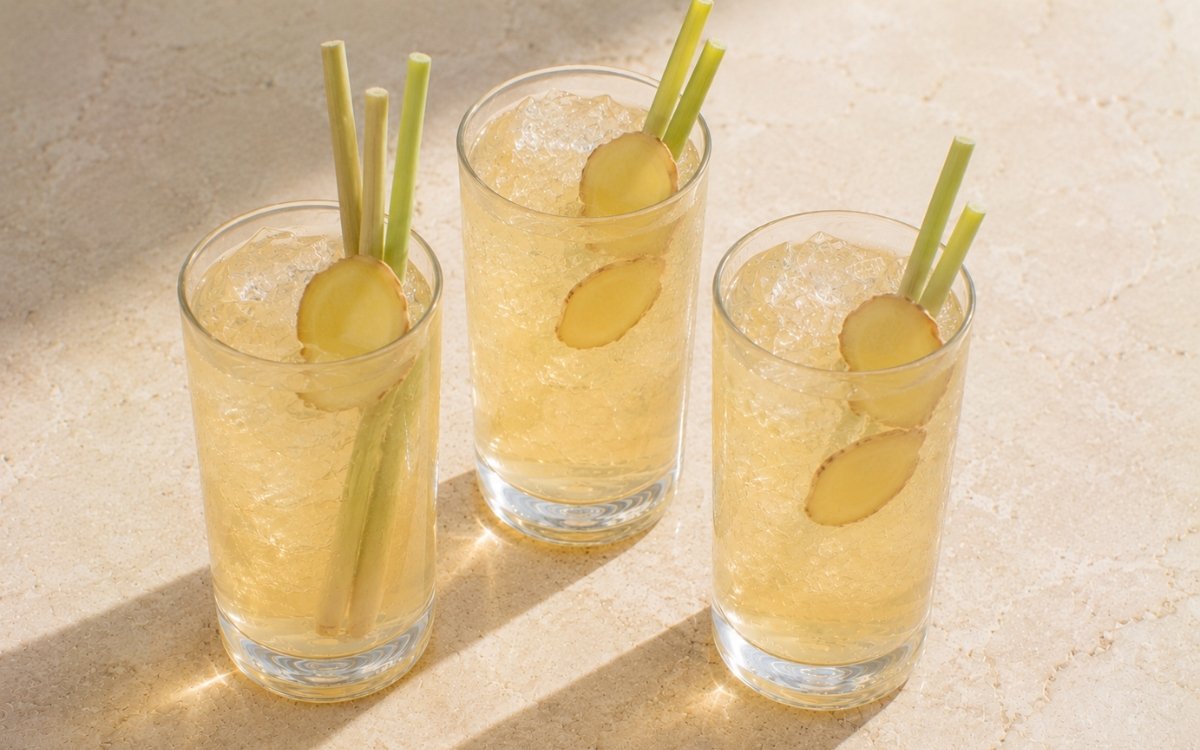
- Refrigerate for 1–2 hours until completely cold. Full chilling is essential — the lemongrass aroma brightens, ginger warmth resolves into a clean background note, and honey integrates invisibly. Fill glasses with ice, pour, and garnish with a short lemongrass segment and an optional thin ginger slice. Serve immediately.
Notes
Lemongrass bruising — not chopping — is the technique that determines whether the infusion tastes bright and citrusy or woody and flat. The essential oils are locked inside the fibrous stalk structure and need mechanical force to release cleanly. Bruise firmly with the back of a knife along the full length before slicing into segments.
Ginger quantity in this recipe is deliberately conservative. Six to eight thin slices infused for 8–10 minutes in warm white tea produces gentle warmth — felt at the finish of each sip, not identified as spice. If it burns, the slices were too thick or the infusion ran too long. Reduce contact time before adjusting quantity.
Mild honey is non-negotiable for keeping the aromatic profile clean and focused. Acacia or clover honey integrates without competing. Strongly flavoured varieties — buckwheat, raw wildflower — assert themselves against the lemongrass and muddy the drink's precise, elegant character.
White tea must remain a detectable presence. If it has completely disappeared behind the botanicals, either the infusion ran too long or the honey quantity was excessive. Pai Mu Tan has enough natural body to hold its own — lighter varieties like Silver Needle may not.