
Blueberry Lemon Thyme Spritzer Mocktail
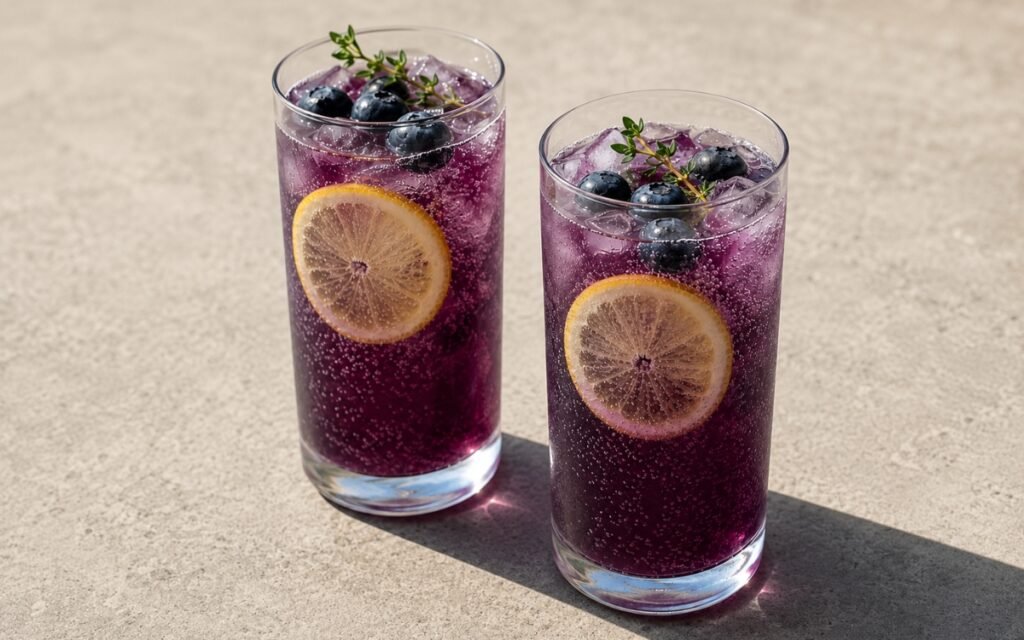
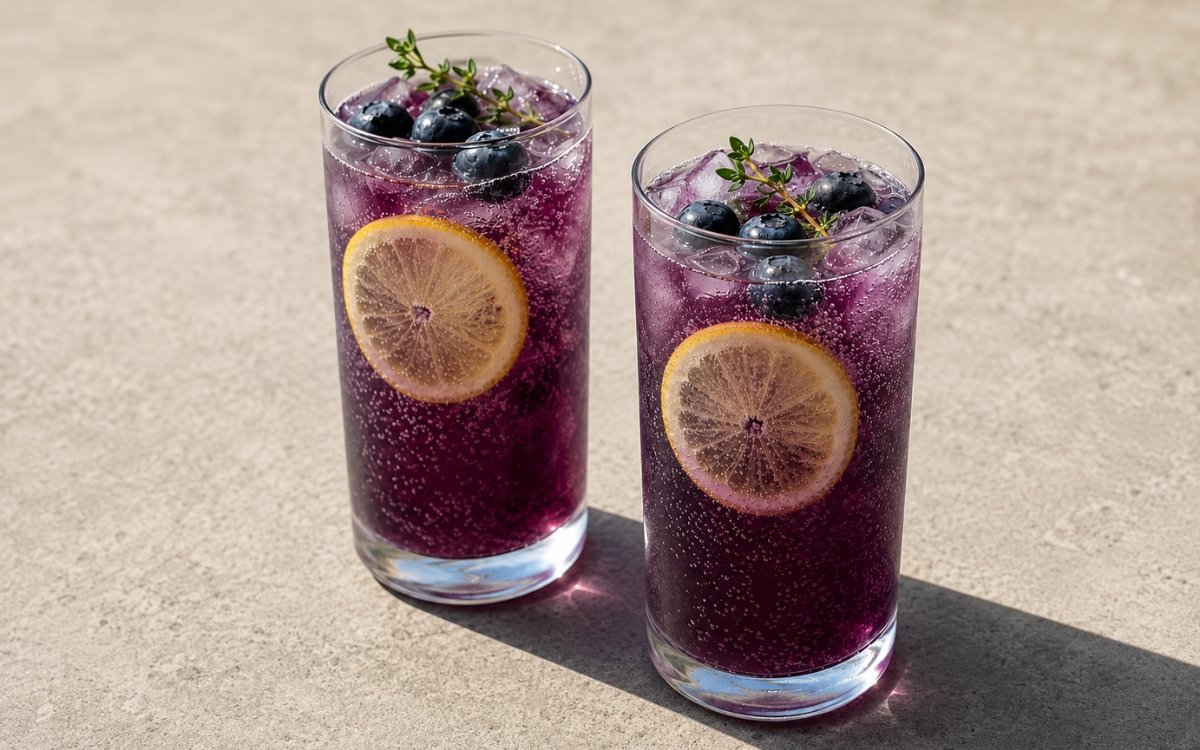
Thyme infused off heat first — removed before the blueberries enter — because blueberry’s primary anthocyanin pigments and the thyme’s thymol both extract most efficiently under different conditions: thyme needs the hot water’s temperature at steeping to bloom its volatile aromatics into the surrounding liquid, but the heat that extracts thyme also risks over-extracting blueberry’s more bitter tannin compounds if they are present during the same hot stage. The sequence — thyme out, blueberries in — produces a base where the thyme’s herbal character is cleanly integrated into the water that then carries the blueberry’s colour and sweetness without the interference of simultaneous extraction. The blueberries crushed directly into the still-hot thyme infusion, the residual heat softening the skins and releasing the deep purple juice without applying additional cooking. Honey dissolved in the same hot infusion. Lemon zest infusing alongside the blueberries in the cooling liquid. Lemon juice added cold after straining. The specific deep purple that results in the glass, with fresh thyme sprigs, blueberries, and lemon visible against the ice.
Prep Time : 10 min
Cook Time : 20 min
Servings : 4
10 min
20 min
4
Ingredients
For the Blueberry-Thyme Base
• 150ml water
• 6 sprigs fresh thyme
• 120g blueberries — fresh or frozen
• 80g honey — this one on Amazon
• Zest of 1 lemon
• 45ml fresh lemon juice — added after straining
• Pinch of fine sea salt
For the Garnish
• 4 thin lemon slices
• 12 fresh blueberries — 3 per glass
• 4 small fresh thyme sprigs
This post may contain affiliate links. As an Amazon Associate I earn from qualifying purchases, at no additional cost to you.
Directions
- Build the Thyme Infusion
Bring the 150ml of water to a gentle simmer in a small saucepan over medium heat. Remove from heat the moment simmering begins. Add the 6 fresh thyme sprigs immediately and cover the saucepan. Allow to infuse covered for 10 minutes. The thyme’s volatile aromatic compound — primarily thymol, a phenolic compound with specifically warm, slightly medicinal, herbal character — requires the hot water’s temperature to bloom and release at meaningful concentration. At cold temperature the release is too slow for a 10-minute infusion to be effective. The covered saucepan traps any thymol and other volatile aromatics that would otherwise escape as steam during the steeping period. The 10-minute window is calibrated to extract thyme’s pleasant herbal warmth without developing the more assertive, slightly camphor-adjacent character that over-steeped thyme produces. Fresh thyme is specifically preferred over dried in this preparation — fresh thyme’s aromatic oils are more volatile and more specifically pleasant in a drink context than dried thyme’s more concentrated, slightly more medicinal character. After 10 minutes, remove and discard all the thyme sprigs from the infusion. It is specifically important to remove the thyme completely before adding the blueberries — any thyme remaining in the liquid during the blueberry infusion would continue extracting throughout the cooling period, developing a more prominent herbal note than intended. - Add Blueberries, Honey, Zest, and Salt to the Hot Infusion
While the thyme infusion is still hot — removed from heat but still steaming — add the 80g of honey, 120g of blueberries, the zest of 1 lemon, and a pinch of fine sea salt. Stir until the honey has dissolved completely into the hot liquid — the residual heat is sufficient to dissolve honey without any additional heat, and no return to the burner is necessary or beneficial. Using the back of a large spoon or a potato masher, crush the blueberries thoroughly into the hot infusion — pressing firmly on each berry until the skins split and the deep purple juice releases fully. Work through all 120g until the mixture is a vivid, deep purple and no intact blueberries remain. The blueberries are crushed into the hot thyme infusion rather than being cooked directly over heat for the same reason pears were added at the lowest possible heat in the pear ginger sparkler — blueberry’s aromatic volatile compounds (including various fruity esters and the specific sweet-fruit character of ripe blueberries) are more heat-sensitive than their robust anthocyanin pigments and are preserved better at the declining temperature of an off-heat infusion than at continued simmering. The hot infusion provides sufficient warmth to soften the skins completely and extract full colour and flavour through the crushing while the temperature declines from the moment the burner is removed. Allow the crushed blueberry and lemon zest mixture to infuse in the hot liquid for 10 minutes, stirring occasionally. The deep purple deepens further during this window as the lemon zest’s aromatic oils infuse simultaneously and the residual temperature continues the gentle extraction. - Strain, Add Lemon Juice, and Chill
Strain the mixture through a fine-mesh sieve over a clean jug, pressing firmly on the blueberry skins, pulp, and lemon zest solids to extract as much of the vivid purple liquid as possible. Blueberry has a relatively low pectin content compared to cherry or kiwi — the pressing is easier and produces less resistance. Press until the solids feel relatively dry. Discard all solids. Stir in the 45ml of fresh lemon juice after straining. The cold lemon juice addition is consistent with the standard practice applied throughout this collection — preserving the volatile aromatic character of the fresh juice. The 45ml quantity is higher than in most preparations in this collection because blueberry’s natural sweetness requires a more pronounced acid counterpoint than more tart fruits. Taste immediately: the base should be vivid, slightly sweet from the honey and blueberry, specifically herbal-warm from the thyme, and lifted by the lemon. It should taste slightly more concentrated than the intended final drink — the club soda and ice will dilute it at serving. Transfer to the refrigerator and chill completely — a minimum of 30 minutes. - Assemble and Serve
Fill four tall glasses generously with ice cubes. Divide the chilled blueberry-thyme base evenly among the glasses — approximately 70–75ml per glass. Stir briefly against the ice. Top each glass with approximately 125ml of chilled club soda, poured gently down the inner side of the glass. Stir once or twice gently. Slip a thin lemon slice into each glass, pressing it against the ice so the yellow is visible through the purple drink. Add 3 fresh blueberries to the ice surface of each glass. Tuck a small fresh thyme sprig between the blueberries with its leaves extending above the rim — the sprig providing a final aromatic impression as the drinker lifts the glass. Serve immediately.
*Notes :
- Frozen blueberries work equally well in this preparation and often produce a more intensely coloured base than fresh ones because the freezing process pre-ruptures the cell walls, releasing the anthocyanin-rich juice more readily during crushing. If using frozen blueberries, add directly from frozen — the hot thyme infusion will thaw them within 30 seconds of contact, and the additional initial cooling of the infusion by the frozen berries is negligible.
- The thyme-blueberry combination is one of the more unusual pairings in this collection and one that benefits from understanding the flavour chemistry: thyme’s thymol provides a specific warm, slightly herbal, slightly camphor-adjacent note that resonates with blueberry’s own subtle complexity in a way that most herbs do not. Mint would overwhelm blueberry’s gentler character; basil would compete; thyme’s softer, warmer, more specific herbal warmth sits as a barely-detectable aromatic background that makes the finished drink more interesting than blueberry-lemon-soda alone without being identifiable as a prominent herb flavour.
Why This Mocktail Works
This recipe works because the thyme is infused and removed before the blueberries enter — allowing each to extract under the conditions most appropriate to its specific character without interference.
The blueberries are crushed into the off-heat infusion rather than cooked, preserving their fresh aromatic character while fully extracting their vivid colour. And the lemon juice is added cold after straining for its preserved fresh acidity.
Ingredient Breakdown
Thyme Infused Off Heat, Removed Before Blueberries
The sequential extraction technique — thyme’s volatile aromatics extracted at hot temperature; removed to prevent over-extraction; blueberries entering clean thyme-flavoured water for independent colour and fruit extraction.
Blueberries Crushed Into Hot Off-Heat Infusion
The temperature-protected extraction — residual heat softening skins and releasing colour and flavour; declining temperature preserving fresh aromatic character.
Honey (Dissolved in Hot Infusion)
The floral sweetener — its floral warmth complementing both the thyme’s herbal character and the blueberry’s sweet fruitiness.
Lemon Zest (With Blueberries in Cooling Infusion) and Lemon Juice (Cold After Straining)
The dual citrus approach — zest contributing its fat-soluble aromatic oils during the cooling infusion; juice added fresh for immediate bright acidity.
Pinch of Fine Sea Salt
The sub-threshold amplifier — heightening the blueberry’s sweetness and the thyme’s herbal warmth below the tasting threshold.
Flavor Structure Explained
This Blueberry lemon thyme spritzer follows a layered balance model:
- Sweet berry core (blueberry)
- Warm herbal depth (thyme)
- Bright citrus lift (lemon juice, zest)
- Gentle floral sweetness (honey)
- Crisp sparkling finish (club soda)
Blueberries define the foundation with soft sweetness, subtle jam-like richness, and deep berry character that carry through every sip. Thyme adds a restrained herbal note that sits in the background, contributing warmth and complexity without overtaking the fruit. Lemon provides the essential contrast, adding clean acidity and aromatic citrus oils that brighten the darker berry flavors. Honey rounds the profile with floral sweetness that smooths the sharper edges of the lemon and complements the blueberries naturally. Club soda finishes the structure with lively carbonation, creating a refreshing lift that keeps the drink light, vibrant, and easy to drink despite its layered flavor profile.
Common Mistakes to Avoid
- Not Removing the Thyme Before Adding Blueberries – Thyme left in during the blueberry infusion and subsequent cooling continues extracting into an increasingly cool liquid, developing a more medicinal character than intended. Always remove completely before adding the blueberries.
- Not Crushing the Blueberries Thoroughly – Intact or partially crushed blueberries in the infusion produce a pale, under-extracted base. Always crush every berry until no intact skins remain.
- Adding Lemon Juice While Still Warm – Warm lemon juice loses its fresh aromatic character. Always wait until fully strained before adding the cold lemon juice.
- Not Pressing the Solids Firmly During Straining – Blueberry solids retain a proportion of the vivid colour. Always press firmly.
- Over-Steeping the Thyme Beyond 10 Minutes – Extended thyme steeping develops a more camphor-adjacent, medicinal character. Always remove at the 10-minute point.
Variations
With Lavender
Add 5g of food-grade dried lavender to the saucepan alongside the thyme — removed with the thyme after the 10-minute infusion. The lavender’s specifically sweet, floral, slightly herbal character alongside the thyme produces a more complex botanical backdrop for the blueberry.
With Rosemary
Replace the thyme with 3 small rosemary sprigs — infused for 8 minutes only (rosemary’s stronger aromatics extract more rapidly and assertively than thyme). The rosemary’s pine-adjacent herbal depth alongside blueberry and lemon produces a specifically more assertive herbal direction.
With Vanilla
Add ¼ tsp of pure vanilla extract to the finished strained base before chilling — the vanilla’s aromatic sweetness specifically amplifies blueberry’s jammy character.
Frozen Version
Pour the strained base (without club soda) into ice lolly moulds and freeze for 4 hours — the vivid deep purple colour produces a visually striking ice lolly with concentrated blueberry-thyme-lemon flavour.
Storage & Make-Ahead
Blueberry-thyme base can be refrigerated in a sealed jar for up to 4 days. Its deep purple color remains vibrant thanks to the high concentration of anthocyanins in the blueberries. During storage, the thyme flavor softens slightly and becomes a more integrated herbal background note. For the best balance of freshness and flavor, it is best used within 48 hours of preparation.
Once assembled, the drinks are not suitable for storage and should be served immediately.
Frequently Asked Questions
Why infuse the thyme in water first rather than adding it directly with the blueberries?
Thyme’s aromatic compounds require hot water to extract at meaningful concentration in a 10-minute window. Blueberry’s most delicate aromatic character is better preserved in the declining temperature of an off-heat infusion. By infusing the thyme in hot water first and then removing it, each ingredient is treated at the temperature most appropriate to its specific extraction characteristics — and the cleaned thyme-infused water becomes the medium for the blueberry’s colour and flavour.
Why remove the thyme before adding the blueberries?
Thyme remaining in the liquid during the blueberry infusion and subsequent cooling continues extracting throughout the cooling period, developing progressively towards the more camphor-adjacent, medicinal character that over-steeped thyme produces. Removing it ensures a controlled, pleasant herbal background note rather than a dominant herb flavour.
Why crush the blueberries into the off-heat infusion rather than cooking them?
Blueberry’s volatile aromatic compounds are more heat-sensitive than their robust anthocyanin pigments. The residual heat of the off-heat thyme infusion (approximately 75–80°C at the moment the thyme is removed) is sufficient to soften the skins and extract the full colour and juice — while the declining temperature preserves the fresh aromatic character that continued cooking would diminish.
Can I use frozen blueberries?
Yes — frozen blueberries often produce an even more vividly coloured base because the freezing process pre-ruptures the cell walls, releasing the anthocyanin pigments more readily during crushing. Add directly from frozen — they thaw within seconds in the hot infusion.
What other deep berry mocktails share a similar flavour direction?
The Blackberry Mojito Mocktail shares the same deep berry colour and bright citrus structure — blackberry rather than blueberry with mint instead of thyme, and a lime-verjus base rather than lemon. The Lavender Blueberry Iced Tea shares the exact same primary fruit — blueberry — in a non-sparkling format where lavender rather than thyme is the herbal partner and black tea provides the depth; a longer, cooler, more complex preparation built on the same sweet-herbal-blueberry foundation.
Nutrition Facts
( per serving )
Calories
~90 kcal
Protein
0 g
Fat
0 g
Carbs
23 g
Calories
~90 kcal
Protein
0 g
Fat
0 g
Carbs
23 g
Related Recipes
Related Recipes

Orange Blossom Fizz Mocktail
Fresh citrus and honey with orange blossom water over club soda — floral and pale gold.
Cucumber Elderflower Tonic Mocktail
Elderflower and cucumber sweetness over tonic water — nearly clear, intensely aromatic, and elegant.
Shirley Temple Tonic
Pomegranate grenadine with ginger ale and citrus zest delivers a bright, tart, grown-up take on a nostalgic classic.
You might also like
You might also like
Blueberry Black Iced Tea
Black tea at 90–95°C for 2½–3 minutes, lemon peel infused cold, blueberries gently fork-mashed and lightly strained — added gradually, chilled. Bright and tea-forward.
Basil Blueberry Sparkling Herbal Cooler
Concentrated white tea, basil blended into blueberries and strained — combined with the tea, finished with gentle club soda, chilled. Herbal and lively.
Classic Iced White Tea
White tea at 75–80°C for 3–4 minutes, honey dissolved while slightly warm, lemon peel infused cold 3–4 minutes — chilled. Pale, delicate, sophisticated.
Blueberry Lemon Thyme Spritzer Mocktail
Ingredients
Method
- Bring the 150ml of water to a gentle simmer in a small saucepan over medium heat. Remove from heat the moment simmering begins. Add the 6 fresh thyme sprigs immediately and cover the saucepan. Allow to infuse covered for 10 minutes. The thyme’s volatile aromatic compound — primarily thymol, a phenolic compound with specifically warm, slightly medicinal, herbal character — requires the hot water’s temperature to bloom and release at meaningful concentration. At cold temperature the release is too slow for a 10-minute infusion to be effective. The covered saucepan traps any thymol and other volatile aromatics that would otherwise escape as steam during the steeping period. The 10-minute window is calibrated to extract thyme’s pleasant herbal warmth without developing the more assertive, slightly camphor-adjacent character that over-steeped thyme produces. Fresh thyme is specifically preferred over dried in this preparation — fresh thyme’s aromatic oils are more volatile and more specifically pleasant in a drink context than dried thyme’s more concentrated, slightly more medicinal character. After 10 minutes, remove and discard all the thyme sprigs from the infusion. It is specifically important to remove the thyme completely before adding the blueberries — any thyme remaining in the liquid during the blueberry infusion would continue extracting throughout the cooling period, developing a more prominent herbal note than intended.
- While the thyme infusion is still hot — removed from heat but still steaming — add the 80g of honey, 120g of blueberries, the zest of 1 lemon, and a pinch of fine sea salt. Stir until the honey has dissolved completely into the hot liquid — the residual heat is sufficient to dissolve honey without any additional heat, and no return to the burner is necessary or beneficial. Using the back of a large spoon or a potato masher, crush the blueberries thoroughly into the hot infusion — pressing firmly on each berry until the skins split and the deep purple juice releases fully. Work through all 120g until the mixture is a vivid, deep purple and no intact blueberries remain. The blueberries are crushed into the hot thyme infusion rather than being cooked directly over heat for the same reason pears were added at the lowest possible heat in the pear ginger sparkler — blueberry’s aromatic volatile compounds (including various fruity esters and the specific sweet-fruit character of ripe blueberries) are more heat-sensitive than their robust anthocyanin pigments and are preserved better at the declining temperature of an off-heat infusion than at continued simmering. The hot infusion provides sufficient warmth to soften the skins completely and extract full colour and flavour through the crushing while the temperature declines from the moment the burner is removed. Allow the crushed blueberry and lemon zest mixture to infuse in the hot liquid for 10 minutes, stirring occasionally. The deep purple deepens further during this window as the lemon zest’s aromatic oils infuse simultaneously and the residual temperature continues the gentle extraction.
- Strain the mixture through a fine-mesh sieve over a clean jug, pressing firmly on the blueberry skins, pulp, and lemon zest solids to extract as much of the vivid purple liquid as possible. Blueberry has a relatively low pectin content compared to cherry or kiwi — the pressing is easier and produces less resistance. Press until the solids feel relatively dry. Discard all solids. Stir in the 45ml of fresh lemon juice after straining. The cold lemon juice addition is consistent with the standard practice applied throughout this collection — preserving the volatile aromatic character of the fresh juice. The 45ml quantity is higher than in most preparations in this collection because blueberry’s natural sweetness requires a more pronounced acid counterpoint than more tart fruits. Taste immediately: the base should be vivid, slightly sweet from the honey and blueberry, specifically herbal-warm from the thyme, and lifted by the lemon. It should taste slightly more concentrated than the intended final drink — the club soda and ice will dilute it at serving. Transfer to the refrigerator and chill completely — a minimum of 30 minutes.
- Fill four tall glasses generously with ice cubes. Divide the chilled blueberry-thyme base evenly among the glasses — approximately 70–75ml per glass. Stir briefly against the ice. Top each glass with approximately 125ml of chilled club soda, poured gently down the inner side of the glass. Stir once or twice gently. Slip a thin lemon slice into each glass, pressing it against the ice so the yellow is visible through the purple drink. Add 3 fresh blueberries to the ice surface of each glass. Tuck a small fresh thyme sprig between the blueberries with its leaves extending above the rim — the sprig providing a final aromatic impression as the drinker lifts the glass. Serve immediately.