Ingredients
Method
Build the Thyme Infusion
- Bring the 150ml of water to a gentle simmer in a small saucepan over medium heat. Remove from heat the moment simmering begins. Add the 6 fresh thyme sprigs immediately and cover the saucepan. Allow to infuse covered for 10 minutes. The thyme's volatile aromatic compound — primarily thymol, a phenolic compound with specifically warm, slightly medicinal, herbal character — requires the hot water's temperature to bloom and release at meaningful concentration. At cold temperature the release is too slow for a 10-minute infusion to be effective. The covered saucepan traps any thymol and other volatile aromatics that would otherwise escape as steam during the steeping period. The 10-minute window is calibrated to extract thyme's pleasant herbal warmth without developing the more assertive, slightly camphor-adjacent character that over-steeped thyme produces. Fresh thyme is specifically preferred over dried in this preparation — fresh thyme's aromatic oils are more volatile and more specifically pleasant in a drink context than dried thyme's more concentrated, slightly more medicinal character. After 10 minutes, remove and discard all the thyme sprigs from the infusion. It is specifically important to remove the thyme completely before adding the blueberries — any thyme remaining in the liquid during the blueberry infusion would continue extracting throughout the cooling period, developing a more prominent herbal note than intended.
Add Blueberries, Honey, Zest, and Salt to the Hot Infusion
- While the thyme infusion is still hot — removed from heat but still steaming — add the 80g of honey, 120g of blueberries, the zest of 1 lemon, and a pinch of fine sea salt. Stir until the honey has dissolved completely into the hot liquid — the residual heat is sufficient to dissolve honey without any additional heat, and no return to the burner is necessary or beneficial. Using the back of a large spoon or a potato masher, crush the blueberries thoroughly into the hot infusion — pressing firmly on each berry until the skins split and the deep purple juice releases fully. Work through all 120g until the mixture is a vivid, deep purple and no intact blueberries remain. The blueberries are crushed into the hot thyme infusion rather than being cooked directly over heat for the same reason pears were added at the lowest possible heat in the pear ginger sparkler — blueberry's aromatic volatile compounds (including various fruity esters and the specific sweet-fruit character of ripe blueberries) are more heat-sensitive than their robust anthocyanin pigments and are preserved better at the declining temperature of an off-heat infusion than at continued simmering. The hot infusion provides sufficient warmth to soften the skins completely and extract full colour and flavour through the crushing while the temperature declines from the moment the burner is removed. Allow the crushed blueberry and lemon zest mixture to infuse in the hot liquid for 10 minutes, stirring occasionally. The deep purple deepens further during this window as the lemon zest's aromatic oils infuse simultaneously and the residual temperature continues the gentle extraction.
Strain, Add Lemon Juice, and Chill
- Strain the mixture through a fine-mesh sieve over a clean jug, pressing firmly on the blueberry skins, pulp, and lemon zest solids to extract as much of the vivid purple liquid as possible. Blueberry has a relatively low pectin content compared to cherry or kiwi — the pressing is easier and produces less resistance. Press until the solids feel relatively dry. Discard all solids. Stir in the 45ml of fresh lemon juice after straining. The cold lemon juice addition is consistent with the standard practice applied throughout this collection — preserving the volatile aromatic character of the fresh juice. The 45ml quantity is higher than in most preparations in this collection because blueberry's natural sweetness requires a more pronounced acid counterpoint than more tart fruits. Taste immediately: the base should be vivid, slightly sweet from the honey and blueberry, specifically herbal-warm from the thyme, and lifted by the lemon. It should taste slightly more concentrated than the intended final drink — the club soda and ice will dilute it at serving. Transfer to the refrigerator and chill completely — a minimum of 30 minutes.
Assemble and Serve
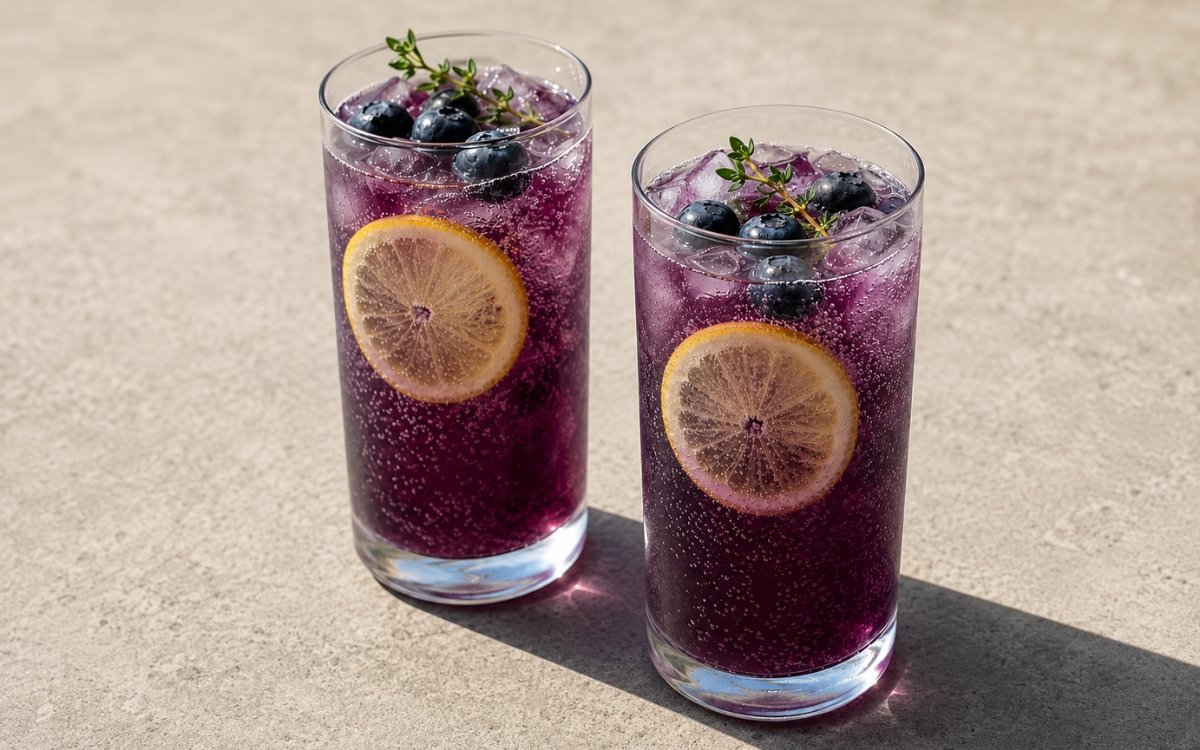
- Fill four tall glasses generously with ice cubes. Divide the chilled blueberry-thyme base evenly among the glasses — approximately 70–75ml per glass. Stir briefly against the ice. Top each glass with approximately 125ml of chilled club soda, poured gently down the inner side of the glass. Stir once or twice gently. Slip a thin lemon slice into each glass, pressing it against the ice so the yellow is visible through the purple drink. Add 3 fresh blueberries to the ice surface of each glass. Tuck a small fresh thyme sprig between the blueberries with its leaves extending above the rim — the sprig providing a final aromatic impression as the drinker lifts the glass. Serve immediately.
Notes
Frozen blueberries work equally well in this preparation and often produce a more intensely coloured base than fresh ones because the freezing process pre-ruptures the cell walls, releasing the anthocyanin-rich juice more readily during crushing. If using frozen blueberries, add directly from frozen — the hot thyme infusion will thaw them within 30 seconds of contact, and the additional initial cooling of the infusion by the frozen berries is negligible.
The thyme-blueberry combination is one of the more unusual pairings in this collection and one that benefits from understanding the flavour chemistry: thyme's thymol provides a specific warm, slightly herbal, slightly camphor-adjacent note that resonates with blueberry's own subtle complexity in a way that most herbs do not. Mint would overwhelm blueberry's gentler character; basil would compete; thyme's softer, warmer, more specific herbal warmth sits as a barely-detectable aromatic background that makes the finished drink more interesting than blueberry-lemon-soda alone without being identifiable as a prominent herb flavour.