Ingredients
Method
Brew the Black Tea
- Heat the water to 90–95°C. Add the black tea bags and steep for 2½–3 minutes maximum. Remove the tea bags without squeezing, since squeezing forces out the most concentrated, bitter fraction held inside them. Let the tea cool to lukewarm.
Sweeten While Warm
- While the tea is still warm, stir in 2 tablespoons of honey until fully dissolved. Taste and add up to 1 additional tablespoon only if needed. This should stay lightly sweetened and controlled, not sweet — the raspberry purée added later will contribute its own natural sugar, so restraint here keeps the final balance correct.
Cool to Room Temperature
- Let the tea cool fully to room temperature before adding the lemon peel.
Infuse the Lemon Peel
- Add the lemon peel strips to the cooled tea and let infuse for 5 minutes only, just until a clean citrus aroma develops. Remove the peel promptly to avoid bitterness — this step is purely aromatic, contributing fragrance rather than any acidity.
Blend the Raspberries
- Add the raspberries to a blender and blend briefly until smooth. There's no need for extended blending here — a short pulse is enough to fully break down the berries before straining.
Strain the Raspberry Purée
- Strain the raspberry purée through a fine-mesh sieve into a bowl or measuring jug. Press gently but firmly to extract the bright raspberry liquid. Do not force dry pulp or seeds through the sieve — the goal is a vivid, clean liquid free of the gritty texture and bitter tannin that raspberry seeds specifically introduce if pushed through.
Combine and Taste
- Stir 120–160ml of the strained raspberry purée into the tea. Taste and adjust carefully — the raspberry should lift the tea, not dominate it. Start at the lower end of the range and add more only if the fruit character feels insufficiently present.
Chill
- Refrigerate for 1–2 hours until fully cold and integrated. The cold rest allows the tea, lemon, and raspberry to settle into a single cohesive character.
Serve
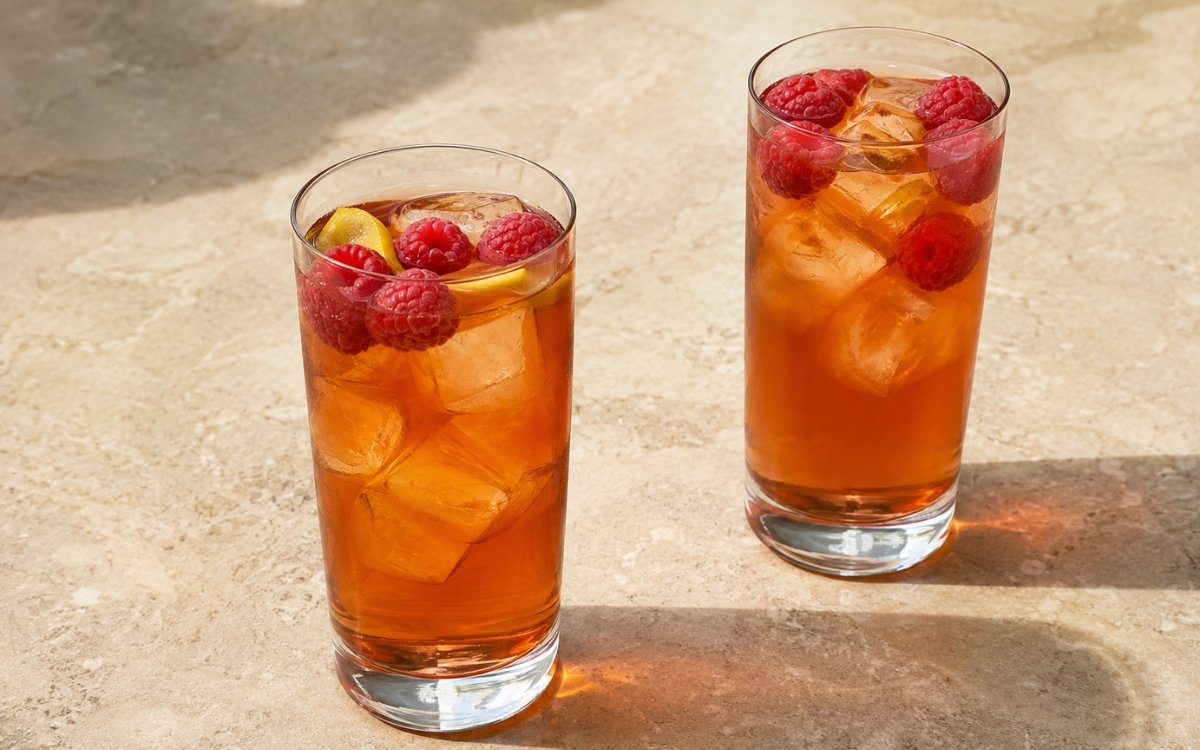
- Fill glasses with ice, pour over the chilled raspberry iced black tea, and garnish with fresh raspberries and an optional twist of lemon peel. Serve cold, clean, lightly fruity, and tea-forward.
Notes
This recipe's blend-and-strain technique is specifically different from the warm-infusion approach used in the crowd-scale raspberry preparations elsewhere in this collection, where raspberries are gently cracked and steeped directly in warm tea. Both methods are valid, but they produce noticeably different results: the warm infusion technique produces a more integrated, gentler raspberry presence, while this blended-and-strained approach produces a more concentrated, more precisely controllable fruit contribution that can be measured and adjusted to taste with more accuracy.
Pressing the raspberry purée firmly during straining is specifically appropriate here, unlike with peach or strawberry syrups elsewhere in this collection where pressing is discouraged. Raspberry's relatively low pulp content compared to stone fruit or strawberries means firm pressing extracts genuine juice without introducing significant starchy cloudiness — the only material to keep out is the seeds and any dry pulp residue.
Frozen raspberries, fully thawed before blending, work just as well as fresh and are often more convenient and more consistently priced outside of peak raspberry season. The pre-ruptured cell walls from freezing mean thawed raspberries blend even more smoothly than fresh ones.