
Raspberry Basil Limeade
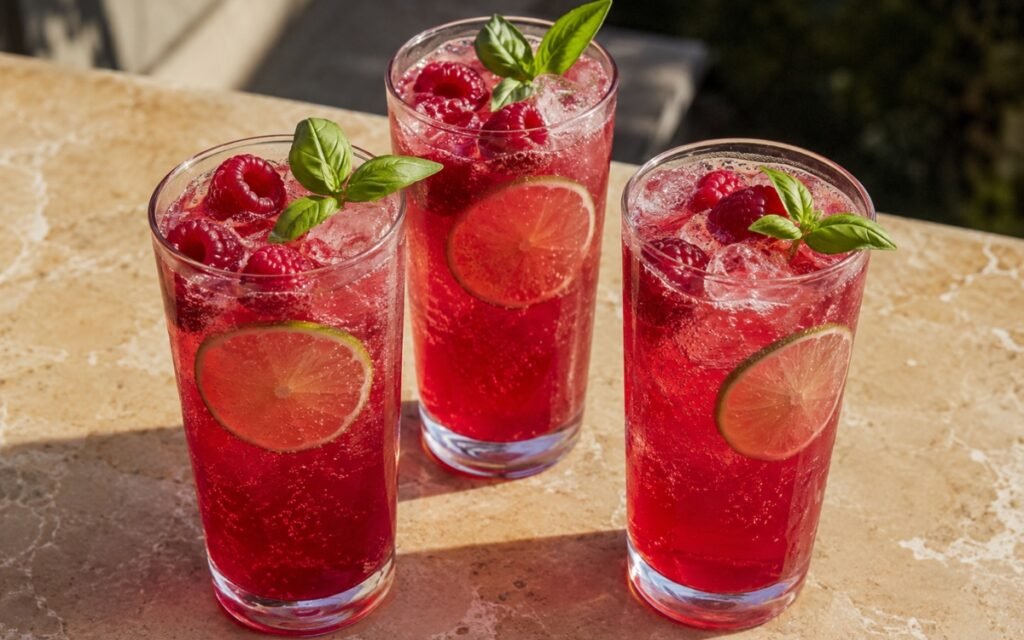
No cooking — the honey dissolved in warm water rather than simmered into a syrup, preserving the honey’s aromatic character completely. The raspberries blended with the lime juice and strained to remove the seeds and dry pulp, producing the vivid, specifically clear raspberry-lime base that is more intensely coloured and cleaner in the glass than a seeded preparation. Fresh basil and mint clapped and steeped cold for 5–10 minutes maximum — the shortest herb infusion window in this collection, specifically because basil’s aromatic compounds are among the most volatile and the most vulnerable to the flavour shift from sweet-anise freshness to grassy bitterness that happens when basil is broken down aggressively or steeped too long in an acidic medium. The club soda added right before serving rather than into the base during preparation, preserving the carbonation’s full intensity through every glass. Eight servings, vivid red, tart, lightly herbal, and refreshing without turning syrupy or grassy.
Prep Time : 10 min
Cook Time : 0 min
Servings : 8
10 min
0 min
8
Ingredients
For the Raspberry Basil Base
• 250g fresh raspberries
• 90–120g honey — start with 90g, adjust after tasting — this one on Amazon
• 80ml warm water — for dissolving the honey
• 120–150ml fresh lime juice — approximately 4–5 limes
• 300–400ml cold water — start with 300ml, adjust after tasting
• 20g fresh basil leaves — approximately 1 packed cup
• 10g fresh mint leaves — approximately ½ packed cup
For the Garnish
• Lime slices
• Fresh raspberries — optional
• Small basil or mint sprigs — optional
This post may contain affiliate links. As an Amazon Associate I earn from qualifying purchases, at no additional cost to you.
Directions
- Dissolve the Honey Without Heat
Combine the honey and 80ml of warm water in a small bowl. Stir vigorously until the honey is completely dissolved — the warm water reducing the honey’s viscosity enough for full dissolution without any heating required. The water temperature should be warm to the touch — approximately 40–50°C — not boiling or simmering. The goal is a fluid honey syrup that mixes evenly into the raspberry-lime base without leaving viscous honey deposits concentrated at the bottom of the pitcher. Honey at full concentration in cold water resists dissolution regardless of how long it is stirred; the brief warm water step is the specific shortcut that makes the no-cook approach viable. - Blend and Strain the Raspberries with Lime
Add the 250g of fresh raspberries and 120ml of fresh lime juice to a blender. Blend at high speed for 30–40 seconds until completely smooth and vivid red — no visible raspberry pieces remaining. The lime juice serves a dual purpose here: it provides the primary acid component and simultaneously prevents the raspberry’s colour from oxidising during blending, preserving the specifically vivid, saturated red that makes the finished limeade visually striking. Strain through a fine-mesh sieve into a large pitcher, pressing firmly on the raspberry pulp to extract as much liquid as possible. The pressed solids should be dry and pink-white — all the colour and juice having transferred to the strained liquid. Discard the seeds and dry pulp. The strained base should be a clear, vivid, deep ruby-red with a clean, sharp raspberry-lime aroma. - Build the Limeade Base and Taste
Stir the honey syrup and 300ml of cold water into the strained raspberry-lime base. Stir well until the honey syrup is completely distributed through the larger liquid volume. Taste carefully and adjust each dimension: if the flavour is too sharp and acidic, add additional honey in small increments; if the raspberry-lime combination tastes flat or one-dimensional, add more lime juice to brighten it; if the overall concentration is too intense for a long-drink format, add up to 100ml more cold water. The base at this stage should taste assertively flavoured — more concentrated than the intended final drink — because it will be further diluted by both the ice and the club soda at serving. A base that tastes correctly balanced before the club soda is added will taste diluted and mild in the glass. - Clap and Cold-Infuse the Herbs
Lightly clap the 20g of basil leaves and 10g of mint leaves together between your palms — one firm clap to bruise the surface aromatic oils without crushing the leaves aggressively. Add both to the pitcher with the raspberry-lime base. Cover and refrigerate for 5–10 minutes only. The specific 5–10 minute window is the most conservative herb-infusion time in this collection for a specific reason: basil is among the most aromatic but also most volatile and most pH-sensitive of the herbs used across these preparations. In an acidic medium — raspberry and lime juice — basil’s pleasant aromatic compounds (primarily linalool and eugenol) begin shifting toward the less pleasant chlorophyll-dominant, slightly bitter, grassy character more rapidly than in neutral or lightly sweet mediums. Five minutes in cold, acidic raspberry-lime produces a specifically clean, slightly anise-fresh, aromatic basil note; ten minutes is the maximum before a grassy edge begins developing. Always strain at or before the 10-minute point. - Add Club Soda Right Before Serving
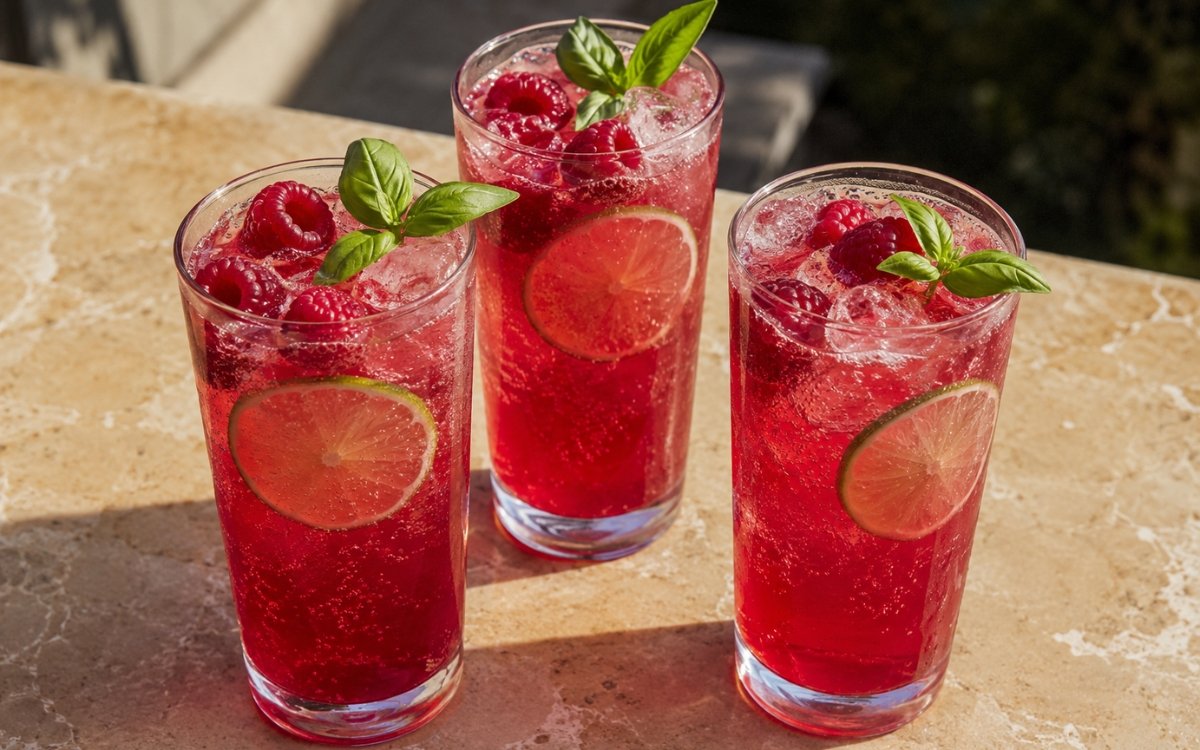
After straining the herbs, the base is ready. Do not add the club soda to the pitcher in advance — the carbonation will be significantly depleted before the drink is served. Add the 900–1000ml of chilled club soda to the pitcher immediately before serving, pouring gently down the side of the pitcher rather than pouring into the centre which releases carbonation rapidly. Stir once or twice gently — enough to distribute the raspberry base through the club soda without collapsing the effervescence. Fill glasses with ice and pour the limeade over the top rather than pouring the base first and adding soda to the individual glass — the pitcher method ensures the carbonation is distributed evenly. Garnish each glass with a lime slice slipped against the ice, a few fresh raspberries if desired, and a small basil or mint sprig. Serve immediately.
*Notes :
- The basil-and-lime combination is a classic warm-weather drink pairing — the basil’s sweet anise-adjacent aromatic character is specifically complementary to lime’s sharp citrus brightness in a way that is different from mint’s cooling menthol freshness. Together the two herbs produce a specifically more complex herbal register than either alone — mint providing the cool, fresh element and basil providing the warm, aromatic sweet-herbal element. The 2:1 basil-to-mint ratio specifically keeps basil as the dominant herbal character with mint as the supporting note rather than the reverse.
- For the best colour and the most vivid visual impact, serve immediately after combining the base with the club soda — raspberry’s anthocyanins are sensitive to pH changes over time and the colour will shift from vivid ruby-red toward a slightly more orange-red as the lime juice’s acidity continues acting on the anthocyanin pigments during extended storage.
Why This Recipe Works
This recipe works because the honey is dissolved without heat — no cooking, no simmer, no heat exposure to any aromatic compound. The raspberries are blended with the lime juice before straining, the acid preventing oxidation and preserving the vivid colour.
The herb infusion is timed precisely within the 5–10 minute window where basil contributes aromatic freshness rather than grassiness. And the club soda is added right before serving rather than in advance.
Ingredient Breakdown
Warm-Water Honey Syrup (No Cooking)
The cold-process sweetener preparation — warm water dissolving honey without heat, preserving the honey’s full aromatic character.
Raspberries Blended with Lime Juice Before Straining
The colour preservation technique — the lime juice’s acidity preventing oxidation during blending; both ingredients processed together for the most vivid, clean-coloured result.
5–10 Minute Maximum Herb Infusion in Acidic Medium
The specific constraint for basil in this preparation — acidic raspberry-lime shifts basil’s character toward grassy bitterness faster than neutral mediums; the window is the tightest in this collection.
Club Soda Added Immediately Before Serving
The carbonation preservation technique — soda added to the base in the pitcher right before service rather than in advance or to individual glasses.
Honey Plus Lime Dual-Balance System
The sweet-acid adjustment approach — both elements adjustable independently for the correct tart-sweet balance specific to the raspberry’s natural acidity.
Flavor Structure Explained
This Raspberry basil limeade follows a layered balance model:
- Tart fruit-citrus core (raspberry and lime)
- Rounded floral sweetness (honey)
- Fresh herbal complexity (basil and mint)
- Bright refreshing acidity (lime)
- Crisp sparkling finish (club soda)
Raspberry and lime define the foundation together, combining vivid berry fruitiness with sharp citrus acidity that intensify one another into a highly energetic flavor profile. Honey softens the sharper edges with floral sweetness, creating balance without muting the brightness. Basil adds aromatic freshness and subtle sweet-anise character, while mint contributes a quieter cooling note underneath. These herbs transform the drink from a straightforward fruit limeade into something more layered and composed. Club soda completes the structure with lively carbonation that lifts the fruit and herbal aromatics, giving the drink a clean, refreshing finish.
Common Mistakes to Avoid
- Muddling the Herbs Aggressively – Aggressive muddling ruptures the herb cells and extracts chlorophyll alongside aromatic oils, producing a grassy, bitter result. Always a light clap only.
- Steeping the Herbs Beyond 10 Minutes – In the acidic raspberry-lime medium, basil’s character shifts to grassy and bitter rapidly. Always strain by the 10-minute point.
- Adding Club Soda in Advance – Carbonation depletes progressively — soda added 20 minutes before serving produces a partially flat drink. Always add right before serving.
- Not Pressing the Raspberry Solids Firmly – Raspberry seeds and dry pulp retain a proportion of the juice and colour. Always press firmly until the solids are dry and white.
- Not Tasting and Adjusting Before Adding Soda – The raspberry’s natural acidity varies significantly by season and variety. Always taste and adjust the base before adding the club soda.
Variations
With Strawberry
Replace half the raspberries with 125g of hulled, quartered strawberries — the strawberry’s sweeter, less tart, slightly more mild character produces a softer, more rounded limeade that is more approachable for those who find the all-raspberry version too sharp.
With Jalapeño
Add 3–4 thin jalapeño slices to the cold infusion alongside the basil and mint — the chili’s warmth against the raspberry’s tartness and the basil’s sweetness produces a specifically more assertive, more interesting version.
Still Version
Omit the club soda entirely and serve the base diluted with 900ml of cold still water for a lightly sweet, tart, herbal still raspberry-lime drink.
With Elderflower
Add 2 tbsp of elderflower cordial to the base alongside the honey syrup — the elderflower’s floral character specifically amplifies the basil’s aromatic sweetness.
Storage & Make-Ahead
Raspberry basil base, with the herbs strained out and without the club soda, can be refrigerated in a sealed pitcher for up to 3 days. The color stays especially vibrant during the first 24 hours, then gradually shifts slightly over the following days. For the best carbonation and freshness, always add the club soda immediately before serving.
If the herbs have not yet been added, the base can be refrigerated for up to 4 days. However, the herbs should be added fresh on the day of serving to preserve their brightest aroma and flavor.
Once assembled, the drinks are not suitable for storage and should be served immediately after the base and soda are combined.
Frequently Asked Questions
Why blend the raspberries with the lime juice together?
The lime juice’s acidity creates an environment that slows the oxidation of raspberry’s anthocyanin pigments during blending — preserving the vivid ruby-red colour more effectively than blending the raspberries in plain water. Both ingredients are acid-requiring components that are processed most efficiently together rather than separately.
Why only 5–10 minutes for the herb infusion?
Basil in an acidic medium (raspberry and lime juice) undergoes a more rapid flavour shift from its pleasant aromatic character toward a grassy, bitter, chlorophyll-dominated note than in neutral mediums. The 5–10 minute window specifically captures the clean, sweet, slightly anise-fresh aromatic contribution before this shift occurs.
Why add club soda right before serving rather than earlier?
Carbonation depletes at a measurable rate from the moment liquid contacts the soda — the bubbles escape progressively regardless of whether the drink is in a sealed pitcher or an open glass. Adding the soda at the last possible moment ensures the full carbonation intensity is present in every serving.
Why warm water rather than boiling water for the honey syrup?
The goal is only to reduce honey’s viscosity sufficiently for dissolution into the cold base — not to make a heated syrup. Boiling water would unnecessarily heat the honey, diminishing its aromatic volatile compounds. Warm water at 40–50°C achieves the dissolution without any aromatic loss.
What other raspberry-and-acid preparations share this flavour direction?
The Raspberry Lemonade shares the raspberry-and-citrus-acid combination with lemon rather than lime — slightly softer and more broadly familiar. The Raspberry Lemon Shrub shares the raspberry-and-acid direction with the specifically more complex, more adult character of white wine vinegar’s tartaric acidity alongside lemon. The Raspberry Mojito Mocktail shares the raspberry-lime-mint combination in a specifically mojito format — similar primary flavour components in a more specifically cocktail-structured presentation.
Nutrition Facts
( per serving )
Calories
~75 kcal
Protein
0 g
Fat
0 g
Carbs
19 g
Calories
~75 kcal
Protein
0 g
Fat
0 g
Carbs
19 g
Related Recipes
Related Recipes

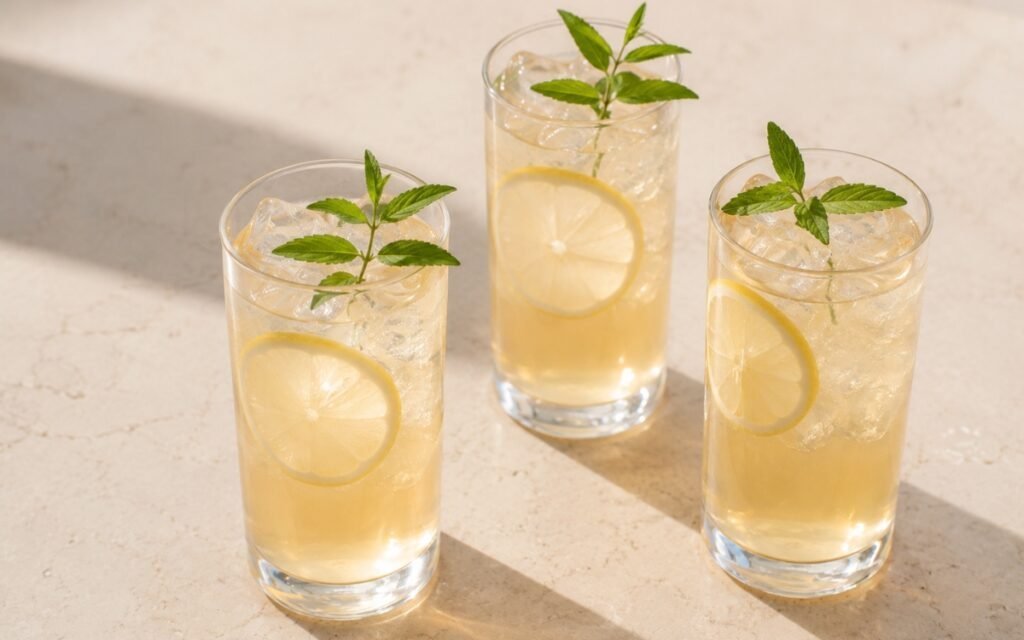
Light Lemon Verbena Iced Tea
Lemon verbena steeped exactly 10–15 minutes, honey dissolved warm, lemon juice added cold — chilled overnight. Floral, clean, and caffeine-free.
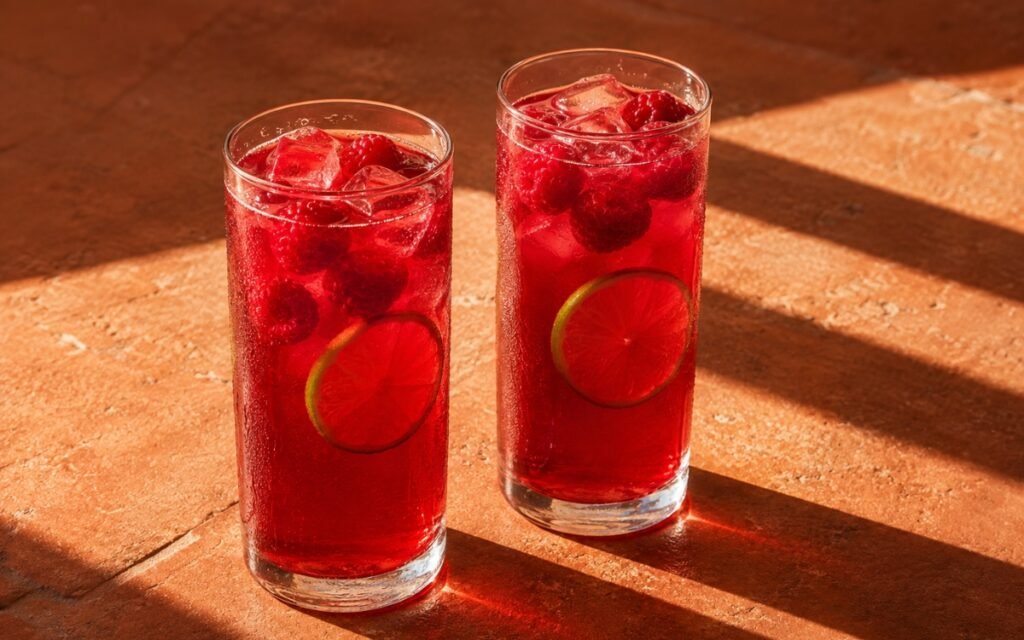
Hibiscus Raspberry Ginger Cooler
Off-heat steeped hibiscus and ginger combined with cold-macerated raspberries and fresh lime juice for a vivid ruby-red, tart cooler.
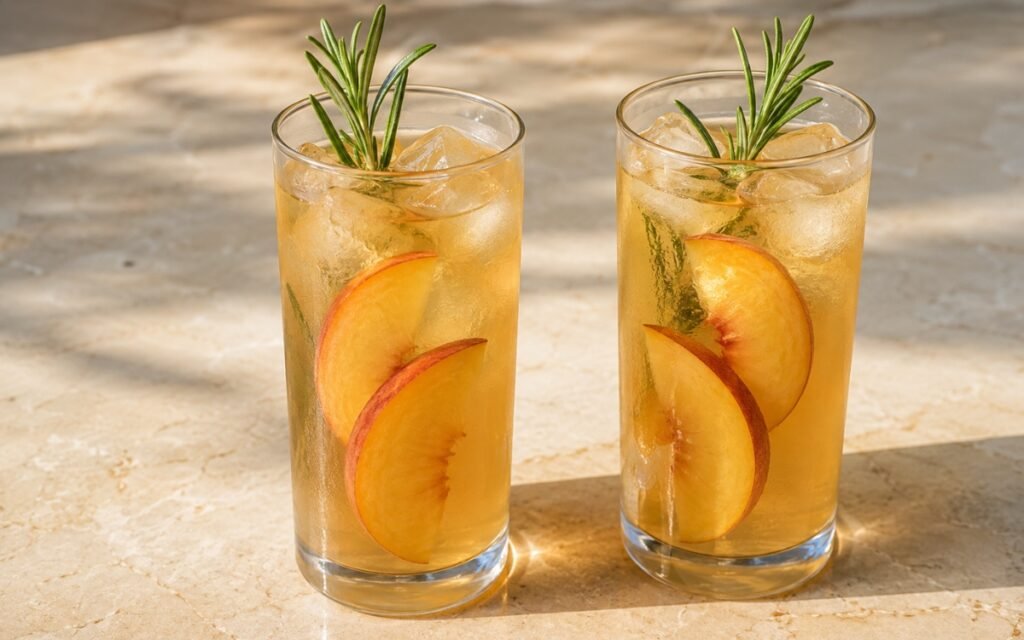
Rosemary Peach White Iced Tea
White tea at 75–80°C for 3–4 minutes, peach rosemary syrup made separately and strained — stirred in with restraint, chilled. Delicate, floral, and quietly fruity.
You might also like
You might also like
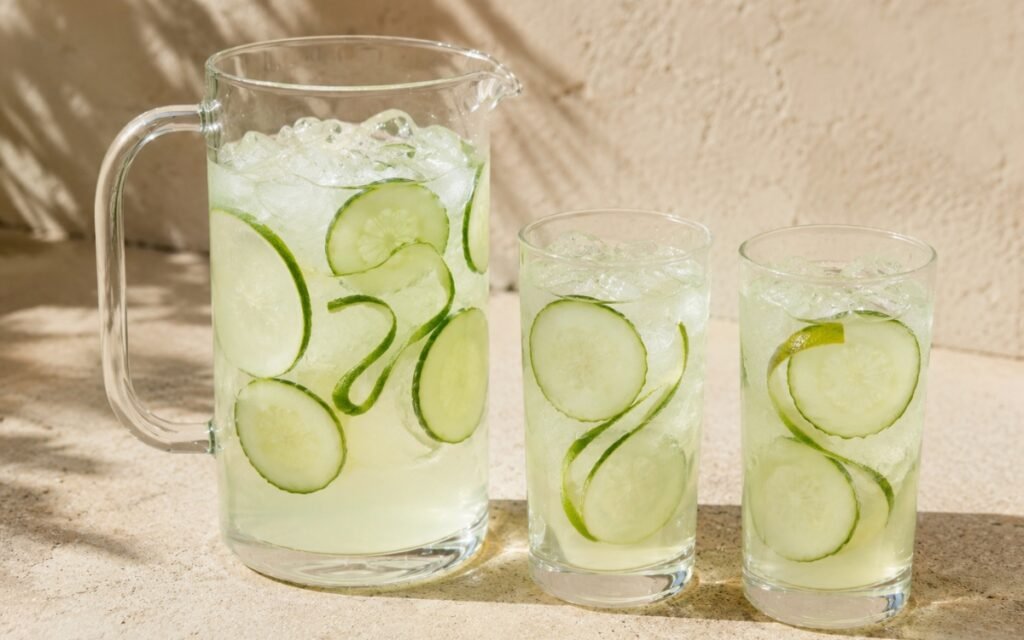
Green Tea Cucumber Pitcher
Green tea at 75–80°C for 2–2½ minutes, lime zest 4–6 minutes — 750g cucumber blended with lime juice, strained, combined with tea and cold water, chilled. Cool and pale.
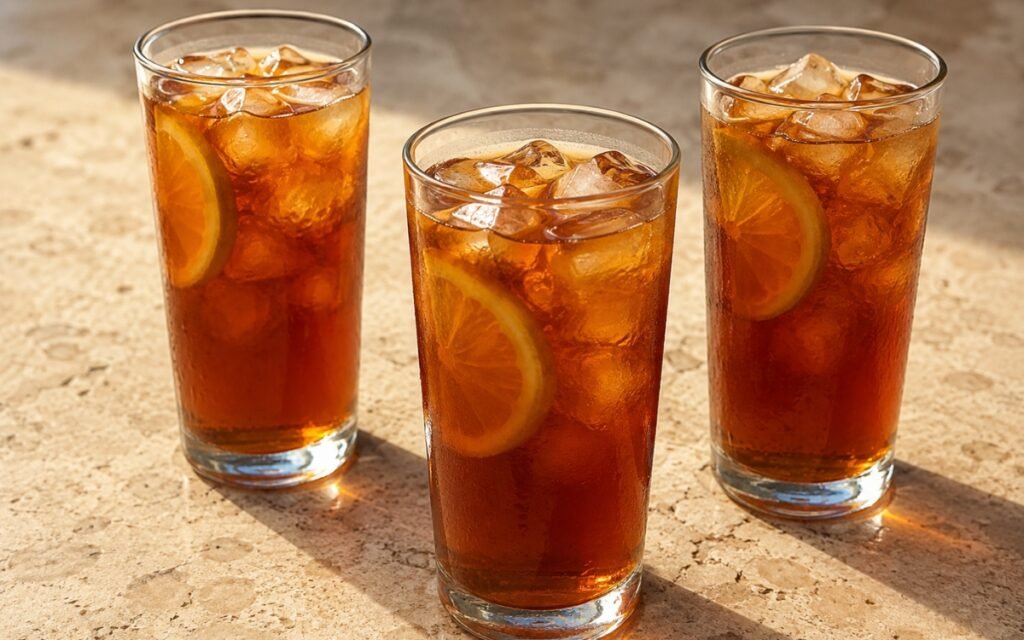
Southern Sweet Tea (Light Version)
Black tea at full boil for 5 minutes, white sugar dissolved into hot brew immediately — cooled, chilled 1–2 hours. Classic Southern character, lighter and more drinkable.
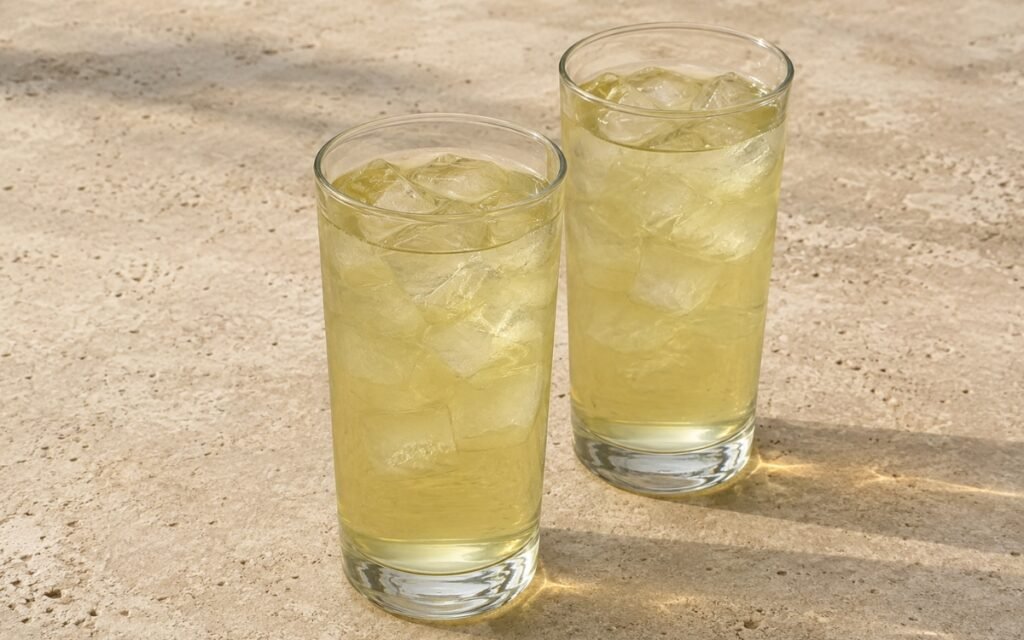
Unsweetened Lime Iced Green Tea
Green tea at 75–80°C for 2–3 minutes, lime peel infused cold exactly 5 minutes — lime juice for gentle acidity, no sweetener, chilled. Crisp, sharp, and clean.
Raspberry Basil Limeade
Ingredients
Method
- Combine the honey and 80ml of warm water in a small bowl. Stir vigorously until the honey is completely dissolved — the warm water reducing the honey’s viscosity enough for full dissolution without any heating required. The water temperature should be warm to the touch — approximately 40–50°C — not boiling or simmering. The goal is a fluid honey syrup that mixes evenly into the raspberry-lime base without leaving viscous honey deposits concentrated at the bottom of the pitcher. Honey at full concentration in cold water resists dissolution regardless of how long it is stirred; the brief warm water step is the specific shortcut that makes the no-cook approach viable.
- Add the 250g of fresh raspberries and 120ml of fresh lime juice to a blender. Blend at high speed for 30–40 seconds until completely smooth and vivid red — no visible raspberry pieces remaining. The lime juice serves a dual purpose here: it provides the primary acid component and simultaneously prevents the raspberry’s colour from oxidising during blending, preserving the specifically vivid, saturated red that makes the finished limeade visually striking. Strain through a fine-mesh sieve into a large pitcher, pressing firmly on the raspberry pulp to extract as much liquid as possible. The pressed solids should be dry and pink-white — all the colour and juice having transferred to the strained liquid. Discard the seeds and dry pulp. The strained base should be a clear, vivid, deep ruby-red with a clean, sharp raspberry-lime aroma.
- Stir the honey syrup and 300ml of cold water into the strained raspberry-lime base. Stir well until the honey syrup is completely distributed through the larger liquid volume. Taste carefully and adjust each dimension: if the flavour is too sharp and acidic, add additional honey in small increments; if the raspberry-lime combination tastes flat or one-dimensional, add more lime juice to brighten it; if the overall concentration is too intense for a long-drink format, add up to 100ml more cold water. The base at this stage should taste assertively flavoured — more concentrated than the intended final drink — because it will be further diluted by both the ice and the club soda at serving. A base that tastes correctly balanced before the club soda is added will taste diluted and mild in the glass.
- Lightly clap the 20g of basil leaves and 10g of mint leaves together between your palms — one firm clap to bruise the surface aromatic oils without crushing the leaves aggressively. Add both to the pitcher with the raspberry-lime base. Cover and refrigerate for 5–10 minutes only. The specific 5–10 minute window is the most conservative herb-infusion time in this collection for a specific reason: basil is among the most aromatic but also most volatile and most pH-sensitive of the herbs used across these preparations. In an acidic medium — raspberry and lime juice — basil’s pleasant aromatic compounds (primarily linalool and eugenol) begin shifting toward the less pleasant chlorophyll-dominant, slightly bitter, grassy character more rapidly than in neutral or lightly sweet mediums. Five minutes in cold, acidic raspberry-lime produces a specifically clean, slightly anise-fresh, aromatic basil note; ten minutes is the maximum before a grassy edge begins developing. Always strain at or before the 10-minute point.
- After straining the herbs, the base is ready. Do not add the club soda to the pitcher in advance — the carbonation will be significantly depleted before the drink is served. Add the 900–1000ml of chilled club soda to the pitcher immediately before serving, pouring gently down the side of the pitcher rather than pouring into the centre which releases carbonation rapidly. Stir once or twice gently — enough to distribute the raspberry base through the club soda without collapsing the effervescence. Fill glasses with ice and pour the limeade over the top rather than pouring the base first and adding soda to the individual glass — the pitcher method ensures the carbonation is distributed evenly. Garnish each glass with a lime slice slipped against the ice, a few fresh raspberries if desired, and a small basil or mint sprig. Serve immediately.