Ingredients
Method
Brew the White Tea Carefully
- Heat the 1.65 litres of water to 75–80°C. Do not allow the water to boil — white tea is delicate, and high brewing temperatures extract bitterness that will compete directly with the hibiscus tartness and flatten the peach syrup's gentle sweetness. No thermometer available? Bring the water to a full boil, then rest it uncovered for 4–5 minutes before brewing. Add the 6 white tea bags and steep for 3–4 minutes. Remove the bags gently without squeezing — squeezing releases harsh tannins that are difficult to balance once introduced. Allow the tea to cool to lukewarm before proceeding.
Infuse the Hibiscus
- Add the 3 tablespoons of dried hibiscus flowers directly to the warm white tea. Allow the infusion to develop for 6–8 minutes, checking at the 6-minute mark. You're looking for a deep, clear ruby colour and a clean, tart floral aroma — vivid and assertive but not aggressively sour. Strain out the hibiscus flowers promptly the moment that balance is achieved. Hibiscus is one of the most potent botanical infusion ingredients available — a few extra minutes pushes the flavour from bright and tart into sharply acidic and one-dimensional, and there is no straightforward way to correct it. When in doubt, pull early.
Make the Light Peach Syrup
- Combine the sliced peaches, sugar, and water in a small saucepan. Bring to a gentle simmer over medium-low heat and cook for 8–10 minutes, just until the peaches are fully softened and their aroma is clearly present in the liquid. Keep the heat gentle throughout — aggressive boiling concentrates the syrup too quickly, pushes the peach flavour toward cooked jam rather than fresh fruit, and reduces the yield. The finished syrup should smell like ripe, fresh peaches, not peach candy or compote.
Strain the Syrup
- Pour the contents of the saucepan through a fine-mesh sieve into a bowl or measuring jug. Allow the syrup to drain naturally — do not press or squeeze the peach solids. Pressing extracts starchy, cloudy liquid and can introduce a slightly bitter, cooked-fruit character that muddies the clean peach flavour. Discard the spent peach slices and allow the strained syrup to cool completely to room temperature before using.
Sweeten the Tea Base
- Stir 120–160ml of the cooled peach syrup into the hibiscus white tea base. Begin with 120ml, taste carefully, and add more only if the balance needs adjustment. The drink should taste softly fruity and lightly sweet — present but restrained. The hibiscus tartness should still be clearly detectable, the white tea should remain in the background, and the peach should register as a gentle, rounded sweetness rather than a dominant flavour. If the peach syrup pushes the drink into obvious sweetness, pull back.
Chill Fully
- Refrigerate for 1–2 hours until completely cold and the flavours are fully integrated. Full chilling allows the hibiscus, white tea, and peach elements to settle into each other and find their balance. Served partially chilled, the hibiscus acidity will feel sharp and the peach sweetness will taste disconnected rather than cohesive.
Serve
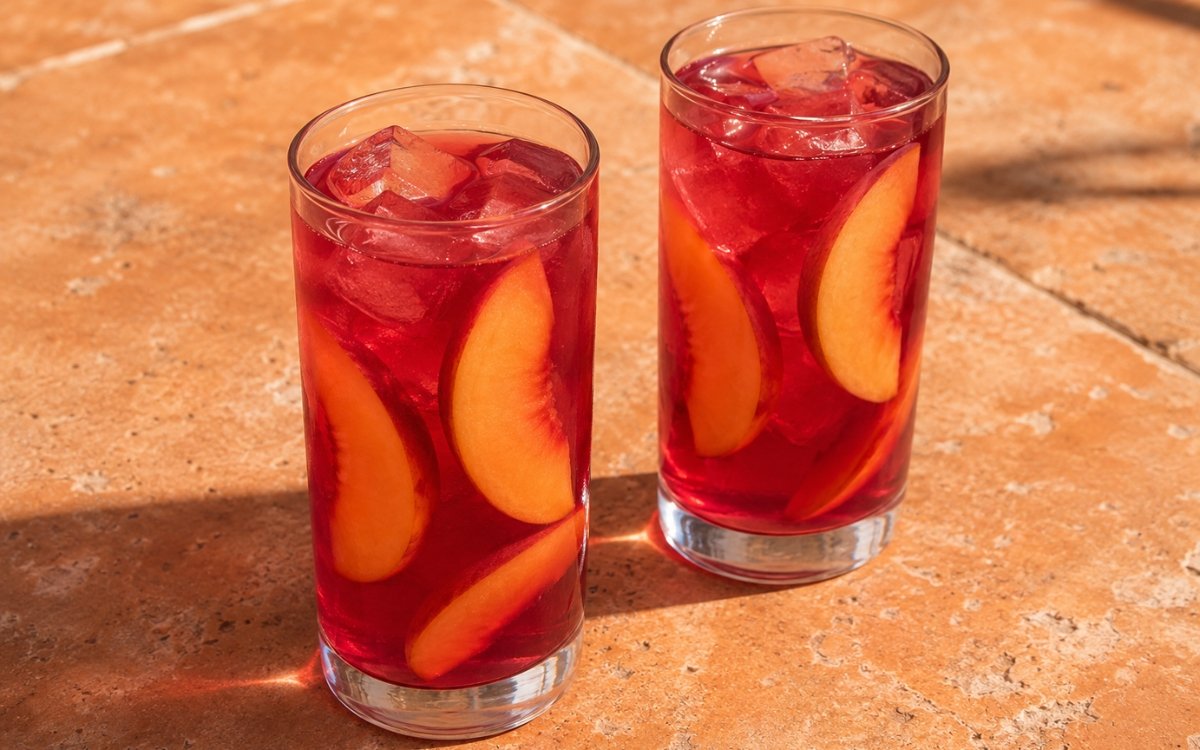
- Fill glasses generously with ice. Pour the chilled hibiscus peach white iced tea over the ice and garnish with fresh peach slices and a dried hibiscus flower if desired. Serve immediately while the colour is vivid and the aroma is at its cleanest.
Notes
Hibiscus intensity varies significantly between brands and batches — some dried flowers are noticeably more potent than others. Always begin tasting at the 6-minute mark during infusion rather than relying purely on timing. The colour is a useful secondary indicator: a deep, clear ruby with no brown or purple tones suggests a well-timed infusion. Brown or muddy tones suggest the hibiscus has been in contact too long and bitterness is developing.
Peach syrup quality depends almost entirely on the ripeness of the fruit. Ripe, fragrant peaches in peak season produce a syrup with genuine depth, natural sweetness, and a clean floral aroma. Underripe or out-of-season peaches produce a thin, flat syrup that tastes more like sugar water than fruit. If fresh peaches are unavailable or out of season, ripe frozen peaches thawed completely before cooking are a reliable substitute that consistently outperform underripe fresh fruit.
White tea must remain a detectable presence in the finished drink. Its role is subtle — a soft, clean backdrop that prevents the hibiscus and peach from colliding directly — but its absence is noticeable. If the white tea has completely disappeared and the drink tastes like hibiscus-peach juice, either the hibiscus infused too long, too much peach syrup was added, or both. Pai Mu Tan is the correct choice here because its natural body and sweetness give it enough presence to hold its own without being assertive.
The quantity of peach syrup added to the tea base is a variable, not a fixed number, because fruit ripeness affects sweetness and intensity significantly. Treat the 120–160ml range as a starting point and adjust based on taste. The finished drink should lean toward restraint — this is an iced tea, not a fruit punch, and the botanical character should always lead.