Ingredients
Method
Blend and Strain the Watermelon
- Cut the watermelon and remove as many seeds as possible — a seedless variety is specifically convenient here; for seeded varieties, the blend-and-strain step will catch any remaining seeds in the sieve. Add the 1.2kg of cubed watermelon flesh to a blender in batches if necessary. Blend at high speed for 30–40 seconds until completely smooth — a vivid, deeply pink-red juice with some natural foam from the blending. Watermelon is approximately 92% water, and the blending produces a liquid rather than a purée almost immediately. Strain through a fine-mesh sieve into a large pitcher or jug, pressing gently on the foam and pulp. The pressing is specifically gentle here — watermelon's very high water content means the strained juice is already mostly liquid; firm pressing extracts more of the very fine pulp particles that would increase the slight cloudiness without adding meaningful flavour. The finished strained juice should be a clear, vivid, specifically deep pink-red — watermelon's characteristic colour present without the thick, pulpy texture of unstrained juice. Set aside while making the syrup.
Make the Simple Syrup Separately
- Combine the 80g of white sugar and 240ml of water in a small saucepan. Place over medium heat and stir continuously until the sugar has fully dissolved. Bring just to the point of dissolution and remove from heat immediately — no simmering reduction is required or beneficial. Allow to cool completely. The separate simple syrup approach is specifically different from the strawberry and peach lemonade preparations where the fruit was cooked in the sugar-water. Watermelon cannot be cooked without losing its characteristically fresh, vivid aromatic character — cooking watermelon produces a muted, vaguely sweet liquid without the specific volatile compounds responsible for watermelon's immediately recognisable aroma and flavour. The simple syrup is therefore made completely separately and added to the raw watermelon juice at the cold combination stage.
Combine All Components Cold
- In the large pitcher containing the strained watermelon juice, add the cooled simple syrup, 240ml of fresh lemon juice, the 1 tsp of lemon zest, ⅛ tsp of fine sea salt, and 300ml of ice-cold water. Stir thoroughly. The lemon zest is added directly to the cold combined base in this preparation rather than infused in a warm syrup as in the strawberry lemonade — because there is no warm syrup for the zest to infuse into. Cold infusion of lemon zest over the 1–2 hour refrigerator chill produces a slower but similarly effective release of its aromatic oils into the surrounding liquid, integrating the citrus depth during the chilling period. The pinch of salt at ⅛ tsp in the full volume is the same sub-threshold amplifier used throughout this collection. Watermelon's natural flavour profile is almost entirely sweet with minimal natural acid — the combination of the lemon juice's brightness and the salt's below-detection-threshold amplification is what prevents the finished lemonade from tasting vaguely sweet rather than specifically of watermelon. Taste and adjust: if the watermelon character is vivid and the balance needs only brightening, add more lemon juice up to 300ml total; if the concentration is too intense, add more cold water up to 600ml total; if the watermelon was particularly mild or under-ripe, add additional simple syrup. The correctly balanced watermelon lemonade should taste crisp, clean, clearly of fresh watermelon, and refreshingly tart from the lemon.
Chill and Serve
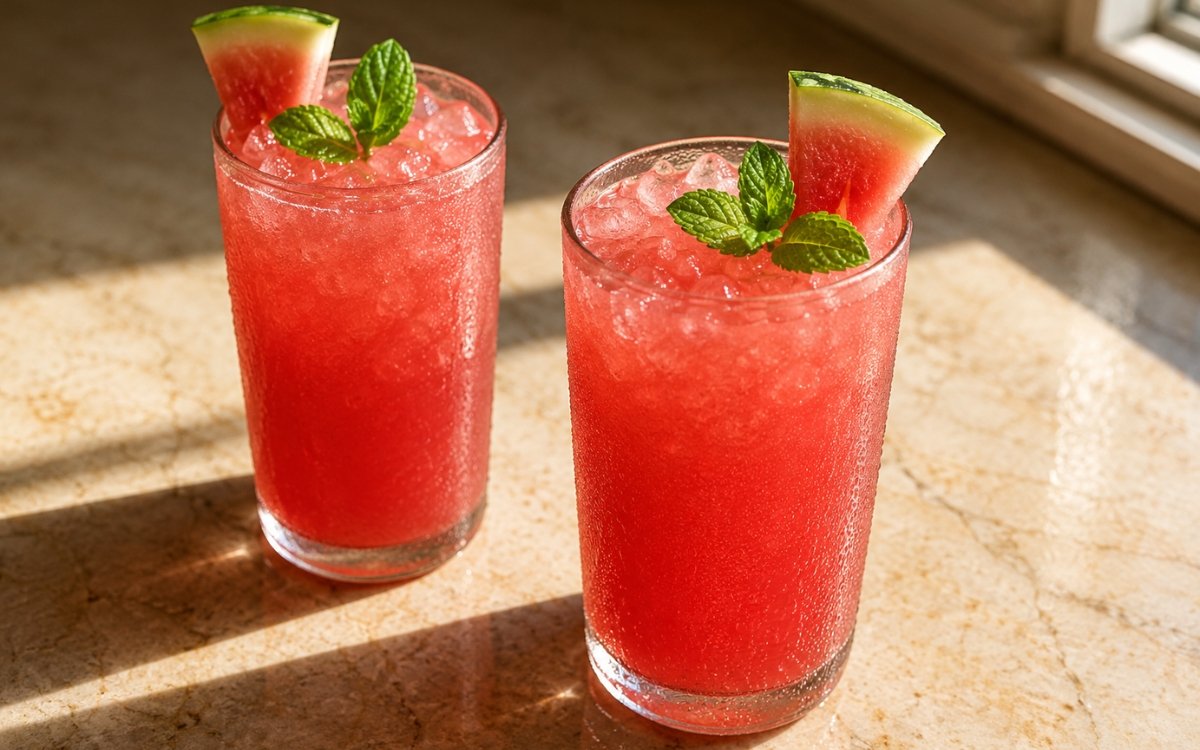
- Refrigerate for 1–2 hours. Before serving, stir the pitcher thoroughly — watermelon juice's natural large-molecule compounds (primarily large sugar molecules and light plant pigments) separate progressively during storage, creating a clear upper layer above a more coloured, denser lower layer. This separation is natural and correct; stirring before each serving reintegrates the components. Fill glasses with ice. Pour over the chilled watermelon lemonade, stirring the pitcher gently between each pour to maintain even distribution. Garnish with a lemon slice and a small watermelon wedge if desired. Serve immediately.
Notes
Seedless watermelon varieties — the dominant commercially available type — are specifically convenient for this preparation because the seed removal step in the blending process is eliminated. The flavour quality between seeded and seedless varieties at comparable ripeness is not meaningfully different; the preparation works equally well with either.
Watermelon's peak flavour season in the Northern Hemisphere is July through September — the period when field-ripened watermelons have the highest lycopene concentration and the most vivid, most specifically aromatic flavour. Out of season, watermelons grown in artificial conditions or shipped long distances often have a significantly milder flavour and higher water content — producing a paler, less specifically watermelon-flavoured lemonade. The amount of ice-cold water added should be reduced when working with milder out-of-season watermelons.