Ingredients
Method
Make the Honey-Strawberry Syrup
- Combine the 300g of thinly sliced strawberries, 140g of honey, and 240ml of water in a saucepan. Warm over low to medium-low heat, stirring gently until the honey dissolves and the strawberries begin softening. Simmer for 8–10 minutes — the extraction window that develops the strawberry's warmer, more concentrated, specifically cooked-fruit depth while keeping the liquid specifically fluid and vivid rather than approaching the thick, jammy result of a reduction. The liquid should remain clearly pourable and flowing at the end of the cooking period. Remove from the heat. Add the zest of 2 lemons and cover. Steep for 5–8 minutes. The double-lemon-zest infusion at this larger scale provides the integrated citrus aromatic depth proportionate to the preparation's volume. Strain through a fine-mesh sieve, pressing gently but firmly on the cooked strawberry solids. Allow to cool completely.
Extract the Fresh Strawberry Juice
- Add the 300g of hulled, roughly chopped fresh strawberries to a blender or food processor. Blend for approximately 10 seconds at medium speed — just enough to produce a uniform strawberry purée without incorporating excessive air. Alternatively, mash thoroughly with a fork or potato masher until liquid. Strain through a fine-mesh sieve into a bowl, pressing the purée firmly to extract the maximum clean juice. At 300g of fresh strawberries the sieve-pressing yields approximately 150–180ml of vivid, specifically fresh, volatile-compound-rich raw strawberry juice. The two-component extraction philosophy established in the raspberry lemonade applies directly here: strawberry's most pleasant aromatic compounds — primarily the furanone-family compounds responsible for its vivid, warm, specifically fresh-fruit character — exist in two categories with opposite heat responses. The cooked fraction captures the heat-stable depth; the raw fraction preserves the volatile freshness. Both are present in the finished pitcher, producing a more complete strawberry flavour than either alone.
Build the Pitcher
- Add the lemon pulp from 2–3 lemons (seeds, membranes, and pith removed; clean pulp only) to the large pitcher and muddle gently. Add the 300ml of fresh lemon juice, the cooled honey-strawberry syrup, the strained fresh strawberry juice, 2 litres of ice-cold water, and the 2 pinches of fine sea salt. Stir thoroughly. Taste with the crowd-format assessment: the drink should be bright, clearly structured as lemonade, and specifically strawberry-flavoured without being dominated by either component at the expense of the other. The 300ml of lemon juice at this volume provides the structural acid backbone for 16 servings; if the strawberry character feels specifically stronger than the lemon, additional lemon juice (rather than additional water) sharpens the balance. If the concentration is too intense for the gathering's taste profile, additional cold water up to 2.5 litres brings it to the lighter end of the range. The mild honey note is specifically important at this scale: 140–160g of a strongly flavoured honey (buckwheat, manuka, or heather) in a pitcher this size is sufficient to specifically overpower the strawberry and lemon's aromatic profiles. Always a mild acacia, clover, or orange blossom honey.
Chill and Serve
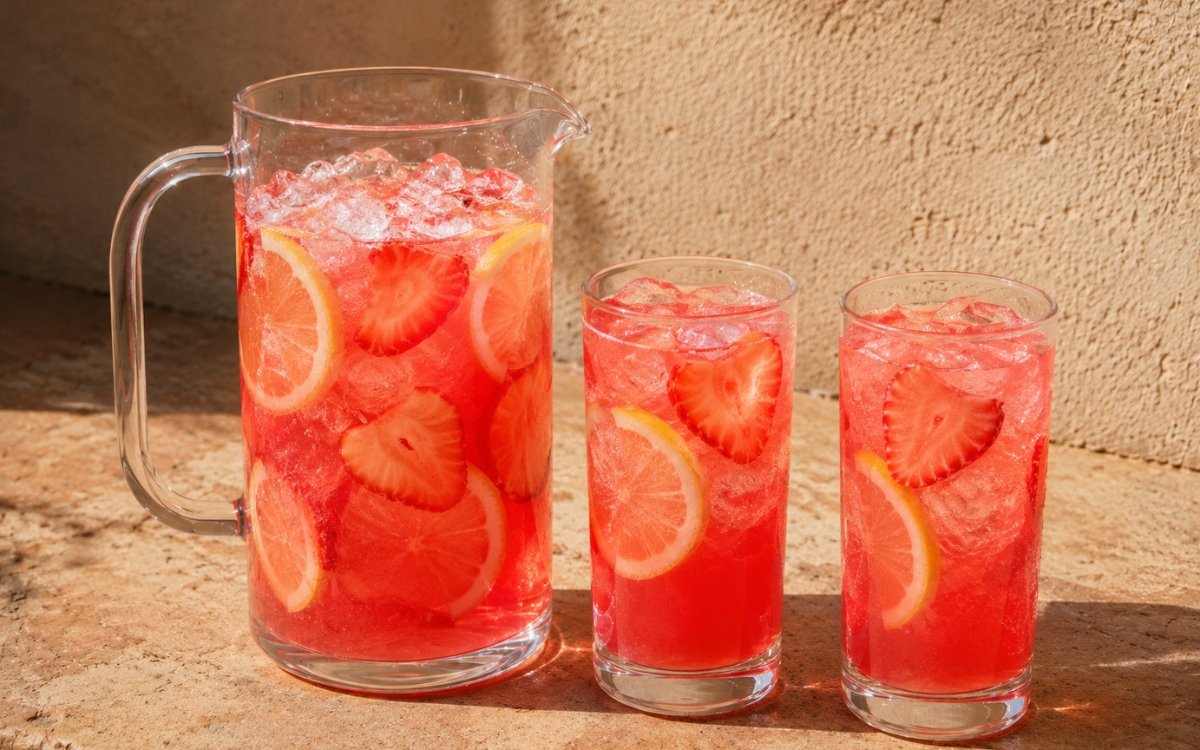
- Refrigerate for 1–2 hours. Fill glasses with ice. Pour the chilled strawberry lemonade over the ice. Garnish with lemon slices and fresh strawberry slices on each glass rim. Serve immediately.
Notes
For outdoor parties or extended serving periods, the honey-strawberry syrup and fresh strawberry juice can be combined in a sealed container and refrigerated up to 24 hours ahead — add the lemon juice, water, and salt at the time of building the pitcher. This allows the most time-sensitive component (the fresh strawberry juice) to be freshly combined while the cooked syrup is made ahead.
For serving at parties where the pitcher will sit at room temperature for extended periods, add the ice to the pitcher rather than individual glasses for self-serve settings — this maintains the temperature throughout service.
The visual garnish specifically at the crowd scale matters: the large pitcher with visible strawberry slices and lemon rounds at serving time produces a significantly more appealing first impression than a pitcher filled only with liquid. Replace or refresh the garnish halfway through service if the original slices have been sitting for more than 2 hours.