Ingredients
Method
Make the Lemon-Honey Syrup
- Combine the 240ml of water and 120g of honey in a small saucepan over low heat. Stir until completely dissolved without boiling. Remove from heat. Add the zest of 2 lemons. Cover and steep for 5–8 minutes. Strain and allow to cool completely. The lemon-honey syrup here is specifically a sweetener-and-aromatic-bridge rather than a fruit-extraction vehicle — its function is providing the honey's warm sweetness and the lemon zest's integrated aromatic oil depth rather than extracting any fruit character. This makes it the simplest syrup in the crowd-format collection and the most quickly prepared.
Blend the Watermelon
- Cut the 1kg of seedless watermelon into rough cubes, removing any remaining seeds and the rind. Place in a blender and blend at medium-high speed until completely smooth — approximately 30–40 seconds. Unlike the infused water preparation where blending was specifically avoided, full blending is the correct approach at lemonade scale: the preparation's character is specifically a vivid watermelon lemonade rather than a subtle infusion, and the blended watermelon produces the vivid colour, the concentrated aromatic presence, and the full juice volume that the pitcher requires. The blended result is approximately 900ml of vivid pink, fully liquid watermelon base. For a cleaner-looking pitcher — where the liquid is more translucent and less opaque — strain through a fine-mesh sieve, pressing the watermelon flesh to extract the juice and remove the fine fibre. For a fuller, more specifically juicy, more textured result, pour directly into the pitcher without straining. Both produce good results; the unstrained version tastes more specifically of fresh watermelon while the strained version produces a cleaner visual at the cost of some body.
Build the Pitcher
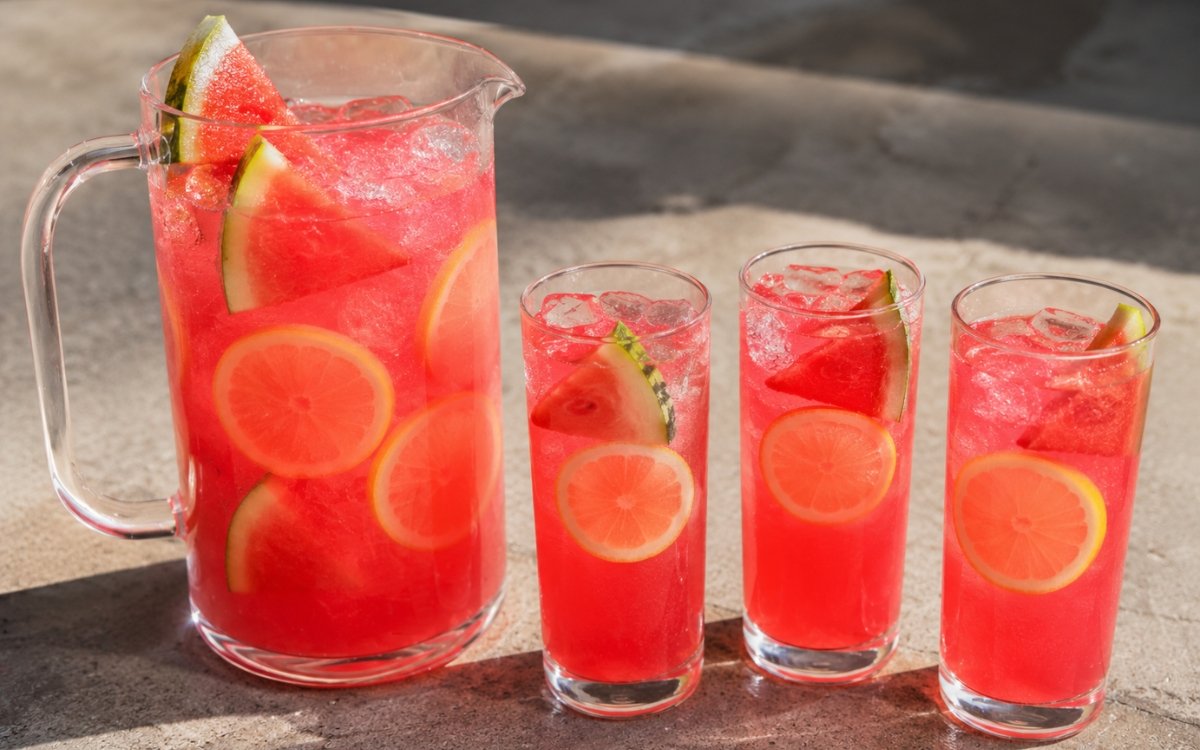
- Add the lemon pulp from 2–3 lemons (seeds, membranes, and pith removed; clean pulp) to the large pitcher. Muddle gently. Add the blended watermelon, cooled lemon-honey syrup, 240ml of fresh lemon juice, 1 litre of ice-cold water, and the 2 pinches of fine sea salt. Stir gently rather than aggressively — watermelon's blended structure disperses through the combined liquid with gentle stirring; aggressive mixing introduces air bubbles that affect the visual clarity. Taste with the specific watermelon-lemonade crowd assessment. The correctly built pitcher should taste immediately of watermelon with lemon's clean acid brightness simultaneously present — neither dominating the other, the watermelon providing the warm, sweet, juicy primary character and the lemon providing the crisp, refreshing dimension that makes it specifically a lemonade. If the result tastes specifically of sweet watermelon without a lemon dimension — insufficient lemon juice; add in 30ml increments up to 300ml. If it tastes specifically of lemon without sufficient watermelon character — the melon was under-ripe; the honey quantity can be increased slightly but the watermelon character cannot be fully compensated at this scale. The structural note from the brief — watermelon already dilutes the drink — means the added water adjustment is particularly consequential here. One litre in addition to the 900ml of watermelon juice produces a significantly less dilute result than starting at 1.5 litres; always start at 1 litre and assess before adding more.
Chill, Stir Before Service, and Serve
- Cover and refrigerate for 1–2 hours. Watermelon settles distinctly during the refrigerator rest — the blended watermelon's larger-molecule solids concentrate at the bottom while the clearer liquid rises. This is expected and normal. Always stir the pitcher once before the first pour and briefly between pours during service to maintain the consistent vivid colour and even watermelon character throughout all 16 servings. Prepare the watermelon garnish slices immediately before service. Thin watermelon slices brown at their cut edges within 30–40 minutes of cutting; always prepare immediately before service. Fill glasses with ice. Pour over the chilled watermelon lemonade. Garnish. Serve immediately.
Notes
Watermelon ripeness at crowd scale (1kg) is the single most important quality variable — under-ripe watermelon at this quantity produces a pitcher that is pale, flat, minimally aromatic, and specifically lacking the vivid, summer-fresh character that makes watermelon lemonade specifically worth making. A correctly ripe watermelon: heavy for its size, with a cream-to-yellow ground spot, a hollow thump when tapped, and a specific watermelon fragrance at the stem end. At 1kg of cubed flesh, a correctly ripe melon produces a vivid, deeply pink, specifically aromatic blended juice; an under-ripe melon produces a pale, mild, flat result.
The 24-hour best-use window applies at crowd scale for two simultaneous reasons: watermelon's primary aromatic aldehydes evaporate progressively post-blending; and the blended solids' progressive settling over extended refrigerator storage produces a more significantly separated pitcher that requires more aggressive stirring and produces less consistent results at the later glasses.