Ingredients
Method
Cold-Infuse the Honey Base
- Combine the 60g of honey, 20g of thinly sliced fresh ginger, zest of 1 lime, and a pinch of fine sea salt in a bowl or sealed container. Clap the 10 fresh mint leaves between your palms and add immediately. Stir the mixture well — working the ginger slices and lime zest through the honey to ensure contact between the aromatic surfaces and the honey's sugar matrix. Cover and refrigerate for 30 minutes. The cold infusion technique applied to ginger here produces a specifically different ginger character than the simmered ginger in the pomegranate sparkler, pear ginger preparation, and other cooked-ginger preparations in this collection. Cold-extracted ginger retains the maximum concentration of gingerol — the raw pungent compound responsible for fresh ginger's sharp, bright, specifically biting heat — without the heat-conversion of gingerols into the softer, more rounded shogaols that cooking produces. The result is a ginger character that is sharper, more immediate, and more specifically like freshly bitten raw ginger — specifically appropriate here because the green apple's own sharpness requires a ginger note of comparable vividness rather than the rounded warmth that would disappear against the apple's malic acid. Honey's viscosity allows it to act as the infusion medium for the aromatic compounds from the ginger, lime zest, and mint over the 30-minute period — the fat-soluble terpene compounds from the lime zest and the volatile aromatic oils from the clapped mint leaves absorbing into the honey's sugar matrix in a way that watery liquid would not retain as effectively.
Process and Press the Green Apples
- While the honey infusion refrigerates, prepare the apple juice. Cut the 3 green apples — skin on, cores removed — into rough 3–4cm pieces. Green apple skin contributes the concentrated aromatic compounds alongside the flesh and the additional malic acid that makes the skin-on juice more vividly sharp than peeled. Add to a food processor or high-speed blender with the 30ml of fresh lime juice and 30ml of water. Process at high speed for 60–90 seconds until the mixture is completely smooth — a pale green, slightly frothy purée with no visible apple chunks. Transfer the processed apple mixture to a cheesecloth-lined sieve or a clean, lint-free kitchen towel set over a large bowl. Gather the cloth into a bundle and twist firmly, progressively tightening the twist until maximum pressure is applied to the apple pulp. Squeeze and press until the pulp inside feels nearly dry and no more liquid drips. The extraction is deliberately forceful — unlike the light pressing used for elderflower zest or cherry solids, the apple pulp requires the full mechanical force of twisting to extract its juice completely. An electric juicer, if available, produces an equivalent result with less physical effort — though the food processor-and-cheesecloth method extracts the fine aromatic compounds from the skin surface particularly effectively through the brief processing period. The fresh apple juice should be a clear-to-slightly-cloudy pale green, specifically fragrant — the sharp, bright, distinctly Granny Smith-adjacent malic acid character present from the first smell.
Combine, Strain, and Chill
- After the 30-minute cold infusion, strain the honey-ginger mixture through a fine-mesh sieve over a clean bowl — pressing lightly on the ginger slices and discarding all solids including the mint and lime zest. The strained honey infusion should be slightly runnier than plain honey from the moisture it has absorbed and specifically fragrant — ginger's sharp heat, lime's aromatic brightness, and mint's clean freshness all present as a unified aromatic. Pour the pressed green apple juice into the strained honey infusion. Stir well until the honey infusion is completely dissolved into the apple juice — no visible honey residue remaining. Strain the combined mixture once more through the fine-mesh sieve for the cleaner, smoother texture that the second straining provides — removing any remaining pulp particles or ginger fibres. Transfer to the refrigerator and chill completely before serving.
Assemble and Serve
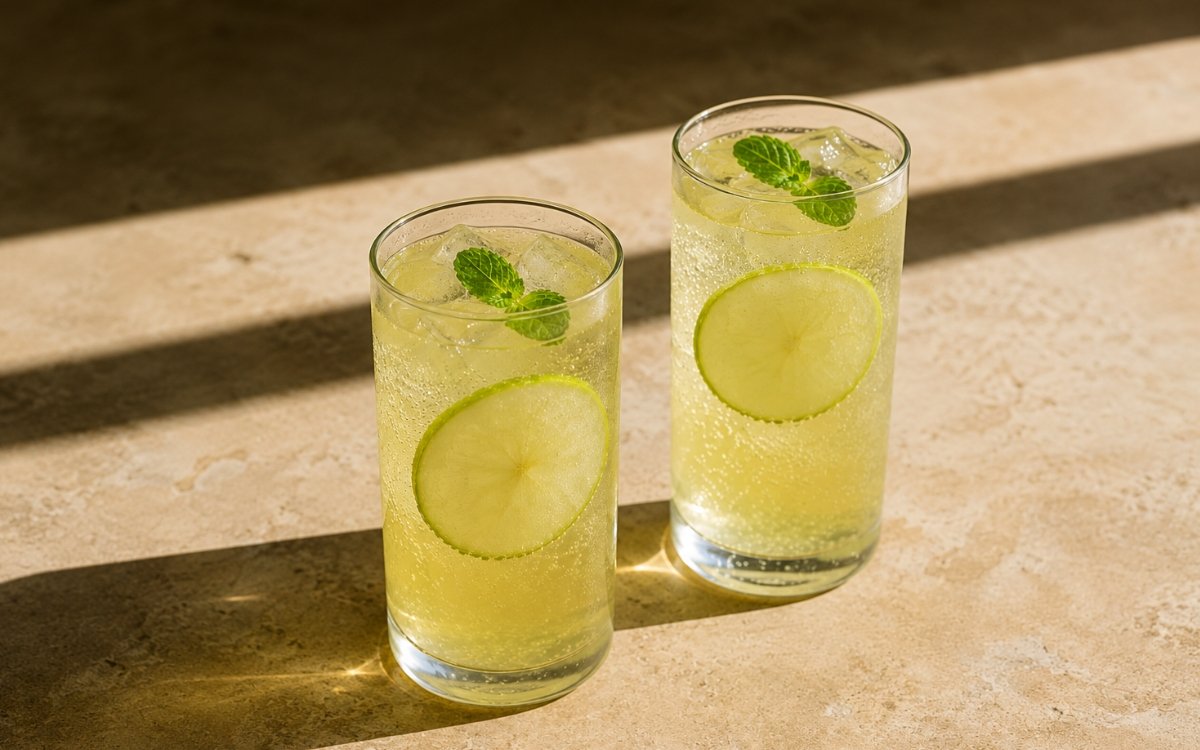
- Slice the garnish apple immediately before assembling the glasses — green apple oxidises rapidly and turns brown within 5 minutes of cutting. A brief dip in cold water with a squeeze of lime juice delays the browning if garnishing needs to be prepared slightly ahead. Fill four tall glasses generously with ice. Divide the chilled green apple base evenly — approximately 80–85ml per glass. Stir briefly against the ice. Top each glass with approximately 125ml of chilled club soda, pouring gently down the inner side. Stir once or twice gently. Slip a thin green apple slice beneath the ice in each glass — the skin's green edge visible against the pale liquid. Place a small mint sprig on top of the ice. Serve immediately.
Notes
Green apple variety selection is the most consequential choice in this recipe. Granny Smith — the archetypal green apple — has the highest malic acid concentration of any widely available apple variety and the lowest sugar content, producing the sharpest, most specifically vivid apple juice of any apple. The resulting base is specifically bright and tart rather than sweet and mild. Bramley apples, where available, have an even higher acidity but are primarily a cooking variety; Golden Delicious or Gala in their green-unripe form are milder and less specifically sharp. Always the sharpest, most acidic green apple available for this preparation.
The cold infusion approach for the honey base — rather than the heated syrup approach — is specifically appropriate for this preparation because the green apple's malic acid character is sharp and vivid without any cooked or concentrated quality. A warm ginger syrup's rounded, cooked-warm ginger character would be tonally inconsistent with the raw, sharp apple; cold-extracted ginger's bright, biting freshness matches and amplifies the apple's own sharp character.