
Creamy Zucchini Pasta with Burrata
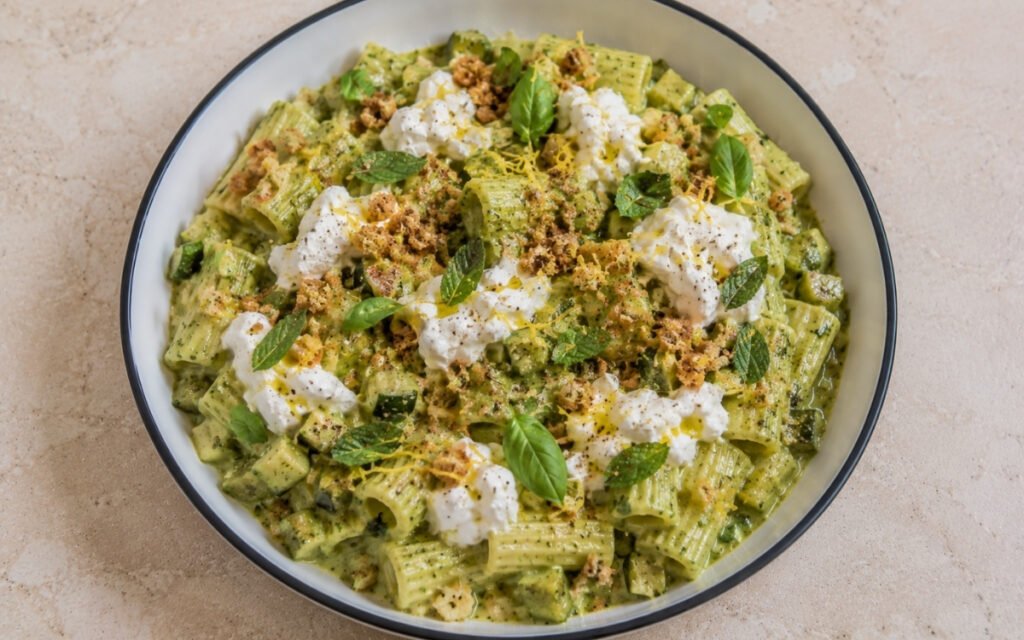
The technique that makes this recipe specifically excellent: half the zucchini is caramelised and kept whole for texture, the other half is blended with pasta water, cream, and Parmigiano into a vivid green sauce that is creamy without feeling heavy. The two halves reunite in the pan with the anchovy-garlic base, and the rigatoni finishes in the sauce. Then — at serving — torn burrata placed over the warm pasta, so the liquid cream interior of each piece pools into the sauce and the cold, fresh dairy contrast against the warm, vibrant green pasta is the specific experience that makes this dish feel genuinely restaurant-quality. Lemon breadcrumbs scattered over the top provide the final crunch. Thirty-five minutes and a composed, elegant bowl.
Prep Time : 15 min
Cook Time : 20 min
Servings : 4
15 min
20 min
4
Ingredients
For the Lemon Breadcrumbs
• 80g sourdough bread, torn into coarse crumbs
• 30ml extra virgin olive oil
• Zest of 1 lemon
• Pinch of salt
For the Zucchini Sauce
• 600g zucchini (about 3 medium), diced into 1cm cubes
• 90ml extra virgin olive oil, divided
• 4 garlic cloves, thinly sliced
• 2 anchovy fillets, minced — this one on Amazon
• ½ tsp red pepper flakes
• 150ml pasta cooking water
• 80ml heavy cream
• 45g unsalted butter
• 60g Parmigiano-Reggiano, finely grated, divided — this one on Amazon
• 45ml fresh lemon juice, from about 1 lemon
• Salt and freshly ground black pepper to taste
For Finishing
• 200g burrata cheese, torn into pieces
• 15g fresh basil leaves, torn
• 10g fresh mint leaves, torn
• Extra virgin olive oil for drizzling
• Freshly ground black pepper
This post may contain affiliate links. As an Amazon Associate I earn from qualifying purchases, at no additional cost to you.
Directions
- Make the Lemon Breadcrumbs
Heat the 30ml of olive oil in a large skillet over medium heat until shimmering. Add the 80g of torn sourdough crumbs — coarse, irregular pieces rather than fine, uniform crumbs, which produce a more interesting, more texturally dramatic topping with better crunch retention. Cook, stirring constantly, for 4–5 minutes until the crumbs are deeply golden and crispy throughout — not just coloured on the surface but crunchy all the way through. The olive oil saturates each piece and the water in the bread evaporates during this cooking period, leaving behind a toasted, crispy crumb that holds its crunch at serving rather than softening immediately on contact with the warm pasta. Add the lemon zest and a pinch of salt in the final 30 seconds of toasting, tossing quickly to coat — the zest’s aromatic oils bloom briefly in the hot oil and adhere to the toasted crumbs, producing a crumb that smells and tastes of both toasted bread and fragrant lemon. Transfer to a bowl and set aside. Wipe the skillet clean. - Cook the Pasta
Bring a large pot of heavily salted water to a full rolling boil. Add the rigatoni and cook until exactly 2 minutes shy of the package’s al dente time — the pasta finishes cooking in the sauce. Before draining, reserve 200ml of the starchy pasta water in a heatproof jug. Drain without rinsing. - Caramelise the Zucchini
This is the most technically important step in the recipe and the one where patience produces the most dramatic quality difference. Heat the 50ml of olive oil in the wiped skillet over medium-high heat until shimmering. Add the diced zucchini in a single layer — work in two batches if the skillet cannot accommodate all 600g without crowding, because crowded zucchini releases its moisture and steams rather than searing, producing pale, soft, waterlogged pieces instead of the deeply golden caramelised cubes that contribute the sauce’s character. With a single layer and space between pieces, the zucchini’s surface moisture evaporates immediately and the direct pan contact produces caramelisation. Leave undisturbed for 3 minutes — no stirring, no moving. The bottom surface of each piece must have uninterrupted contact with the hot pan for long enough to develop genuine golden colour. After 3 minutes, toss or stir once and cook for another 2–3 minutes until the zucchini is tender throughout and golden on most surfaces. Season with salt and black pepper. Remove approximately half the zucchini — approximately 300g — and transfer it to a blender. Leave the remaining half in the skillet. The strategic split is the architectural decision that defines this dish: the blended half becomes the smooth, vibrant green sauce; the intact half provides the textural, slightly charred zucchini pieces that are visible in the finished dish and provide a contrast between creamy sauce and distinct vegetable. - Build the Anchovy-Garlic Aromatic Base
Reduce the heat to medium-low. Add the remaining 40ml of olive oil to the skillet with the intact zucchini pieces. Add the thinly sliced garlic, the 2 minced anchovy fillets, and the red pepper flakes. Cook for 1–2 minutes, stirring constantly, until the garlic is fragrant and very lightly golden. The anchovies — the same invisible-but-essential umami foundation technique as in puttanesca — melt almost completely into the olive oil within 60–90 seconds of minced contact with the hot fat, distributing their glutamate-rich savoury depth through the oil without leaving any identifiable anchovy presence. Their role is to add the deep savoury foundation that prevents the zucchini sauce from tasting one-dimensionally sweet and vegetable-mild. At their small quantity — 2 fillets — they are completely undetectable as anchovy in the finished dish. The garlic and red pepper flakes bloom their aromatic and heat compounds into the anchovy-infused oil simultaneously. - Blend the Sauce
To the blender containing the reserved half of the caramelised zucchini, add 150ml of the reserved pasta water, the 80ml of heavy cream, and 30g (half the total) of the finely grated Parmigiano-Reggiano. Blend on high speed for 45–60 seconds until completely smooth — a vivid, uniform green cream with no visible zucchini pieces remaining. The blended sauce should look and behave like a pourable cream sauce — smooth, slightly thick, and vibrantly green from the cooked zucchini’s chlorophyll. The caramelised zucchini pieces used here produce a more complex, more deeply flavoured sauce than raw or simply sautéed zucchini would — the Maillard reaction compounds from the caramelisation distribute through the blended sauce, adding a slightly sweet, concentrated depth to every tablespoon. The pasta water’s starch and the cream’s fat combine during blending to produce the sauce’s emulsified, slightly creamy body. Pour the blended sauce into the skillet with the intact zucchini pieces and the anchovy-garlic base. Add the 45g of butter and stir until completely melted and incorporated — the butter adds richness and contributes to the sauce’s smooth, coating quality. - Finish the Pasta in the Sauce
Add the drained, underdone rigatoni and the 45ml of fresh lemon juice to the skillet. Increase the heat to medium. Toss continuously with tongs for 2–3 minutes, turning the rigatoni through the green sauce and ensuring the sauce coats every external surface and penetrates into each tube’s hollow interior. The lemon juice added at this stage — rather than during the sauce building — preserves its brightest volatile aromatic compounds by not subjecting them to extended heat, producing a more vivid, more fragrant lemon character than lemon added earlier would provide. The pasta’s surface starch continues to release into the sauce during this tossing, thickening and enriching it. Add splashes of the remaining pasta water if needed — the sauce should be loose enough to flow slightly when the pan is tilted, not tightly coating or dry. Remove from heat and stir in the torn basil, torn mint, and the remaining 30g of Parmigiano-Reggiano. Taste and adjust with additional salt, black pepper, or lemon juice. - Serve with Burrata
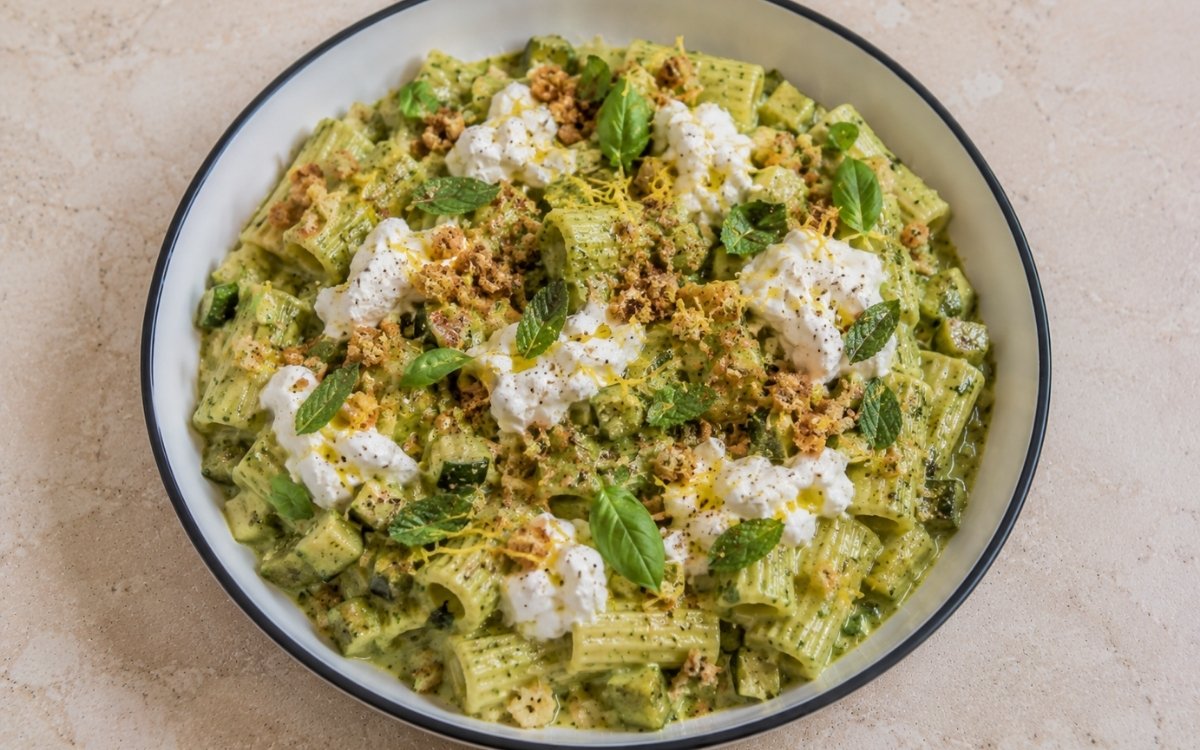
Divide among four warm shallow bowls immediately — the green colour of the zucchini sauce begins to fade slightly as the chlorophyll continues to be exposed to heat after cooking, and the dish is most visually vibrant in the first few minutes of plating. Over each bowl, distribute torn pieces of the 200g burrata — tear it directly from the ball just before serving, allowing the liquid cream interior to flow as each piece is placed. The contrast between the warm, vibrant-green pasta and the cool, creamy white burrata pieces is the visual and thermal signature of the dish — cool dairy against warm pasta is the specific eating experience this composition is designed to produce. Scatter a generous amount of the lemon breadcrumbs over each bowl — the crumbs must go on at the last possible moment before serving to preserve their crunch against the warm, moist pasta. Drizzle a small amount of extra-virgin olive oil over each bowl. Finish with freshly ground black pepper.
*Notes :
- The zucchini-splitting technique — half blended into the sauce, half kept whole — is the single most important structural decision in this recipe and worth examining in detail. Blending all the zucchini produces a sauce that is completely smooth and uniformly green but has no textural contrast and can feel monotonous despite its flavour. Keeping all the zucchini whole produces a pasta where the sauce is only lightly thickened by the pasta water and cream without the body that blended zucchini adds — the sauce does not coat the pasta with sufficient richness. The split produces the best of both: a smooth, creamy, coating sauce base from the blended half, and identifiable zucchini pieces providing textural interest, visual variety, and a concentrated caramelised zucchini flavour presence throughout the dish.
- Burrata must be torn immediately before serving and placed on the pasta — never cooked into the sauce, never added when the pasta is still in the pan, and never prepared more than a minute before the bowl is carried to the table. Burrata’s specific quality is the contrast between its outer mozzarella shell and its liquid cream and stracciatella interior. Placed on warm pasta, the exterior mozzarella softens while the interior cream melts into the pasta sauce — producing a pooling of cool, fresh dairy that combines with the warm green sauce at the edges of each piece into something more compelling than either the sauce or the burrata alone. Cooked burrata loses this contrast entirely.
- The lemon breadcrumbs are a technique borrowed from the Southern Italian pangrattato tradition — toasted bread as a textural and flavour finishing element. The sourdough’s slight sourness and open crumb structure produces breadcrumbs with more character and more varied texture than white sandwich bread. The lemon zest added in the final 30 seconds of toasting adheres to the hot, oil-slicked crumbs and its aromatic oils bloom and fix to the surface, producing a crumb that provides both lemon aroma and crunch simultaneously.
Why This Recipe Works
This recipe works because every component — the caramelised zucchini split between sauce and texture, the invisible anchovy umami base, the blended sauce with pasta water starch, the lemon juice added at the last cooking stage, the burrata placed cold at serving, and the breadcrumbs scattered at the last moment — is positioned at the step where it contributes most effectively.
Nothing is added before its time; nothing is cooked longer than it should be. The result is a dish where every element is at its textural and aromatic peak simultaneously when the bowl reaches the table.
Ingredient Breakdown
Zucchini (600g, Half Caramelised-and-Blended, Half Kept Whole)
The primary ingredient in two simultaneous expressions — blended into the green sauce for body and colour, kept whole for textural identity and visible presence.
Anchovy Fillets (2, Minced and Dissolved)
The invisible savoury foundation — melted completely into the oil, providing the glutamate depth that prevents the zucchini sauce from tasting flat without any detectable anchovy presence.
Heavy Cream and Pasta Water (In the Blender)
The sauce medium — cream for richness, pasta water starch for emulsification and body; blended together with the zucchini for a smooth, coating consistency.
Butter
The finishing richness — stirred into the sauce after blending for smooth, coating quality and gentle dairy depth.
Lemon Juice (Added During Pasta Finishing)
Acid brightness added late in the process to preserve its most volatile aromatic compounds — the specific citrus freshness that makes the green sauce vivid rather than heavy.
Burrata (Torn at Serving)
The cold, creamy contrast — placed at the last moment so the liquid interior melts into the warm green sauce at each bowl’s surface while the pasta remains warm beneath it.
Lemon Breadcrumbs (Added at the Last Possible Moment)
Toasted sourdough crumbs with lemon zest — scattered immediately before serving to preserve their crunch against the warm, moist pasta.
Flavor Structure Explained
This pasta follows a layered balance model:
- Fresh vegetal core (zucchini, lemon)
- Savory umami depth (anchovy, garlic, Parmesan)
- Creamy rich body (cream, butter)
- Crisp aromatic topping (lemon breadcrumbs)
- Cool dairy finish (burrata)
Zucchini defines the base with mild sweetness and fresh vegetal character, lifted by lemon’s brightness. Anchovy, garlic, and Parmesan anchor the profile with deep umami, giving the dish substance. Cream and butter build a smooth, coating richness that carries all flavors. Lemon breadcrumbs add crunch and aromatic lift, preventing the texture from feeling flat. Burrata finishes the dish with cool, creamy contrast, melting into the warm sauce and elevating both richness and complexity.
Common Mistakes to Avoid
- Not Caramelising the Zucchini Properly – Crowded or moved-too-soon zucchini steams rather than caramelises — producing pale, waterlogged pieces without the sweet, concentrated depth that makes the sauce. Work in batches and leave completely undisturbed for the first 3 minutes.
- Blending the Zucchini Without Draining – Excess water in the zucchini pieces going into the blender produces a thinner, less cohesive sauce. The caramelisation step drives off much of this moisture — properly caramelised zucchini is drier and more concentrated than simply cooked zucchini.
- Adding Burrata to the Pasta While Still in the Pan – Burrata in a hot pan loses its cream interior and becomes simply melted mozzarella. Always add to the plated bowl immediately before serving.
- Scattering Breadcrumbs Too Early – Breadcrumbs placed on warm pasta more than 30 seconds before serving absorb moisture and lose their crunch. Always add at the absolute last moment.
- Skipping the Anchovies – Without the two anchovy fillets the sauce tastes noticeably flatter and less complex — the invisible umami depth they provide cannot be substituted by salt alone. Include them regardless of aversion — they are undetectable in the finished dish.
- Adding Lemon Juice Too Early – Lemon juice added at the sauce-building stage loses much of its volatile aromatic freshness to heat. Added during the pasta-finishing step it retains its most vibrant character.
Variations
Without Anchovies
Omit the anchovies and add 15ml of soy sauce to the garlic step instead — not a perfect substitute but it provides some of the umami depth the anchovies would have contributed. The sauce will be slightly less complex but still excellent.
Zucchini Pasta With Prawns
Add 300g of large peeled prawns to the skillet after the garlic-anchovy step, searing for 90 seconds per side before adding the blended sauce. Return them with the pasta at the tossing stage. The prawn’s sweetness has a specific affinity with zucchini and lemon.
Without Burrata
Replace the burrata with torn fresh mozzarella or a generous amount of fresh ricotta dolloped over each bowl. Neither produces the same liquid-cream contrast as burrata but both provide comparable fresh dairy cooling against the warm green pasta.
Stracciatella Version
Replace the whole burrata with 200g of stracciatella — the shredded cream-enriched interior of burrata sold separately. Spoon directly over each bowl for the cream-pooling effect without the mozzarella outer shell.
Storage & Make-Ahead
The assembled pasta can be refrigerated for up to 2 days, as long as the burrata and breadcrumbs are stored separately. During storage, the pasta will absorb some of the green sauce and the color may fade slightly. To reheat it, warm it gently in a pan over low heat with 2 to 3 tablespoons of water or cream per portion, stirring carefully. Add fresh torn burrata and fresh lemon breadcrumbs just before serving.
The blended zucchini sauce on its own can be refrigerated for up to 3 days, without the pasta, burrata, or breadcrumbs. This is the most practical make-ahead method. The color may darken slightly during storage, but the flavor will remain the same.
Lemon breadcrumbs can be refrigerated in an airtight container for up to 3 days. They may lose some of their crispness over time, but you can quickly crisp them again in a dry pan for about 60 seconds before serving.
Frequently Asked Questions
What is burrata and how is it different from mozzarella?
Burrata is a fresh Italian cheese with an outer shell of mozzarella encasing a filling of stracciatella — shredded mozzarella soaked in fresh cream. When torn, the liquid cream interior flows from the centre, creating a pool of fresh dairy. Mozzarella is firmer and less creamy throughout. Burrata’s specific quality in this dish is the flowing cream interior — its thermal contrast with the warm pasta and the way it pools into the green sauce is what makes it the correct choice rather than simply a more expensive mozzarella.
Why sour dough for the breadcrumbs?
Sourdough’s slightly open crumb structure and mild tanginess produce breadcrumbs with more character and more varied texture than white sandwich bread — irregular pieces that toast to different levels of crispness simultaneously, producing a more interesting topping. The sourdough’s tang also complements the lemon zest.
How do I prevent the zucchini from being watery?
The caramelisation step — high heat, single layer, undisturbed for 3 minutes — drives off much of the zucchini’s moisture before the pieces are used in the sauce. Never salt the zucchini before searing (salt draws out moisture) and never crowd the pan.
Why is the sauce green rather than cream-coloured?
The zucchini’s chlorophyll — the green pigment in the flesh and particularly the skin — blends into the cream and pasta water during the blending step, producing the sauce’s vivid green colour. Using zucchini with skin on rather than peeled produces a more vividly green sauce.
Can I make the blended sauce in advance?
Yes — the blended sauce refrigerates for up to 3 days and can be reheated gently from cold with a small amount of additional water or cream while the pasta cooks. The colour may darken slightly but the flavour is unaffected.
Nutrition Facts
( per serving )
Calories
~1080 kcal
Protein
25 g
Fat
64 g
Carbs
90 g
Calories
~1080 kcal
Protein
25 g
Fat
64 g
Carbs
90 g
Related Recipes
Related Recipes

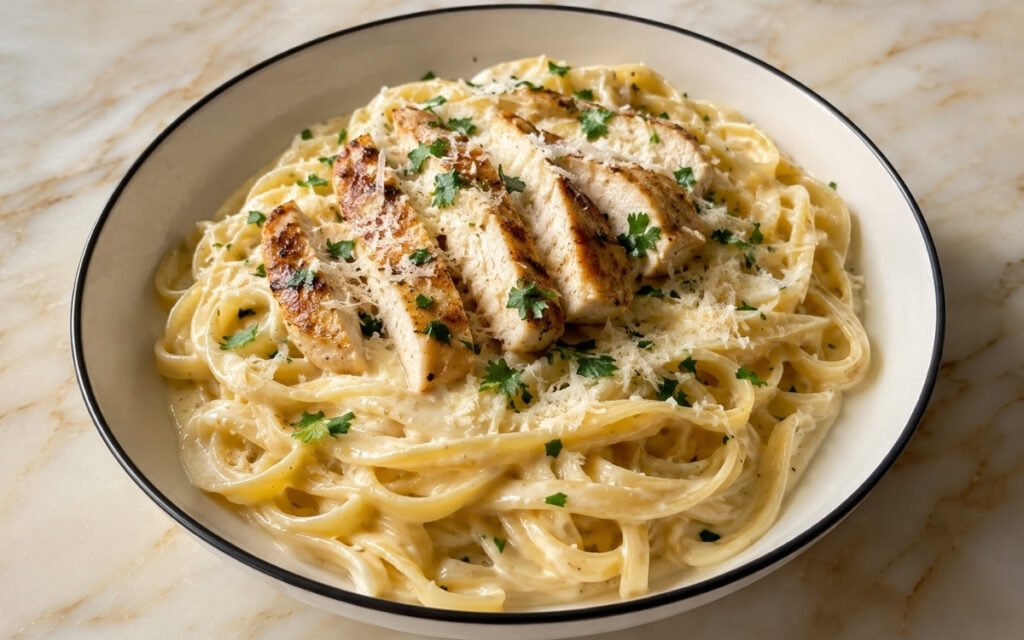
Chicken Fettuccine Alfredo
Seared chicken over fettuccine emulsified with butter, Parmigiano, and pasta water — the authentic no-cream Alfredo, 40 minutes.
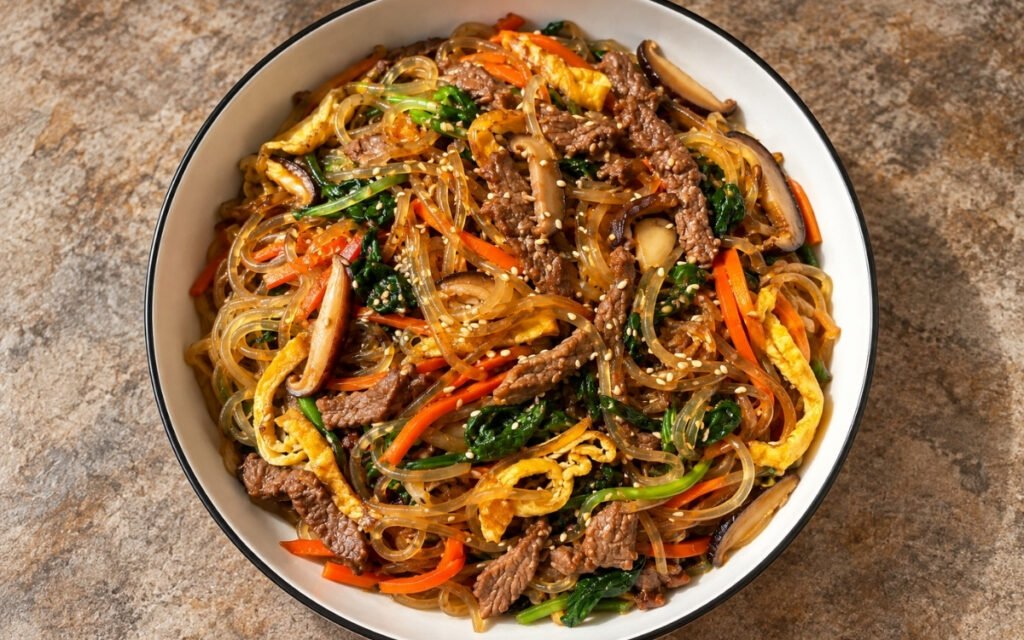
Japchae — Korean Glass Noodle Stir-Fry
Chewy sweet potato glass noodles, thin strips of beef, spinach, shiitake mushrooms, carrot, onion, and egg ribbons in glossy soy-sesame seasoning.
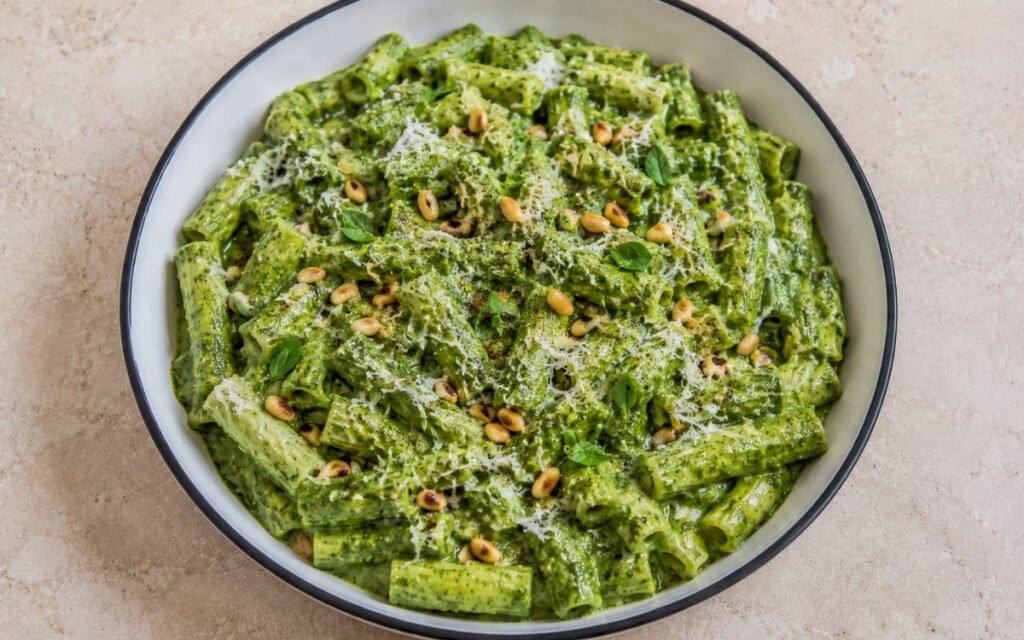
Creamy Spinach & Herb Green Sauce Pasta
Four herbs blended raw with cream cheese and Parmigiano — vivid green, rich, and ready in 35 minutes.
You might also like
You might also like
Crispy Buffalo Chicken Tenders
Chicken tenderloins breaded in three stages, fried until golden, oven-finished — tossed in buttery buffalo sauce just before serving. Crispy and tangy.
Chili Lime Shrimp
Shrimp dried and seared, garlic and chilies added after the flip, glazed in lime honey butter sauce built in the pan. Bright and spicy.
Grilled Chicken Skewers
Juicy grilled chicken skewers lacquered with caramelized honey–sriracha glaze for smoky, sticky heat.
Creamy Zucchini Pasta with Burrata
Ingredients
Method
- Heat the 30ml of olive oil in a large skillet over medium heat until shimmering. Add the 80g of torn sourdough crumbs — coarse, irregular pieces rather than fine, uniform crumbs, which produce a more interesting, more texturally dramatic topping with better crunch retention. Cook, stirring constantly, for 4–5 minutes until the crumbs are deeply golden and crispy throughout — not just coloured on the surface but crunchy all the way through. The olive oil saturates each piece and the water in the bread evaporates during this cooking period, leaving behind a toasted, crispy crumb that holds its crunch at serving rather than softening immediately on contact with the warm pasta. Add the lemon zest and a pinch of salt in the final 30 seconds of toasting, tossing quickly to coat — the zest’s aromatic oils bloom briefly in the hot oil and adhere to the toasted crumbs, producing a crumb that smells and tastes of both toasted bread and fragrant lemon. Transfer to a bowl and set aside. Wipe the skillet clean.
- Bring a large pot of heavily salted water to a full rolling boil. Add the rigatoni and cook until exactly 2 minutes shy of the package’s al dente time — the pasta finishes cooking in the sauce. Before draining, reserve 200ml of the starchy pasta water in a heatproof jug. Drain without rinsing.
- This is the most technically important step in the recipe and the one where patience produces the most dramatic quality difference. Heat the 50ml of olive oil in the wiped skillet over medium-high heat until shimmering. Add the diced zucchini in a single layer — work in two batches if the skillet cannot accommodate all 600g without crowding, because crowded zucchini releases its moisture and steams rather than searing, producing pale, soft, waterlogged pieces instead of the deeply golden caramelised cubes that contribute the sauce’s character. With a single layer and space between pieces, the zucchini’s surface moisture evaporates immediately and the direct pan contact produces caramelisation. Leave undisturbed for 3 minutes — no stirring, no moving. The bottom surface of each piece must have uninterrupted contact with the hot pan for long enough to develop genuine golden colour. After 3 minutes, toss or stir once and cook for another 2–3 minutes until the zucchini is tender throughout and golden on most surfaces. Season with salt and black pepper. Remove approximately half the zucchini — approximately 300g — and transfer it to a blender. Leave the remaining half in the skillet. The strategic split is the architectural decision that defines this dish: the blended half becomes the smooth, vibrant green sauce; the intact half provides the textural, slightly charred zucchini pieces that are visible in the finished dish and provide a contrast between creamy sauce and distinct vegetable.
- Reduce the heat to medium-low. Add the remaining 40ml of olive oil to the skillet with the intact zucchini pieces. Add the thinly sliced garlic, the 2 minced anchovy fillets, and the red pepper flakes. Cook for 1–2 minutes, stirring constantly, until the garlic is fragrant and very lightly golden. The anchovies — the same invisible-but-essential umami foundation technique as in puttanesca — melt almost completely into the olive oil within 60–90 seconds of minced contact with the hot fat, distributing their glutamate-rich savoury depth through the oil without leaving any identifiable anchovy presence. Their role is to add the deep savoury foundation that prevents the zucchini sauce from tasting one-dimensionally sweet and vegetable-mild. At their small quantity — 2 fillets — they are completely undetectable as anchovy in the finished dish. The garlic and red pepper flakes bloom their aromatic and heat compounds into the anchovy-infused oil simultaneously.
- To the blender containing the reserved half of the caramelised zucchini, add 150ml of the reserved pasta water, the 80ml of heavy cream, and 30g (half the total) of the finely grated Parmigiano-Reggiano. Blend on high speed for 45–60 seconds until completely smooth — a vivid, uniform green cream with no visible zucchini pieces remaining. The blended sauce should look and behave like a pourable cream sauce — smooth, slightly thick, and vibrantly green from the cooked zucchini’s chlorophyll. The caramelised zucchini pieces used here produce a more complex, more deeply flavoured sauce than raw or simply sautéed zucchini would — the Maillard reaction compounds from the caramelisation distribute through the blended sauce, adding a slightly sweet, concentrated depth to every tablespoon. The pasta water’s starch and the cream’s fat combine during blending to produce the sauce’s emulsified, slightly creamy body. Pour the blended sauce into the skillet with the intact zucchini pieces and the anchovy-garlic base. Add the 45g of butter and stir until completely melted and incorporated — the butter adds richness and contributes to the sauce’s smooth, coating quality.
- Add the drained, underdone rigatoni and the 45ml of fresh lemon juice to the skillet. Increase the heat to medium. Toss continuously with tongs for 2–3 minutes, turning the rigatoni through the green sauce and ensuring the sauce coats every external surface and penetrates into each tube’s hollow interior. The lemon juice added at this stage — rather than during the sauce building — preserves its brightest volatile aromatic compounds by not subjecting them to extended heat, producing a more vivid, more fragrant lemon character than lemon added earlier would provide. The pasta’s surface starch continues to release into the sauce during this tossing, thickening and enriching it. Add splashes of the remaining pasta water if needed — the sauce should be loose enough to flow slightly when the pan is tilted, not tightly coating or dry. Remove from heat and stir in the torn basil, torn mint, and the remaining 30g of Parmigiano-Reggiano. Taste and adjust with additional salt, black pepper, or lemon juice.
- Divide among four warm shallow bowls immediately — the green colour of the zucchini sauce begins to fade slightly as the chlorophyll continues to be exposed to heat after cooking, and the dish is most visually vibrant in the first few minutes of plating. Over each bowl, distribute torn pieces of the 200g burrata — tear it directly from the ball just before serving, allowing the liquid cream interior to flow as each piece is placed. The contrast between the warm, vibrant-green pasta and the cool, creamy white burrata pieces is the visual and thermal signature of the dish — cool dairy against warm pasta is the specific eating experience this composition is designed to produce. Scatter a generous amount of the lemon breadcrumbs over each bowl — the crumbs must go on at the last possible moment before serving to preserve their crunch against the warm, moist pasta. Drizzle a small amount of extra-virgin olive oil over each bowl. Finish with freshly ground black pepper.