
Creamy Pumpkin Sauce Pasta with Pancetta
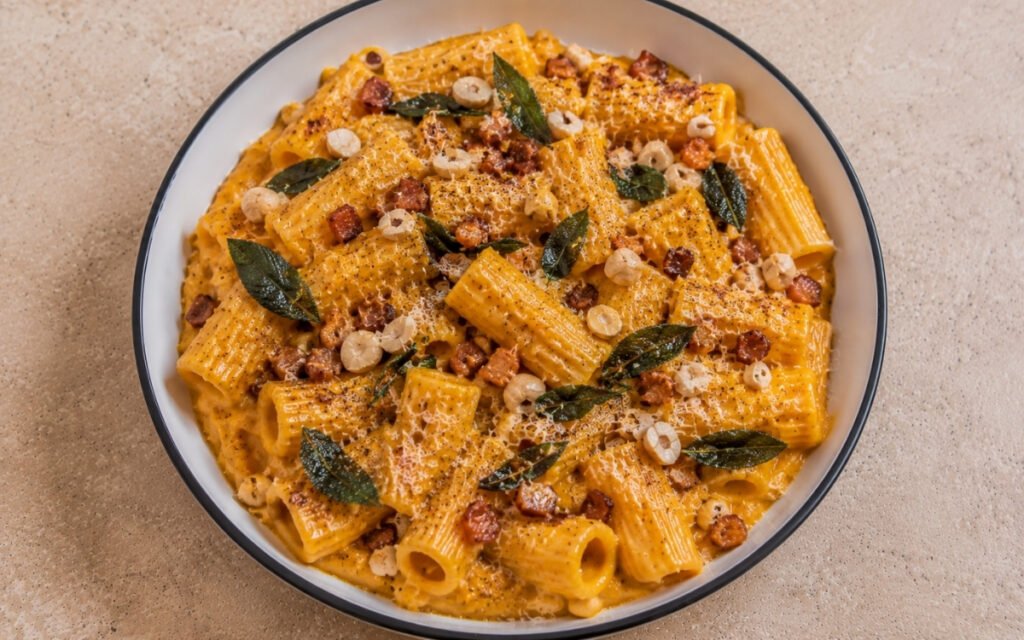
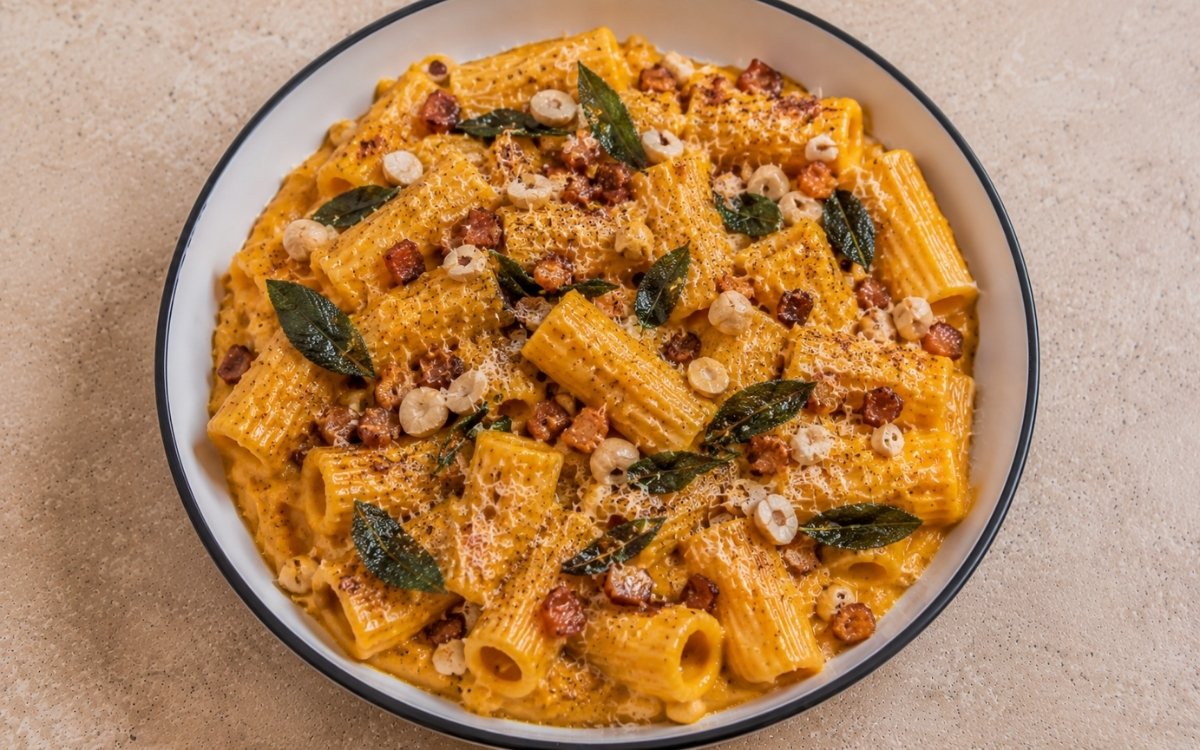
The autumn pasta that earns its place as a seasonal centrepiece — a velvety pumpkin cream sauce enriched with pancetta fat, nutmeg, and cayenne, finished with Parmigiano and starchy pasta water into something silky enough to coat every rigatoni tube inside and out. The toppings are not garnish but an integral second layer of flavour and texture: crispy pancetta rendered until its fat has done its work in the sauce, sage leaves fried until brittle and aromatic in that same fat, and toasted hazelnuts that provide the specific nutty crunch that this combination of sweet, creamy, and savoury specifically needs. Forty minutes, one pan, and the most satisfying autumn bowl on this site.
Prep Time : 15 min
Cook Time : 25 min
Servings : 4
15 min
25 min
4
Ingredients
For the Creamy Pumpkin Sauce
• 450g pumpkin purée, preferably homemade from roasted kabocha or butternut squash
• 200ml heavy cream (35% fat)
• 120ml whole milk
• 60g unsalted butter
• 3 garlic cloves, approximately 12g, minced
• 2g freshly grated nutmeg, about ½ tsp
• 1g cayenne pepper, about ¼ tsp
• Salt and freshly ground black pepper to taste
• 240ml reserved pasta cooking water
For the Toppings
• 120g pancetta, diced into small cubes — this one on Amazon
• 15 fresh sage leaves
• 60g hazelnuts, roughly chopped
• 80g Parmigiano-Reggiano, finely grated, plus extra for serving — this one on Amazon
• 15ml extra virgin olive oil
This post may contain affiliate links. As an Amazon Associate I earn from qualifying purchases, at no additional cost to you.
Directions
- Toast the Hazelnuts
Place the 60g of roughly chopped hazelnuts in a dry skillet over medium heat. Toast for 4–5 minutes, tossing or stirring frequently throughout — hazelnuts have a high oil content that makes them move from fragrant and golden to burnt and bitter quickly without the constant attention that less oily nuts require. The target is a deep, even golden-brown across the surface of each piece, with the kitchen clearly smelling of toasted nut. Transfer immediately to a plate as soon as this colour is reached — they continue to toast on any residual heat of the pan if left. Set aside for the topping. Toasted hazelnuts provide a specific deeply nutty, slightly bitter aromatic character that is completely different from raw hazelnuts and is the specific textural and flavour contrast that makes this pasta composition work — their crunch against the smooth, creamy sauce, and their earthy bitterness against the pumpkin’s sweetness, are both essential. - Cook the Pasta
Bring a large pot of water with the 40g of salt to a full rolling boil. The water should taste aggressively salted — 40g for a standard pasta pot is a generous quantity that ensures the rigatoni is properly seasoned throughout. Add the rigatoni and cook until exactly 2 minutes shy of the package’s al dente time. The pasta finishes cooking in the sauce during the final tossing step — pulling it significantly underdone means it arrives in the sauce with sufficient cooking time remaining to absorb the pumpkin cream’s character directly into its structure. Before draining, reserve 240ml of the starchy pasta water in a heatproof jug and keep it warm throughout. Drain without rinsing. - Render the Pancetta
In a large, deep skillet over medium heat, add the diced pancetta without any additional oil — pancetta contains sufficient fat for self-rendering. Cook for 6–8 minutes, stirring occasionally, until the cubes are deeply golden and crispy on most surfaces and the fat has rendered completely into the pan. The rendered pancetta fat is the cooking medium for the sage and the garlic — it carries the cured pork’s savory, slightly smoky depth through both aromatics and into the sauce base. Use a slotted spoon to transfer the crispy pancetta to a paper-towel-lined plate, leaving all the rendered fat in the pan. Do not drain the fat — every drop is flavour. - Fry the Sage Leaves
Add the 60g of butter to the rendered pancetta fat in the pan over medium heat. Allow the butter to melt completely into the fat and begin to foam — the foam indicates the water in the butter is evaporating and the milk solids are approaching the temperature at which they will begin to brown. Add the 15 fresh sage leaves to the foaming butter-pancetta fat. The leaves will sizzle immediately and dramatically — this is correct and expected. Fry for 45–60 seconds, turning the leaves once with tongs or a fork at the 20-second mark. Watch continuously and do not leave the pan unattended during this step. The target is crispy, aromatic, still-bright-green leaves — the moment any leaf begins to darken beyond bright green toward olive or brown, remove all leaves immediately. Over-fried sage tastes bitter and its characteristic camphor-and-floral aromatic character is replaced by a harsh, charred note. Properly fried sage is one of the most specific and irreplaceable aromatic elements in Italian cooking — it loses its volatile aromatic compounds gradually as it cooks and transitions from fragrant to bitter in under 30 seconds past the correct point. Transfer the fried sage leaves to the plate with the pancetta. The butter and fat remaining in the pan — now infused with sage’s aromatic oils — is the foundation of the sauce. - Build the Pumpkin Cream Sauce
Reduce the heat to medium-low. Add the minced garlic to the sage-infused butter-pancetta fat and cook for 30 seconds, stirring continuously — at this reduced heat level, the garlic becomes fragrant and sweet rather than sharp, and the 30-second window is all it needs before the pumpkin goes in. Add the 450g of pumpkin purée and stir it into the aromatic fat and garlic, pressing and folding to combine. Cook for 2–3 minutes, stirring frequently — this brief direct-heat cooking of the purée before the liquid is added deepens its flavour through a mild caramelisation of its natural sugars, concentrates it slightly, and drives off some of the residual moisture that would otherwise dilute the finished sauce. Pour in the 200ml of heavy cream and 120ml of whole milk, whisking continuously until the mixture is completely smooth and uniform. The combination of cream and milk rather than cream alone is calibrated for this specific sauce — cream alone produces a richer, heavier result where the pumpkin’s delicate sweetness can be masked by the dairy fat; the milk lightens the cream’s richness and produces a sauce where the pumpkin’s character remains the primary flavour. Season with the 2g of nutmeg, 1g of cayenne, a generous pinch of salt, and several grinds of black pepper. The nutmeg is the classic spice pairing for pumpkin and squash in Italian cooking — at this quantity it adds the specific warm, slightly floral-sweet background note that amplifies pumpkin’s inherent character without announcing itself as nutmeg. The cayenne’s background heat prevents the cream and pumpkin’s sweetness from making the sauce feel cloying. Bring to a gentle simmer and cook for 3–4 minutes, stirring occasionally, until the sauce has thickened slightly and the flavours have integrated. - Finish the Pasta in the Sauce
Add the partially cooked rigatoni directly to the pumpkin cream sauce in the skillet along with 180ml of the reserved pasta water. Increase the heat to medium-high. Toss and stir continuously for 2–3 minutes — turning the rigatoni through the sauce, ensuring it coats every external surface and penetrates into the hollow centres of each tube. The pasta’s surface starch releases into the pumpkin cream during this tossing, thickening and enriching the sauce further and producing the emulsified, clinging coating that distinguishes pasta finished in a sauce from pasta simply plated alongside one. The sauce should cling to the pasta with a thick, slightly glossy coating after 2–3 minutes of tossing — not watery, not dry, but specifically coating. If it tightens beyond the correct consistency, add the remaining 60ml of reserved pasta water in small increments while continuing to toss. - Add Parmigiano and Serve
Remove the pan from the heat. Add the 80g of finely grated Parmigiano-Reggiano and stir to incorporate — the residual heat of the pasta and sauce melts the cheese smoothly without it seizing, adding a deep savoury, umami-rich layer that rounds the sweetness of the pumpkin and the cream’s richness into a fully balanced, complete sauce. Divide among four warm bowls immediately. Place the toppings over each bowl — the crispy pancetta pieces first, then the fried sage leaves distributed across the surface, then the toasted hazelnuts scattered generously. Drizzle the 15ml of extra-virgin olive oil in a thin stream over each bowl. Finish with additional finely grated Parmigiano and a confident crack of black pepper. Serve without delay.
*Notes :
- Homemade pumpkin or squash purée is the better choice over canned for this recipe for two specific reasons. First, kabocha squash and butternut squash roasted whole or halved at 200°C until completely tender produce a purée with a more concentrated, more complex, more naturally sweet flavour than canned pumpkin — which is often made from Dickinson pumpkin, a variety with a less vibrant flavour than kabocha or butternut. Second, homemade purée has lower moisture content than canned — roasting drives off significant water content, producing a denser purée that thickens the sauce more effectively. To make homemade purée: halve a kabocha squash or butternut squash, remove seeds, drizzle with olive oil, and roast cut-side down at 200°C for 40–50 minutes until completely tender. Scoop the flesh and blend until completely smooth. Canned pumpkin is an entirely acceptable shortcut — simply choose plain pumpkin purée rather than pumpkin pie filling, which contains added spices and sugar that would conflict with this recipe’s specific seasoning.
- The fried sage technique is one of the most useful and most underused in Italian cooking. Sage leaves fried for 45–60 seconds in hot butter or oil become brittle, concentrated versions of their raw selves — their volatile aromatic compounds, which in raw sage are assertive and slightly medicinal at room temperature, transform into a more complex, camphor-sweet, deeply aromatic character when briefly exposed to high heat. The result crumbles pleasantly when bitten and releases a burst of concentrated sage aroma. The same technique works with thyme and rosemary. The fried leaves can be prepared up to 30 minutes before serving and set aside — they remain crispy at room temperature for this period.
Why This Recipe Works
This recipe works because it uses the pancetta rendering step to produce a fat that carries the dish’s savoury depth before the sauce is built, and uses that same pan sequentially for the sage frying, the garlic blooming, and the sauce building — meaning every element contributes to the same flavoured cooking medium that the pumpkin eventually goes into.
The pasta finishing step adds starch to an already-rich sauce, producing the specific coating quality that makes the dish feel restaurant-calibre. And the toppings — added at serving rather than cooked into the sauce — provide a textural and flavour contrast layer that the dish needs to balance its sweetness and creaminess.
Ingredient Breakdown
Pumpkin Purée (450g)
The primary flavour and sauce base — roasted kabocha or butternut squash produces a more complex, more concentrated result than canned; briefly cooked in the fat before the cream is added to deepen its flavour.
Pancetta (Rendered, Fat Retained)
The savoury fat contributor and crispy topping — the rendered fat is the cooking medium for the sage, garlic, and eventually the sauce base; the crispy pieces provide salt, pork flavour, and textural contrast at serving.
Fried Sage Leaves
The irreplaceable aromatic topping — 45–60 seconds in hot butter-pancetta fat transforms raw sage’s medicinal edge into complex, camphor-sweet aromatics and produces a brittle, concentrated leaf that crumbles into each bite.
Toasted Hazelnuts
The textural and flavour counterpoint — earthy, slightly bitter nuttiness against the smooth sweet cream and savoury pork provides the specific contrast that makes the dish three-dimensional.
Heavy Cream and Whole Milk
The sauce body — cream for richness, milk for lightness; the combination allows the pumpkin’s sweetness to remain the primary flavour rather than being overwhelmed by dairy fat.
Nutmeg and Cayenne
The specific spice pair for pumpkin — nutmeg amplifies pumpkin’s natural character; cayenne provides the background warmth that prevents the cream and pumpkin from tasting cloying.
Parmigiano-Reggiano (Off-Heat)
The savoury finishing layer — melted into the warm sauce off heat, adding umami depth that rounds the sweetness and completes the sauce.
Flavor Structure Explained
This pasta follows a layered balance model:
- Sweet creamy core (pumpkin, cream, milk, nutmeg)
- Savory umami depth (pancetta, garlic, Parmesan)
- Aromatic spice layer (sage, black pepper, cayenne)
- Textural contrast (crispy pancetta, fried sage, hazelnuts)
- Integrated richness (sauce + fat cohesion)
Pumpkin and cream define the base with smooth, sweet, warmly spiced richness that leads the profile. Pancetta, garlic, and Parmesan anchor the dish with savory depth, preventing the sweetness from becoming flat. Sage and spices sit on top as aromatic highlights, adding complexity and lift. Crispy elements introduce crunch, contrasting the soft sauce and keeping each bite engaging. The structure depends on all layers working together — richness balanced by depth, aromatics, and texture.
Common Mistakes to Avoid
- Burning the Sage – The 45–60 second window for correctly fried sage is narrow. Watch continuously and pull the moment the leaves are crispy — any darkening beyond bright green means bitterness rather than aroma.
- Not Cooking the Pumpkin Purée in the Fat Before Adding Cream – Pumpkin purée added directly to the cream without the 2–3 minute direct-heat step lacks the slight caramelisation and concentrated sweetness that makes the sauce’s flavour vivid. Always cook the purée in the fat briefly first.
- Over-thickening the Sauce – Pumpkin purée produces a sauce that thickens more aggressively than cream alone during the pasta tossing step. Add pasta water incrementally and stop when the sauce coats the pasta — not when it is dry.
- Not Reserving Pasta Water – The starchy water is the consistency adjustment tool throughout the sauce-building and pasta-finishing steps. Reserve the full 240ml.
- Adding All Toppings Before Serving – The pancetta, sage, and hazelnuts lose their textural identity if added to the sauce during cooking — their crispy, crunchy character is specifically a serving-moment contrast. Always add immediately before serving.
- Using Pumpkin Pie Filling Instead of Plain Pumpkin Purée – Pumpkin pie filling contains added sugar and spices that conflict with this recipe’s specific seasoning. Always use plain pumpkin purée.
Variations
Vegetarian Version
Omit the pancetta entirely. Replace the pancetta fat with an additional 30g of butter and 15ml of olive oil for the sage frying step. Add 30g of toasted pine nuts alongside the hazelnuts as a supplementary topping element that compensates for the absent pancetta crunch.
Butternut Squash Version
Replace the pumpkin purée with roasted butternut squash purée for a slightly sweeter, more fibrous result with a deeper orange colour. The preparation and technique are identical.
Spicy Version
Double the cayenne to 2g and add ½ tsp of red pepper flakes to the garlic step for a version where the warmth is a more prominent note rather than a subtle background correction.
Walnut Version
Replace the hazelnuts with 60g of roughly chopped toasted walnuts — slightly more bitter and more assertively earthy than hazelnuts, producing a more robust textural topping with less of the hazelnuts’ specific sweet nuttiness.
Storage & Make-Ahead
The assembled pasta can be refrigerated for up to 3 days. During storage, the pasta will absorb the pumpkin cream sauce and thicken considerably. To reheat it, warm it gently in a pan over low heat with 2 to 3 tablespoons of milk or cream per portion, stirring until the sauce returns to a creamy consistency. Add the toppings fresh when reheating, since pancetta, sage, and hazelnuts lose their texture when stored with the pasta.
The pumpkin cream sauce on its own can be refrigerated for up to 4 days and reheats smoothly with gentle stirring. This is the most practical make-ahead method: prepare the sauce base up to 2 days in advance, then cook the pasta fresh and add fresh toppings when you are ready to serve.
The pancetta and toasted hazelnuts can be prepared up to 2 hours ahead and kept at room temperature. Fried sage should be made no more than 30 minutes in advance if you want it to stay as crisp as possible.
Frequently Asked Questions
What type of pumpkin should I use?
Kabocha squash produces the most complex, richest flavour — its flesh is denser, sweeter, and more concentrated than standard carving pumpkins. Butternut squash is the most widely available substitute with a comparable sweet, smooth flavour. Avoid large carving pumpkins — their flesh is watery and bland. Canned plain pumpkin purée is a completely valid shortcut; avoid pumpkin pie filling which contains added spices and sugar.
How do I make homemade pumpkin purée?
Halve the squash, remove the seeds, drizzle with olive oil, and roast cut-side down at 200°C for 40–50 minutes until completely tender — a fork should go through the flesh without any resistance. Scoop the flesh and blend until completely smooth in a food processor or with a stick blender. 450g of purée requires approximately 800g–1kg of raw squash before roasting.
Can I make this without pancetta?
Yes — see the vegetarian variation. The sauce itself is excellent without the pork, though it loses the savoury depth that the rendered fat and crispy pieces contribute to both the sauce base and the toppings. Butter-only sage frying still produces excellent fried sage leaves.
Why both cream and milk?
Cream alone produces a heavier sauce where the dairy fat can overwhelm the pumpkin’s relatively delicate sweetness. Milk lightens the cream’s richness, and the combined fat level is sufficient for a silky sauce without being cloying.
Can I use other pasta shapes?
Rigatoni is specifically suited because its ridges and hollow centre capture both the smooth cream sauce and the chunky topping pieces. Penne works well for the same structural reasons. Shorter, ridged formats are better suited to this sauce than long pasta — the toppings distribute more evenly through shorter pasta and the cream sauce coats ridged surfaces more completely.
Nutrition Facts
( per serving )
Calories
~1060 kcal
Protein
29 g
Fat
59 g
Carbs
89 g
Calories
~1060 kcal
Protein
29 g
Fat
59 g
Carbs
89 g
Related Recipes
Related Recipes

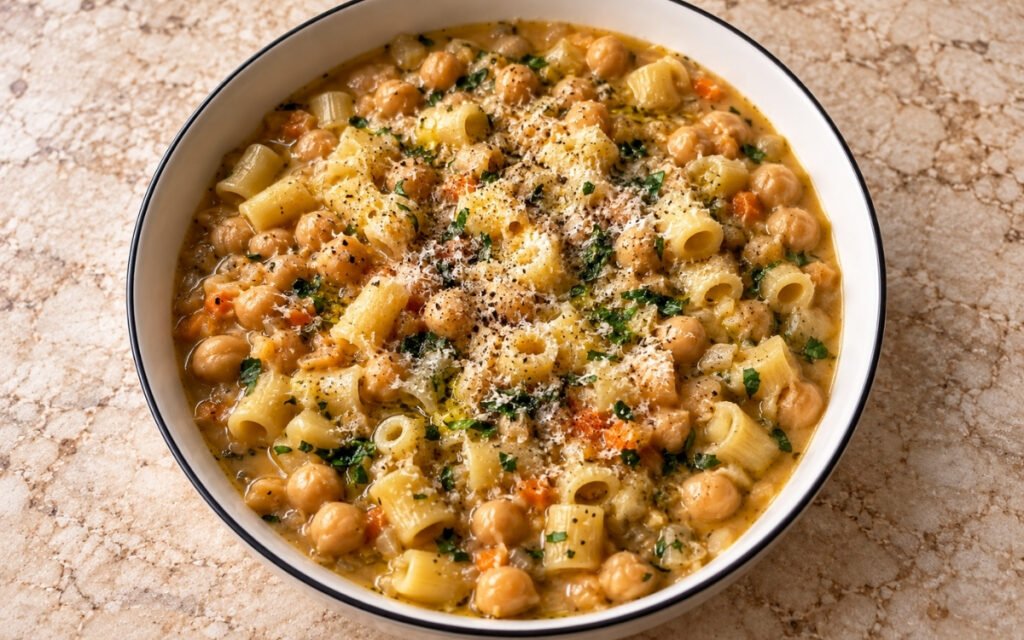
Pasta e Ceci
Small pasta and chickpeas in a thick, creamy brothy base with soffritto, garlic, and rosemary. Rustic Italian comfort food.
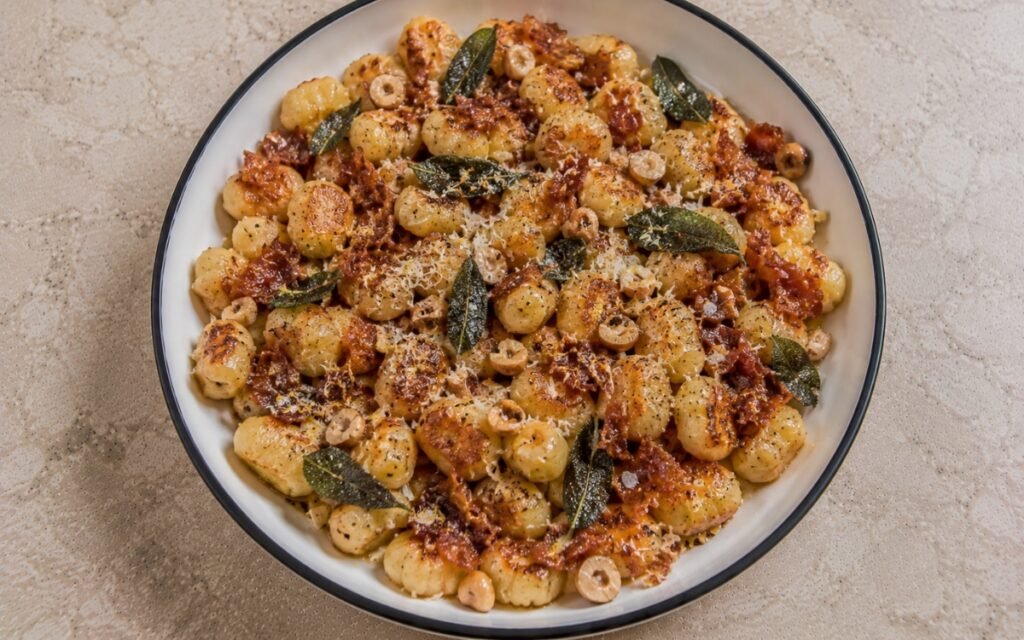
Brown Butter Sage Gnocchi
Pillowy gnocchi coated in nutty brown butter with fragrant sage leaves, golden edges, and a rich, buttery finish.
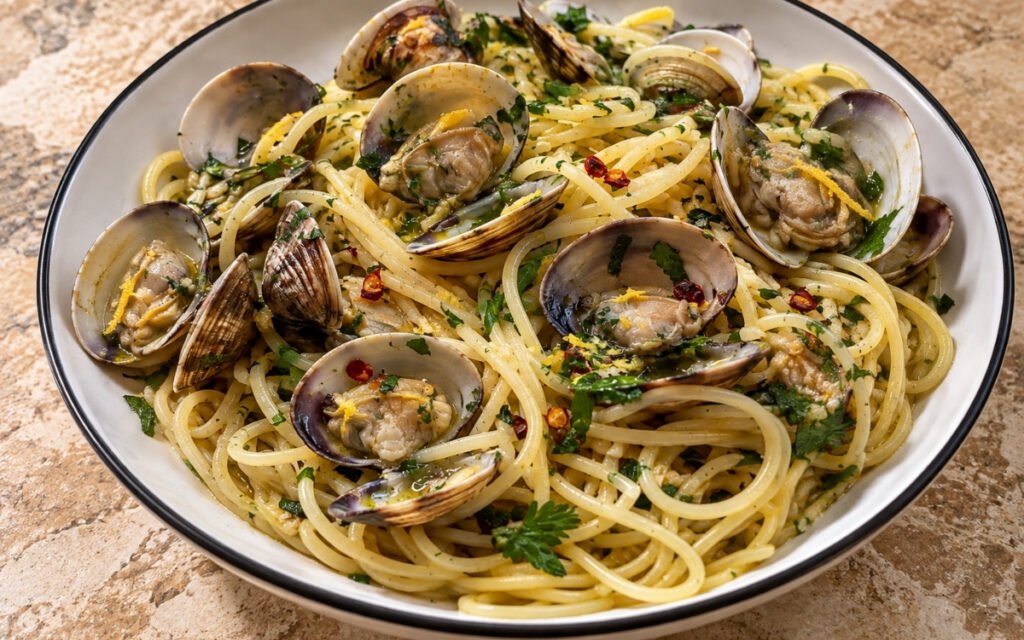
Spaghetti alle Vongole
Fresh clams in a light olive-oil, white wine, and garlic emulsion with parsley and lemon zest, tossed with al dente spaghetti.
You might also like
You might also like
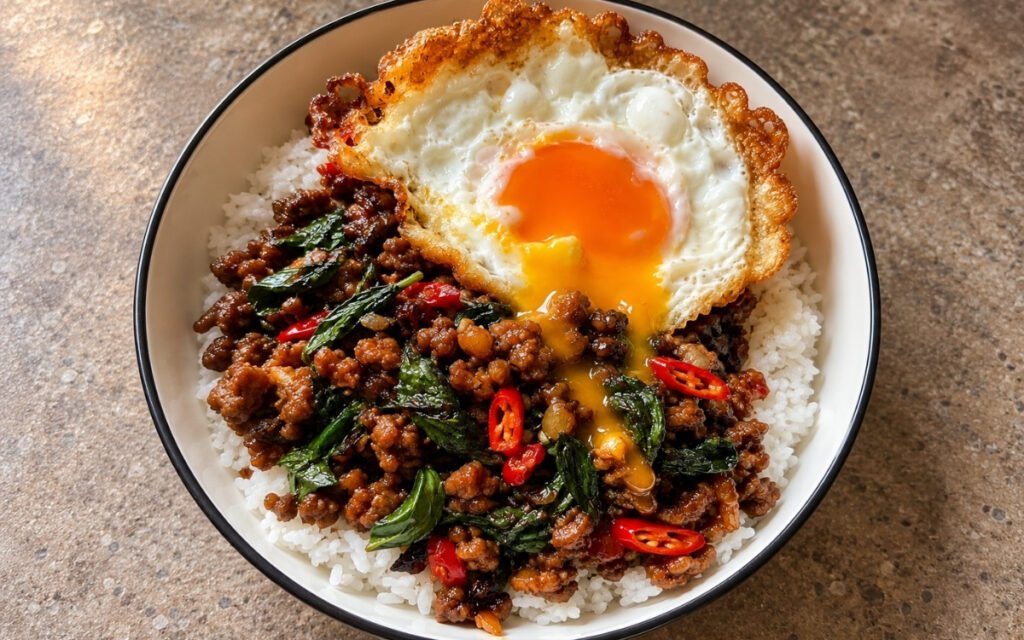
Pad Krapao — Thai Basil Stir-Fry
Hard-caramelized minced pork with garlic, chilies, glossy sauce, and Thai holy basil, served over jasmine rice with a crispy fried egg.
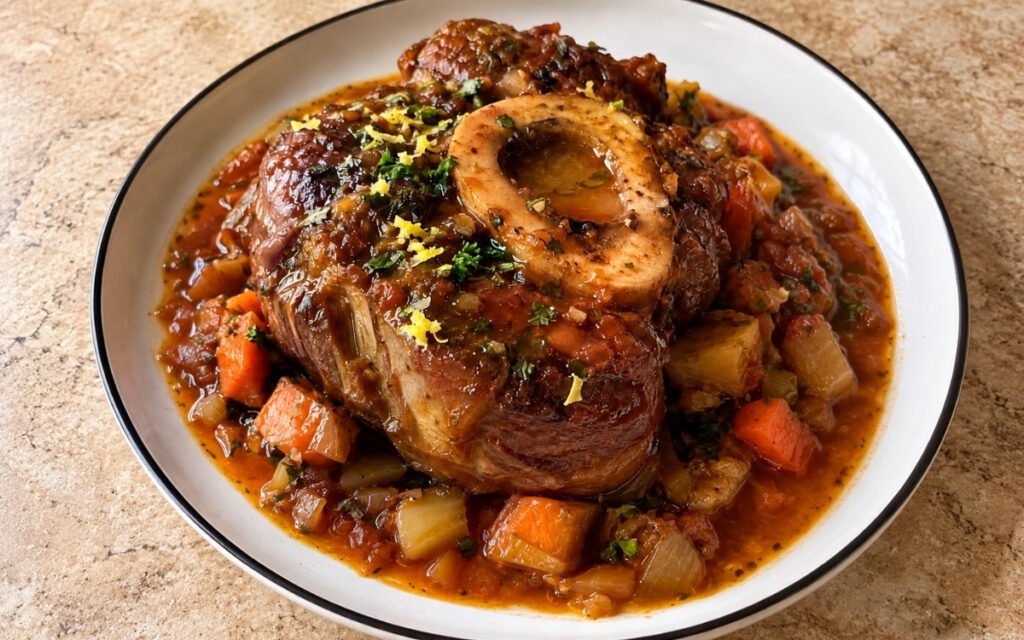
Osso Buco
Slow-braised veal shanks in a glossy white wine and tomato sauce, fork-tender with buttery marrow, finished with a bright lemon-parsley gremolata.
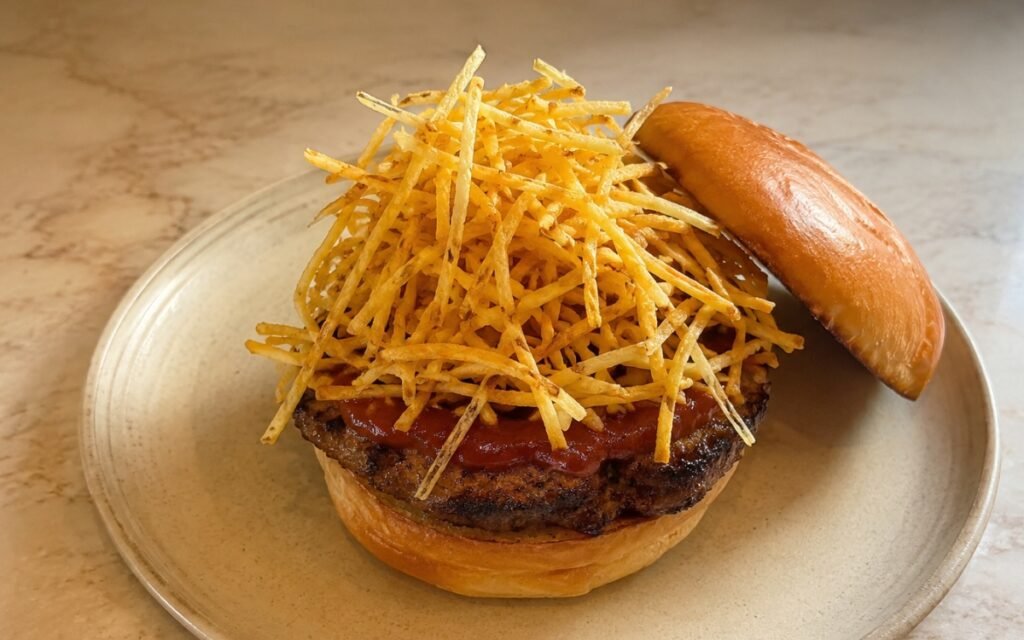
Cuban Frita Burger
A paprika-red chorizo-beef patty glazed in tangy frita sauce, piled high with crispy thin shoestring potatoes on a toasted brioche bun.
Creamy Pumpkin Sauce Pasta with Pancetta
Ingredients
Method
- Place the 60g of roughly chopped hazelnuts in a dry skillet over medium heat. Toast for 4–5 minutes, tossing or stirring frequently throughout — hazelnuts have a high oil content that makes them move from fragrant and golden to burnt and bitter quickly without the constant attention that less oily nuts require. The target is a deep, even golden-brown across the surface of each piece, with the kitchen clearly smelling of toasted nut. Transfer immediately to a plate as soon as this colour is reached — they continue to toast on any residual heat of the pan if left. Set aside for the topping. Toasted hazelnuts provide a specific deeply nutty, slightly bitter aromatic character that is completely different from raw hazelnuts and is the specific textural and flavour contrast that makes this pasta composition work — their crunch against the smooth, creamy sauce, and their earthy bitterness against the pumpkin’s sweetness, are both essential.
- Bring a large pot of water with the 40g of salt to a full rolling boil. The water should taste aggressively salted — 40g for a standard pasta pot is a generous quantity that ensures the rigatoni is properly seasoned throughout. Add the rigatoni and cook until exactly 2 minutes shy of the package’s al dente time. The pasta finishes cooking in the sauce during the final tossing step — pulling it significantly underdone means it arrives in the sauce with sufficient cooking time remaining to absorb the pumpkin cream’s character directly into its structure. Before draining, reserve 240ml of the starchy pasta water in a heatproof jug and keep it warm throughout. Drain without rinsing.
- In a large, deep skillet over medium heat, add the diced pancetta without any additional oil — pancetta contains sufficient fat for self-rendering. Cook for 6–8 minutes, stirring occasionally, until the cubes are deeply golden and crispy on most surfaces and the fat has rendered completely into the pan. The rendered pancetta fat is the cooking medium for the sage and the garlic — it carries the cured pork’s savory, slightly smoky depth through both aromatics and into the sauce base. Use a slotted spoon to transfer the crispy pancetta to a paper-towel-lined plate, leaving all the rendered fat in the pan. Do not drain the fat — every drop is flavour.
- Add the 60g of butter to the rendered pancetta fat in the pan over medium heat. Allow the butter to melt completely into the fat and begin to foam — the foam indicates the water in the butter is evaporating and the milk solids are approaching the temperature at which they will begin to brown. Add the 15 fresh sage leaves to the foaming butter-pancetta fat. The leaves will sizzle immediately and dramatically — this is correct and expected. Fry for 45–60 seconds, turning the leaves once with tongs or a fork at the 20-second mark. Watch continuously and do not leave the pan unattended during this step. The target is crispy, aromatic, still-bright-green leaves — the moment any leaf begins to darken beyond bright green toward olive or brown, remove all leaves immediately. Over-fried sage tastes bitter and its characteristic camphor-and-floral aromatic character is replaced by a harsh, charred note. Properly fried sage is one of the most specific and irreplaceable aromatic elements in Italian cooking — it loses its volatile aromatic compounds gradually as it cooks and transitions from fragrant to bitter in under 30 seconds past the correct point. Transfer the fried sage leaves to the plate with the pancetta. The butter and fat remaining in the pan — now infused with sage’s aromatic oils — is the foundation of the sauce.
- Reduce the heat to medium-low. Add the minced garlic to the sage-infused butter-pancetta fat and cook for 30 seconds, stirring continuously — at this reduced heat level, the garlic becomes fragrant and sweet rather than sharp, and the 30-second window is all it needs before the pumpkin goes in. Add the 450g of pumpkin purée and stir it into the aromatic fat and garlic, pressing and folding to combine. Cook for 2–3 minutes, stirring frequently — this brief direct-heat cooking of the purée before the liquid is added deepens its flavour through a mild caramelisation of its natural sugars, concentrates it slightly, and drives off some of the residual moisture that would otherwise dilute the finished sauce. Pour in the 200ml of heavy cream and 120ml of whole milk, whisking continuously until the mixture is completely smooth and uniform. The combination of cream and milk rather than cream alone is calibrated for this specific sauce — cream alone produces a richer, heavier result where the pumpkin’s delicate sweetness can be masked by the dairy fat; the milk lightens the cream’s richness and produces a sauce where the pumpkin’s character remains the primary flavour. Season with the 2g of nutmeg, 1g of cayenne, a generous pinch of salt, and several grinds of black pepper. The nutmeg is the classic spice pairing for pumpkin and squash in Italian cooking — at this quantity it adds the specific warm, slightly floral-sweet background note that amplifies pumpkin’s inherent character without announcing itself as nutmeg. The cayenne’s background heat prevents the cream and pumpkin’s sweetness from making the sauce feel cloying. Bring to a gentle simmer and cook for 3–4 minutes, stirring occasionally, until the sauce has thickened slightly and the flavours have integrated.
- Add the partially cooked rigatoni directly to the pumpkin cream sauce in the skillet along with 180ml of the reserved pasta water. Increase the heat to medium-high. Toss and stir continuously for 2–3 minutes — turning the rigatoni through the sauce, ensuring it coats every external surface and penetrates into the hollow centres of each tube. The pasta’s surface starch releases into the pumpkin cream during this tossing, thickening and enriching the sauce further and producing the emulsified, clinging coating that distinguishes pasta finished in a sauce from pasta simply plated alongside one. The sauce should cling to the pasta with a thick, slightly glossy coating after 2–3 minutes of tossing — not watery, not dry, but specifically coating. If it tightens beyond the correct consistency, add the remaining 60ml of reserved pasta water in small increments while continuing to toss.
- Remove the pan from the heat. Add the 80g of finely grated Parmigiano-Reggiano and stir to incorporate — the residual heat of the pasta and sauce melts the cheese smoothly without it seizing, adding a deep savoury, umami-rich layer that rounds the sweetness of the pumpkin and the cream’s richness into a fully balanced, complete sauce. Divide among four warm bowls immediately. Place the toppings over each bowl — the crispy pancetta pieces first, then the fried sage leaves distributed across the surface, then the toasted hazelnuts scattered generously. Drizzle the 15ml of extra-virgin olive oil in a thin stream over each bowl. Finish with additional finely grated Parmigiano and a confident crack of black pepper. Serve without delay.