
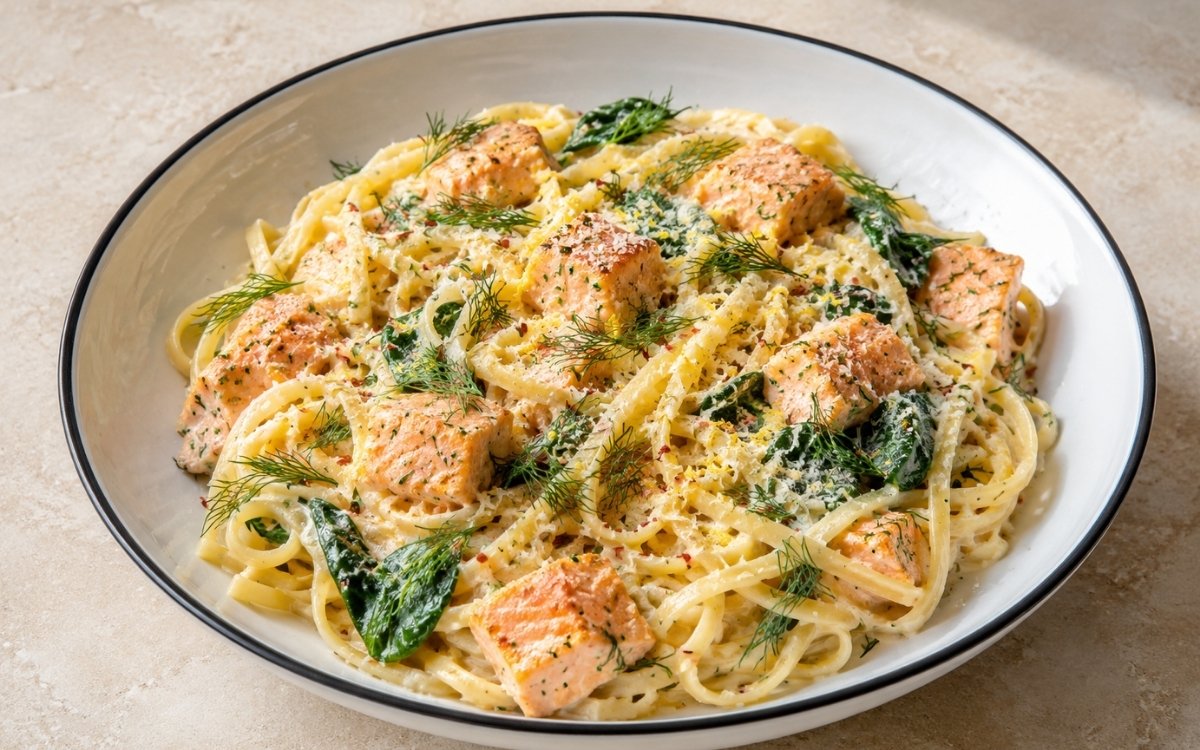
Creamy Salmon Pasta with Lemon & Dill
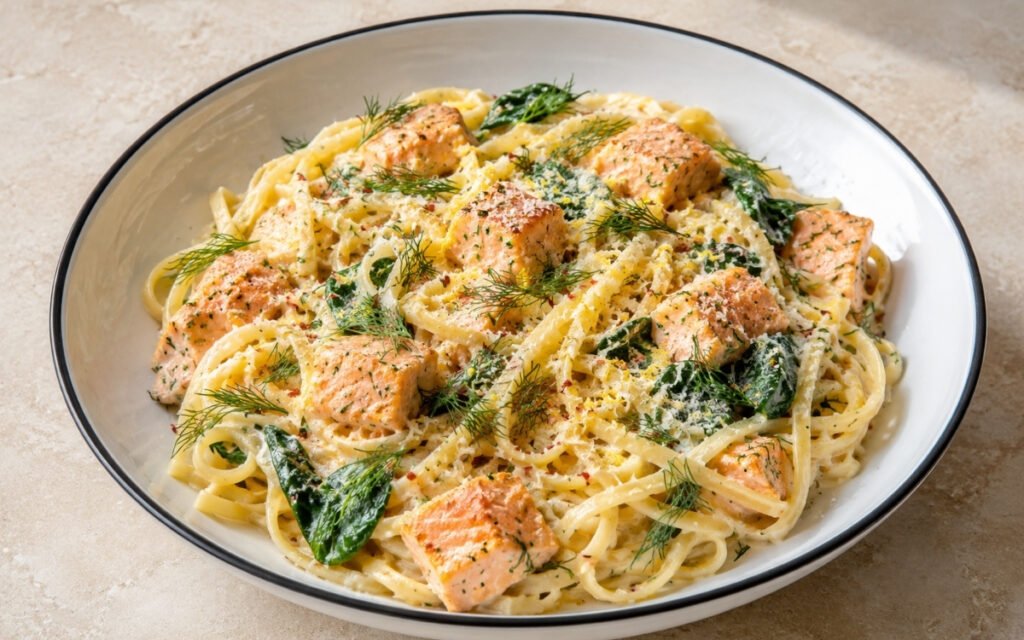
Salmon cubes seared in butter until golden and pulled at 52°C — still slightly pink at the centre and continuing to cook through residual heat — then folded gently into a crème fraîche and cream sauce built on shallots, white wine, and dill stems tied and simmered in the sauce before being removed. The dill stems infuse their aromatic character into the cream during the simmering step; the chopped fresh dill goes in at the very end alongside the lemon juice and Parmesan for maximum herbal brightness. A double-dill technique that makes the finished sauce taste specifically and completely of dill without any single addition doing all the work. Thirty-five minutes, elegant enough for a special occasion, straightforward enough for a normal Tuesday.
Prep Time : 20 min
Cook Time : 35 min
Servings : 4
20 min
35 min
4
Ingredients
For the Pasta
• 320g dried fettuccine or linguine — this one on Amazon
• 6g kosher salt (for pasta water)
For the Salmon
• 500g salmon fillets, skin removed, cut into 2.5cm cubes
• 1g kosher salt
• 1g freshly cracked black pepper
• 15g unsalted butter
For the Cream Sauce
• 25g unsalted butter
• 15ml extra virgin olive oil
• 3 medium shallots (90g), finely minced
• 4 garlic cloves (16g), minced
• 8g fresh dill stems (reserved, tied with kitchen twine)
• 120ml dry white wine
• 200ml heavy cream (35% fat)
• 150ml whole milk
• 120g crème fraîche — this one on Amazon
• 1 large lemon (zest and juice, approximately 50ml juice)
• 20g fresh dill, chopped, plus extra for garnish
• 60g baby spinach
• 40g Parmesan cheese, finely grated — this one on Amazon
• 1g kosher salt
• 2g freshly cracked black pepper
• 2g red pepper flakes (optional, for garnish)
This post may contain affiliate links. As an Amazon Associate I earn from qualifying purchases, at no additional cost to you.
Directions
- Cook the Pasta
Bring a large pot of water to a full rolling boil and add the 6g of kosher salt. Add the fettuccine or linguine and cook according to the package directions until al dente — approximately 8–9 minutes. Before draining, reserve 240ml of the starchy pasta water in a heatproof jug — always reserve more than you expect to need, as the crème fraîche sauce can tighten unpredictably during the pasta combining step and the reserved water is the only available correction tool. Drain without rinsing and set aside. - Sear the Salmon
This step requires a separate non-stick skillet rather than the sauce pan — salmon’s delicate structure makes it prone to sticking to stainless steel, and the non-stick surface allows the cubes to be turned without breaking. Pat the 500g of salmon cubes completely dry on all sides with paper towels — thorough drying is the prerequisite for a proper golden sear rather than steaming grey surfaces. Season evenly with the 1g of salt and 1g of black pepper. Heat the non-stick skillet over medium-high heat and add the 15g of butter. Allow the butter to melt and its foam to subside — the subsiding foam indicates the water has evaporated and the fat is at the correct temperature for searing without burning. Add the salmon cubes in a single layer without crowding — crowded salmon steams rather than sears. Sear for 1.5–2 minutes per side until golden on the exterior. The critical internal temperature is 52°C — at this point the salmon is just cooked through at the surface while retaining a slightly translucent, slightly pink centre that the residual heat will finish to a tender, moist doneness as it rests. Pulling salmon at 52°C produces the specific texture — firm enough to hold its cube shape when folded into the pasta, still moist and yielding at the centre — that overcooked salmon at 65°C+ cannot provide. Transfer immediately to a plate and set aside. - Build the Aromatic Base
In a large, deep skillet over medium heat, melt the 25g of butter with the 15ml of olive oil together. The combined fat provides both the butter’s sweet dairy richness for the shallots and the olive oil’s temperature moderation that prevents the butter from browning during the 3–4 minutes of shallot cooking. Add the 90g of finely minced shallots. Cook for 3–4 minutes, stirring frequently, until completely softened and translucent — shallots at this point should have no raw crunch remaining and their natural sugars should have begun developing into mild sweetness. Add the 16g of minced garlic and the tied bundle of dill stems simultaneously. Cook for 1 minute, stirring continuously — the garlic blooms its aromatic compounds into the surrounding fat and the dill stems begin releasing their aromatic oils into the hot shallot base. Increase the heat to medium-high and pour in the 120ml of dry white wine. Allow to bubble vigorously for 2–3 minutes, scraping the bottom of the pan to lift any fond. The wine reduces by approximately half, its sharp alcohol edge cooking off and leaving its fruity acidity and depth. The acid of the white wine specifically bridges the cream’s richness and the lemon’s brightness — producing a sauce that tastes more complete than cream and lemon without wine would. - Build the Cream Sauce with Dill Stem Infusion
Reduce the heat to medium-low. Add the 200ml of heavy cream, 150ml of whole milk, and 120g of crème fraîche to the skillet. Stir continuously until the crème fraîche dissolves completely into the cream and milk — it resists smooth integration if added to very hot liquid without stirring, potentially producing visible curds rather than a uniform sauce. The three-dairy combination is calibrated for this specific dish: heavy cream provides richness and coating quality; milk lightens the cream’s fat content so the sauce flows freely rather than coating oppressively; crème fraîche provides the specific slightly tangy, slightly sour note that differentiates this from a plain cream sauce and that has a natural, deeply classical affinity with both dill and salmon. Add the lemon zest and bring to a gentle simmer. Simmer for 4–5 minutes, stirring occasionally, until the sauce has thickened enough to coat the back of a spoon — a clear line held when a finger is drawn through the coating. Remove and discard the tied dill stems — they have given their aromatic contribution during the simmer and their woody texture should not appear in the finished sauce. - Combine Pasta and Wilt Spinach
Add the drained fettuccine to the cream sauce along with 120ml of the reserved pasta water. Toss vigorously with tongs for 1–2 minutes — the pasta’s surface starch releases into the sauce during the tossing, combining with the cream’s fat to produce the glossy, slightly emulsified coating that distinguishes pasta finished in a sauce from pasta simply plated with sauce poured over it. Add the 60g of baby spinach and toss for approximately 30 seconds until just wilted and bright green — the spinach should wilt completely in the residual heat of the sauce without any additional time on the burner, preserving its vivid colour and preventing the waterlogged dark green of overcooked spinach. - Fold in Salmon, Add Fresh Dill and Lemon, Finish
Remove the skillet from the heat completely. This is the most care-requiring step of the recipe — the salmon is fragile and the lemon juice must be added off the heat to prevent it from curdling the crème fraîche. Gently fold in the seared salmon cubes — a lifting and turning motion rather than vigorous stirring, which would break the cubes into flakes rather than maintaining their distinct, textural 2.5cm pieces. Add the 20g of chopped fresh dill — the main fresh dill addition that provides the vivid, aromatic, clean herbal character the dish is named for and that the stem infusion alone cannot provide. Add the 50ml of lemon juice — the bright, clean acid that cuts through the cream’s richness and amplifies the dill’s aromatic freshness. Add the 40g of finely grated Parmesan, the 1g of salt, and the 2g of black pepper. Fold gently once more to distribute. The sauce at this point should taste bright, creamy, herbaceous, and balanced — the dill prominent and fresh, the lemon vivid rather than simply acidic, the cream rich but not heavy. If the sauce has tightened beyond the correct flowing, coating consistency, add the remaining pasta water in 30ml increments. Divide among four warm shallow bowls immediately. Garnish each bowl with fresh dill fronds, a small pinch of additional lemon zest, and optional red pepper flakes. Serve without delay.
*Notes :
- The dill stem bundling technique — tying the stems with kitchen twine before adding to the sauce and removing them after simmering — is a specific application of the bouquet garni principle common to French and Northern European cooking. Dill stems contain the same aromatic compounds as the leaves — primarily the terpene compounds carvone and limonene — but in a form that releases more slowly and more gently during heat exposure than the delicate leaf cells, which wilt and release their aromatics immediately. Simmered for 4–5 minutes in the cream, the tied stems provide a sustained, gradual infusion of dill character into the sauce base that the chopped leaves, added at the end for brightness, build upon. The two applications together — infused stems for background depth, fresh leaves for surface brightness — produce a dill character that is present at multiple levels of flavour intensity simultaneously.
- Crème fraîche is specified rather than sour cream for a specific reason relevant to this cooking application. Crème fraîche has a fat content of approximately 30–45% and a relatively low protein content, which makes it stable at higher temperatures — it can be added to warm sauces and simmered briefly without curdling. Sour cream has a lower fat content and higher protein content, and curdles readily when added to hot liquids, producing a grainy, separated sauce. Both taste similarly tangy; their cooking behaviour is significantly different.
- The 52°C internal temperature for the salmon is worth measuring rather than estimating. Salmon seared to the correct temperature has a firm, golden exterior and a slightly translucent, slightly pink interior that the residual heat finishes to moist, tender doneness on the plate. The same salmon held in the pan for 2 extra minutes reaches 65°C+ and produces a different texture entirely — dry, separating into white flakes, and prone to breaking when folded into the pasta.
Why This Recipe Works
This recipe works because it treats dill as a two-stage ingredient — stems simmered in the cream for aromatic depth, fresh leaves added at the very end for brightness — rather than a single addition that either cooks away or is only present at the surface. The salmon’s precise temperature target preserves its specific tender, slightly pink texture through the folding step.
The crème fraîche’s heat stability allows it to be simmered with the cream without curdling. And the lemon juice added off the heat preserves its brightest volatile aromatic compounds at the moment of serving.
Ingredient Breakdown
Salmon (52°C, Butter-Seared)
The protein — seared to precise medium doneness to preserve its tender, moist texture through the gentle folding step.
Dill Stems (Bundled, Simmered, Removed)
The infusing herb layer — slow aromatic release into the cream during simmering, removed before service, providing the background dill depth.
Fresh Dill (Chopped, Added Last)
The bright herb layer — volatile aromatic compounds at maximum intensity, providing the surface freshness that the infused stems cannot.
Crème Fraîche
The tangy, heat-stable dairy component — tangy enough to complement salmon and dill, stable enough to simmer without curdling.
Heavy Cream and Milk
The sauce medium — cream for richness, milk for flowability; combined to produce a coating sauce where the salmon and dill’s delicate character remains prominent.
Lemon Zest (In Sauce) and Juice (Off-Heat)
The dual citrus application — zest blooms in the simmering cream for aromatic depth; juice added off-heat for bright, clean acid finish.
Parmesan (Off-Heat)
The savoury emulsifying finish — adds depth and helps bind the sauce without the dairy curdling risk of adding to a boiling sauce.
Flavor Structure Explained
This creamy salmon pasta follows a layered balance model:
- Fresh herbal core (dill)
- Bright acidic layer (lemon, crème fraîche)
- Rich protein base (salmon)
- Creamy carrying body (cream, Parmesan)
- Aromatic depth (white wine, shallot)
Dill defines the identity with clean, aromatic freshness layered at different intensities. Lemon and crème fraîche sharpen the profile with acidity, keeping the richness controlled. Salmon provides the central substance with mild, fatty, marine sweetness. Cream and Parmesan form a smooth base that carries all flavors evenly. White wine and shallot build a subtle aromatic foundation, ensuring the sauce feels developed rather than simple.
Common Mistakes to Avoid
- Overcooking the Salmon – Beyond 52°C, salmon dries and flakes rather than cubing cleanly when folded. Use a thermometer and pull at 52°C — residual heat finishes it.
- Adding Lemon Juice to Hot Sauce – Acid added to a hot crème fraîche sauce can cause curdling. Always remove from heat completely before adding the lemon juice.
- Not Tying the Dill Stems – Untied stems break apart during simmering and cannot be removed — the woody texture and appearance in the finished sauce are unpleasant. Always tie with twine.
- Using Sour Cream Instead of Crème Fraîche – Sour cream curdles in hot sauce. Crème fraîche is heat-stable. Not interchangeable in this cooking application.
- Folding Too Aggressively – The seared salmon cubes break easily. Always use a gentle lifting and folding motion — vigorous stirring produces flaked salmon throughout the sauce rather than intact 2.5cm pieces.
- Not Reserving Enough Pasta Water – The crème fraîche sauce can tighten unpredictably. Always reserve the full 240ml.
Variations
With Smoked Salmon
Replace half the fresh salmon with 250g of cold-smoked salmon torn into pieces — fold in completely off the heat at the very end without any searing step. The smoked salmon adds a secondary smoky dimension alongside the seared salmon’s fresh character.
With Capers
Add 30g of rinsed capers alongside the fresh dill at the finishing step — their briny, slightly floral character has a classical and specific affinity with both salmon and dill.
With Asparagus
Add 200g of asparagus cut into 3cm pieces to the pasta water for the final 3 minutes of pasta cooking. Drain alongside the pasta and fold into the sauce — the asparagus’s vegetal sweetness pairs naturally with the dill and lemon character.
Without Crème Fraîche
Replace the crème fraîche with 120g of full-fat Greek yogurt added off the heat — Greek yogurt is not heat-stable but can be added to a completely cooled sauce. Alternatively, increase the heavy cream to 300ml and add an additional squeeze of lemon juice to compensate for the crème fraîche’s missing tanginess.
Storage & Make-Ahead
The assembled pasta is best served immediately, since the salmon continues to cook from the residual heat of the sauce during storage and loses its ideal medium texture. It can be refrigerated for up to 2 days, but if you reheat it, do so very gently over the lowest possible heat with 2 to 3 tablespoons of cream per portion, folding carefully so the salmon keeps as much of its texture as possible.
The cream sauce on its own, without the salmon or pasta, can be refrigerated for up to 3 days. This is the most practical make-ahead method: prepare the dill-infused cream sauce in advance, then sear the salmon fresh and cook the pasta fresh when you are ready to serve.
The salmon can also be seared up to 2 hours ahead and kept at room temperature. At the final step, fold it in while still cool, since it will warm through from the residual heat of the sauce without overcooking.
Frequently Asked Questions
Why 52°C for the salmon?
At 52°C the salmon is just cooked through at the exterior and still slightly translucent at the centre — the residual heat finishes it to moist, tender medium doneness. At 65°C+ the salmon is fully opaque, drier, and breaks into white flakes. For a pasta dish where the salmon needs to hold its cube shape through folding, 52°C is the target.
Can I use dried dill instead of fresh?
Dried dill produces a completely different aromatic profile — dusty, muted, and without the clean, slightly anise-like freshness of fresh dill. In a dish specifically built around dill as the defining flavour, fresh is the only option. If fresh dill is unavailable, substitute with 20g of fresh tarragon for a different but compatible herbal character.
Why crème fraîche and not sour cream?
Crème fraîche’s higher fat content makes it heat-stable — it can be added to warm sauces and simmered without curdling. Sour cream curdles readily in hot liquid. Both taste similarly tangy; their cooking behaviour is significantly different.
What wine works best?
Any dry white wine you would drink — Sauvignon Blanc, Pinot Grigio, or Muscadet are particularly well-suited because their clean, crisp acidity complements both the cream and the dill without adding competing fruit character.
Can I make this with a different fish?
Yes — sea bass, cod, or halibut cut into 2.5cm cubes and seared to the correct internal temperature for each variety (cod and halibut at 60°C; sea bass at 55–58°C) all work well with the dill-lemon cream sauce. The technique is identical.
Nutrition Facts
( per serving )
Calories
~1030 kcal
Protein
42 g
Fat
60 g
Carbs
72 g
Calories
~1030 kcal
Protein
42 g
Fat
60 g
Carbs
72 g
Related Recipes
Related Recipes

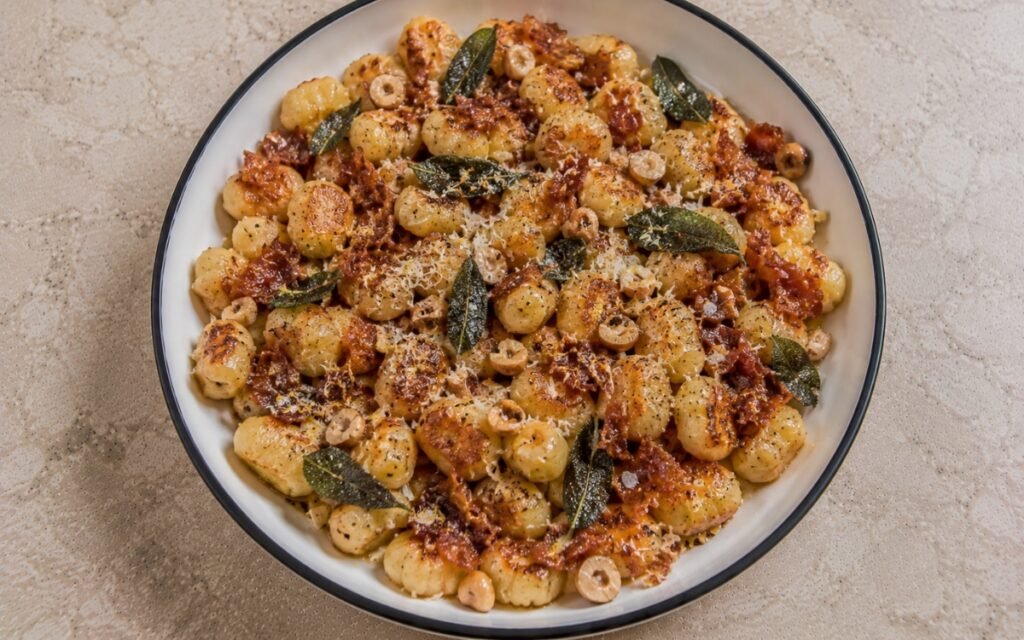
Brown Butter Sage Gnocchi
Pillowy gnocchi coated in nutty brown butter with fragrant sage leaves, golden edges, and a rich, buttery finish.
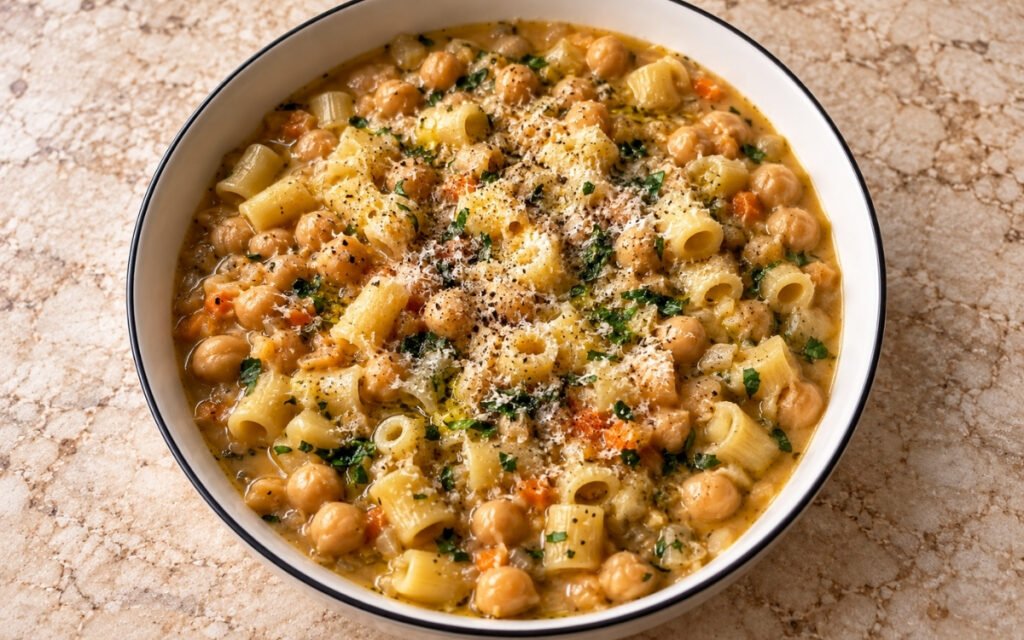
Pasta e Ceci
Small pasta and chickpeas in a thick, creamy brothy base with soffritto, garlic, and rosemary. Rustic Italian comfort food.
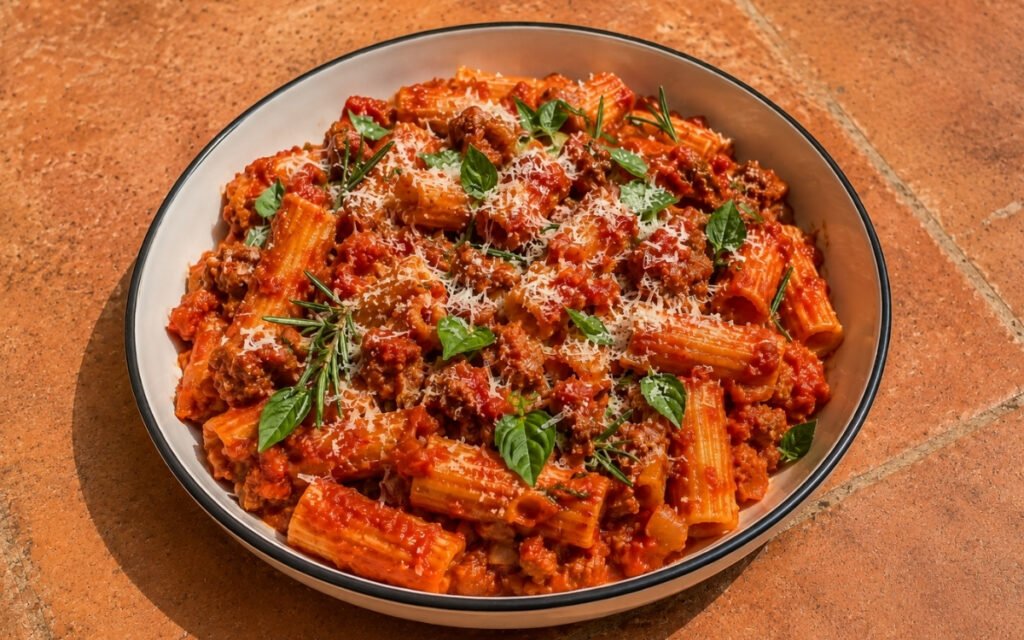
One-Pan Sausage Tomato Pasta
Rigatoni cooked directly in sausage and San Marzano tomato sauce — the pasta’s own starch creates a glossy coating without cream. One pan, 35 minutes.
You might also like
You might also like
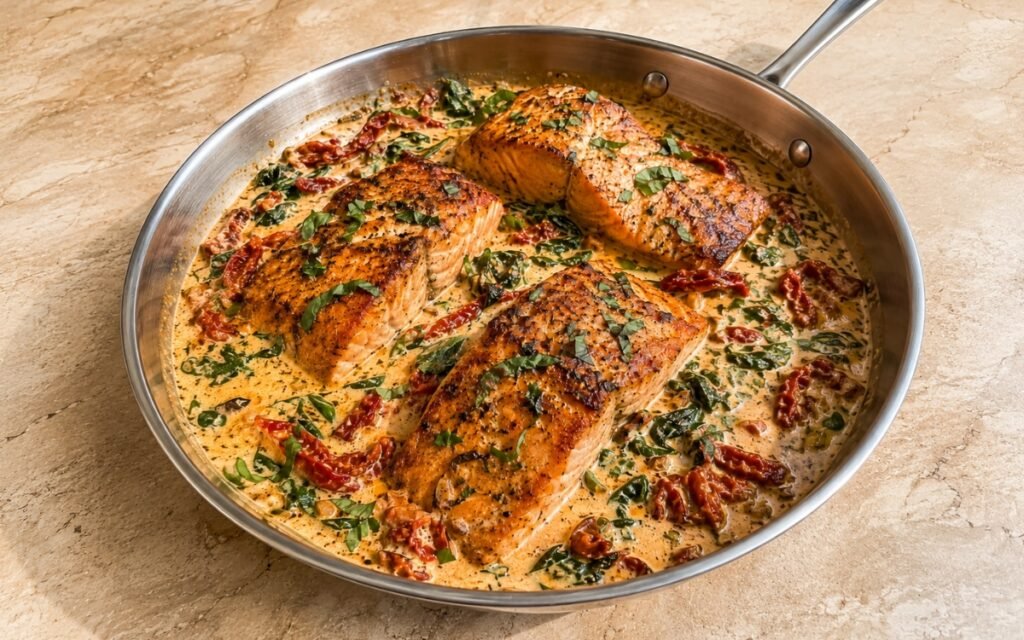
Creamy Tuscan Salmon
Deeply seared salmon finished gently in a rich garlic Parmesan cream sauce with sun-dried tomatoes, spinach, parsley, and basil.
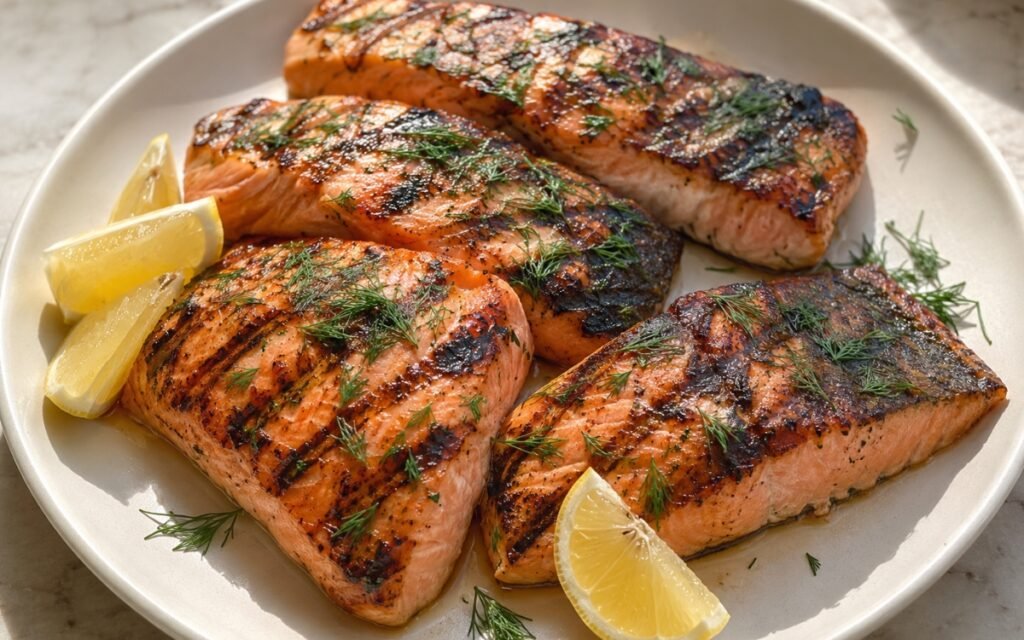
Grilled Salmon Fillets
Salmon skin dried thoroughly, flesh seasoned, grilled skin-side down undisturbed until crisp. Finished with dill and lemon. Clean and moist.
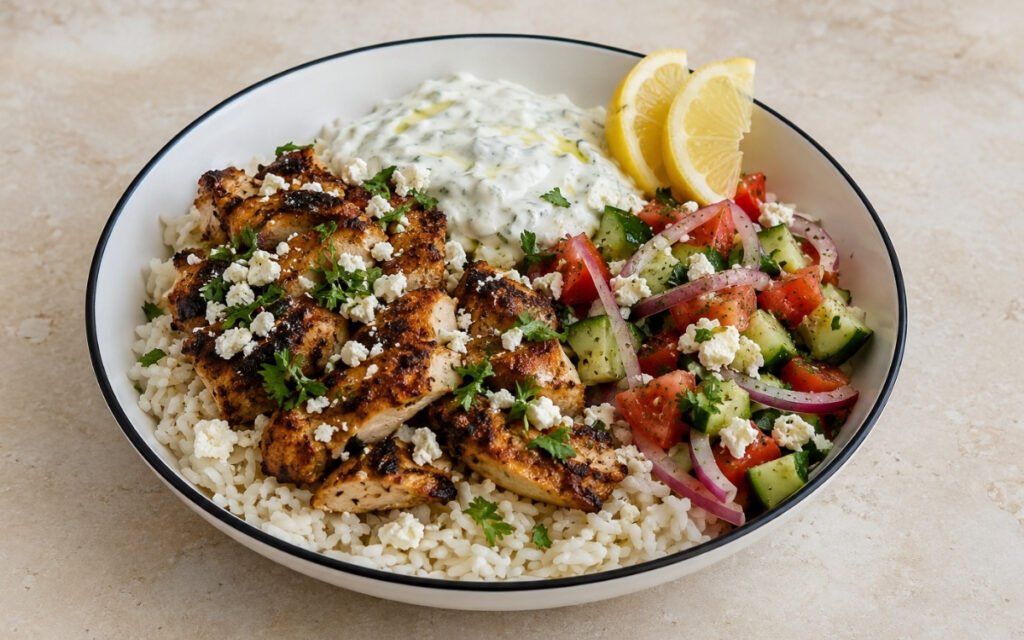
Greek Chicken Gyro Rice Bowl
Chicken thighs marinated fifteen minutes, seared in a single layer, rested and sliced — basmati, cucumber-tomato salad, tzatziki, feta.
Creamy Salmon Pasta with Lemon & Dill
Ingredients
Method
- Bring a large pot of water to a full rolling boil and add the 6g of kosher salt. Add the fettuccine or linguine and cook according to the package directions until al dente — approximately 8–9 minutes. Before draining, reserve 240ml of the starchy pasta water in a heatproof jug — always reserve more than you expect to need, as the crème fraîche sauce can tighten unpredictably during the pasta combining step and the reserved water is the only available correction tool. Drain without rinsing and set aside.
- This step requires a separate non-stick skillet rather than the sauce pan — salmon’s delicate structure makes it prone to sticking to stainless steel, and the non-stick surface allows the cubes to be turned without breaking. Pat the 500g of salmon cubes completely dry on all sides with paper towels — thorough drying is the prerequisite for a proper golden sear rather than steaming grey surfaces. Season evenly with the 1g of salt and 1g of black pepper. Heat the non-stick skillet over medium-high heat and add the 15g of butter. Allow the butter to melt and its foam to subside — the subsiding foam indicates the water has evaporated and the fat is at the correct temperature for searing without burning. Add the salmon cubes in a single layer without crowding — crowded salmon steams rather than sears. Sear for 1.5–2 minutes per side until golden on the exterior. The critical internal temperature is 52°C — at this point the salmon is just cooked through at the surface while retaining a slightly translucent, slightly pink centre that the residual heat will finish to a tender, moist doneness as it rests. Pulling salmon at 52°C produces the specific texture — firm enough to hold its cube shape when folded into the pasta, still moist and yielding at the centre — that overcooked salmon at 65°C+ cannot provide. Transfer immediately to a plate and set aside.
- In a large, deep skillet over medium heat, melt the 25g of butter with the 15ml of olive oil together. The combined fat provides both the butter’s sweet dairy richness for the shallots and the olive oil’s temperature moderation that prevents the butter from browning during the 3–4 minutes of shallot cooking. Add the 90g of finely minced shallots. Cook for 3–4 minutes, stirring frequently, until completely softened and translucent — shallots at this point should have no raw crunch remaining and their natural sugars should have begun developing into mild sweetness. Add the 16g of minced garlic and the tied bundle of dill stems simultaneously. Cook for 1 minute, stirring continuously — the garlic blooms its aromatic compounds into the surrounding fat and the dill stems begin releasing their aromatic oils into the hot shallot base. Increase the heat to medium-high and pour in the 120ml of dry white wine. Allow to bubble vigorously for 2–3 minutes, scraping the bottom of the pan to lift any fond. The wine reduces by approximately half, its sharp alcohol edge cooking off and leaving its fruity acidity and depth. The acid of the white wine specifically bridges the cream’s richness and the lemon’s brightness — producing a sauce that tastes more complete than cream and lemon without wine would.
- Reduce the heat to medium-low. Add the 200ml of heavy cream, 150ml of whole milk, and 120g of crème fraîche to the skillet. Stir continuously until the crème fraîche dissolves completely into the cream and milk — it resists smooth integration if added to very hot liquid without stirring, potentially producing visible curds rather than a uniform sauce. The three-dairy combination is calibrated for this specific dish: heavy cream provides richness and coating quality; milk lightens the cream’s fat content so the sauce flows freely rather than coating oppressively; crème fraîche provides the specific slightly tangy, slightly sour note that differentiates this from a plain cream sauce and that has a natural, deeply classical affinity with both dill and salmon. Add the lemon zest and bring to a gentle simmer. Simmer for 4–5 minutes, stirring occasionally, until the sauce has thickened enough to coat the back of a spoon — a clear line held when a finger is drawn through the coating. Remove and discard the tied dill stems — they have given their aromatic contribution during the simmer and their woody texture should not appear in the finished sauce.
- Add the drained fettuccine to the cream sauce along with 120ml of the reserved pasta water. Toss vigorously with tongs for 1–2 minutes — the pasta’s surface starch releases into the sauce during the tossing, combining with the cream’s fat to produce the glossy, slightly emulsified coating that distinguishes pasta finished in a sauce from pasta simply plated with sauce poured over it. Add the 60g of baby spinach and toss for approximately 30 seconds until just wilted and bright green — the spinach should wilt completely in the residual heat of the sauce without any additional time on the burner, preserving its vivid colour and preventing the waterlogged dark green of overcooked spinach.
- Remove the skillet from the heat completely. This is the most care-requiring step of the recipe — the salmon is fragile and the lemon juice must be added off the heat to prevent it from curdling the crème fraîche. Gently fold in the seared salmon cubes — a lifting and turning motion rather than vigorous stirring, which would break the cubes into flakes rather than maintaining their distinct, textural 2.5cm pieces. Add the 20g of chopped fresh dill — the main fresh dill addition that provides the vivid, aromatic, clean herbal character the dish is named for and that the stem infusion alone cannot provide. Add the 50ml of lemon juice — the bright, clean acid that cuts through the cream’s richness and amplifies the dill’s aromatic freshness. Add the 40g of finely grated Parmesan, the 1g of salt, and the 2g of black pepper. Fold gently once more to distribute. The sauce at this point should taste bright, creamy, herbaceous, and balanced — the dill prominent and fresh, the lemon vivid rather than simply acidic, the cream rich but not heavy. If the sauce has tightened beyond the correct flowing, coating consistency, add the remaining pasta water in 30ml increments. Divide among four warm shallow bowls immediately. Garnish each bowl with fresh dill fronds, a small pinch of additional lemon zest, and optional red pepper flakes. Serve without delay.