
Tuscan Chicken Cream Pasta
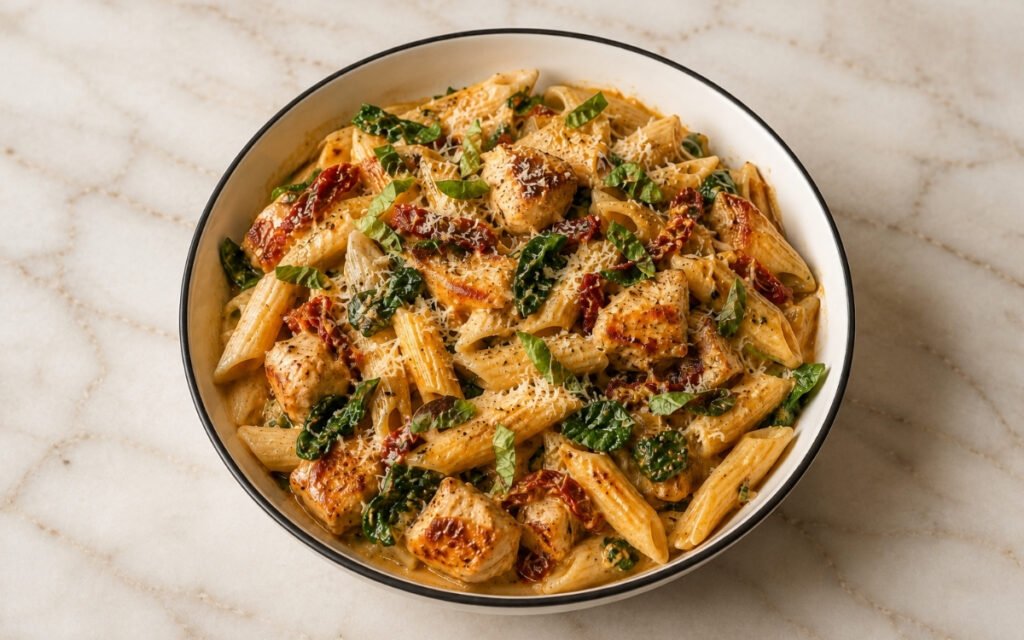
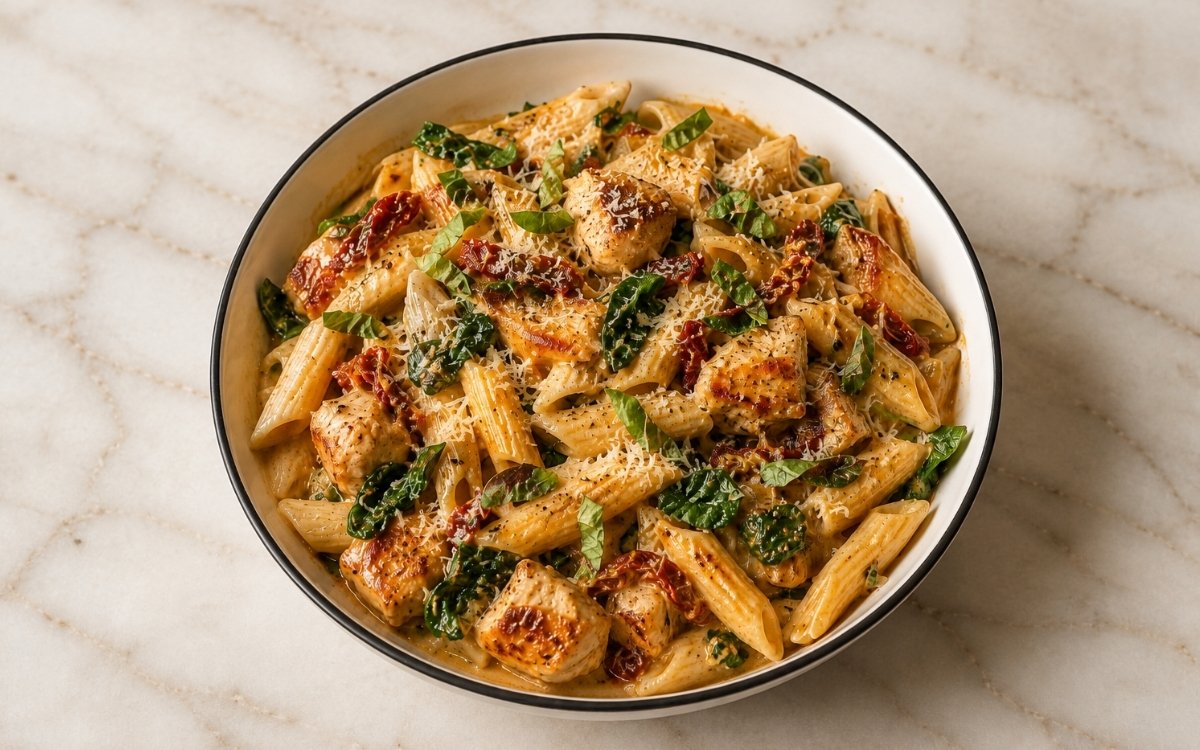
Seared chicken thighs, sun-dried tomatoes, wilted spinach, and a Parmesan cream sauce built on a white wine and garlic base — the combination that became known as Tuscan chicken for its specific sun-dried tomato and cream character that tastes unmistakably of Southern Italian cooking even though it is more Italian-American than strictly Tuscan. The sun-dried tomato oil from the jar finishes each bowl as a drizzle, adding the aromatic tomato-infused oil that the sauce is built in. One pan, forty minutes, the weeknight pasta that reliably impresses.
Prep Time : 15 min
Cook Time : 25 min
Servings : 4
15 min
25 min
4
Ingredients
For the Pasta
• 320g penne rigate or rigatoni — this one on Amazon
• 5g kosher salt (for pasta water)
• 240ml reserved pasta water
For the Chicken
• 500g boneless, skinless chicken thighs, cut into 2cm pieces
• 2g kosher salt
• 2g freshly ground black pepper
• 25ml extra-virgin olive oil
For the Tuscan Cream Sauce
• 30g unsalted butter
• 20g garlic (4 cloves), thinly sliced
• 2g red pepper flakes (1 teaspoon)
• 120ml dry white wine
• 200g sun-dried tomatoes in oil, drained and sliced — this one on Amazon
• 3g dried oregano (1½ teaspoons)
• 240ml heavy cream (35% fat)
• 100g Parmigiano-Reggiano, finely grated — this one on Amazon
• 150g baby spinach
• 1g kosher salt
• 2g freshly ground black pepper
• 2g lemon zest (from 1 lemon)
• 15g fresh basil leaves, torn
This post may contain affiliate links. As an Amazon Associate I earn from qualifying purchases, at no additional cost to you.
Directions
- Cook the Pasta
Bring a large pot of water to a full rolling boil and add the 5g of kosher salt. Add the penne rigate or rigatoni and cook until 1 minute shy of the package’s al dente time. Before draining, reserve 240ml of the starchy pasta water in a heatproof jug and keep it warm throughout — the pasta water is the consistency adjustment tool for the final sauce, added gradually at the combining step to produce the correct flowing, coating consistency. Drain without rinsing and set aside briefly. - Sear the Chicken Thighs
Pat the 500g of chicken thigh pieces completely dry on all surfaces with paper towels — the drying step is the preparation prerequisite for a genuine sear. Any surface moisture on the chicken converts to steam on contact with the hot pan, dropping the temperature and preventing the Maillard caramelisation that produces the golden crust contributing both flavour and the fond that the sauce is built on. Season with the 2g of salt and 2g of black pepper on all sides. Heat the 25ml of olive oil in a large, deep skillet over medium-high heat until shimmering. Add the chicken pieces in a single layer without crowding — work in two batches if needed. Leave completely undisturbed for 3–4 minutes until deeply golden on the bottom. Flip and cook for 2–3 minutes more. The chicken does not need to be cooked fully through at this stage — it will return to the sauce and finish there, absorbing the cream and sun-dried tomato character during the simmering step. Transfer to a plate, leaving all rendered fat and fond in the pan. - Build the Aromatic Base with Wine
Reduce the heat to medium and add the 30g of butter to the skillet with the rendered chicken fat. Allow the butter to melt and begin to foam — the foam indicates the correct temperature for the garlic. Add the thinly sliced garlic and red pepper flakes simultaneously. Cook, stirring constantly, for 45 seconds — thin garlic slices in foaming butter move from fragrant to golden to browned within 60 seconds at medium heat, and constant stirring prevents any pieces from remaining stationary long enough to brown unevenly. The garlic should be fragrant and showing the faintest golden colour at its edges at 45 seconds. Pour in the 120ml of dry white wine. Immediately scrape the bottom of the pan firmly with a wooden spoon — the wine’s acid and liquid dissolve the fond that the chicken sear produced, lifting every bit of caramelised protein and fat from the pan surface into the developing sauce. Allow the wine to reduce by approximately half over 2 minutes, bubbling vigorously — the reduction concentrates the wine’s fruity depth and cooks off the raw alcohol. Add the 200g of sliced, drained sun-dried tomatoes and 3g of dried oregano. Stir and cook for 1 minute — the sun-dried tomatoes warm through and their concentrated aromatic oils release into the surrounding sauce base. - Add Cream, Return Chicken, Wilt Spinach
Pour in the 240ml of heavy cream and bring to a gentle simmer over medium heat. Return the seared chicken pieces and every drop of their accumulated resting juices to the pan. Simmer for 5–6 minutes, stirring occasionally, until the chicken is fully cooked through to 74°C internal temperature and the sauce has thickened slightly — the cream reduces around the chicken, concentrating the garlic, sun-dried tomato, and chicken flavour into a cohesive sauce. Add the 150g of baby spinach in handfuls rather than all at once — a large volume of raw spinach added simultaneously drops the sauce temperature and produces steaming rather than wilting. Add one or two large handfuls, stir until completely wilted and incorporated, then add the next handful. The residual heat of the sauce is sufficient to wilt each addition completely within 30–45 seconds. Once all the spinach is incorporated and wilted into the sauce, remove the pan from the heat completely. - Combine and Finish
Add the drained pasta directly to the skillet. Scatter the 100g of finely grated Parmigiano-Reggiano over the pasta and add the 1g of salt and 2g of black pepper. Begin tossing — the pasta, Parmigiano, cream sauce, and sun-dried tomatoes combine with the tossing motion. Add the reserved pasta water in 60ml increments, tossing after each addition and assessing the consistency. The pasta water’s starch combines with the cream’s fat and the Parmigiano’s proteins to produce the cohesive, slightly glossy sauce consistency that makes the difference between a cream pasta and a truly coating, clinging cream pasta. Add until the sauce flows slowly when the pan is tilted but clings to each pasta piece rather than pooling at the bottom — approximately 120–180ml will be needed depending on how much the pasta absorbed during standing and how much the cream reduced. Add the 2g of lemon zest and the torn basil leaves. Fold gently to distribute — both go in last to preserve the lemon’s aromatic oils and the basil’s colour and fresh character. Taste and adjust with additional salt or pepper. Allow to rest off the heat for 2 minutes — this brief rest allows the sauce to settle and thicken very slightly around the pasta, improving the cling. - Serve
Divide among four warm shallow bowls immediately. Drizzle a small amount of the reserved sun-dried tomato jar oil over each bowl — this aromatic, tomato-infused olive oil carries the concentrated flavour of the tomatoes that have been soaking in it and adds a final, specifically sun-dried-tomato-forward aromatic note that fresh olive oil cannot provide. Add additional finely grated Parmigiano over each portion. Serve immediately.
*Notes :
- The combination known as Tuscan chicken — sun-dried tomatoes, spinach, cream, and garlic with chicken — is one of the most widely reproduced Italian-American restaurant preparations of the past two decades. Its origins are specifically American rather than Tuscan, but the flavour combination draws legitimately on the ingredients of Tuscan cooking: sun-dried tomatoes are a specifically Southern Italian preservation, heavy cream sauces appear throughout Northern Italian cuisine, and the combination of dried herbs with tomato and chicken is standard across the Italian peninsula. The dish’s specific character — concentrated tomato sweetness against cream’s richness, spinach’s herbal freshness against both — is genuinely compelling regardless of its geographic accuracy.
- The sun-dried tomato oil from the jar deserves emphasis as a finishing ingredient rather than a discarded byproduct. Oil-packed sun-dried tomatoes are stored in olive oil for weeks or months, and the fat-soluble aromatic compounds from the tomatoes migrate into the surrounding oil during storage. By the time the jar is opened, the oil is deeply infused with concentrated sun-dried tomato character. Used as a finishing drizzle over the plated pasta, it adds a specifically aromatic, concentrated tomato note that the sauce alone — where the sun-dried tomatoes are a solid component — cannot produce as a surface top note.
Why This Recipe Works
This recipe works because it sequences the sauce’s flavour-building steps to compound rather than simply accumulate. The chicken sear produces the fond. The butter-garlic-wine base dissolves the fond. The sun-dried tomatoes add their concentrated character to the wine-reduced base. The cream simmers with the chicken so the two exchange flavour — chicken absorbs cream character, cream absorbs chicken fat and juice.
The spinach wilts into a finished sauce rather than being a separately prepared vegetable. And the pasta water’s starch ties the Parmigiano and cream into the coating emulsion. Every step builds on the previous one.
Ingredient Breakdown
Sun-Dried Tomatoes (Oil-Packed) and Their Oil
Dual contribution — the tomatoes provide concentrated sweet-acidic depth in the sauce; the reserved jar oil provides an aromatic tomato-infused finishing drizzle.
White Wine (Reduced by Half)
The fond integrator and secondary acid — lifts every bit of chicken sear from the pan and adds fruity complexity before the cream is added.
Heavy Cream (Simmered with Chicken)
The sauce body — simmers around the returning chicken, absorbing chicken fat and juices while the chicken absorbs cream character simultaneously.
Baby Spinach (Added in Handfuls)
The fresh vegetable element added in increments — prevents temperature drop, wilts uniformly, and retains its colour by going into an already-finished sauce.
Parmigiano-Reggiano
The savoury emulsifying finish — combined with the pasta water starch to produce the glossy, coating consistency.
Lemon Zest and Basil (Last):
The aromatic brightness added at the final moment — both go in last to preserve their volatile compounds at maximum intensity.
Flavor Structure Explained
This tuscan chicken pasta dish follows a layered balance model:
- Sweet concentrated core (sun-dried tomato)
- Creamy savory body (cream, Parmesan)
- Rich protein base (chicken)
- Fresh green contrast (spinach)
- Bright aromatic lift (basil, lemon zest, white wine)
Sun-dried tomato defines the dominant character with intense sweetness and slight acidity, carried through both sauce and finish. Cream and Parmesan build a smooth, coating richness that distributes that flavor evenly. Chicken adds substance and depth, anchoring the dish. Spinach introduces a fresh, green counterpoint that prevents heaviness. Basil, lemon zest, and wine sharpen and lift the entire profile, keeping the richness vivid rather than dull.
Common Mistakes to Avoid
- Not Drying the Chicken – Surface moisture prevents the Maillard sear. Always dry completely before seasoning.
- Browning the Garlic – Beyond pale golden, garlic becomes bitter in the cream sauce. Watch continuously and maintain constant stirring for the 45 seconds.
- Adding All the Spinach at Once – A large volume drops the sauce temperature and produces steaming rather than wilting. Always add in handfuls.
- Not Using the Sun-Dried Tomato Oil – The jar oil is a flavour ingredient, not waste. Always reserve for the finishing drizzle.
- Adding Parmigiano to a Boiling Sauce – Remove from heat before adding the cheese — the pasta combining step happens off the direct burner heat, which provides the correct temperature for smooth Parmigiano incorporation.
- Not Resting 2 Minutes Before Serving – The brief rest allows the sauce to thicken slightly around the pasta and improves cling significantly.
Variations
With Artichoke Hearts
Add 150g of drained, quartered marinated artichoke hearts alongside the sun-dried tomatoes — their briny, slightly bitter character provides an excellent counterpoint to the cream and sun-dried tomato’s sweetness.
With Mushrooms
Add 200g of sliced cremini mushrooms to the skillet after the garlic step, before the wine — sear for 2–3 minutes until golden before adding the wine. The mushroom’s umami depth adds another layer of savory complexity to the sauce.
Without Wine
Replace the 120ml of white wine with 60ml of additional chicken stock and 15ml of lemon juice. The acid of the lemon maintains the brightness the wine provides; the stock maintains the liquid volume for fond dissolution.
Spicier Version
Increase the red pepper flakes to 4g and add 1 small dried chili to the butter alongside the garlic for a version where the heat is a noticeable element rather than a warm background note.
Storage & Make-Ahead
The assembled pasta can be refrigerated for up to 3 days. During storage, the pasta will absorb some of the cream sauce, so when reheating, warm it gently in a pan over low heat with 2 to 3 tablespoons of cream or milk per portion, stirring until the sauce returns to a smooth, flowing consistency.
The Tuscan cream sauce on its own, without the pasta, can be refrigerated for up to 4 days and reheats well over low heat. Its flavor actually improves overnight as the sun-dried tomato and chicken continue to blend with the cream, which makes this the most practical make-ahead approach for entertaining.
The chicken can be seared up to 24 hours in advance and refrigerated separately. Before adding it back to the sauce, let it come to room temperature.
Frequently Asked Questions
What makes this specifically “Tuscan”?
The combination of sun-dried tomatoes, cream, spinach, and garlic with chicken draws on Tuscan and broader Italian ingredients — sun-dried tomatoes are a specifically Southern Italian preservation and the combination appears throughout Italian-American cooking inspired by regional Italian cuisine. The dish’s specific form is an Italian-American restaurant preparation that became widely popular.
Can I use sun-dried tomatoes that aren’t oil-packed?
Dry-packed sun-dried tomatoes lack the aromatic oil that makes the jar oil a valuable finishing ingredient, and they are firmer and less flavourful than oil-packed. If only dry-packed are available, soak in warm water for 10 minutes, drain, and add — omit the finishing oil drizzle.
Why rest the pasta 2 minutes before serving?
During the 2-minute rest off the heat, the cream sauce’s temperature drops slightly and the sauce thickens to the optimal coating consistency — still flowing but substantially more adherent to each pasta piece than the hotter sauce immediately after combining. The rest is a meaningful quality improvement rather than optional waiting time.
Can I add vegetables beyond spinach?
Yes — see the artichoke and mushroom variations. Cherry tomatoes added alongside the spinach provide an additional fresh tomato note. Zucchini sliced into half-moons, sautéed briefly before the garlic step, adds body and a mild vegetable sweetness.
What wine works best?
Any dry white wine that is good enough to drink — not cooking wine, which contains added salt. Pinot Grigio, Sauvignon Blanc, or Vermentino all work well. Avoid sweet or off-dry white wines, which make the sauce unpleasantly sweet alongside the sun-dried tomatoes’ natural sweetness.
Nutrition Facts
( per serving )
Calories
~1010 kcal
Protein
46 g
Fat
54 g
Carbs
75 g
Calories
~1010 kcal
Protein
46 g
Fat
54 g
Carbs
75 g
Related Recipes
Related Recipes

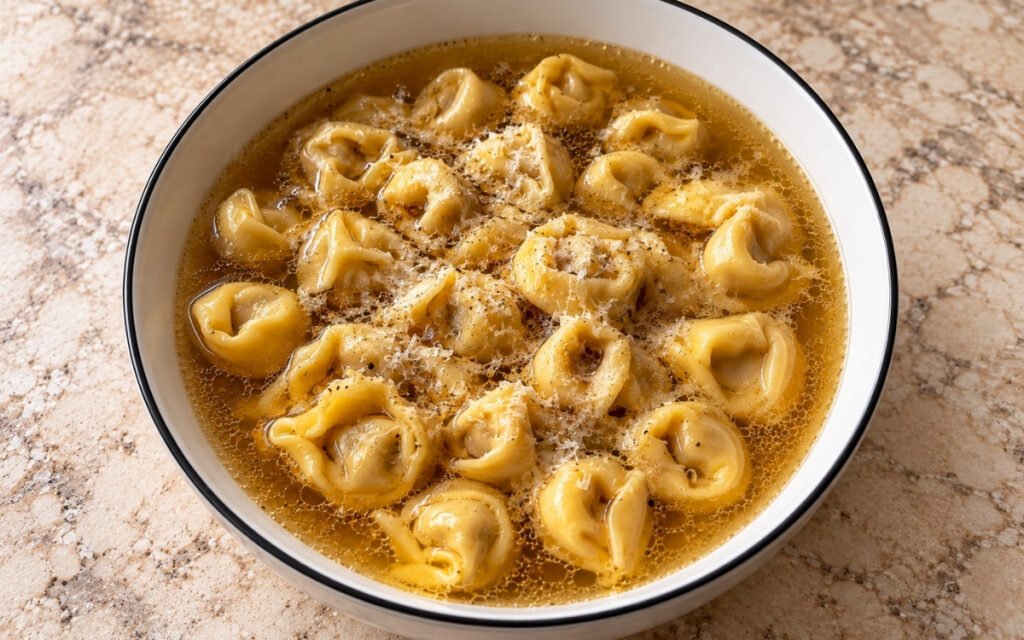
Tortellini in Brodo
Small meat tortellini in a clear, golden, deeply savory beef and chicken broth, finished simply with Parmigiano-Reggiano.
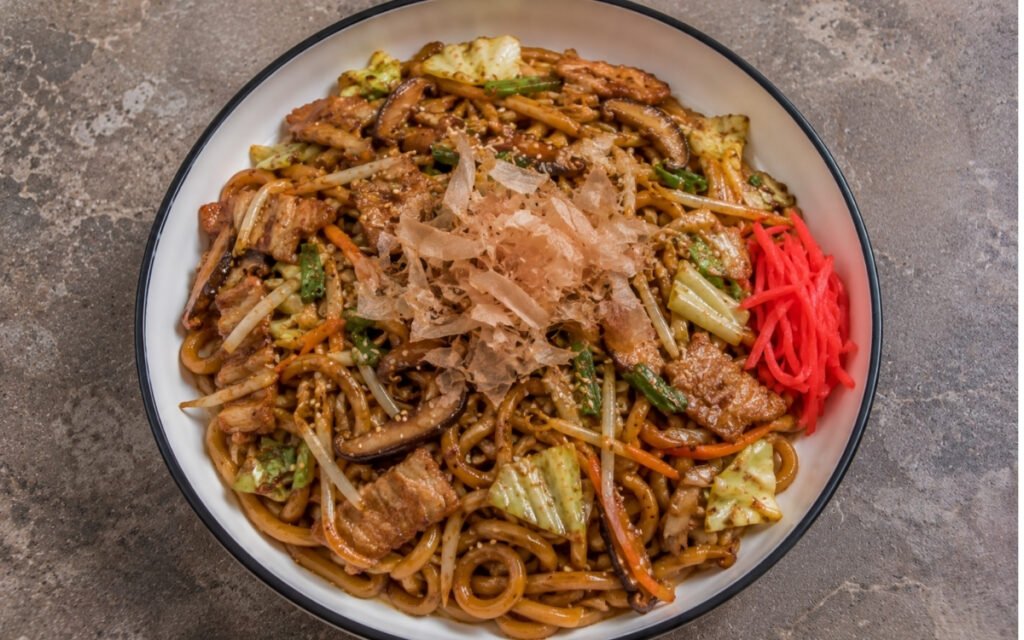
Yaki Udon Stir-Fry Noodles
Pork belly, shiitake, and udon in a smoking-hot wok — soy-mirin sauce, bonito flakes, pickled ginger, 27 minutes.
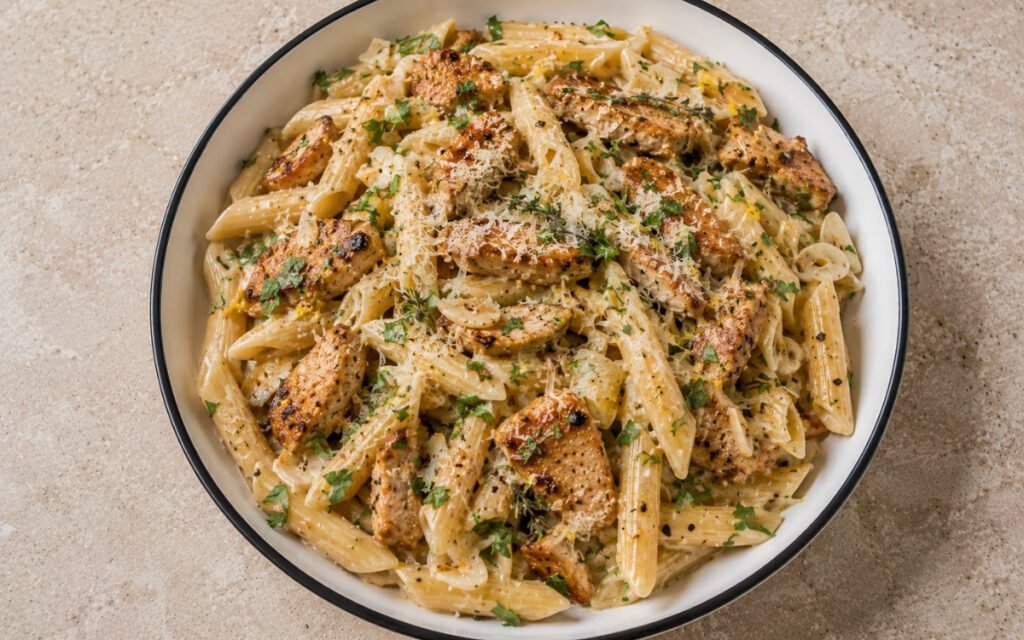
Creamy Chicken Garlic Parmesan Pasta
Seared chicken thighs in a garlic cream sauce — eight cloves cooked to pale gold, Parmigiano added off heat, pasta finished in the sauce. One pan, 40 minutes.
You might also like
You might also like
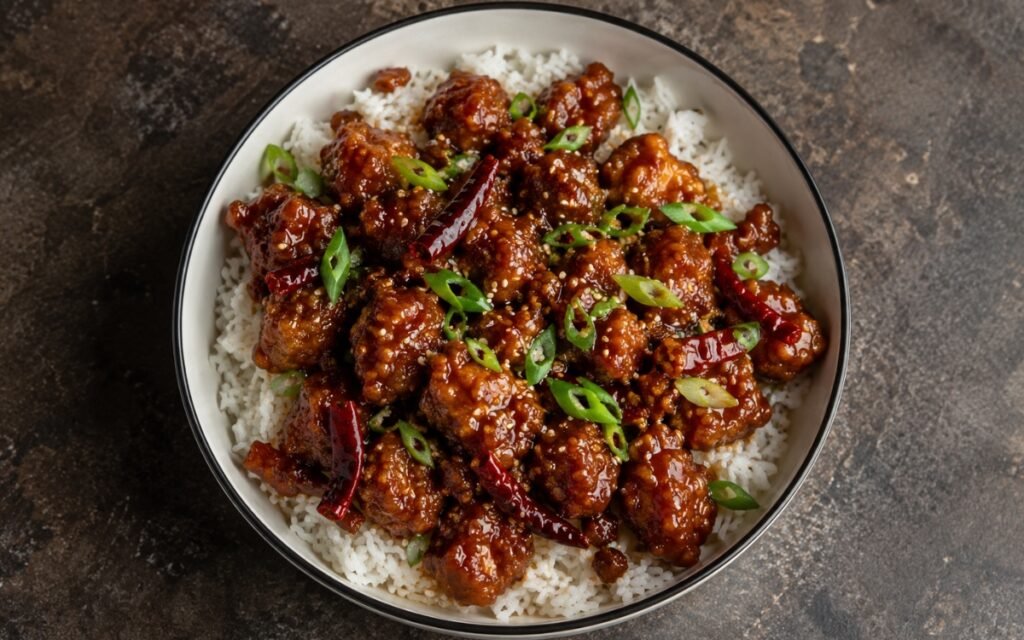
General Tso’s Chicken Rice Bowl
Golden fried chicken coated in sticky sweet-spicy General Tso’s sauce, served over jasmine rice with scallions and sesame.
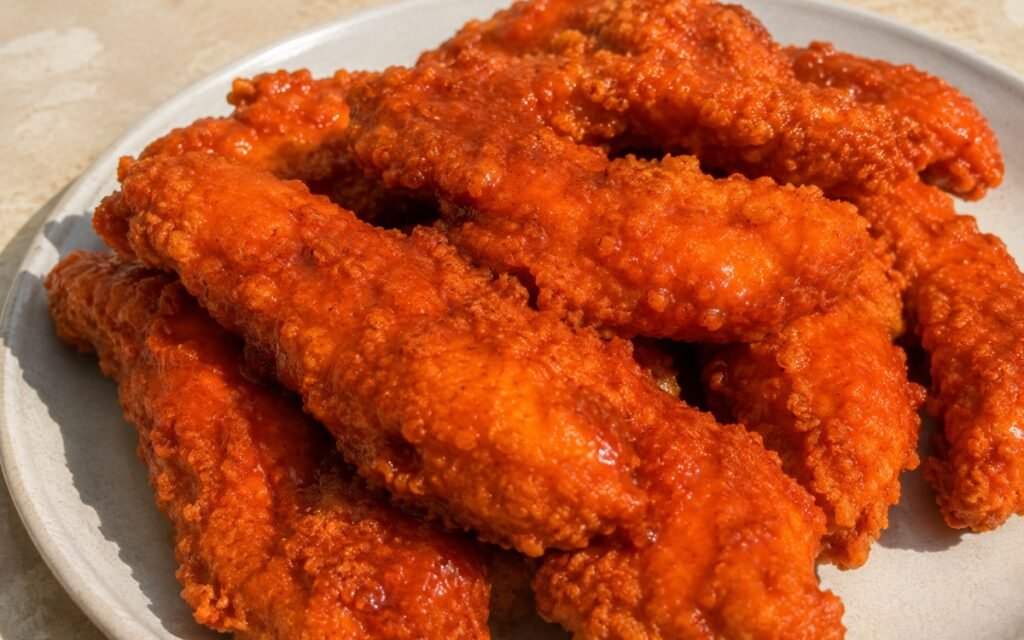
Crispy Buffalo Chicken Tenders
Chicken tenderloins breaded in three stages, fried until golden, oven-finished — tossed in buttery buffalo sauce just before serving. Crispy and tangy.
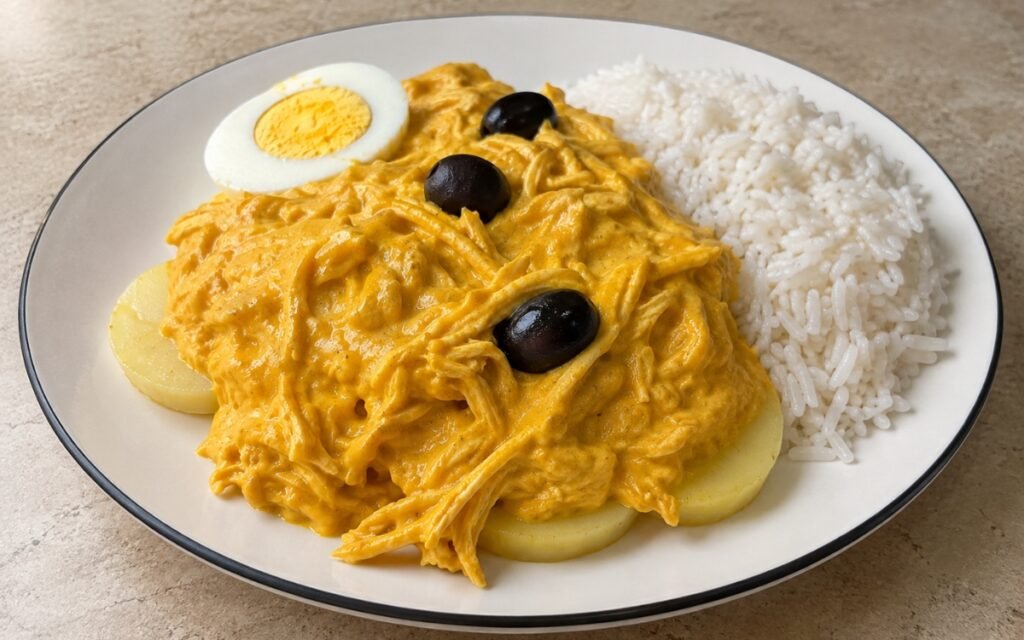
Ají de Gallina
Tender shredded chicken in a rich, velvety ají amarillo cream sauce with bread, evaporated milk, and walnuts, served over sliced potatoes.
Tuscan Chicken Cream Pasta
Ingredients
Method
- Bring a large pot of water to a full rolling boil and add the 5g of kosher salt. Add the penne rigate or rigatoni and cook until 1 minute shy of the package’s al dente time. Before draining, reserve 240ml of the starchy pasta water in a heatproof jug and keep it warm throughout — the pasta water is the consistency adjustment tool for the final sauce, added gradually at the combining step to produce the correct flowing, coating consistency. Drain without rinsing and set aside briefly.
- Pat the 500g of chicken thigh pieces completely dry on all surfaces with paper towels — the drying step is the preparation prerequisite for a genuine sear. Any surface moisture on the chicken converts to steam on contact with the hot pan, dropping the temperature and preventing the Maillard caramelisation that produces the golden crust contributing both flavour and the fond that the sauce is built on. Season with the 2g of salt and 2g of black pepper on all sides. Heat the 25ml of olive oil in a large, deep skillet over medium-high heat until shimmering. Add the chicken pieces in a single layer without crowding — work in two batches if needed. Leave completely undisturbed for 3–4 minutes until deeply golden on the bottom. Flip and cook for 2–3 minutes more. The chicken does not need to be cooked fully through at this stage — it will return to the sauce and finish there, absorbing the cream and sun-dried tomato character during the simmering step. Transfer to a plate, leaving all rendered fat and fond in the pan.
- Reduce the heat to medium and add the 30g of butter to the skillet with the rendered chicken fat. Allow the butter to melt and begin to foam — the foam indicates the correct temperature for the garlic. Add the thinly sliced garlic and red pepper flakes simultaneously. Cook, stirring constantly, for 45 seconds — thin garlic slices in foaming butter move from fragrant to golden to browned within 60 seconds at medium heat, and constant stirring prevents any pieces from remaining stationary long enough to brown unevenly. The garlic should be fragrant and showing the faintest golden colour at its edges at 45 seconds. Pour in the 120ml of dry white wine. Immediately scrape the bottom of the pan firmly with a wooden spoon — the wine’s acid and liquid dissolve the fond that the chicken sear produced, lifting every bit of caramelised protein and fat from the pan surface into the developing sauce. Allow the wine to reduce by approximately half over 2 minutes, bubbling vigorously — the reduction concentrates the wine’s fruity depth and cooks off the raw alcohol. Add the 200g of sliced, drained sun-dried tomatoes and 3g of dried oregano. Stir and cook for 1 minute — the sun-dried tomatoes warm through and their concentrated aromatic oils release into the surrounding sauce base.
- Pour in the 240ml of heavy cream and bring to a gentle simmer over medium heat. Return the seared chicken pieces and every drop of their accumulated resting juices to the pan. Simmer for 5–6 minutes, stirring occasionally, until the chicken is fully cooked through to 74°C internal temperature and the sauce has thickened slightly — the cream reduces around the chicken, concentrating the garlic, sun-dried tomato, and chicken flavour into a cohesive sauce. Add the 150g of baby spinach in handfuls rather than all at once — a large volume of raw spinach added simultaneously drops the sauce temperature and produces steaming rather than wilting. Add one or two large handfuls, stir until completely wilted and incorporated, then add the next handful. The residual heat of the sauce is sufficient to wilt each addition completely within 30–45 seconds. Once all the spinach is incorporated and wilted into the sauce, remove the pan from the heat completely.
- Add the drained pasta directly to the skillet. Scatter the 100g of finely grated Parmigiano-Reggiano over the pasta and add the 1g of salt and 2g of black pepper. Begin tossing — the pasta, Parmigiano, cream sauce, and sun-dried tomatoes combine with the tossing motion. Add the reserved pasta water in 60ml increments, tossing after each addition and assessing the consistency. The pasta water’s starch combines with the cream’s fat and the Parmigiano’s proteins to produce the cohesive, slightly glossy sauce consistency that makes the difference between a cream pasta and a truly coating, clinging cream pasta. Add until the sauce flows slowly when the pan is tilted but clings to each pasta piece rather than pooling at the bottom — approximately 120–180ml will be needed depending on how much the pasta absorbed during standing and how much the cream reduced. Add the 2g of lemon zest and the torn basil leaves. Fold gently to distribute — both go in last to preserve the lemon’s aromatic oils and the basil’s colour and fresh character. Taste and adjust with additional salt or pepper. Allow to rest off the heat for 2 minutes — this brief rest allows the sauce to settle and thicken very slightly around the pasta, improving the cling.
- Divide among four warm shallow bowls immediately. Drizzle a small amount of the reserved sun-dried tomato jar oil over each bowl — this aromatic, tomato-infused olive oil carries the concentrated flavour of the tomatoes that have been soaking in it and adds a final, specifically sun-dried-tomato-forward aromatic note that fresh olive oil cannot provide. Add additional finely grated Parmigiano over each portion. Serve immediately.