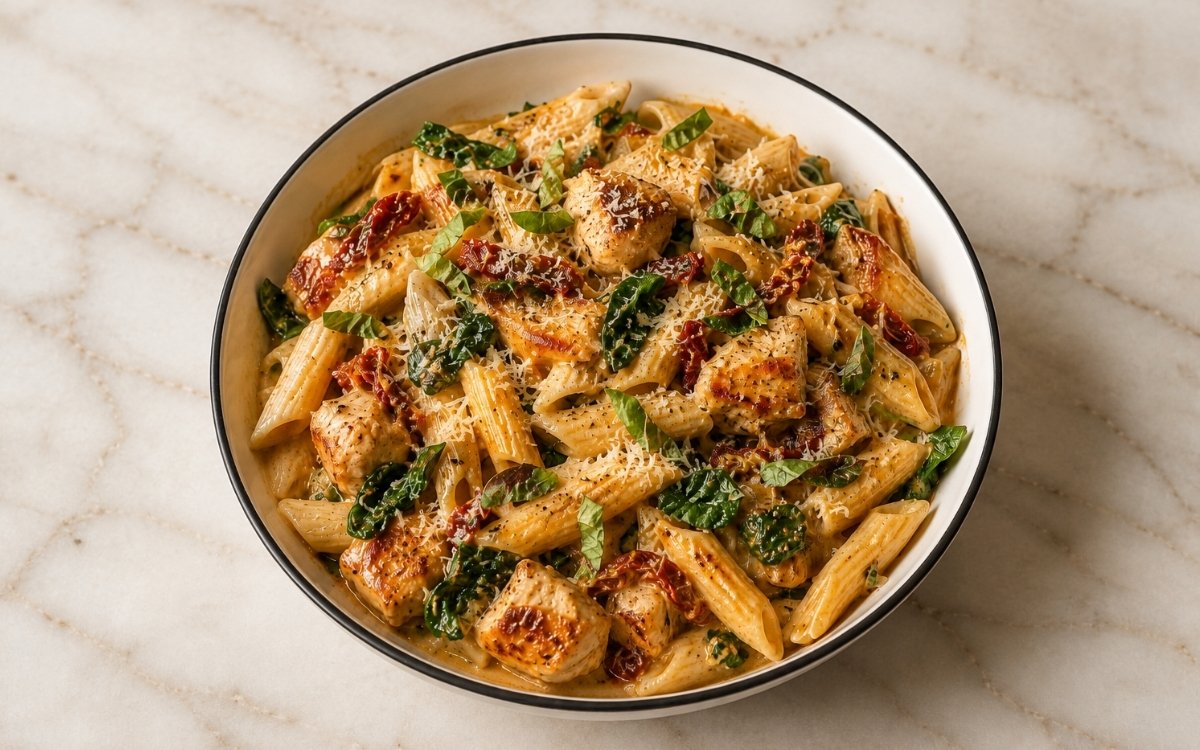
Ingredients
Method
Cook the Pasta
- Bring a large pot of water to a full rolling boil and add the 5g of kosher salt. Add the penne rigate or rigatoni and cook until 1 minute shy of the package's al dente time. Before draining, reserve 240ml of the starchy pasta water in a heatproof jug and keep it warm throughout — the pasta water is the consistency adjustment tool for the final sauce, added gradually at the combining step to produce the correct flowing, coating consistency. Drain without rinsing and set aside briefly.
Sear the Chicken Thighs
- Pat the 500g of chicken thigh pieces completely dry on all surfaces with paper towels — the drying step is the preparation prerequisite for a genuine sear. Any surface moisture on the chicken converts to steam on contact with the hot pan, dropping the temperature and preventing the Maillard caramelisation that produces the golden crust contributing both flavour and the fond that the sauce is built on. Season with the 2g of salt and 2g of black pepper on all sides. Heat the 25ml of olive oil in a large, deep skillet over medium-high heat until shimmering. Add the chicken pieces in a single layer without crowding — work in two batches if needed. Leave completely undisturbed for 3–4 minutes until deeply golden on the bottom. Flip and cook for 2–3 minutes more. The chicken does not need to be cooked fully through at this stage — it will return to the sauce and finish there, absorbing the cream and sun-dried tomato character during the simmering step. Transfer to a plate, leaving all rendered fat and fond in the pan.
Build the Aromatic Base with Wine
- Reduce the heat to medium and add the 30g of butter to the skillet with the rendered chicken fat. Allow the butter to melt and begin to foam — the foam indicates the correct temperature for the garlic. Add the thinly sliced garlic and red pepper flakes simultaneously. Cook, stirring constantly, for 45 seconds — thin garlic slices in foaming butter move from fragrant to golden to browned within 60 seconds at medium heat, and constant stirring prevents any pieces from remaining stationary long enough to brown unevenly. The garlic should be fragrant and showing the faintest golden colour at its edges at 45 seconds. Pour in the 120ml of dry white wine. Immediately scrape the bottom of the pan firmly with a wooden spoon — the wine's acid and liquid dissolve the fond that the chicken sear produced, lifting every bit of caramelised protein and fat from the pan surface into the developing sauce. Allow the wine to reduce by approximately half over 2 minutes, bubbling vigorously — the reduction concentrates the wine's fruity depth and cooks off the raw alcohol. Add the 200g of sliced, drained sun-dried tomatoes and 3g of dried oregano. Stir and cook for 1 minute — the sun-dried tomatoes warm through and their concentrated aromatic oils release into the surrounding sauce base.
Add Cream, Return Chicken, Wilt Spinach
- Pour in the 240ml of heavy cream and bring to a gentle simmer over medium heat. Return the seared chicken pieces and every drop of their accumulated resting juices to the pan. Simmer for 5–6 minutes, stirring occasionally, until the chicken is fully cooked through to 74°C internal temperature and the sauce has thickened slightly — the cream reduces around the chicken, concentrating the garlic, sun-dried tomato, and chicken flavour into a cohesive sauce. Add the 150g of baby spinach in handfuls rather than all at once — a large volume of raw spinach added simultaneously drops the sauce temperature and produces steaming rather than wilting. Add one or two large handfuls, stir until completely wilted and incorporated, then add the next handful. The residual heat of the sauce is sufficient to wilt each addition completely within 30–45 seconds. Once all the spinach is incorporated and wilted into the sauce, remove the pan from the heat completely.
Combine and Finish
- Add the drained pasta directly to the skillet. Scatter the 100g of finely grated Parmigiano-Reggiano over the pasta and add the 1g of salt and 2g of black pepper. Begin tossing — the pasta, Parmigiano, cream sauce, and sun-dried tomatoes combine with the tossing motion. Add the reserved pasta water in 60ml increments, tossing after each addition and assessing the consistency. The pasta water's starch combines with the cream's fat and the Parmigiano's proteins to produce the cohesive, slightly glossy sauce consistency that makes the difference between a cream pasta and a truly coating, clinging cream pasta. Add until the sauce flows slowly when the pan is tilted but clings to each pasta piece rather than pooling at the bottom — approximately 120–180ml will be needed depending on how much the pasta absorbed during standing and how much the cream reduced. Add the 2g of lemon zest and the torn basil leaves. Fold gently to distribute — both go in last to preserve the lemon's aromatic oils and the basil's colour and fresh character. Taste and adjust with additional salt or pepper. Allow to rest off the heat for 2 minutes — this brief rest allows the sauce to settle and thicken very slightly around the pasta, improving the cling.
Serve
- Divide among four warm shallow bowls immediately. Drizzle a small amount of the reserved sun-dried tomato jar oil over each bowl — this aromatic, tomato-infused olive oil carries the concentrated flavour of the tomatoes that have been soaking in it and adds a final, specifically sun-dried-tomato-forward aromatic note that fresh olive oil cannot provide. Add additional finely grated Parmigiano over each portion. Serve immediately.
Notes
The combination known as Tuscan chicken — sun-dried tomatoes, spinach, cream, and garlic with chicken — is one of the most widely reproduced Italian-American restaurant preparations of the past two decades. Its origins are specifically American rather than Tuscan, but the flavour combination draws legitimately on the ingredients of Tuscan cooking: sun-dried tomatoes are a specifically Southern Italian preservation, heavy cream sauces appear throughout Northern Italian cuisine, and the combination of dried herbs with tomato and chicken is standard across the Italian peninsula. The dish's specific character — concentrated tomato sweetness against cream's richness, spinach's herbal freshness against both — is genuinely compelling regardless of its geographic accuracy.
The sun-dried tomato oil from the jar deserves emphasis as a finishing ingredient rather than a discarded byproduct. Oil-packed sun-dried tomatoes are stored in olive oil for weeks or months, and the fat-soluble aromatic compounds from the tomatoes migrate into the surrounding oil during storage. By the time the jar is opened, the oil is deeply infused with concentrated sun-dried tomato character. Used as a finishing drizzle over the plated pasta, it adds a specifically aromatic, concentrated tomato note that the sauce alone — where the sun-dried tomatoes are a solid component — cannot produce as a surface top note.