
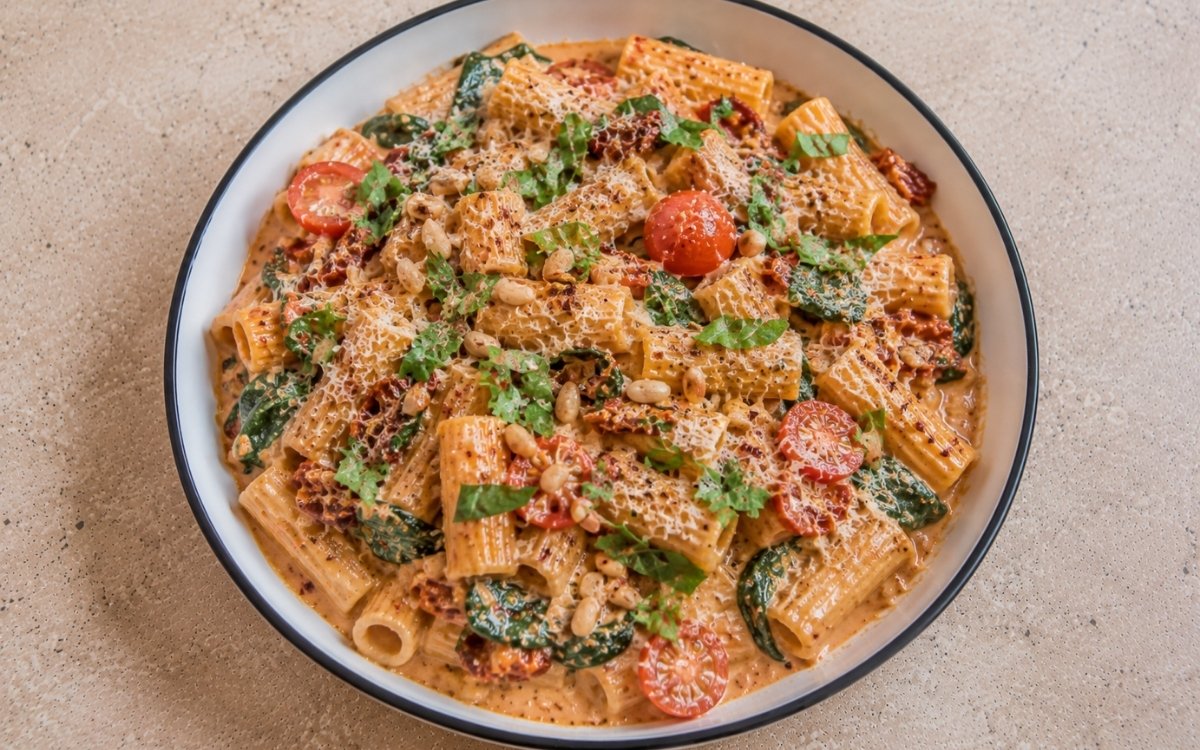
Creamy Sun-Dried Tomato Pasta
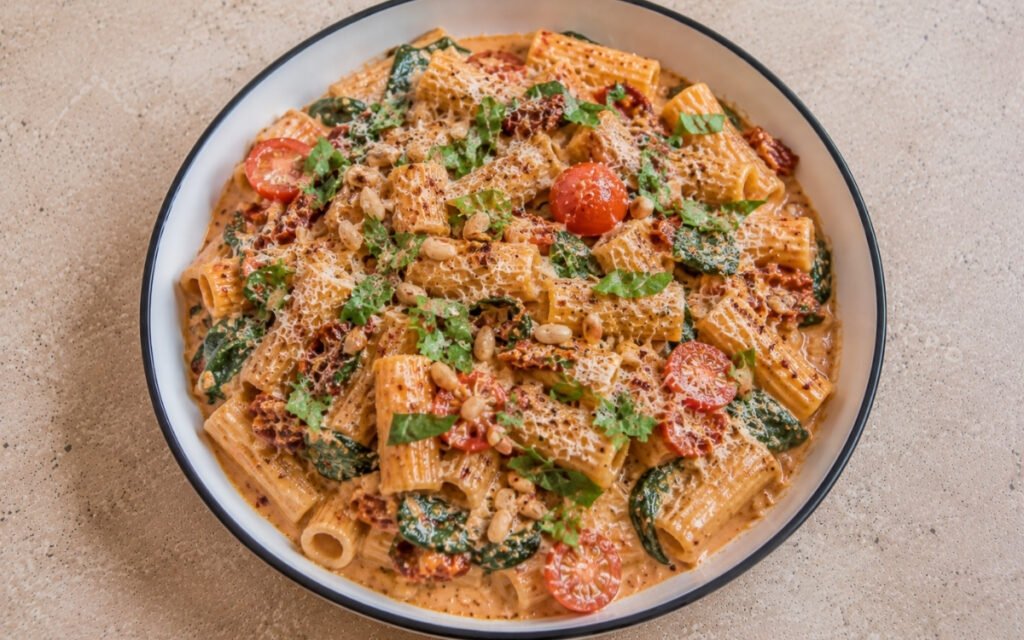
Two kinds of tomato in one sauce — oil-packed sun-dried tomatoes for concentrated, intensely sweet depth, and fresh cherry tomatoes that burst during simmering and contribute a brighter, more acidic freshness on top of the sun-dried base. The garlic and tomato paste are cooked in the sun-dried tomato oil rather than plain olive oil, which carries the oil’s accumulated tomato aromatic compounds directly into the sauce from the first moment. Parmesan goes in gradually off the heat, baby spinach wilts in the residual warmth, and toasted pine nuts and torn basil finish each bowl. Thirty minutes, one pan, and a pasta that delivers considerably more flavour than its cooking time suggests.
Prep Time : 10 min
Cook Time : 20 min
Servings : 4
10 min
20 min
4
Ingredients
For the Creamy Sun-Dried Tomato Sauce
• 180g oil-packed sun-dried tomatoes, drained and sliced (reserve 30ml oil) — this one on Amazon
• 200g heavy cream
• 200g whole milk
• 100g Parmesan cheese, finely grated — this one on Amazon
• 4 cloves garlic (20g), minced
• 300g cherry tomatoes, halved
• 15g tomato paste
• 4g red pepper flakes
• 3g black pepper, freshly ground
• 2g kosher salt
For Finishing
• 80g fresh basil leaves, torn
• 60g baby spinach
• 40g pine nuts, toasted
• Extra Parmesan cheese for serving
This post may contain affiliate links. As an Amazon Associate I earn from qualifying purchases, at no additional cost to you.
Directions
- Toast the Pine Nuts
Place the 40g of pine nuts in a dry skillet over medium-low heat — no oil, no butter, just the dry pan surface and the pine nuts’ own substantial oil content. Toast for 3–4 minutes, shaking the pan or stirring every 30–45 seconds throughout. Pine nuts’ polyunsaturated fat content makes them one of the most volatile nuts to toast — they move from pale and raw to golden and fragrant to burnt and bitter in rapid succession, with each transition taking only 30–60 seconds at medium-low heat. The target is an even, light golden-brown across the surface of most nuts, with a clearly nutty, buttery, toasted aroma. Transfer immediately to a plate the moment this colour is reached — pine nuts left on the pan’s residual heat after the burner is off continue toasting and can go from correct to bitter in under a minute. Set aside for the topping. - Cook the Pasta
Bring a large pot of water to a full rolling boil and add the 8g of kosher salt. Add the rigatoni and cook according to the package directions until al dente — approximately 11–12 minutes. Before draining, reserve 240ml of the starchy pasta cooking water in a heatproof jug and keep it warm throughout. The pasta water performs two functions in this recipe: emulsifying the cream sauce during the pasta-finishing toss, and serving as the consistency adjustment tool if the sauce tightens beyond the correct flowing, coating consistency. Drain without rinsing and set aside briefly. - Build the Aromatic Base in Sun-Dried Tomato Oil
Heat the reserved 30ml of sun-dried tomato packing oil in a large, deep skillet over medium heat. The decision to use the packing oil rather than plain olive oil is the most impactful flavour decision in the recipe — oil-packed sun-dried tomatoes are stored in olive oil that has been infusing with the tomatoes’ fat-soluble aromatic compounds for an extended period. This oil is intensely tomato-flavoured, slightly sweet, slightly acidic, and carries concentrated sun-dried tomato character in every drop. Using it as the base cooking fat means the garlic, tomato paste, and subsequently every element of the sauce is cooked in a medium that already carries deep, concentrated tomato flavour before any ingredient is added. Add the 20g of minced garlic and 4g of red pepper flakes simultaneously. Cook for 45 seconds, stirring continuously, until the garlic is fragrant and just beginning to show very faint colour — at medium heat in the tomato oil the garlic moves quickly, and the 45-second window produces sweet, aromatic garlic without any of the bitterness of browned garlic. Add the 180g of sliced sun-dried tomatoes and the 15g of tomato paste. Stir to combine and press the tomato paste against the hot pan surface. Cook for 2 minutes, stirring constantly — the tomato paste undergoes Maillard caramelisation at direct pan contact, darkening slightly and developing the concentrated, almost smoky tomato depth that distinguishes tomato paste cooked in a pan from tomato paste added directly to liquid. The sun-dried tomatoes heat through and their residual oil releases further into the pan. - Build the Cream Sauce with Cherry Tomatoes
Pour in the 200ml of heavy cream and 200ml of whole milk, stirring continuously to incorporate them with the tomato-garlic base. The combination of cream and milk produces a sauce that is rich and coating without being as heavy as cream alone — the milk’s lower fat content lightens the cream’s richness while still contributing to the sauce’s body. Add the 300g of halved cherry tomatoes. Bring to a gentle simmer and cook for 5–6 minutes, stirring occasionally, while the cherry tomatoes soften and begin to release their juices into the cream. The cherry tomatoes contribute a fundamentally different tomato character from the sun-dried tomatoes already in the sauce — where the sun-dried tomatoes provide concentrated, sweet, preserved tomato depth, the fresh cherry tomatoes provide a brighter, more acidic, more immediate tomato freshness that adds a second layer of tomato character and prevents the sauce from tasting flat or one-dimensionally sweet. After 5–6 minutes, use the back of a wooden spoon to gently press approximately half of the cherry tomatoes against the side of the pan until they burst — releasing their juice and pulp into the cream sauce while leaving the other half intact as identifiable tomato pieces. This deliberate partial bursting produces both a visual texture and a two-texture experience — sauce incorporating tomato juice throughout and distinct tomato pieces providing concentrated freshness in specific bites. - Add Parmesan Gradually
Reduce the heat to low. Add the 100g of finely grated Parmesan in three separate additions, stirring continuously and allowing each addition to melt completely into the sauce before adding the next. This gradual addition is the technique that produces a smooth, creamy, integrated sauce rather than a lumpy, clumped one. When Parmesan is added all at once to a hot sauce, the proteins in the outer layer of each mound of cheese seize simultaneously against the heat before the interior has melted, producing protein agglomerations that cannot be broken up by stirring. Added in small increments with continuous stirring, each addition is dispersed and melted before the next quantity is introduced, producing a uniformly smooth, creamy incorporation. After all three additions are fully incorporated the sauce should be glossy and slightly thickened, coating the back of a spoon. - Finish the Pasta in the Sauce
Add the drained rigatoni directly to the sauce along with 120ml of the reserved pasta water. Increase the heat to medium. Toss vigorously with tongs for 2 minutes — turning the rigatoni through the sauce continuously to coat every external surface and encourage the sauce to enter the hollow centres of each tube. The pasta’s surface starch releases into the cream sauce during this tossing, combining with the cream’s fat and the Parmesan’s proteins to produce the emulsified, glossy, clinging coating that makes the difference between pasta in sauce and pasta that is the sauce. Add more pasta water in 30ml increments if the sauce tightens beyond the correct flowing consistency during this tossing period. - Add Spinach, Basil, and Serve
Fold in the 60g of baby spinach and allow it to sit in the warm pasta and sauce for 1 minute — the residual heat wilts the spinach completely without cooking it beyond that, preserving its bright green colour and preventing the waterlogged, dark-green result that direct heat would produce. Add three-quarters of the torn basil leaves and fold through gently. Taste and adjust with the 2g of salt and 3g of black pepper. Remove from the heat and allow to rest for 2 minutes — the brief rest allows the sauce to set slightly and the flavours to integrate. Divide among four warm bowls. Scatter the 40g of toasted pine nuts over each bowl. Add the reserved fresh basil leaves. Finish with additional grated Parmesan. Serve immediately.
*Notes :
- The sun-dried tomato packing oil is the most underused component of a jar or can of oil-packed sun-dried tomatoes and its use as the cooking fat rather than its disposal is what makes this recipe specifically more flavourful than versions that use plain olive oil. Over the weeks or months that sun-dried tomatoes sit in olive oil, their fat-soluble aromatic compounds — the concentrated esters and aldehydes that give sun-dried tomatoes their specific intense sweetness and depth — migrate progressively into the surrounding oil. By the time the jar is opened, the oil is deeply infused. This oil is an ingredient, not a waste product, and using it as the base fat for the entire sauce means those compounds are present in every element from the first step.
- The two-tomato approach — sun-dried for depth, cherry for freshness — is the technique that gives this cream sauce its specific character. A sun-dried tomato cream sauce without fresh tomatoes can taste sweet, heavy, and slightly one-dimensional. Fresh cherry tomatoes burst into the sauce during simmering, contributing acidity, juice, and fresh tomato aromatics that the preserved tomatoes cannot provide. Together the two types produce a tomato character with more dimension and more interest than either alone.
- Baby spinach added off the heat rather than sautéed separately is the correct technique for this recipe. Direct heat sautéing produces a darker, more concentrated spinach with a slightly sulphurous edge. Off-heat wilting in the warm pasta produces a bright, fresh, clean spinach presence that provides colour and mild vegetable freshness without any strong cooked-spinach flavour.
Why This Recipe Works
This recipe works because it makes three ingredient-level decisions that compound toward a more flavourful result than equivalent effort would produce without them. Using the sun-dried tomato oil as the cooking fat carries its concentrated tomato aromatics into the sauce base from the first second. Caramelising the tomato paste in the pan develops its flavour beyond what adding it directly to liquid would produce.
Adding the cherry tomatoes to the cream sauce and deliberately bursting half of them produces a two-dimensional tomato character — preserved depth and fresh acidity — in a single component addition. All three decisions serve the same goal of maximum tomato flavour in the finished sauce.
Ingredient Breakdown
Sun-Dried Tomatoes (Oil-Packed) and Their Oil
Dual-function ingredient — the tomatoes provide concentrated sweet-acidic depth; the reserved oil is the cooking fat that carries those aromatic compounds into every element of the sauce base.
Cherry Tomatoes (Partially Burst)
The fresh tomato layer — provides acidity and brightness that the preserved sun-dried tomatoes cannot, producing a two-dimensional tomato character in the finished sauce.
Tomato Paste (Caramelised in Pan)
The third tomato element — caramelised against the hot pan surface before liquid is added, contributing the specific concentrated, slightly smoky depth that direct-heat tomato paste produces.
Heavy Cream and Whole Milk
The sauce medium — cream for richness and body, milk for lightness; combined to produce a coating sauce where the tomato’s character remains dominant.
Parmesan (Added in Three Increments)
The savoury emulsifying finish — added gradually off high heat to melt smoothly rather than clumping.
Baby Spinach (Off-Heat Wilting)
The fresh vegetable element — wilted in residual heat to preserve bright colour and clean flavour.
Toasted Pine Nuts
The textural topping — buttery, toasted, slightly sweet nuttiness that provides crunch against the smooth cream sauce.
Flavor Structure Explained
This pasta follows a layered balance model:
- Multi-dimensional tomato core (sun-dried, cherry, tomato paste)
- Creamy savory body (cream, Parmesan)
- Warm savory base (garlic, chili flakes)
- Fresh herbal and green lift (basil, spinach)
- Nutty textural finish (pine nuts)
The tomato layer defines the foundation, combining concentrated sweetness, fresh acidity, and caramelised depth into a single, complex core. Cream and Parmesan build a smooth, coating richness that carries and softens that intensity. Garlic and chili create a warm, savory background that grounds the sweetness and prevents the sauce from feeling flat. Basil and spinach add freshness and brightness at the top, keeping the dish lively. Pine nuts finish with texture and nuttiness, completing the structure with contrast and balance.
Common Mistakes to Avoid
- Discarding the Sun-Dried Tomato Oil – The packing oil is one of the recipe’s primary flavour ingredients. Always reserve 30ml for the cooking base.
- Adding All the Parmesan at Once – Simultaneous addition causes protein seizing and clumping rather than smooth incorporation. Always add in three increments with continuous stirring.
- Not Bursting the Cherry Tomatoes – Intact cherry tomatoes provide only surface flavour contribution. Bursting half of them releases their juice and fresh acidity into the sauce body, fundamentally improving the sauce’s character.
- Wilting the Spinach Over Direct Heat – Direct heat produces dark, concentrated, slightly sulphurous spinach. Off-heat wilting produces bright, fresh, clean spinach. Always fold the spinach in after removing from the heat.
- Not Reserving Enough Pasta Water – The sauce thickens significantly during the pasta tossing step as the cream tightens and the Parmesan absorbs remaining liquid. Reserve the full 240ml and use it to maintain the correct flowing consistency.
- Under-toasting or Burning the Pine Nuts – Both extremes sacrifice the toasted pine nut’s specific contribution. Pale, under-toasted pine nuts taste raw and flat; burnt pine nuts are bitter. Continuous attention for 3–4 minutes is required.
Variations
With Chicken
Add 400g of thinly sliced chicken breast, seasoned with salt, pepper, and Italian seasoning, seared in the sun-dried tomato oil for 3–4 minutes per side before the garlic step. Set aside and return with the pasta tossing step. The chicken’s searing fond adds additional depth to the tomato sauce base.
With Roasted Red Peppers
Add 150g of drained, sliced jarred roasted red peppers alongside the sun-dried tomatoes for a second layer of sweet, smoky roasted pepper character that complements the tomato profile.
Without Cream (Lighter Version)
Replace the heavy cream with 300ml of chicken or vegetable stock and reduce the Parmesan to 80g. The sauce will be thinner and less coating but more tomato-forward and significantly lighter in both richness and calories.
With Artichokes
Add 150g of drained, quartered marinated artichoke hearts to the sauce alongside the cherry tomatoes for a briny, slightly bitter element that provides excellent contrast to the cream and sun-dried tomato’s sweetness.
Storage & Make-Ahead
The assembled pasta can be refrigerated for up to 3 days. During storage, the pasta will absorb some of the cream sauce, so when reheating, warm it gently in a pan over low heat with 2 to 3 tablespoons of cream or milk per portion, stirring until the sauce returns to a creamy consistency. Add fresh toasted pine nuts and fresh basil after reheating, since toppings stored with the pasta lose their texture.
The creamy sun-dried tomato sauce on its own can be refrigerated for up to 4 days and reheats smoothly over low heat with gentle stirring. This is the most practical make-ahead method: prepare the sauce in advance, then cook the pasta fresh and add the toppings at serving time.
Toasted pine nuts can be prepared up to 2 days ahead and stored in an airtight container at room temperature. They hold their toasted flavor and texture very well.
Frequently Asked Questions
What are the best sun-dried tomatoes for this recipe?
Oil-packed rather than dry-packed — the oil-packed variety is softer, more flavourful, and their packing oil is a usable ingredient in the recipe. Look for plump, deep-red tomatoes with a clean, intensely tomato aroma. Italian sun-dried tomatoes from Calabria or Sicily are the highest quality; any good-quality oil-packed version works.
Can I use canned diced tomatoes instead of cherry tomatoes?
Yes — drain well before adding and skip the bursting step. Canned diced tomatoes contribute comparable fresh acidity and juice to the sauce. Cherry tomatoes are preferred because their higher natural sugar content produces a slightly sweeter, brighter result in the sauce and their intact shape until bursting provides more textural interest.
Why both cream and milk?
Cream alone produces a sauce that is very rich and can overwhelm the tomato character. Milk lightens the cream’s dairy fat presence while still contributing to the sauce’s body and coating quality. The combined ratio produces a sauce where the tomato is dominant and the cream is supportive rather than the other way around.
Can I make this without pine nuts?
Yes — the toasted pine nuts provide textural crunch and a buttery, slightly sweet nuttiness that complements the tomato and cream. Toasted walnuts or toasted almonds provide comparable crunch with a different flavour profile. The dish is complete without any nut if allergies are a concern, though it loses the textural contrast that makes each bite more interesting.
What should I serve with this?
The dish is a complete pasta main. A simple green salad with lemon vinaigrette provides the fresh, acidic counterpoint that cuts the cream’s richness. Garlic bread alongside absorbs the residual sauce excellently. A glass of dry Italian white — Pinot Grigio, Soave, or Vermentino — complements the tomato and cream’s character naturally.
Nutrition Facts
( per serving )
Calories
~950 kcal
Protein
26 g
Fat
46 g
Carbs
92 g
Calories
~950 kcal
Protein
26 g
Fat
46 g
Carbs
92 g
Related Recipes
Related Recipes

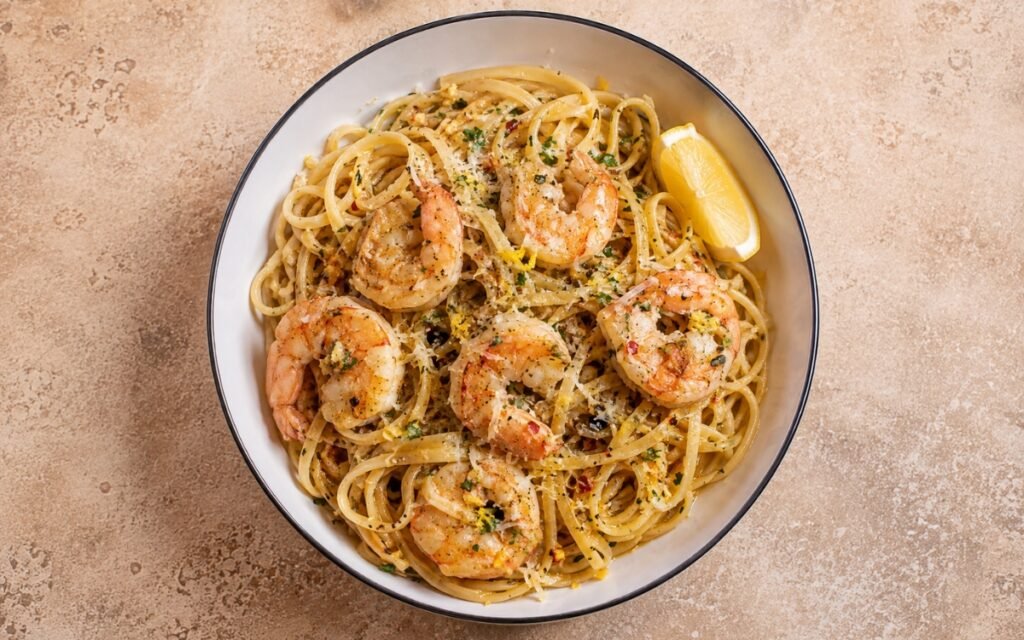
Shrimp Scampi Pasta
Linguine finished in a glossy garlic butter lemon sauce with tender shrimp, parsley, chili flakes, and Parmesan.
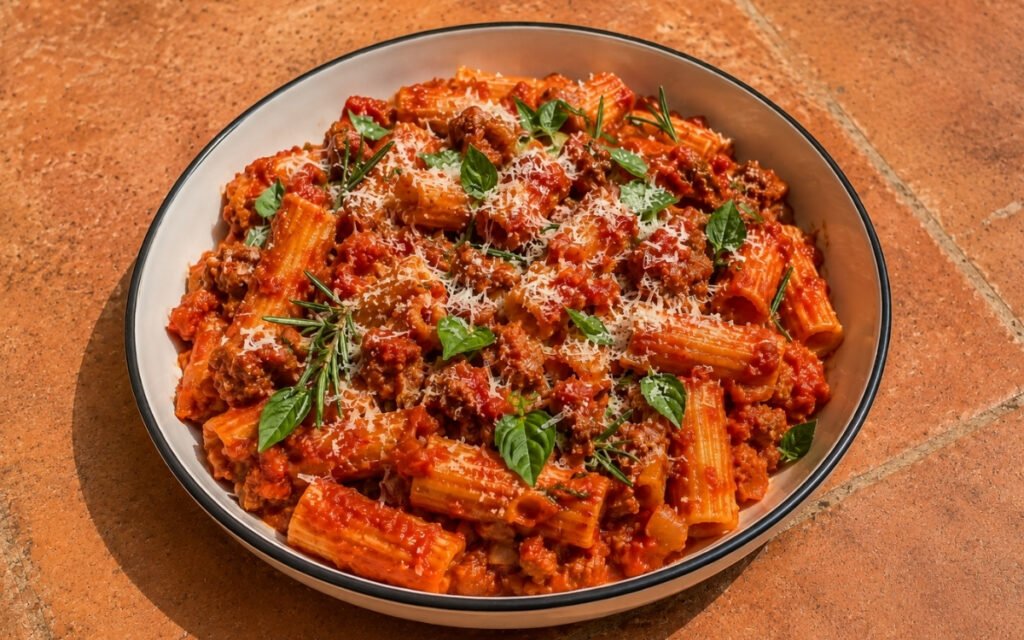
One-Pan Sausage Tomato Pasta
Rigatoni cooked directly in sausage and San Marzano tomato sauce — the pasta’s own starch creates a glossy coating without cream. One pan, 35 minutes.
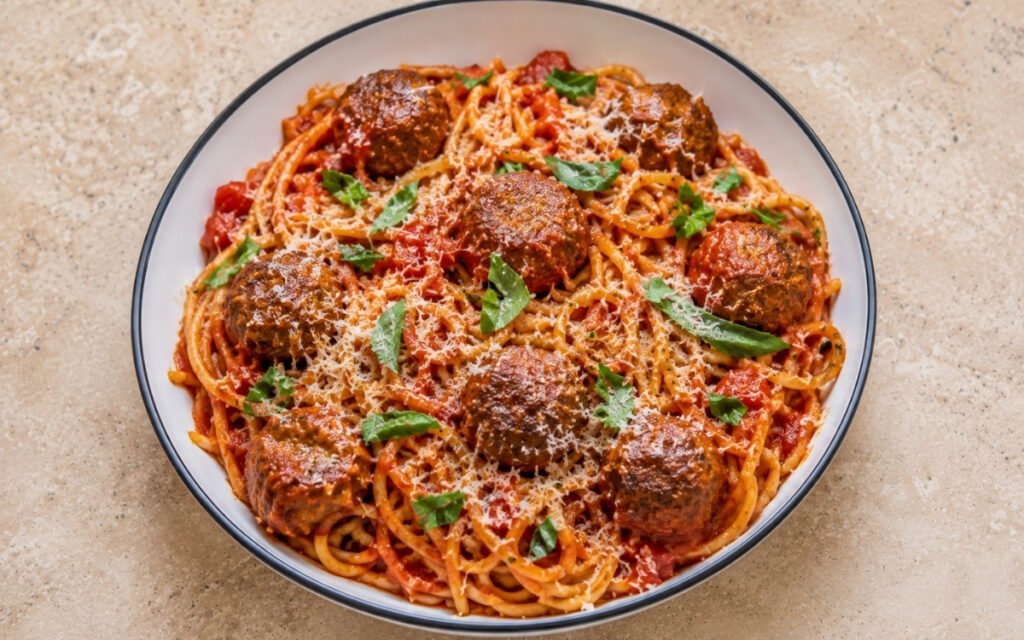
Easy Spaghetti and Meatballs
Beef and pork meatballs on a panade, deeply browned, simmered in San Marzano marinara — 60 minutes.
You might also like
You might also like
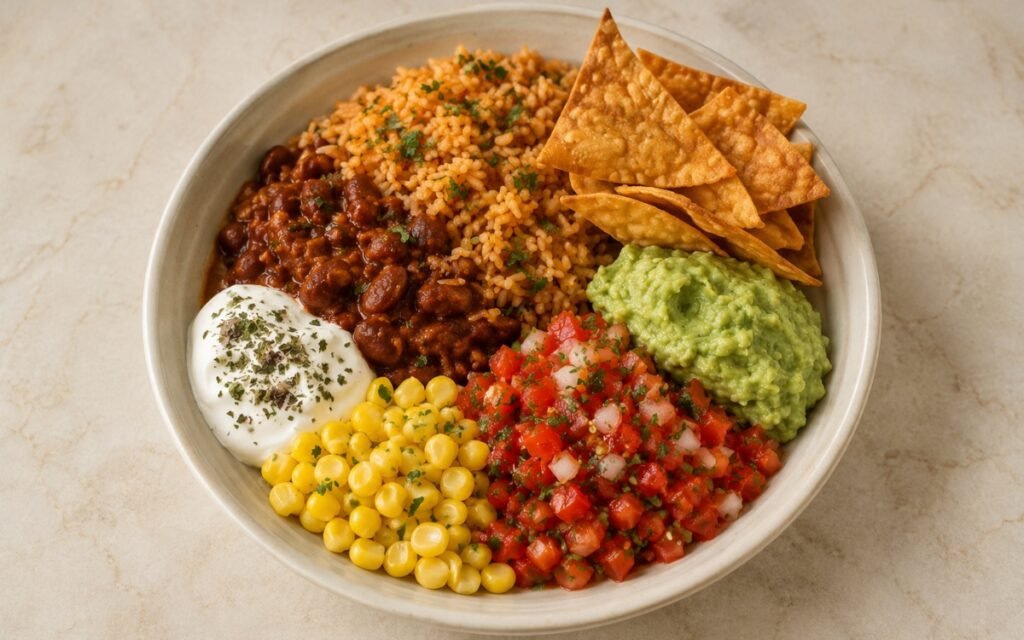
Loaded Mexican Taco Bowl
Toasted tomato rice, smoky chipotle red beans, fresh pico de gallo, plain guacamole, sour cream, and crispy tortilla chips, layered in one vibrant bowl.
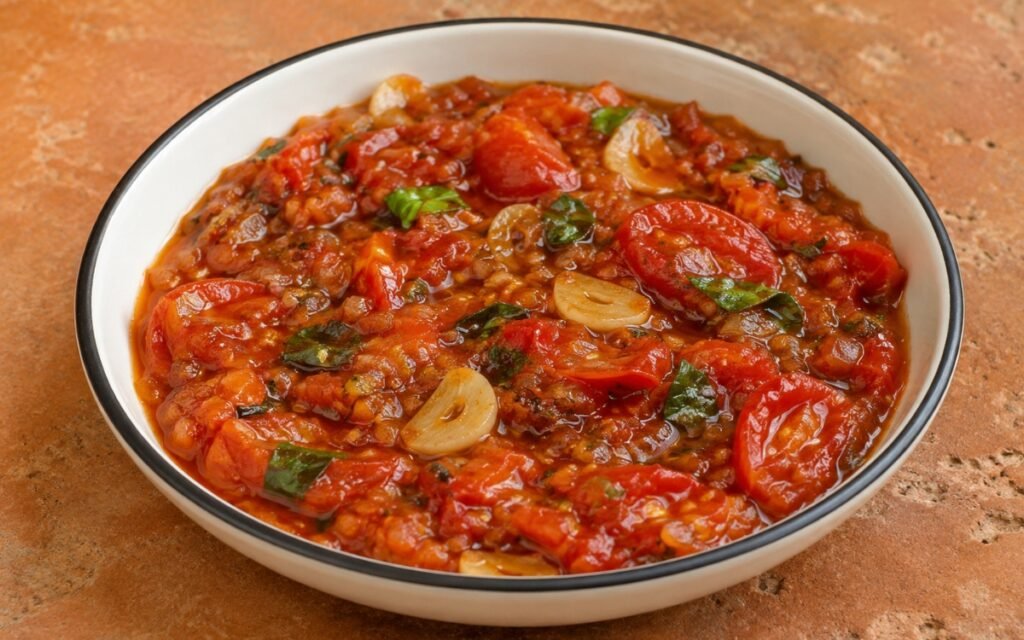
Quick Warm Tomato Garlic Sauce
Fresh cherry tomatoes simmer with garlic and basil. Versatile warm sauce ready in just 15 minutes.
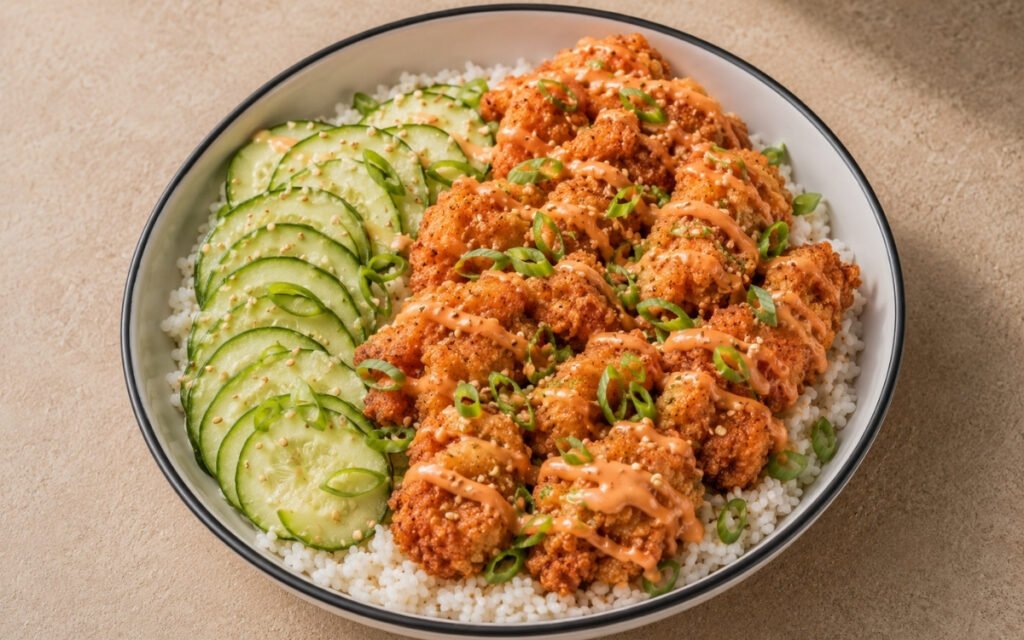
Bang Bang Chicken Rice Bowl
Crispy fried chicken in sweet-spicy bang bang sauce over jasmine rice with cucumber and scallions.
Creamy Sun-Dried Tomato Pasta
Ingredients
Method
- Place the 40g of pine nuts in a dry skillet over medium-low heat — no oil, no butter, just the dry pan surface and the pine nuts’ own substantial oil content. Toast for 3–4 minutes, shaking the pan or stirring every 30–45 seconds throughout. Pine nuts’ polyunsaturated fat content makes them one of the most volatile nuts to toast — they move from pale and raw to golden and fragrant to burnt and bitter in rapid succession, with each transition taking only 30–60 seconds at medium-low heat. The target is an even, light golden-brown across the surface of most nuts, with a clearly nutty, buttery, toasted aroma. Transfer immediately to a plate the moment this colour is reached — pine nuts left on the pan’s residual heat after the burner is off continue toasting and can go from correct to bitter in under a minute. Set aside for the topping.
- Bring a large pot of water to a full rolling boil and add the 8g of kosher salt. Add the rigatoni and cook according to the package directions until al dente — approximately 11–12 minutes. Before draining, reserve 240ml of the starchy pasta cooking water in a heatproof jug and keep it warm throughout. The pasta water performs two functions in this recipe: emulsifying the cream sauce during the pasta-finishing toss, and serving as the consistency adjustment tool if the sauce tightens beyond the correct flowing, coating consistency. Drain without rinsing and set aside briefly.
- Heat the reserved 30ml of sun-dried tomato packing oil in a large, deep skillet over medium heat. The decision to use the packing oil rather than plain olive oil is the most impactful flavour decision in the recipe — oil-packed sun-dried tomatoes are stored in olive oil that has been infusing with the tomatoes’ fat-soluble aromatic compounds for an extended period. This oil is intensely tomato-flavoured, slightly sweet, slightly acidic, and carries concentrated sun-dried tomato character in every drop. Using it as the base cooking fat means the garlic, tomato paste, and subsequently every element of the sauce is cooked in a medium that already carries deep, concentrated tomato flavour before any ingredient is added. Add the 20g of minced garlic and 4g of red pepper flakes simultaneously. Cook for 45 seconds, stirring continuously, until the garlic is fragrant and just beginning to show very faint colour — at medium heat in the tomato oil the garlic moves quickly, and the 45-second window produces sweet, aromatic garlic without any of the bitterness of browned garlic. Add the 180g of sliced sun-dried tomatoes and the 15g of tomato paste. Stir to combine and press the tomato paste against the hot pan surface. Cook for 2 minutes, stirring constantly — the tomato paste undergoes Maillard caramelisation at direct pan contact, darkening slightly and developing the concentrated, almost smoky tomato depth that distinguishes tomato paste cooked in a pan from tomato paste added directly to liquid. The sun-dried tomatoes heat through and their residual oil releases further into the pan.
- Pour in the 200ml of heavy cream and 200ml of whole milk, stirring continuously to incorporate them with the tomato-garlic base. The combination of cream and milk produces a sauce that is rich and coating without being as heavy as cream alone — the milk's lower fat content lightens the cream's richness while still contributing to the sauce's body. Add the 300g of halved cherry tomatoes. Bring to a gentle simmer and cook for 5–6 minutes, stirring occasionally, while the cherry tomatoes soften and begin to release their juices into the cream. The cherry tomatoes contribute a fundamentally different tomato character from the sun-dried tomatoes already in the sauce — where the sun-dried tomatoes provide concentrated, sweet, preserved tomato depth, the fresh cherry tomatoes provide a brighter, more acidic, more immediate tomato freshness that adds a second layer of tomato character and prevents the sauce from tasting flat or one-dimensionally sweet. After 5–6 minutes, use the back of a wooden spoon to gently press approximately half of the cherry tomatoes against the side of the pan until they burst — releasing their juice and pulp into the cream sauce while leaving the other half intact as identifiable tomato pieces. This deliberate partial bursting produces both a visual texture and a two-texture experience — sauce incorporating tomato juice throughout and distinct tomato pieces providing concentrated freshness in specific bites.
- Reduce the heat to low. Add the 100g of finely grated Parmesan in three separate additions, stirring continuously and allowing each addition to melt completely into the sauce before adding the next. This gradual addition is the technique that produces a smooth, creamy, integrated sauce rather than a lumpy, clumped one. When Parmesan is added all at once to a hot sauce, the proteins in the outer layer of each mound of cheese seize simultaneously against the heat before the interior has melted, producing protein agglomerations that cannot be broken up by stirring. Added in small increments with continuous stirring, each addition is dispersed and melted before the next quantity is introduced, producing a uniformly smooth, creamy incorporation. After all three additions are fully incorporated the sauce should be glossy and slightly thickened, coating the back of a spoon.
- Add the drained rigatoni directly to the sauce along with 120ml of the reserved pasta water. Increase the heat to medium. Toss vigorously with tongs for 2 minutes — turning the rigatoni through the sauce continuously to coat every external surface and encourage the sauce to enter the hollow centres of each tube. The pasta’s surface starch releases into the cream sauce during this tossing, combining with the cream’s fat and the Parmesan’s proteins to produce the emulsified, glossy, clinging coating that makes the difference between pasta in sauce and pasta that is the sauce. Add more pasta water in 30ml increments if the sauce tightens beyond the correct flowing consistency during this tossing period.
- Fold in the 60g of baby spinach and allow it to sit in the warm pasta and sauce for 1 minute — the residual heat wilts the spinach completely without cooking it beyond that, preserving its bright green colour and preventing the waterlogged, dark-green result that direct heat would produce. Add three-quarters of the torn basil leaves and fold through gently. Taste and adjust with the 2g of salt and 3g of black pepper. Remove from the heat and allow to rest for 2 minutes — the brief rest allows the sauce to set slightly and the flavours to integrate. Divide among four warm bowls. Scatter the 40g of toasted pine nuts over each bowl. Add the reserved fresh basil leaves. Finish with additional grated Parmesan. Serve immediately.