
Bang Bang Chicken Rice Bowl
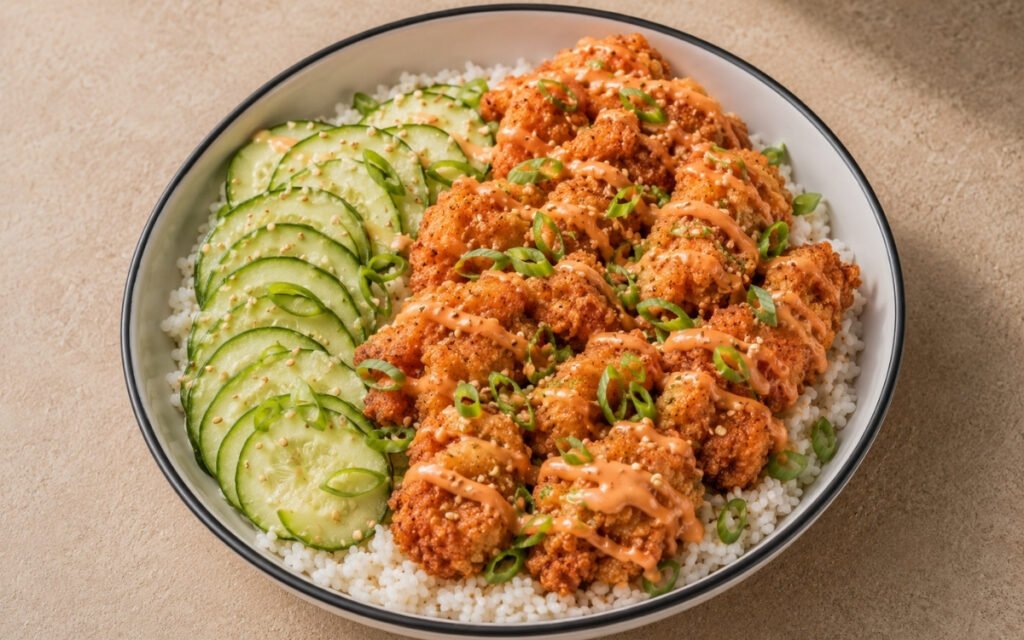
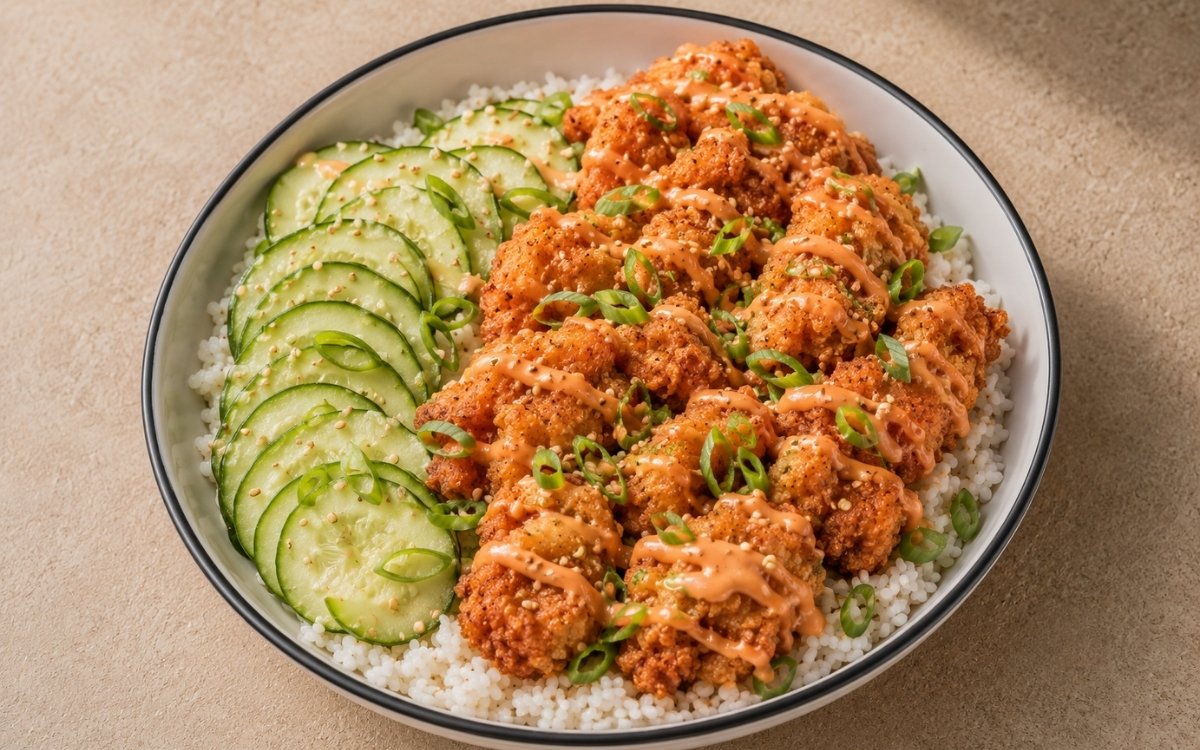
Chicken pieces breaded through the three-stage flour-egg-panko sequence and deep-fried to 175°C until deeply golden — then tossed immediately in bang bang sauce: mayonnaise, Thai sweet chili sauce, sriracha, rice vinegar, and honey whisked into the specific sweet-creamy-spiced coating that the fried chicken’s crust was built to carry. The sauce is made before the oil is heated so the moment the chicken comes out of the fryer it goes directly into the bowl and gets tossed — maintaining the crunch while the sauce adheres to every piece of hot crust rather than cooling first and losing the cling. Jasmine rice underneath, sliced cucumber and scallions alongside for the fresh contrast. Thirty-five minutes, the fried chicken bowl that earns every calorie.
Prep Time : 20 min
Cook Time : 15 min
Servings : 4
20 min
15 min
4
Ingredients
For the Bang Bang Chicken
• 600g boneless, skinless chicken breasts, cut into bite-sized pieces
• 120g all-purpose flour
• 60g cornstarch
• 2 large eggs, beaten
• 150g panko breadcrumbs — this one on Amazon
• 5g salt
• 3g black pepper
• 2g garlic powder
• Vegetable oil for frying
For the Bang Bang Sauce
• 120g mayonnaise
• 60g Thai sweet chili sauce — this one on Amazon
• 30g Sriracha sauce — this one on Amazon
• 15ml rice vinegar
• 5g honey
For the Rice
• 250g jasmine rice, uncooked
• 375ml water
• pinch of salt
For the Bowl
• 200g cucumber, thinly sliced
• 40g scallions, sliced
• 20g sesame seeds for garnish
This post may contain affiliate links. As an Amazon Associate I earn from qualifying purchases, at no additional cost to you.
Directions
- Cook the Jasmine Rice
Rinse the 250g of jasmine rice under cold running water until the water running through the grains is nearly clear. Combine the rinsed rice with 375ml of water and a pinch of salt in a medium saucepan. Bring to a full rolling boil over high heat, then reduce immediately to the lowest possible setting, cover tightly, and simmer for 15 minutes without lifting the lid. Remove from heat and allow to stand covered and undisturbed for 5 minutes. Uncover and fluff with a fork. Keep covered to maintain warmth while the chicken is prepared and fried. - Make the Bang Bang Sauce
Make the sauce before the oil is heated and before the chicken is breaded — the sauce must be ready the moment the fried chicken comes out of the oil. In a medium bowl, whisk together the 120g of mayonnaise, 60g of Thai sweet chili sauce, 30g of sriracha, 15ml of rice vinegar, and 5g of honey until completely smooth and uniform. The sauce should taste simultaneously sweet from the Thai chili sauce and honey, creamy from the mayonnaise, spiced and garlicky from the sriracha, and bright from the rice vinegar — all four notes present and balanced. Adjust: more sriracha for heat, more sweet chili sauce for sweetness, more vinegar for brightness. The Thai sweet chili sauce is the element that distinguishes bang bang sauce from plain spicy mayo — its specific fruity, slightly sweet, moderately spiced character provides the background sweetness that the sriracha’s direct heat builds against. Set aside. - Set Up the Breading Station
Prepare three shallow bowls in sequence — the standard three-stage breading station: First bowl: combine the 120g of all-purpose flour, 60g of cornstarch, 5g of salt, 3g of black pepper, and 2g of garlic powder and stir to distribute the seasonings evenly through the flour. The flour-cornstarch combination is the specific coating blend for maximum crispness — flour alone produces a thicker, bread-like coating; cornstarch alone produces a thin, very crisp coating; together they produce a coating that is simultaneously light, crisp, and sufficiently thick to carry the panko adhesion in the next stage. Second bowl: the 2 beaten eggs, which serve as the adhesion layer between the flour coating and the panko exterior. Third bowl: the 150g of panko breadcrumbs. Panko — Japanese-style breadcrumbs made from crustless white bread processed into irregular, airy, jagged flakes — produces a crispier, lighter, more texturally interesting crust than standard fine breadcrumbs because the irregular flake shapes create more air gaps during frying, resulting in a crust that shatters pleasantly rather than producing the dense, uniform crunch of fine breadcrumbs. - Bread the Chicken
Working with a few pieces at a time, bread each chicken piece through the three stages in sequence: First, coat in the seasoned flour mixture and shake off the excess vigorously — the flour layer must be thin and even rather than clumped, as excess flour prevents the egg from adhering cleanly. Second, dip into the beaten egg, turning to coat all surfaces and allowing the excess to drip off naturally. Third, press firmly into the panko breadcrumbs on all surfaces — pressing rather than simply rolling produces a more adherent, more even crust. Place each breaded piece on a wire rack rather than a plate — a wire rack allows air circulation beneath each piece, preventing the bottom coating from becoming damp and soft from contact with a flat surface. For maximum crust adhesion, refrigerate the breaded pieces on the wire rack for 15 minutes before frying — the chilling firms the egg layer and allows the panko to adhere more completely, significantly reducing the likelihood of the crust separating from the chicken during frying. - Fry the Chicken
Pour sufficient vegetable oil into a large, heavy-bottomed pot or deep skillet to reach a depth of approximately 5cm. Heat the oil over medium-high heat to 175°C — use a cooking thermometer for the most reliable result. At 175°C a small piece of panko dropped into the oil will sizzle immediately and vigorously; below this temperature the oil is insufficiently hot and the chicken will absorb oil and become greasy rather than crisping immediately on contact. Working in batches — never adding more pieces than the oil surface can accommodate without touching — lower the breaded chicken pieces gently into the oil. Fry for 5–6 minutes per batch, turning once at the midpoint, until the exterior is a deep, even golden-brown and the internal temperature of the thickest piece reads 75°C. The batching is non-negotiable — adding too many pieces simultaneously drops the oil temperature dramatically, producing the same greasy, pale result as insufficiently hot oil. Transfer each finished batch to a paper towel-lined plate to drain briefly — no more than 30 seconds on the paper towels before tossing in the sauce, as the paper towel begins to soften the bottom crust on contact. - Toss in Bang Bang Sauce and Assemble
Transfer the hot fried chicken pieces directly into the large bowl with the prepared bang bang sauce. Pour the sauce over the chicken and toss gently to coat every piece — turning the chicken through the sauce with tongs or two spoons rather than vigorous stirring, which would break the panko crust. The heat from the freshly fried chicken makes the sauce slightly more fluid and helps it adhere to the textured panko surface more completely than sauce applied to cooled chicken would — this is why the sauce preparation before frying and the immediate tossing after frying matters. Every piece should show a visible, even coating of the pale orange-pink sauce against the golden crust. Divide the cooked jasmine rice among four wide bowls. Top each bowl with equal portions of the bang bang chicken. Arrange the sliced cucumber alongside the chicken — their cool, fresh, slightly watery crunch provides the specific contrast that the fried chicken’s richness and the sauce’s sweetness specifically need. Scatter the sliced scallions over each bowl. Finish with the toasted sesame seeds. Serve immediately while the crust retains its crunch.
*Notes :
- The flour-cornstarch coating combination is the technique decision that produces the specific light, shatteringly crisp crust that distinguishes correctly made bang bang chicken from a simply breaded preparation. At a 2:1 ratio of flour to cornstarch, the coating provides both the structural thickness needed for the egg to adhere to and the high-cornstarch surface starch content that gelatinises rapidly at frying temperature, producing the crisp, dry exterior surface. A pure-flour coating produces a softer, more bready result; a higher cornstarch ratio produces a thinner, very crisp but less substantial crust. The current ratio is calibrated for maximum crispness with sufficient body to carry the panko layer without separating.
- Bang bang sauce is one of the most straightforward and most successful sweet-spicy-creamy sauce formulas in this collection, and its balance between the Thai sweet chili sauce’s sweetness, the sriracha’s heat, the mayonnaise’s creaminess, and the vinegar’s brightness produces a sauce that is specifically designed to complement fried food. The sweetness prevents the heat from being aggressive; the acid prevents the creaminess from being heavy; the result is addictive in the specific way that sweet-heat combinations are addictive — each bite producing a brief sweetness followed by a building warmth.
- The 15-minute refrigeration step for the breaded chicken is the single most effective technique improvement that can be applied to any breaded fried preparation. During refrigeration, the egg layer beneath the panko firms and partially dries, bonding the panko to the flour coating more completely. The result is a crust that maintains adhesion during frying rather than separating in patches from the chicken surface. The improvement in crust integrity and uniformity is significant and the 15-minute delay costs very little in the overall recipe timeline.
Why This Recipe Works
This recipe works because it applies the correct technique at each stage of the fried chicken preparation — the flour-cornstarch blend for crisp coating, the three-stage breading for full crust development, the refrigeration step for adhesion, the correct oil temperature for immediate crisping, and the immediate sauce tossing while the chicken is still hot for maximum sauce cling.
The bang bang sauce is made entirely before frying so there is no preparation delay between the fryer and the bowl. And the cucumber and scallion garnishes provide the specific fresh, cool, crunchy contrast that the fried chicken and sweet-spicy sauce composition specifically requires.
Ingredient Breakdown
Flour-Cornstarch Coating (2:1 Ratio)
The specific breading base — flour provides structural thickness, cornstarch provides the crisp, dry exterior surface; together producing the maximum-crispness coating.
Panko Breadcrumbs
The crust — irregular, airy Japanese-style flakes that produce a lighter, crispier, more texturally interesting crust than fine breadcrumbs.
15-Minute Refrigeration of Breaded Chicken
The adhesion technique — firms the egg layer and bonds the panko completely, preventing crust separation during frying.
175°C Oil Temperature
The frying requirement — below this temperature the coating absorbs oil and becomes greasy; at this temperature the crust crisps immediately on contact.
Bang Bang Sauce (Made Before Frying)
The defining element — Thai sweet chili sauce, sriracha, mayonnaise, rice vinegar, and honey producing the specific sweet-creamy-spiced-bright combination; applied to hot chicken immediately after frying for maximum cling.
Cucumber (Raw, Cool)
The essential fresh contrast — cool, crisp, slightly watery; providing the specific relief against the fried chicken’s richness and the sauce’s sweetness.
Flavor Structure Explained
This Bang bang chicken bowl follows a layered balance model:
- Crispy savory core (fried chicken crust)
- Sweet-spiced creamy sauce (bang bang sauce)
- Fresh cooling contrast (cucumber, scallion)
- Bright acidic lift (vinegar in the sauce)
- Neutral grounding base (rice)
Fried chicken defines the foundation with crunchy, golden texture and warm garlic-pepper savoriness built through caramelised panko and seasoned coating. Bang bang sauce creates the dominant flavor layer — sweet, creamy, spicy, and tangy simultaneously — coating every piece with balanced intensity. Cucumber and scallion cut through the richness with cool freshness and sharpness, preventing monotony. Vinegar inside the sauce keeps the sweetness and mayo vivid rather than heavy. Rice grounds the entire bowl with neutral comfort, allowing all contrasting registers to combine cleanly in every bite.
Common Mistakes to Avoid
- Not Shaking Off Excess Flour – Clumped flour prevents clean egg adhesion and produces uneven panko coverage and patchy crust.
- Skipping the Refrigeration Step – The 15-minute chill significantly improves crust adhesion. Frying immediately after breading produces more crust separation during cooking.
- Frying at Insufficient Temperature – Oil below 175°C produces greasy, pale chicken that absorbs oil rather than crisping immediately. Always use a thermometer.
- Overcrowding the Oil – More pieces than the surface accommodates drops the temperature dramatically. Always fry in batches with space between pieces.
- Not Making the Sauce Before Frying – Sauce prepared concurrently with frying means the hot chicken cools while waiting for the sauce — cooled fried chicken sauce-tossed produces inferior cling.
- Tossing Too Aggressively – Vigorous stirring breaks the panko crust. Always toss gently with tongs or two spoons.
Variations
With Shrimp
Replace the chicken with 600g of large peeled shrimp — bread and fry identically but reduce the frying time to 2–3 minutes per batch as shrimp cook through much faster.
Baked Version
Spray the breaded chicken pieces generously with cooking spray on all surfaces and bake at 220°C on a wire rack over a baking sheet for 20–22 minutes, turning once, until golden. The result is less crisp than deep-fried but significantly lighter and still excellent with the bang bang sauce.
Milder Version
Reduce the sriracha to 10g and increase the Thai sweet chili sauce to 80g — the sauce retains its characteristic sweet-spiced-creamy character but with notably lower heat.
With Mango
Add 150g of diced fresh mango alongside the cucumber — its tropical sweetness amplifies the Thai sweet chili sauce’s character and provides a juicy, fruity element alongside the cool cucumber.
Storage & Make-Ahead
Fried chicken can be refrigerated separately for up to 2 days. To bring back some of its crispness, reheat it on a wire rack in a 200°C oven for 5 to 7 minutes. Avoid microwaving, since that will steam the crust and make it soft and unpleasant.
Bang bang sauce can be refrigerated in a sealed jar for up to 5 days. It is one of the most versatile make-ahead sauces in this collection and works well on sandwiches, as a dipping sauce, or with other fried proteins.
The assembled bowl is not suitable for storage because the panko crust softens very quickly once it is coated in sauce. For the best result, fry the chicken fresh and toss it with the sauce immediately before serving.
Breaded raw chicken can be refrigerated for up to 4 hours before frying. In fact, the extra time in the refrigerator helps the coating adhere even better during frying.
Frequently Asked Questions
Why both flour and cornstarch in the coating?
Flour alone produces a thicker, softer, more bread-like crust. Cornstarch alone produces a very thin, extremely crisp but fragile crust. The 2:1 flour-to-cornstarch combination produces a coating that is simultaneously crisp, light, and sufficiently thick to hold the panko layer securely during frying.
Why panko rather than regular breadcrumbs?
Panko’s irregular, airy, jagged flake structure creates more air pockets during frying than the uniform, fine structure of regular breadcrumbs — producing a crust that is lighter, crispier, and more texturally interesting. The larger flakes also create a more visually appealing, more texturally satisfying surface.
What is Thai sweet chili sauce?
Thai sweet chili sauce is a widely available condiment made from red chilies, garlic, sugar, and vinegar — specifically sweeter, fruitier, and less pungent than sriracha. It is available at most supermarkets in the Asian foods section. It is the specific sweetness source in bang bang sauce — its fruity chili character cannot be substituted with plain sugar or honey without losing the sauce’s specific character.
Why toss the chicken in sauce while hot?
Hot freshly fried chicken has a slightly porous, slightly moist surface from the escaping steam — the sauce absorbs into this surface more effectively and adheres more completely than it does to cooled chicken’s firmer, drier surface. Hot chicken also warms the sauce slightly, making it more fluid and improving its flow over the textured panko surface.
Can I air-fry the chicken?
Yes — spray the breaded pieces generously with cooking spray and air-fry at 200°C for 12–14 minutes, turning once at the midpoint. The result is less golden and less crisp than deep-frying but significantly lighter with acceptable texture. Toss with sauce immediately after the air-frying cycle.
Nutrition Facts
( per serving )
Calories
~1090 kcal
Protein
50 g
Fat
51 g
Carbs
104 g
Calories
~1090 kcal
Protein
50 g
Fat
51 g
Carbs
104 g
Related Recipes
Related Recipes

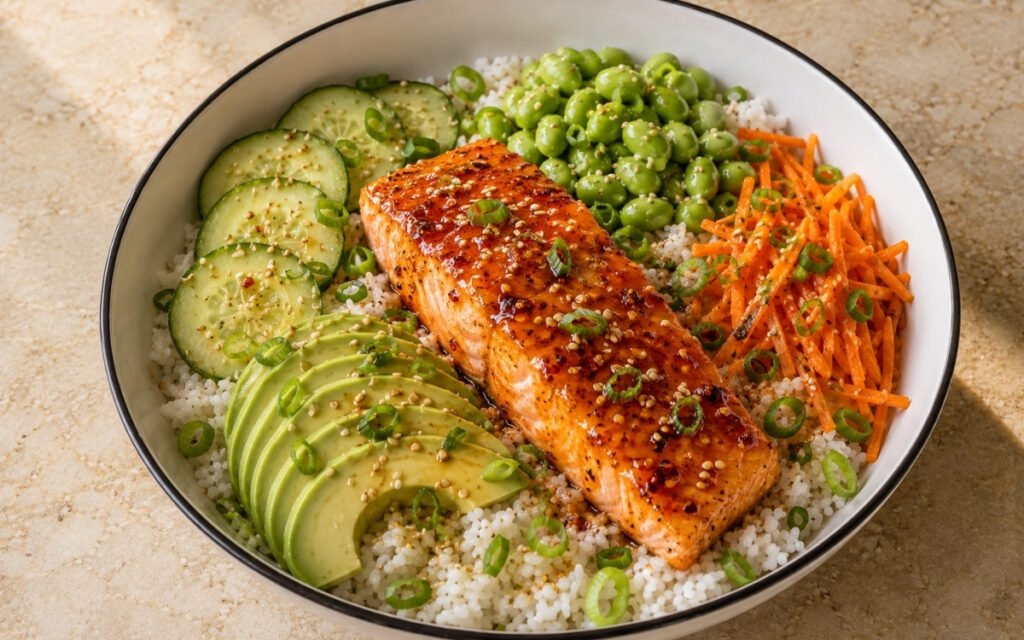
Hot Honey Salmon Rice Bowl
Salmon seared in sesame oil and glazed with gochugaru hot honey in the final minute — over jasmine rice with pickled carrots, avocado, and soy sauce. 35 minutes.
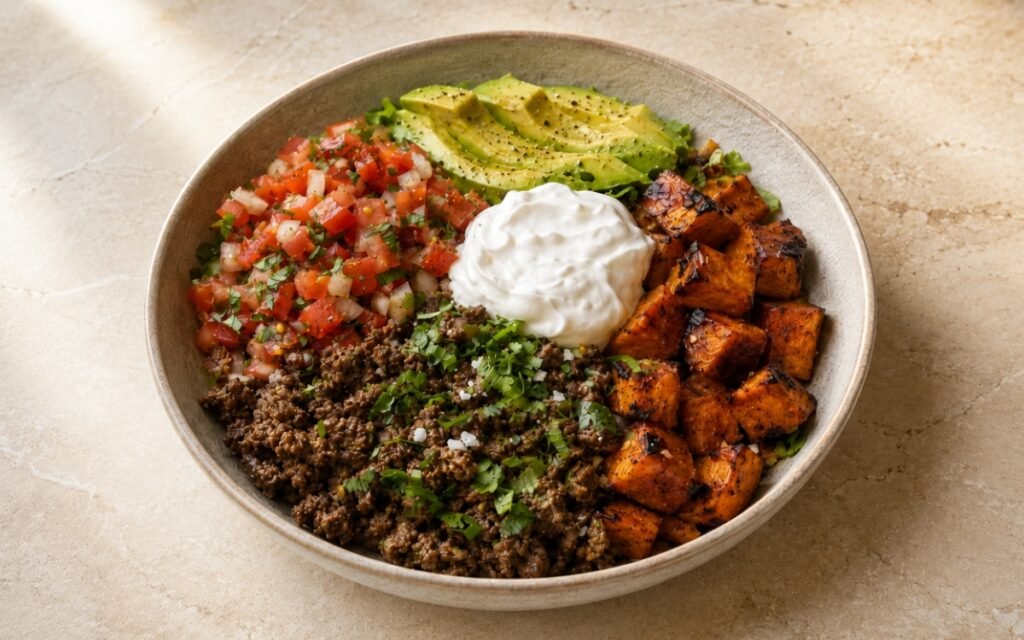
Sweet Potato Ground Beef Burrito Bowl
Crisp roasted sweet potato and browned seasoned ground beef with fresh pico de gallo, sliced avocado and cool sour cream.
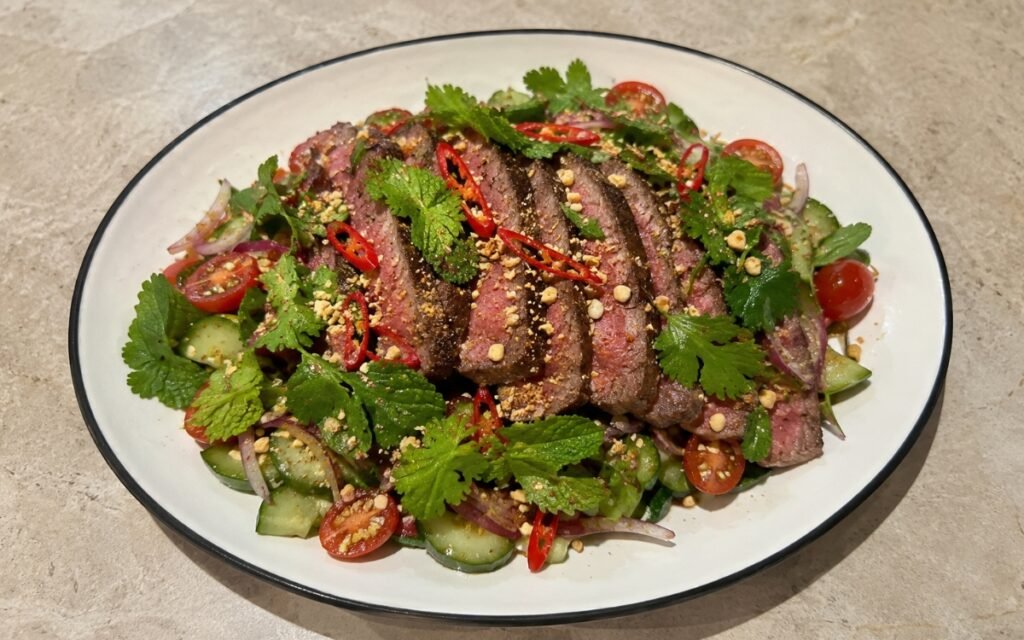
Spicy Thai Beef Salad (Yam Neua)
Sliced seared beef tossed with crisp vegetables, fresh herbs, and a punchy Thai lime-chili dressing.
You might also like
You might also like
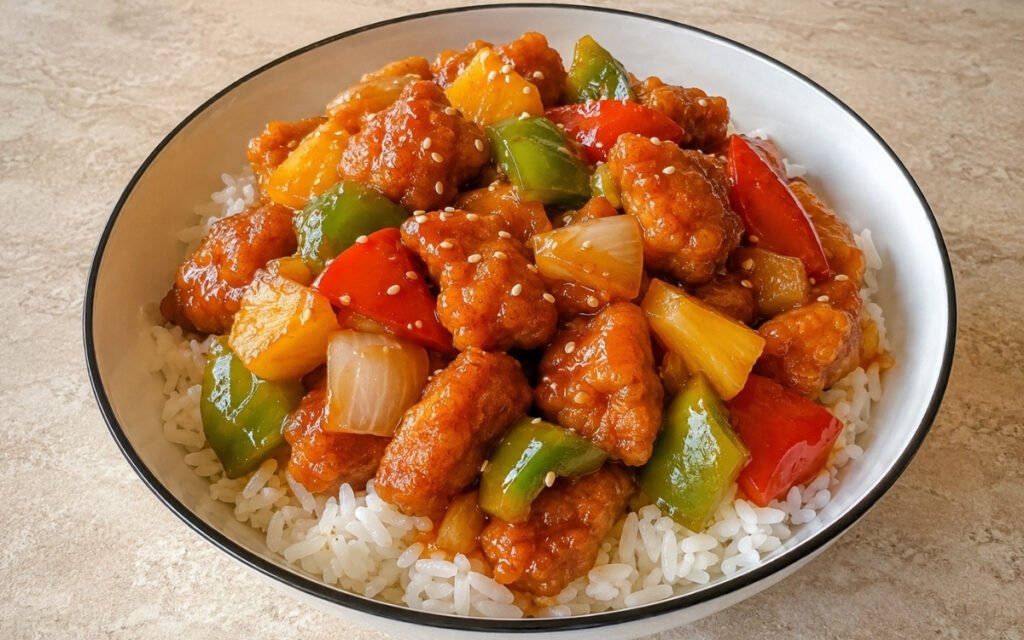
Sweet and Sour Chicken
Double-fried battered chicken thighs with pineapple and vegetables tossed in a glossy tangy-sweet sauce — the restaurant crispiness technique explained for home cooking in 50 minutes.
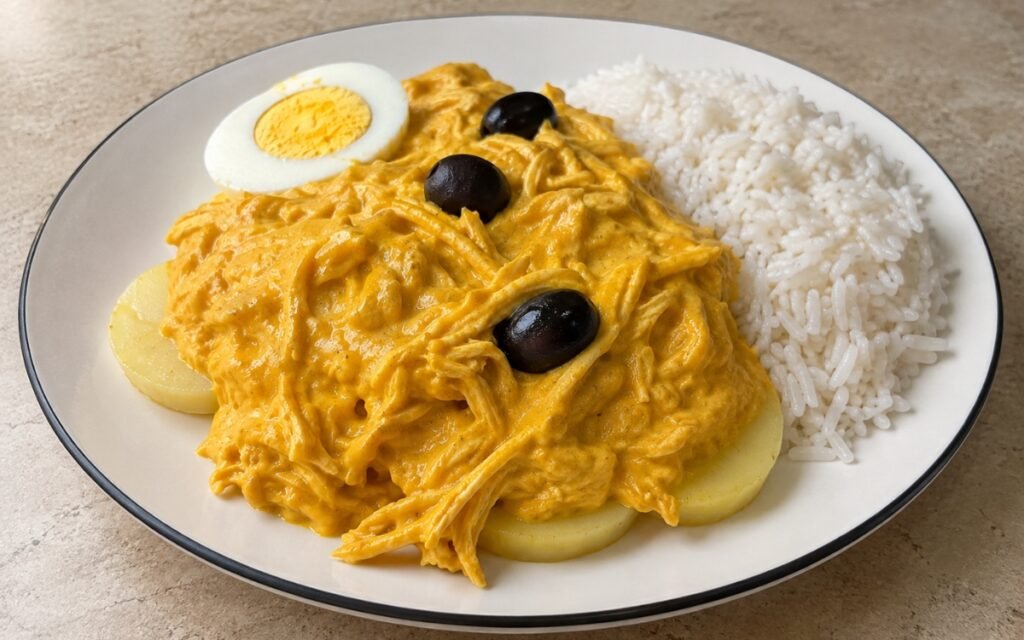
Ají de Gallina
Tender shredded chicken in a rich, velvety ají amarillo cream sauce with bread, evaporated milk, and walnuts, served over sliced potatoes.
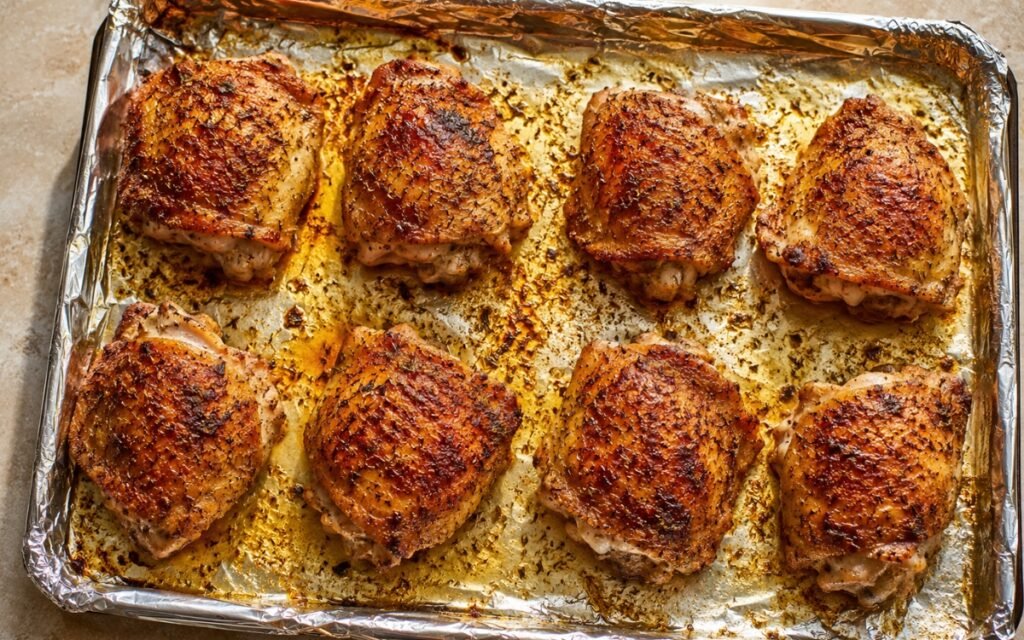
Cripsy Oven-Baked Chicken Thighs
Crispy-skinned chicken thighs baked with simple spices—the most forgiving and flavorful cut.
Bang Bang Chicken Rice Bowl
Ingredients
Method
- Rinse the 250g of jasmine rice under cold running water until the water running through the grains is nearly clear. Combine the rinsed rice with 375ml of water and a pinch of salt in a medium saucepan. Bring to a full rolling boil over high heat, then reduce immediately to the lowest possible setting, cover tightly, and simmer for 15 minutes without lifting the lid. Remove from heat and allow to stand covered and undisturbed for 5 minutes. Uncover and fluff with a fork. Keep covered to maintain warmth while the chicken is prepared and fried.
- Make the sauce before the oil is heated and before the chicken is breaded — the sauce must be ready the moment the fried chicken comes out of the oil. In a medium bowl, whisk together the 120g of mayonnaise, 60g of Thai sweet chili sauce, 30g of sriracha, 15ml of rice vinegar, and 5g of honey until completely smooth and uniform. The sauce should taste simultaneously sweet from the Thai chili sauce and honey, creamy from the mayonnaise, spiced and garlicky from the sriracha, and bright from the rice vinegar — all four notes present and balanced. Adjust: more sriracha for heat, more sweet chili sauce for sweetness, more vinegar for brightness. The Thai sweet chili sauce is the element that distinguishes bang bang sauce from plain spicy mayo — its specific fruity, slightly sweet, moderately spiced character provides the background sweetness that the sriracha’s direct heat builds against. Set aside.
- Prepare three shallow bowls in sequence — the standard three-stage breading station: First bowl: combine the 120g of all-purpose flour, 60g of cornstarch, 5g of salt, 3g of black pepper, and 2g of garlic powder and stir to distribute the seasonings evenly through the flour. The flour-cornstarch combination is the specific coating blend for maximum crispness — flour alone produces a thicker, bread-like coating; cornstarch alone produces a thin, very crisp coating; together they produce a coating that is simultaneously light, crisp, and sufficiently thick to carry the panko adhesion in the next stage. Second bowl: the 2 beaten eggs, which serve as the adhesion layer between the flour coating and the panko exterior. Third bowl: the 150g of panko breadcrumbs. Panko — Japanese-style breadcrumbs made from crustless white bread processed into irregular, airy, jagged flakes — produces a crispier, lighter, more texturally interesting crust than standard fine breadcrumbs because the irregular flake shapes create more air gaps during frying, resulting in a crust that shatters pleasantly rather than producing the dense, uniform crunch of fine breadcrumbs.
- Working with a few pieces at a time, bread each chicken piece through the three stages in sequence: First, coat in the seasoned flour mixture and shake off the excess vigorously — the flour layer must be thin and even rather than clumped, as excess flour prevents the egg from adhering cleanly. Second, dip into the beaten egg, turning to coat all surfaces and allowing the excess to drip off naturally. Third, press firmly into the panko breadcrumbs on all surfaces — pressing rather than simply rolling produces a more adherent, more even crust. Place each breaded piece on a wire rack rather than a plate — a wire rack allows air circulation beneath each piece, preventing the bottom coating from becoming damp and soft from contact with a flat surface. For maximum crust adhesion, refrigerate the breaded pieces on the wire rack for 15 minutes before frying — the chilling firms the egg layer and allows the panko to adhere more completely, significantly reducing the likelihood of the crust separating from the chicken during frying.
- Pour sufficient vegetable oil into a large, heavy-bottomed pot or deep skillet to reach a depth of approximately 5cm. Heat the oil over medium-high heat to 175°C — use a cooking thermometer for the most reliable result. At 175°C a small piece of panko dropped into the oil will sizzle immediately and vigorously; below this temperature the oil is insufficiently hot and the chicken will absorb oil and become greasy rather than crisping immediately on contact. Working in batches — never adding more pieces than the oil surface can accommodate without touching — lower the breaded chicken pieces gently into the oil. Fry for 5–6 minutes per batch, turning once at the midpoint, until the exterior is a deep, even golden-brown and the internal temperature of the thickest piece reads 75°C. The batching is non-negotiable — adding too many pieces simultaneously drops the oil temperature dramatically, producing the same greasy, pale result as insufficiently hot oil. Transfer each finished batch to a paper towel-lined plate to drain briefly — no more than 30 seconds on the paper towels before tossing in the sauce, as the paper towel begins to soften the bottom crust on contact.
- Transfer the hot fried chicken pieces directly into the large bowl with the prepared bang bang sauce. Pour the sauce over the chicken and toss gently to coat every piece — turning the chicken through the sauce with tongs or two spoons rather than vigorous stirring, which would break the panko crust. The heat from the freshly fried chicken makes the sauce slightly more fluid and helps it adhere to the textured panko surface more completely than sauce applied to cooled chicken would — this is why the sauce preparation before frying and the immediate tossing after frying matters. Every piece should show a visible, even coating of the pale orange-pink sauce against the golden crust. Divide the cooked jasmine rice among four wide bowls. Top each bowl with equal portions of the bang bang chicken. Arrange the sliced cucumber alongside the chicken — their cool, fresh, slightly watery crunch provides the specific contrast that the fried chicken’s richness and the sauce’s sweetness specifically need. Scatter the sliced scallions over each bowl. Finish with the toasted sesame seeds. Serve immediately while the crust retains its crunch.